

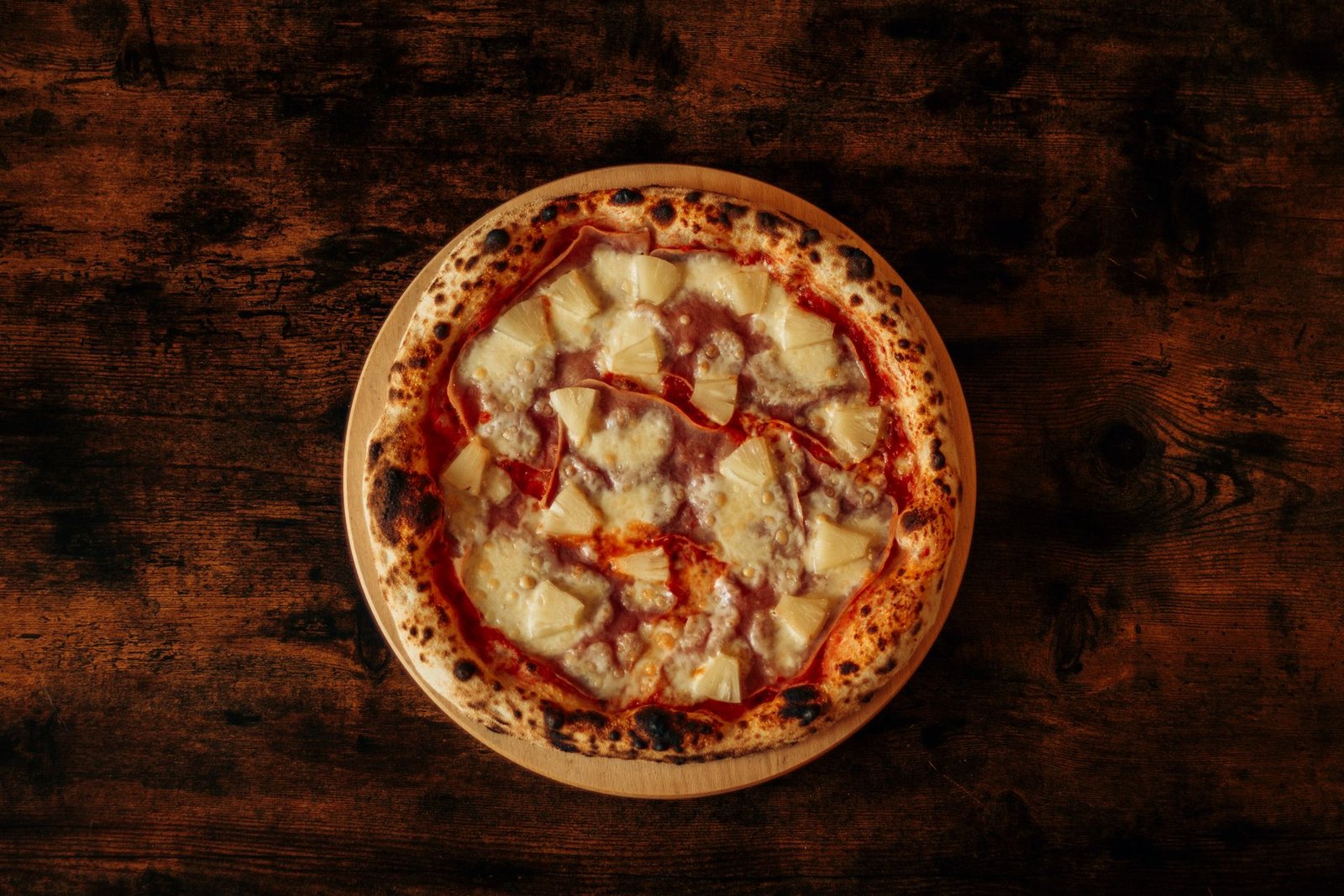
Few pizzas inspire stronger opinions than the Hawaiian. People either love the sweet-salty contrast of ham and pineapple or consider fruit on pizza a personal offense. Here is the thing both camps can agree on: most Hawaiian pizzas are badly made — built from watery canned pineapple dumped straight from the tin, rubbery low-grade ham, and a sauce applied without thought. A great Hawaiian pizza recipe is a different animal entirely: smoky, high-quality ham, pineapple treated so its juice seasons the pizza instead of flooding it, and a balance of sweet, salty, and savory that converts skeptics.
The Hawaiian pizza was invented in 1962 in Ontario, Canada, by Sam Panopoulos, a Greek immigrant running a restaurant with his brothers. The story goes that he put canned pineapple on pizza partly out of curiosity and partly because the sweet-and-savory combination was already popular in Chinese cooking — his restaurant served Chinese dishes alongside pizza, and the flavor pairing was familiar to him. It caught on locally, spread across North America through the 60s and 70s, and eventually became one of the most ordered — and most argued-about — pizzas in the world, even earning a famous (joking) condemnation from Iceland’s president in 2017. Whatever your position in the great debate, making it properly at home is the only fair way to judge it — most people’s opinions were formed on mediocre delivery versions, not on the pizza at its best.
This recipe treats the Hawaiian with the respect it rarely gets: good smoked ham (not the pressed deli squares), pineapple prepped to control its considerable juice, a restrained sauce hand, and optional upgrades — bacon, jalapeño, a BBQ-sauce base — that take the sweet-salty template to genuinely exciting places.
🍕 Key Takeaways
- Drain pineapple thoroughly and pat it dry — its juice is the number one cause of soggy Hawaiian pizza.
- Use real smoked ham (diced ham steak or good deli ham), not pressed canned ham, for meaty, savory depth.
- Fresh pineapple is brighter and firmer; canned works fine if well drained — each has trade-offs.
- Keep the sauce thin (⅓ cup) since pineapple adds its own moisture and sweetness.
- Bake at maximum heat (500–550°F / 260–290°C) on a preheated steel or stone for 6–9 minutes.
- Optional upgrades — bacon, jalapeño, red onion — add savory and spicy contrast to the sweet base.
- Cool leftovers within 2 hours, refrigerate 3–4 days, and reheat in a skillet or hot oven.
Why Most Hawaiian Pizza Disappoints (And How to Fix It)
The classic failure mode of Hawaiian pizza is a soggy, bland middle: a pale crust, watery cheese, pineapple that tastes steamed rather than caramelized, and ham with the texture of a pencil eraser. Every one of these flaws traces back to ingredient quality and moisture control, and every one is fixable.
The pineapple problem. A cup of canned pineapple chunks can carry several tablespoons of juice, and most recipes dump it all on the pizza. In the oven, that juice floods the cheese and soaks the dough. The fix is simple but non-negotiable: drain canned pineapple in a sieve for at least 10 minutes, then pat it dry with paper towels or a clean kitchen towel. You want the fruit, not the syrup. Fresh pineapple needs less draining but should still be patted dry after dicing. Well-drained pineapple does something wonderful in a hot oven: its surface sugars caramelize, its edges char slightly, and it concentrates into chewy, intensely flavored nuggets instead of steaming into mush.
The ham problem. The pressed, water-added “ham” from a can or the cheapest deli slices release water as they heat and taste of little but salt. A good smoked ham — a ham steak diced into cubes, or thick-sliced deli ham torn into pieces — has real pork flavor and a firm texture that stands up to baking. The smokiness is doing important work: it is the savory counterweight to the pineapple’s sweetness, and without it the pizza tastes one-dimensionally sweet.
The balance problem. Hawaiian pizza lives or dies on the sweet-salty-savory triangle. Too much pineapple and it is dessert; too much ham and it is a salt lick; too much sauce and the whole thing is wet and muddled. The ratios in this recipe — roughly equal volumes of ham and well-drained pineapple, a thin sauce layer, and a moderate cheese hand — keep all three corners of the triangle in play. Think of it as seasoning: the pineapple is the sugar, the ham is the salt, the cheese and crust are the canvas. A pinch of red pepper flakes or a few jalapeño slices add a fourth dimension (heat) that makes the sweetness taste intentional rather than accidental — heat is the secret weapon of nearly every great sweet-savory dish, from Thai food to salted caramel.
Ingredients for Hawaiian Pizza
Makes two 12-inch pizzas. The dough is a straightforward same-day dough; a cold-fermented dough adds a pleasant chew that stands up well to the juicy toppings.
For the dough (makes 2 balls, ~260g each)
- 500g bread flour (about 4 cups spooned and leveled)
- 320g lukewarm water (about 1⅓ cups)
- 10g fine sea salt (about 2 teaspoons)
- 7g instant dry yeast (one standard packet)
- 15g extra-virgin olive oil (about 1 tablespoon), plus more for the bowl
For the toppings (enough for 2 pizzas)
- 8 oz (225g) smoked ham steak, diced into ½-inch cubes (or thick-sliced smoked deli ham, torn)
- 1½ cups diced pineapple (fresh, or canned chunks well drained and patted dry)
- ¼ medium red onion, sliced thin (optional but recommended)
For topping each 12-inch pizza
- ⅓ cup tomato sauce (about 80ml) — keep it thin; our homemade pizza sauce is ideal
- 5 oz (140g) low-moisture whole-milk mozzarella, shredded by hand
- Half of the ham and pineapple
- Pinch of crushed red pepper flakes (optional)
- 1 tablespoon extra-virgin olive oil, for finishing (optional)
A note on pineapple: fresh vs canned is a genuine trade-off, not a snob question. Fresh pineapple is firmer, brighter, and more aromatic — it holds its shape and caramelizes beautifully. Canned pineapple is softer, sweeter, and more convenient, and it is what the original 1962 pizza used. Either makes an excellent pizza as long as it is well drained. What does not work is pineapple in heavy syrup dumped straight from the can, or pre-crushed pineapple, which is essentially juice with bits in it. Tidbits or chunks, drained and patted dry, are the right canned format.
Step-by-Step Method
Step 1: Mix, knead, and ferment the dough
Whisk flour and yeast, add water and oil, mix to a shaggy mass, rest 15 minutes, add salt, and knead 8–10 minutes until smooth and elastic. Bulk ferment covered in an oiled bowl for 1.5–2 hours until doubled. Full method: how to make pizza dough.
Step 2: Prep the pineapple and ham (do not skip the draining)
If using canned pineapple, pour it into a fine-mesh sieve and let it drain for at least 10 minutes, shaking occasionally. Then spread it on a clean kitchen towel or paper towels and pat firmly — you will be surprised how much liquid comes out. If using fresh, dice into ½-inch pieces and pat dry. Dice the ham steak into ½-inch cubes, or tear thick deli ham into bite-size pieces. Slice the red onion thin if using.
Step 3: Ball the dough
Divide the risen dough into two ~260g balls, shape tight, and proof covered on a floured tray for 30–60 minutes until puffy and relaxed. Shred the mozzarella while you wait.
Step 4: Preheat the oven
Steel or stone on an upper-middle rack, oven at maximum (500–550°F / 260–290°C), preheated for a full hour. The fierce heat is what caramelizes the pineapple’s surface sugars instead of merely warming them — a cooler oven gives you steamed fruit. Background: pizza oven temperature guide.
Step 5: Stretch the base
Press and stretch a dough ball to 12 inches with a 1-inch rim, transfer to a lightly floured pizza peel, and shake to confirm it slides. Technique help: how to stretch pizza dough without tearing.
Step 6: Sauce thinly, then cheese
Spread ⅓ cup of sauce in a thin layer, leaving the rim bare. Scatter the shredded mozzarella evenly. Remember: the pineapple brings moisture and sweetness of its own, so both the sauce and cheese layers stay moderate — this is not the pizza for a heavy hand.
Step 7: Add ham and pineapple
Distribute the diced ham and well-drained pineapple evenly in a single layer, with the optional red onion scattered over. Aim for a balanced mosaic — every slice should get both ham and pineapple in each bite. If using red pepper flakes, sprinkle them now so they toast lightly in the heat.
Step 8: Bake 6–9 minutes
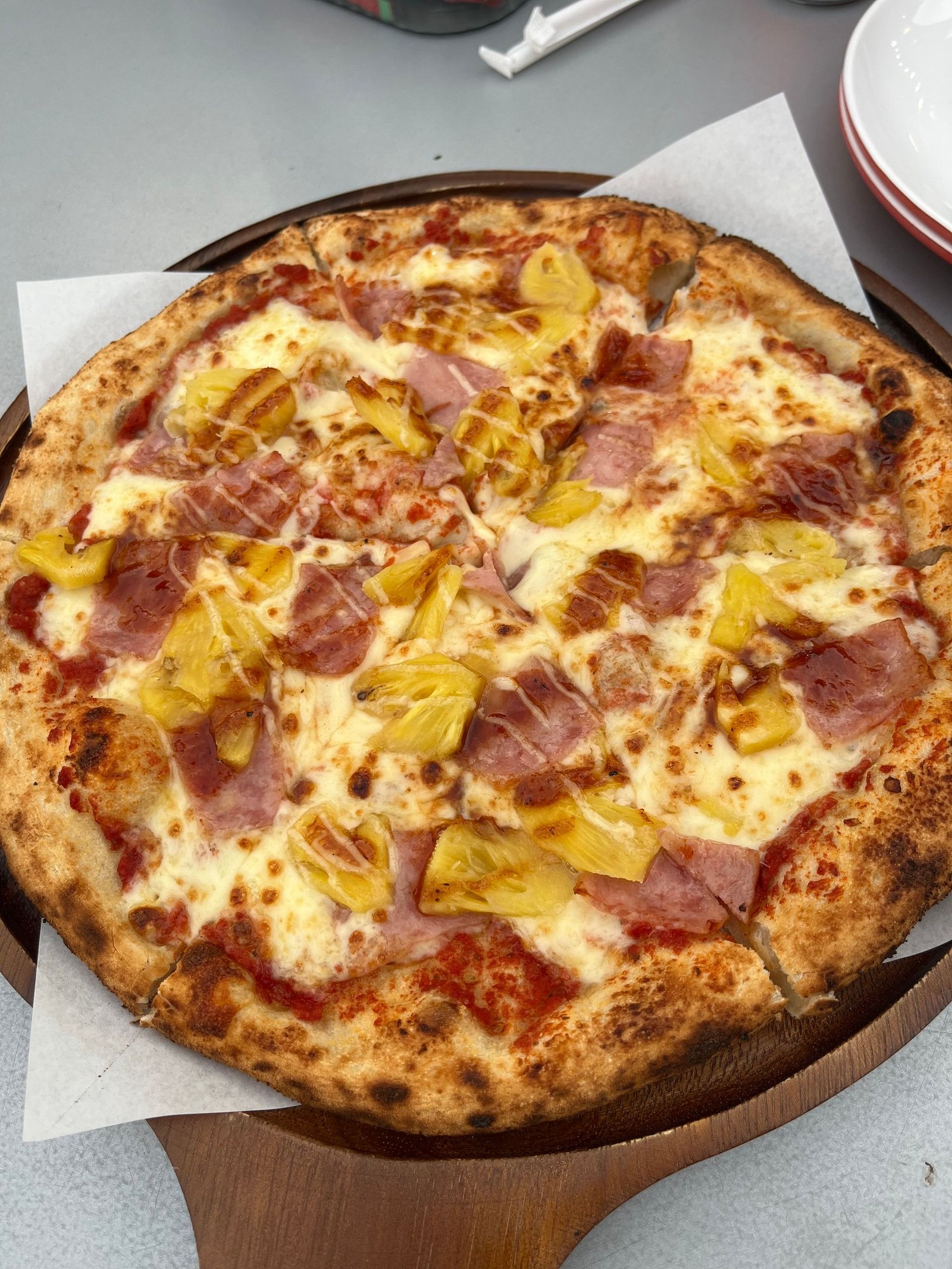
Launch onto the hot steel and bake until the crust is deep golden with charred spots, the cheese is melted with amber patches, and the pineapple edges show light caramelization — 6–9 minutes at max heat. The pineapple should look slightly shrunken and glistening with a few browned edges, not pale and wet. Start checking at 5 minutes.
Step 9: Rest and serve
Slide onto a wire rack or board, drizzle with olive oil if using, and rest 1–2 minutes so the cheese sets. Slice and serve; repeat with the second pizza.
Pro Tips for Hawaiian Done Right
Drain, then drain again. I cannot overstate this: pineapple moisture is the entire ballgame. Sieve for 10 minutes, then pat dry firmly. If you think it is dry enough, pat it once more. The difference between damp and dry pineapple is the difference between a soggy middle and a caramelized, chewy topping. This is the single highest-impact step in the recipe.
Dice the ham; don’t lay flat slices. Diced ham cubes distribute through every bite and their cut surfaces brown slightly in the oven, adding savory depth. Flat deli slices tend to curl, trap steam underneath, and create ham-only zones. Half-inch cubes are the ideal size — big enough to stay juicy, small enough to distribute.
Balance is a ratio, not a feeling. For a 12-inch pizza: about 4 ounces of ham and ¾ cup of well-drained pineapple. That ratio keeps the sweet-salty balance dialed in. If you love extra pineapple, add it — but drain it impeccably and accept a slightly juicier pie, or compensate by reducing the sauce a touch.
Add something savory or spicy. The classic Hawaiian is a two-note pizza, and a third note elevates it enormously. Crisped bacon bits add smoky crunch; pickled jalapeños add bright heat; red onion adds sharp freshness. Even a pinch of red pepper flakes changes the whole equation, making the sweetness taste deliberate and complex rather than simple.
Consider the BBQ base swap. Replacing the tomato sauce with a thin layer of BBQ sauce (about ⅓ cup, thinned slightly) creates the Hawaiian BBQ variant — smoky, sweet, and deeply savory. It is arguably even better than the original, and the technique overlaps with our BBQ chicken pizza.
Don’t fear the char on the pineapple. Those browned, slightly shrunken edges are caramelization — concentrated sweetness and complex flavor. Pale, glistening, wet-looking pineapple means it needed more draining or a hotter oven. Our crispy crust tips explain how maximum heat drives browning on every component.
Warm the ham slightly before topping. Ice-cold ham cubes straight from the fridge lower the temperature of the cheese around them and can leave cold spots in the melt. Ten minutes on the counter while the oven finishes preheating is enough — you are not bringing it to room temperature for safety reasons (keep total counter time under 2 hours), just taking the refrigerator chill off so everything heats evenly.
Taste your pineapple before committing. Pineapple varies enormously in sweetness and acidity. Taste a piece: if it is mouth-puckeringly tart, you may want a touch less of it or a slightly sweeter sauce balance; if it is candy-sweet, the red pepper flakes or jalapeño become even more valuable for contrast. Adjusting to the actual fruit in front of you is what separates good cooks from recipe followers.
Variations Worth Trying
Hawaiian BBQ
Swap the tomato sauce for ⅓ cup of thinned BBQ sauce and add a handful of thin-sliced red onion. The smoke and tang of the BBQ sauce marry perfectly with the ham and pineapple — this is the version that wins over the most skeptics.
Spicy Hawaiian (jalapeño)
Add 10–12 slices of fresh or pickled jalapeño (patted dry) scattered among the ham and pineapple, plus a pinch of red pepper flakes. The heat makes the sweetness pop and keeps the pizza from tasting one-note. Finish with fresh cilantro for a bright contrast.
Hawaiian with bacon
Add 3–4 slices of cooked, crumbled bacon per pizza along with the ham. The bacon’s smoky crunch doubles down on the savory side of the equation. Keep the bacon crisp but not brittle, and crumble it coarse so the pieces stay distinct.
Prosciutto and pineapple (upscale Hawaiian)
Replace the ham with torn prosciutto added after baking (the residual heat warms it without cooking it tough), and use fresh pineapple. Finish with arugula and a drizzle of good olive oil. It is the same sweet-salty idea, executed with Italian-deli ingredients.
Grilled Hawaiian
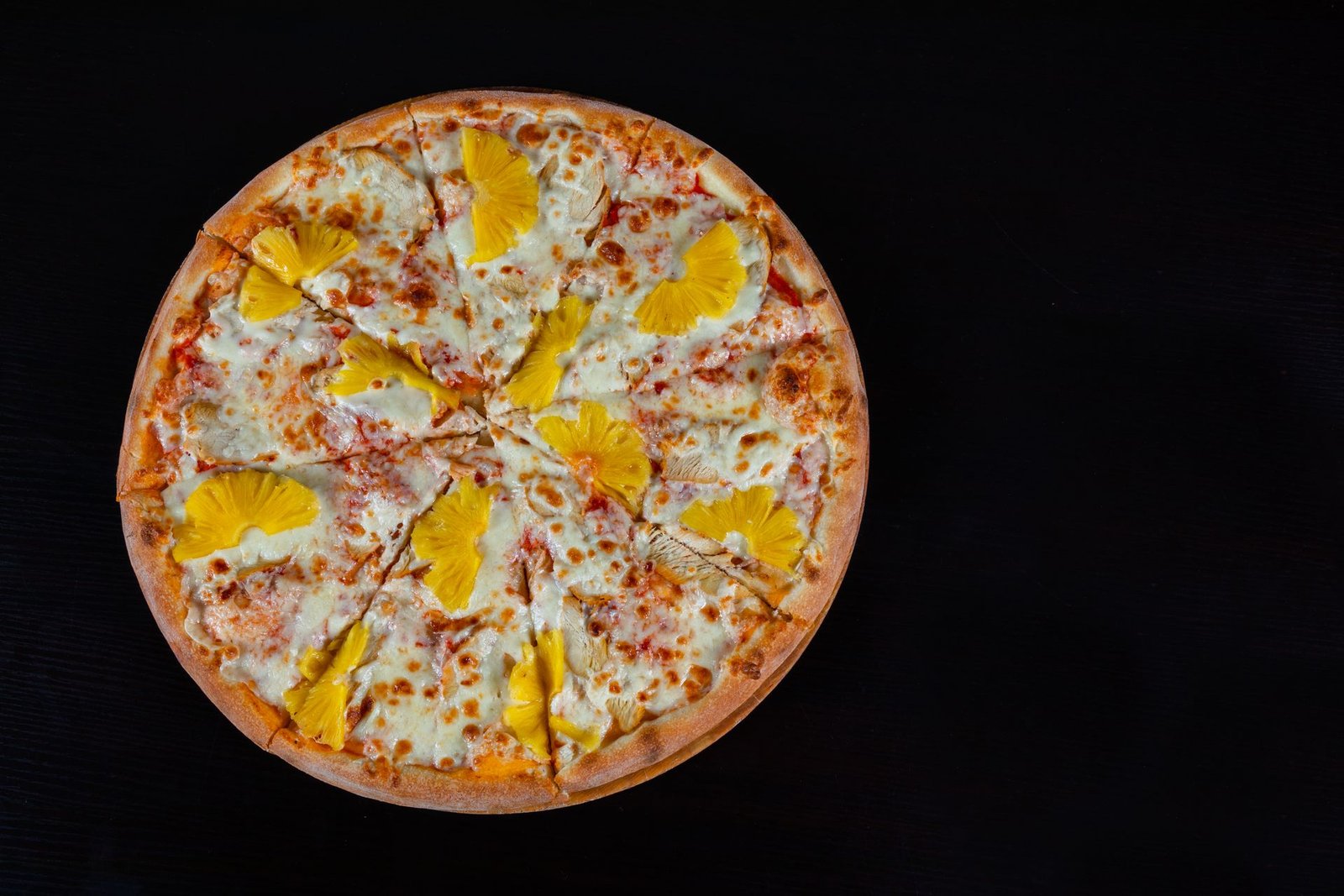
Grill thick pineapple rings directly on hot grates until marked and caramelized, then dice and use as the topping — the grill drives off water and adds smoky char that the oven cannot replicate. Our grilled pizza guide covers grilling the crust too, for the full outdoor version.
Storage, Reheating & Food Safety
Storing leftovers: Cool to room temperature within 2 hours of baking, then refrigerate airtight for 3–4 days. The ham makes the 2-hour rule especially worth observing — do not leave the box out all evening. Full guide: how long leftover pizza lasts.
Reheating: Skillet method (medium heat, 2–3 minutes, lid on at the end) re-crisps the crust and re-caramelizes the pineapple edges beautifully. A 375°F (190°C) oven for 8–10 minutes is the runner-up. The microwave makes the ham rubbery and the pineapple soggy — avoid it. All methods: how to reheat pizza.
Freezing: Cool completely, wrap slices individually, freeze up to 2 months. Reheat from frozen at 400°F (200°C) for 10–12 minutes until steaming throughout. The pineapple softens a bit but the flavor holds up well.
Food safety notes: Use ham from a reputable source and check the use-by date — pre-sliced deli ham is more perishable than a whole ham steak. Keep the ham refrigerated until topping time, and do not leave the prepped toppings sitting out during a long dough proof; 2 hours at room temperature is the limit for all of it. After baking, the same 2-hour rule governs the finished pizza. Reheat leftovers until steaming hot throughout, and discard anything that smells off or has been left out too long.
Frequently Asked Questions
Is Hawaiian pizza actually from Hawaii?
No — it was invented in 1962 in Chatham, Ontario, Canada, by Greek immigrant Sam Panopoulos. The name came from the brand of canned pineapple he used, which was called Hawaiian. For the fuller story of pizza’s journey, see our history of pizza.
Fresh vs canned pineapple — which is better on pizza?
Fresh is firmer, brighter, and caramelizes better; canned is sweeter, softer, and more convenient (and historically authentic to the original). Both are excellent when well drained. The only wrong choice is undrained pineapple in any form.
How do you keep Hawaiian pizza from getting soggy?
Drain and pat the pineapple thoroughly, use a thin sauce layer (⅓ cup), choose ham that is not water-added, and bake on a fully preheated steel or stone at maximum heat. Our guide to preventing soggy pizza covers the general principles.
What cheese goes best with ham and pineapple?
Low-moisture whole-milk mozzarella — it melts cleanly and stays in the background, letting the ham-pineapple contrast star. Smoked mozzarella is a worthy upgrade that echoes the ham’s smokiness. Avoid fresh mozzarella; its water plus the pineapple’s juice is too much moisture.
Can I use Canadian bacon instead of ham?
Yes — Canadian bacon (back bacon) is lean, smoky, and traditional on many Hawaiian pizzas; in some regions it is the default “ham” on a Hawaiian. It is leaner than ham steak, so it can dry out slightly in a hot oven; dice it a bit larger than you would ham cubes, or add it in the last few minutes of the bake if your slices are thin. Either way, look for a smoked variety — the smoke is load-bearing flavor in this pizza.
What other toppings go well with pineapple?
Bacon, jalapeño, red onion, and BBQ sauce are the classics — each adds a savory, spicy, or smoky counterpoint that keeps the sweetness in check. More adventurous: prosciutto added after baking, crisped pancetta, a drizzle of Thai sweet chili sauce, or even a sprinkle of toasted coconut after baking for a tropical dessert-leaning pie (surprisingly good as a dessert pizza variant). For broader inspiration, browse our best topping combinations.
The Bottom Line
A great Hawaiian pizza recipe is not about winning an argument — it is about executing a sweet-salty idea properly: well-drained pineapple that caramelizes instead of steaming, real smoked ham with actual pork flavor, balanced ratios, and fierce heat. Make it this way once, and whatever you believed about fruit on pizza, you will be judging the idea on its best evidence — which is the only fair trial any controversial pizza deserves, served hot. And if the sweet-savory template wins you over, our pizza recipes are full of places to take it next.