

If you keep a sourdough starter alive for bread, you are sitting on one of the finest pizza doughs imaginable — you just might not know it yet. Sourdough pizza dough trades commercial yeast for your starter’s wild yeast and lactic acid bacteria, producing a crust with a depth no yeast packet can match: gentle tang, profound wheatiness, a chewy-crisp texture, and the kind of open, airy crumb that makes people close their eyes on the first bite.
This guide assumes you already have a mature, active starter (fed and doubling reliably). It covers the sourdough-specific formula in grams and cups, the longer and gentler mixing and folding process, fermentation timing at room temperature and cold, the quirks of shaping naturally leavened dough, and troubleshooting the issues unique to sourdough pizza — over-acidification, sluggish starters, and sticky dough. No starter yet? You will need 7–14 days to build one before this guide applies — but the wait is worth it.
🍕 Key Takeaways
- Use starter at its peak — domed, bubbly, and just beginning to recede — for maximum leavening power and cleanest flavor.
- Formula: 20% ripe starter to flour weight (100 g starter per 500 g flour), 65% hydration, 2.2% salt.
- Bulk ferment 4–6 hours at 75–78°F with gentle stretch-and-folds; then cold ferment 24–72 hours for peak flavor.
- Handle sourdough gently — wild-yeast dough is more extensible but more fragile than commercial-yeast dough.
- Acid weakens gluten over time: knead or fold to full strength early, and don’t push cold fermentation past 72 hours.
- Bake hot (500–550°F) on a preheated stone or steel; sourdough browns beautifully thanks to fermentation sugars.
Why Sourdough Makes Exceptional Pizza
Commercial yeast (Saccharomyces cerevisiae, a single strain) does one job efficiently: produce CO2 fast. A mature sourdough starter is an ecosystem — wild yeasts plus Lactobacillus and other lactic acid bacteria — and that bacterial half changes everything. The bacteria produce lactic acid (mild, yogurty tang) and acetic acid (sharper, vinegar-like bite) alongside the yeasts’ CO2, and the ratio between them shapes the flavor.
For pizza, that bacterial contribution is pure gold. The gentle acidity tightens the eating experience the way lemon brightens a rich dish — it cuts through cheese and fat, making each bite taste fresh rather than heavy. The acids also strengthen flavor perception of the wheat itself, which is why sourdough crust tastes more “wheaty” than its yeast-leavened twin. And the long fermentation that sourdough requires (there is no rushing wild yeast) develops the same enzymatic complexity as a 72-hour cold ferment — because it effectively is one, with extra bacterial character layered on top.
Texture benefits too. Sourdough’s acids slightly weaken gluten over long ferments, which sounds bad but actually produces the ideal pizza texture: extensible enough to stretch thin without springing back, yet strong enough to trap gas for an airy, open crumb with those coveted irregular holes. The crust bakes up with a crackling exterior and a custardy-chewy interior that commercial yeast struggles to replicate.
The tradeoff is predictability. Wild cultures vary with your flour, water, kitchen temperature, and feeding schedule — your starter is literally unique to your home. This guide gives you the framework; your starter fills in the personality. That variability is a feature, not a bug — it is why sourdough pizza from your kitchen tastes like nowhere else on earth.
Is Your Starter Ready?
Sourdough pizza demands a vigorous starter. A sluggish starter produces dense, overly sour pizza — the most common sourdough pizza failure. Run this checklist:
The doubling test: Feed your starter (1:2:2 — one part starter, two parts flour, two parts water by weight) and mark the level. A ready starter doubles (or more) within 4–8 hours at 70–75°F. If yours takes 12+ hours or barely rises, it needs a week of consistent twice-daily feedings before pizza duty.
The float test (secondary): Drop a teaspoon of peaked starter in water. If it floats, it is full of gas and ready. This test is imperfect — very wet starters may not float even when active — so treat it as confirmation, not verdict.
The aroma test: A ready starter smells pleasantly tangy — like yogurt with a whiff of alcohol. Harsh vinegar or nail-polish-remover aromas mean it is overripe and hungry; feed it and wait for the next peak.
Timing the peak: Use the starter when it is at or just past its peak rise — domed on top, full of bubbles, just beginning to recede. Using it too early (still rising) wastes leavening potential; too late (fully collapsed, liquid on top) adds excess acid that weakens gluten and sours the dough harshly.
Build a levain for best results: Instead of using starter straight from the jar, build a dedicated levain 8–12 hours before mixing: 25 g starter + 50 g flour + 50 g water. This gives you young, vigorous culture at exactly the right moment, and keeps your mother starter’s feeding schedule undisturbed. The levain also lets you control flavor: build it with bread flour for a clean, mild profile, or swap in 10–20% whole wheat or rye flour to push the tang and complexity higher. Think of the levain as a test batch for the flavor direction of the whole pizza — a small decision with an outsized impact on the final crust.
The Sourdough Pizza Dough Formula
Makes two 12-inch pizzas. Baker’s percentages relative to flour weight; starter counts toward both flour and water in advanced calculations, but for this recipe we keep it simple.
Ingredients
- 500 g (about 4 cups) bread flour — 100%
- 325 g (325 ml / about 1⅓ cups) water, 75–80°F (24–27°C) — 65%
- 100 g (about ½ cup) ripe, peaked sourdough starter — 20%
- 11 g (2 teaspoons) fine sea salt — 2.2%
- 10 g (2 teaspoons) extra-virgin olive oil — 2% (optional; adds tenderness)
Formula notes
Starter at 20%: This is the sweet spot for pizza — enough culture for a 4–6 hour bulk ferment at room temperature, not so much that acidity overwhelms. More starter (25–30%) speeds fermentation but risks excess sourness; less (10–15%) needs a much longer bulk. In cold kitchens, nudge toward 22–25%.
Salt at 2.2%: Slightly higher than standard because sourdough’s acidity benefits from the flavor backbone, and salt regulates the bacterial activity that could otherwise run ahead of the yeast. Add salt after an initial rest (see method) — early salt tightens gluten before it has hydrated, making mixing harder.
Hydration at 65%: Sourdough doughs feel wetter than their hydration suggests because acids relax gluten. If you are new to sourdough pizza, start at 62–63% (310–315 g water) until you are comfortable handling the dough, then work up. Whole-grain additions (see variations) need 2–3% more water per 10% whole grain.
Mixing, Folding, and Bulk Fermentation
Sourdough pizza dough is built with folds, not prolonged kneading. The approach is gentler and spread over hours.
Step 1 — Mix and rest (autolyse, 30–60 minutes)
Whisk the flour and water together until no dry flour remains. Cover and rest 30–60 minutes. This autolyse hydrates the flour fully and begins gluten formation passively — particularly valuable for sourdough, where you want maximum gluten strength before acids start their slow weakening work.
Step 2 — Add starter and salt, mix to shaggy (10 minutes)
Add the peaked starter and salt (plus olive oil if using). Pinch and fold the mixture with wet hands — squeeze the dough between your fingers, fold it over, rotate the bowl — until the starter and salt are fully incorporated, about 5 minutes. The dough will be rough and sticky. Cover and rest 30 minutes.
Step 3 — Stretch-and-fold series (2–3 hours)
Every 30–45 minutes, perform a set of stretch-and-folds: with wet hands, grab one side of the dough, stretch it up and fold over the center; rotate the bowl 90 degrees and repeat, 4 folds total per set. Do 4–6 sets over the first 2–3 hours. Each set builds gluten strength and evens out temperature and fermentation. You will feel the dough transform — from shaggy and slack to smooth, elastic, and alive. Stop folding once the dough holds its shape and feels airy; over-folding late in bulk degasses the dough.
Step 4 — Bulk ferment to maturity (4–6 hours total at 75–78°F)
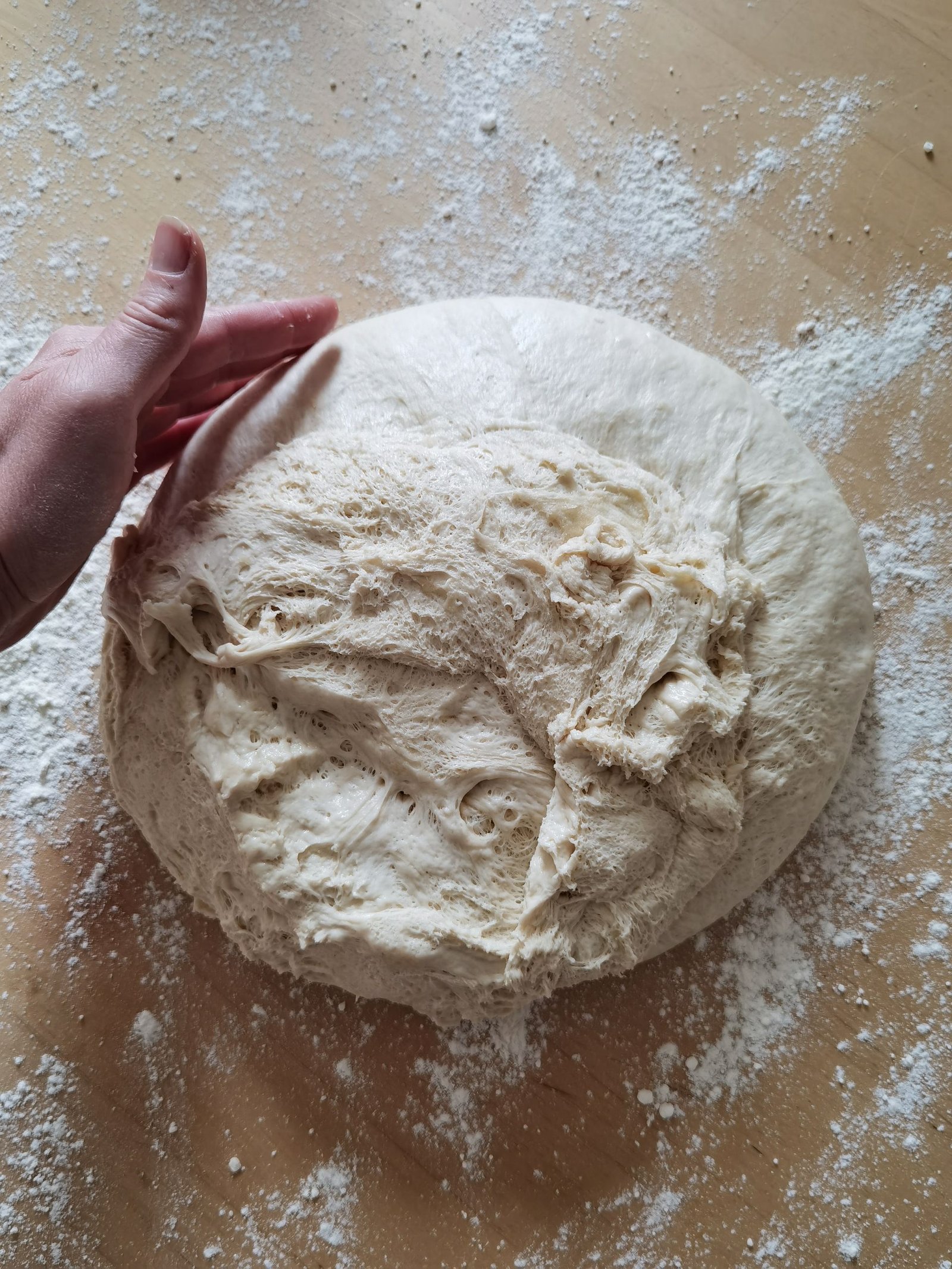
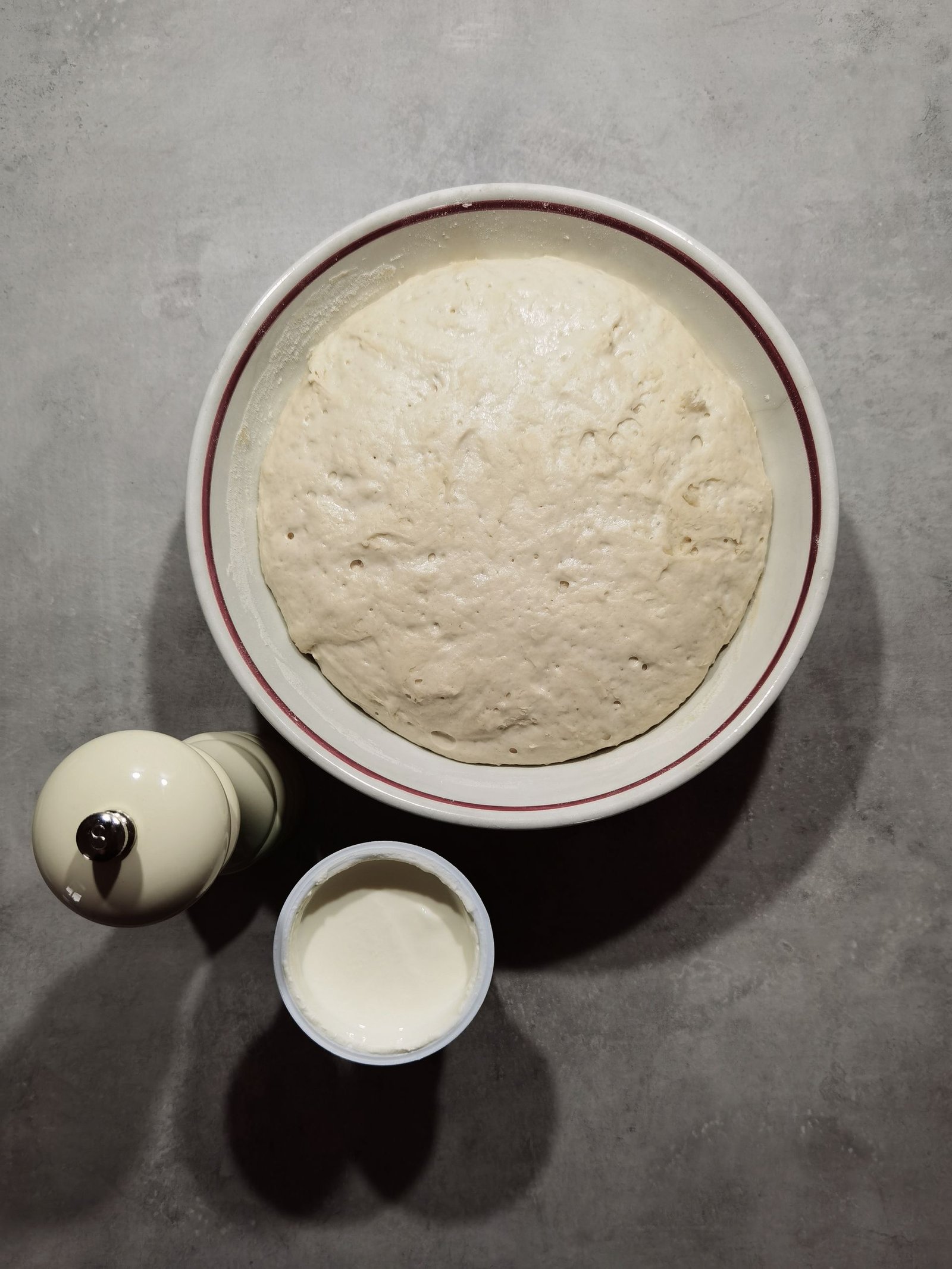
After the folding series, let the dough rest undisturbed until the bulk ferment completes — typically 4–6 hours total from mixing at 75–78°F. Judge readiness by signs, not the clock: the dough should be roughly 50–75% larger (not fully doubled — sourdough over-proofs easily), domed, jiggly, with visible bubbles on the surface and sides. The “poke test” is unreliable for sourdough; trust the visual and the jiggle. Cooler kitchens (68–70°F) may need 7–9 hours; warmer (80°F+) may finish in 3–4 — watch the dough, not the timer.
Cold Fermentation, Dividing, and Bake Day
Step 5 — Divide and cold ferment (24–72 hours)
Turn the matured dough onto a lightly floured counter and divide into two equal balls (about 465 g each — weigh them). Shape tightly, place in individual oiled containers, and refrigerate at 36–40°F. The cold ferment is where sourdough pizza flavor peaks: 24 hours is good, 48 is excellent, 72 is transcendent. Do not exceed 72 hours — sourdough’s acids continue weakening gluten in the cold, and past three days the dough becomes slack and tears when shaped. (For the pure science of cold fermentation, our 72-hour guide goes deeper.)
Same-day option: If you must bake the same day, extend the room-temperature bulk to full maturity (the dough should be airy and nearly doubled), divide, rest the balls 1–2 hours at room temperature, and bake. The pizza will be good — airy and mildly tangy — but noticeably less complex than the cold-fermented version.
Step 6 — Warm up (2–3 hours)
Remove balls from the fridge 2–3 hours before baking. Keep covered. Target dough temperature: 60–65°F — cool but pliable. Cold sourdough dough is especially prone to tearing because the acids have relaxed the gluten; adequate warming is even more critical than with commercial-yeast dough.
Step 7 — Shape gently
Flour hands and bench. Press from the center outward with fingertips, leaving a generous puffy rim — sourdough’s open crumb makes the most spectacular cornicione of any dough style, all airy holes and char. Stretch on knuckles to 12 inches, supporting the dough’s weight; sourdough is extensible and can overstretch if you are careless. Transfer to a semolina-dusted peel, confirm it slides, top sparingly.
Step 8 — Bake hot and bold
Launch onto a stone or steel preheated 45–60 minutes at 500–550°F (260–290°C). Bake 7–10 minutes until deeply colored — sourdough’s fermentation sugars drive gorgeous Maillard browning and leopard-spotting on the rim. Start checking at 6 minutes. The aroma when a sourdough pizza bakes is one of kitchen life’s great pleasures: wheaty, toasty, faintly tangy.
Variations to Try
Whole wheat sourdough pizza
Replace 100 g (20%) of the bread flour with whole wheat flour and add 15 g extra water. Whole grains add nutty depth that harmonizes with sourdough tang, plus extra fermentation food for the culture. Expect a slightly denser crumb and a heartier flavor — excellent with robust toppings like sausage and mushroom. Our whole wheat dough guide explores grain ratios further.
Discard pizza dough (quick weeknight version)
Have discard to use up? Mix 200 g unfed discard with 400 g flour, 250 g water, 10 g salt, and 5 g instant yeast for a hybrid dough: sourdough flavor from the discard, reliable rise from the commercial yeast. Bulk ferment 2–3 hours warm, shape, and bake. It is not pure sourdough, but it is delicious and wastes nothing.
Sourdough pan pizza
Press the divided dough into an oiled cast iron skillet after the cold ferment and warm-up, proof in the pan 45 minutes, top, and bake 18–20 minutes at 475°F. The sourdough tang against the fried-crisp pan crust is extraordinary — arguably the best use of sourdough pizza dough there is.
Herb and garlic sourdough crust
Fold 2 tablespoons of minced fresh rosemary and 4 minced garlic cloves into the dough during the last fold set. The long cold ferment infuses the dough with their flavor far more deeply than a same-day dough could. Ideal for simple margherita-style toppings that let the crust lead.
Troubleshooting Sourdough Pizza
Dense, gummy crumb with no air holes
Under-fermentation is the usual cause — the dough was shaped and baked before the wild yeast had produced enough gas. Extend the bulk ferment and look for the visual cues (50–75% growth, jiggle, surface bubbles). Alternatively the starter was weak — run the doubling test and strengthen it with a week of regular feedings.
Overly sour, harsh flavor
Over-fermentation, too much starter, or starter used past peak (collapsed and acidic). Use starter at peak, keep starter percentage at 20%, and do not push cold fermentation past 72 hours. A very sour starter can also be rehabilitated: feed it a few cycles with a higher ratio (1:5:5) to dilute accumulated acids.
Dough tears when stretching
Shaped too cold (warm it longer), over-fermented in the cold (acids degraded the gluten — bake sooner next time), or under-developed (insufficient folds early on). For the current dough, handle with extra care, stretch smaller (10-inch instead of 12), and accept a slightly thicker pizza rather than fighting tears.
Sticky, slack dough that’s hard to handle
Some slackness is normal for sourdough — acids relax gluten. But soupy dough means over-fermentation or too-high hydration for your flour. Next time, drop hydration 2–3%, strengthen with an extra fold set, or shorten the cold ferment. For now, flour generously and use the peel confidently — hesitant handling makes sticking worse.
Crust browns too fast
Sourdough’s residual sugars caramelize aggressively. Drop to 475°F, move to a higher rack, and check early. If the bottom chars before the top finishes, slip a baking sheet under the stone. This is a sign of excellent fermentation — manage it rather than fighting it.
Great flavor but pale crust
Under-baked or oven not hot enough. Sourdough needs full heat and full time to express its browning potential — the pale version is leaving flavor on the table. Verify your stone preheated a full hour and bake until the rim has real color and char spots.
Storage, Freezing & Food Safety
Refrigerator window
Use cold-fermented sourdough dough within 72 hours of refrigerating. Past that, acidity degrades the gluten unacceptably. If plans change, freeze instead.
Freezing
Freeze balls after dividing (before or after the cold ferment — either works, though pre-ferment freezing gives slightly better oven spring). Oil, bag with air removed, freeze up to 3 months. Thaw 24 hours in the fridge, then warm 2–3 hours at room temperature. Frozen sourdough dough is remarkably resilient — the culture survives freezing well.
Food safety
The same rules as all dough: no tasting raw (flour risk), keep the fridge at or below 40°F, cool baked pizza within 2 hours, refrigerate leftovers. Sourdough’s acidity does not make raw dough safe to eat — the pH is nowhere near low enough to neutralize flour-borne bacteria. Bake it fully, always.
Frequently Asked Questions
Can I make sourdough pizza dough with an immature starter?
Not well. A young starter (under 2–3 weeks, or one that does not reliably double) lacks the yeast population for good leavening and often produces harsh, one-dimensional sourness. Strengthen it first with consistent feedings — the pizza will wait, and the difference between pizza from a vigorous starter and a weak one is night and day.
How sour will my pizza be?
Mildly tangy, not mouth-puckering — if you follow the formula. Sourness scales with fermentation time and temperature: longer and warmer means more sour. For milder pizza, use the starter young (just peaked), ferment at the cool end of the range, and bake at 24–48 hours cold rather than 72. For more tang, do the opposite.
Why is my sourdough dough so much stickier than regular dough?
Acids relax gluten, making the dough feel looser and tackier at the same hydration. This is normal. Wet your hands for handling, flour the bench adequately, and trust the process — the baked result justifies the stickier handling. If it is truly unmanageable, reduce hydration 2–3% next time.
Can I use sourdough starter discard for pizza?
Yes — the hybrid discard dough in the variations section is the practical answer. Pure discard (unfed, acidic, low yeast activity) will not leaven pizza on its own; it needs either a long ferment with patience or a boost from a little commercial yeast. For scheduled pizza nights, always use ripe, peaked starter.
Do I need to knead sourdough pizza dough?
Not in the traditional sense. The stretch-and-fold method develops gluten gently over hours, which suits sourdough’s long timeline better than intensive kneading. That said, the initial mix should be thorough, and the folds should be confident — timid folds under-develop the dough. If you prefer kneading, a 5-minute hand knead after the autolyse plus 2–3 fold sets also works.
How is sourdough pizza dough different from regular cold-ferment dough?
The bacterial culture. A commercial-yeast cold ferment develops enzymatic complexity (sweet, wheaty, nutty); sourdough adds bacterial acids on top (tangy, bright, complex). Sourdough is also less predictable — your starter’s unique microbiome means your pizza tastes like your kitchen specifically. Both are excellent; sourdough is the deeper, more characterful of the two, at the cost of more attention.
Bread was sourdough’s first love, but pizza might be its truest expression — the hot, fast bake and the blistered, airy rim show off everything wild fermentation does best. This sourdough pizza dough guide gives you the framework: 20% peaked starter, gentle folds, patient bulk fermentation, a 24–72 hour cold rest, and a ripping-hot oven. Your starter provides the rest — the tang, the aroma, the crumb structure that makes people ask what your secret is. Keep feeding it, keep baking, and keep notes: sourdough rewards the observant baker more than any other dough style. And when you want to understand the numbers behind what your starter is doing, the hydration guide will deepen the craft.