

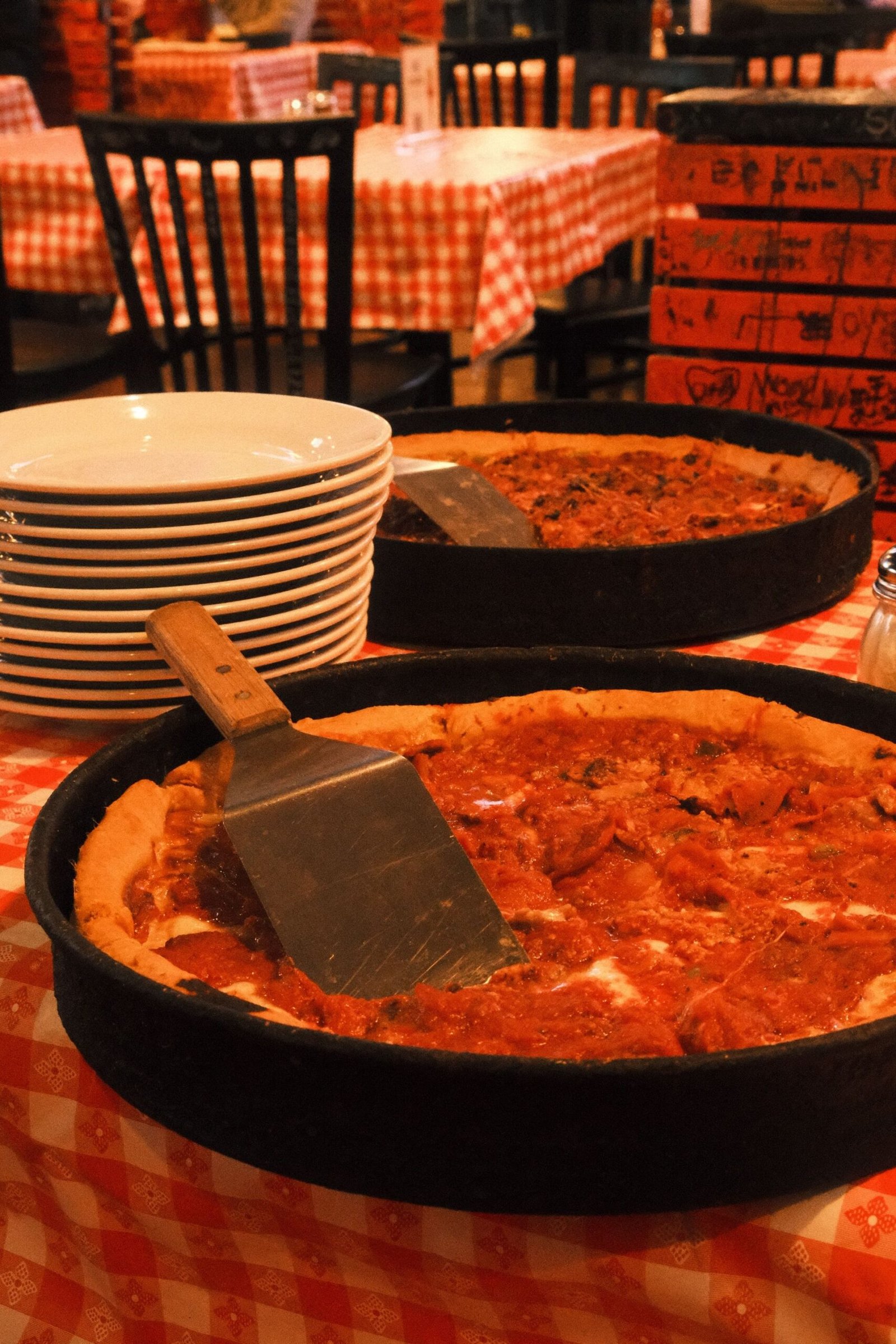
Chicago deep dish pizza is less a pizza and more an event. Where most pizzas are flatbreads with toppings, a real Chicago deep dish is a tall, buttery pie with a crisp, biscuit-like crust, a pound or more of low-moisture mozzarella laid directly on the dough, chunky tomato sauce spooned over the top, and toppings buried like treasure underneath. It eats with a fork, needs a good 45 minutes to bake, and feeds a crowd from a single pan.
The story of Chicago deep dish pizza begins in 1943 at Pizzeria Uno in Chicago, Illinois, where founder Ike Sewell and chef Ric Riccardo set out to create something different from the thin pizzas sweeping in from New York. Whether it was Sewell’s idea, Riccardo’s recipe, or a collaboration is still debated over Malört shots in Chicago bars — but the result was unmistakable: a pizza so deep it needed a cake pan, a crust enriched with butter and cornmeal, and a reverse assembly order that confused outsiders and delighted locals. What started as one restaurant’s experiment became a city’s identity, and today deep dish is one of the most argued-about, most misunderstood, and most rewarding pizza styles you can make at home.
🍕 Key Takeaways
- Chicago deep dish pizza was created in 1943 at Pizzeria Uno in Chicago, built in a deep round pan with a buttery, biscuit-like crust.
- The signature reverse layering goes cheese first, then toppings, then a chunky tomato sauce on top — this protects the cheese during the long bake.
- An authentic deep dish needs 35–45 minutes at around 425°F (218°C); the long, slow bake is what sets the tall crust and melts everything evenly.
- Cornmeal or semolina in the crust and butter (or oil) in the dough are what give deep dish its flaky, golden, almost-fried texture.
- Deep dish is not stuffed pizza: stuffed pizza has a second thin dough lid, while deep dish is open-faced with sauce on top.
- Rest the pie for 10–15 minutes after baking so the layers set — slice too early and the whole thing slumps.
- One 12-inch deep dish easily serves 6–8 people; leftovers reheat beautifully and the crust stays crisp for days.
The History of Chicago Deep Dish Pizza
Every great pizza style has an origin story wrapped in legend, and Chicago deep dish pizza is no exception. In 1943, in the middle of World War II, a former football star named Ike Sewell opened Pizzeria Uno at 29 E. Ohio Street in Chicago. Sewell was a Texan, not an Italian, and he had a specific idea: he wanted a pizza you could eat as a full meal, something hearty enough to stand on its own rather than a thin snack. Working with chef Ric Riccardo, he developed a pizza baked in a deep, round, well-oiled steel pan — closer in shape to a cake pan than anything used for pizza at the time.
The innovation wasn’t just the pan. To fill it, the dough had to be substantial, so they enriched it with butter and oil, giving it a flaky, biscuit-like quality that could stand up to a long bake. Then came the famous reverse layering. In a conventional pizza, sauce goes on the dough first, and cheese goes on last. In deep dish, sliced low-moisture mozzarella went directly onto the crust, toppings came next, and a thick, uncooked crushed-tomato sauce was spooned over everything. The logic was purely practical: with a bake time pushing 40 minutes, cheese exposed on top would burn long before the pie finished. Tucked under the sauce, it melted into a gooey, cohesive layer.
The pizza was an immediate hit, and Pizzeria Uno became a Chicago institution. As word spread, competitors followed. In 1971, Nancy’s Pizza introduced the stuffed pizza — a related but distinct style with a second thin layer of dough on top. Lou Malnati’s, founded in 1971 by Lou Malnati, became synonymous with the style thanks to its flaky butter crust and signature sausage patty pressed into the bottom of the pan. Gino’s East, Giordano’s, and others built their own followings, and deep dish became one of the defining dishes of Chicago, right up there with the hot dog and Italian beef.
Outside Chicago, deep dish has had a complicated reputation. Purists from Naples or New York have been known to scoff, insisting it’s a casserole, not a pizza. Chicagoans, for their part, mostly shrug — while noting that the thin, cracker-crust tavern-style pizza cut into squares is actually what locals eat more often week to week. Deep dish is the special-occasion pie, the birthday-dinner pie, the pie you order when out-of-town guests visit and someone inevitably says, “We have to get deep dish.” That duality is part of its charm: it’s simultaneously a tourist icon and a genuine local tradition.
If you want the full context of how regional American styles evolved, our New York style pizza guide covers the thin, foldable counterpart that was sweeping the country at the same time deep dish was born — and Chicago’s own tavern-style classic explains the cracker-thin pie that Chicagoans actually eat most often.
What Makes Chicago Deep Dish Different: The Defining Characteristics
The crust
Deep dish crust is closer to a savory pie crust or a buttery biscuit than to the chewy, airy rim of a Neapolitan or New York slice. It starts with bread flour or all-purpose flour, enriched with a generous amount of fat — butter, corn oil, or a combination — plus a small amount of cornmeal or semolina, which adds a golden color and a subtle crunch. The dough is pressed, not stretched, into a deep, heavily oiled round pan (2 inches deep is standard), climbing up the sides to form a tall, sturdy wall.
The fat does two jobs. First, it shortens the gluten strands, which is why the crumb is tender and flaky rather than chewy. Second, in a well-oiled pan, the exterior of the crust essentially fries as it bakes, developing a deep golden, crisp shell that can support the massive load of cheese and sauce. A well-made deep dish crust shatters slightly when you cut it, then gives way to a soft, buttery interior. If your deep dish crust tastes like regular pizza dough, something went wrong — it should taste richer, almost like a cornmeal-laced shortcrust.
For the dough science behind why fat changes texture so dramatically, see our pizza dough hydration guide — deep dish typically runs a moderate 55–60% hydration, much lower than the wet, airy doughs used for Neapolitan pizza.
The cheese
A true deep dish uses a serious amount of low-moisture, whole-milk mozzarella — often a full pound (450g) or more for a 12-inch pie — sliced or torn, never pre-shredded from a bag. Pre-shredded cheese is coated with anti-caking starch that prevents smooth melting, which matters enormously when the cheese is the structural foundation of the pie. Many Chicago shops use a blend that includes a little provolone or white cheddar for extra flavor and stretch.
The cheese goes directly onto the raw dough. This is the defining move of Chicago deep dish pizza: the reverse layering. The cheese layer insulates the crust from the wet sauce above it, preventing sogginess, and it protects the cheese from the long bake. By the time the pie comes out, the mozzarella has melted into a molten, cohesive sheet that holds everything together when you lift a slice.
Our guide to the best cheese for pizza breaks down which varieties melt best and why low-moisture mozzarella dominates here, while fresh vs low-moisture mozzarella explains exactly why fresh mozzarella is the wrong choice for this long-baked style.
The sauce
Deep dish sauce is chunky, bright, and assertively seasoned — crushed or diced tomatoes (many shops swear by California-grown canned tomatoes for their balanced sweetness), garlic, oregano, basil, and olive oil, cooked briefly or sometimes not at all before it goes on the pie. Because it sits on top and bakes exposed for 40 minutes, a raw or lightly cooked sauce concentrates and caramelizes in the oven, developing a deep, sweet-tart flavor that contrasts beautifully with the rich cheese below.
The sauce is applied in a generous layer over the toppings, often right up to — and slightly over — the crust wall. That edge of sauce that bakes against the hot pan caramelizes into the best bite of the pie. Seasoning matters more here than in quick-baked styles because the long bake amplifies everything; oregano that tastes subtle at 5 minutes can turn bitter at 40, so Chicago shops tend to favor basil, garlic, and the natural sweetness of the tomatoes.
The bake
A deep dish bakes at a moderate 400–425°F (200–218°C) for 35–45 minutes — dramatically longer than the 6–8 minutes of a New York pie or the 90 seconds of a Neapolitan. The lower temperature and longer time let heat penetrate to the center of the dense pie, set the thick crust, melt the buried cheese, and reduce the sauce. The pan itself is part of the equipment: dark, heavy steel pans conduct heat aggressively and give the crust its fried exterior. A light-colored aluminum cake pan works, but you’ll get a paler, softer crust.
This is where home bakers get nervous, and where getting a crispy pizza crust at home and understanding your pizza oven temperature make the difference between a soggy-bottomed disappointment and a shattering crust.
The Layering Order (And Why It Matters)
If you assemble a deep dish like a regular pizza — sauce first, cheese last — you will ruin it. Here’s the correct order, from the pan up, and the reason each layer sits where it does:
- Dough, pressed into an oiled deep pan. Press the dough up the sides to form a 2-inch wall. A thin layer of oil between dough and pan is what fries the crust.
- Sliced low-moisture mozzarella, edge to edge. Lay slices directly on the raw dough, overlapping slightly. This moisture barrier is the most important structural move in the whole pie.
- Toppings. Raw Italian sausage (pressed into a thin patty or crumbled), pepperoni, mushrooms, peppers, onions — whatever you like. Raw sausage is traditional and cooks fully in the long bake; just make sure it reaches 160°F (71°C) internally.
- Crushed tomato sauce, spooned over the top. Cover everything generously, spreading to the crust wall. The sauce protects the toppings and cheese from drying out.
- A dusting of grated Parmesan and dried oregano (optional but classic) over the sauce for the final flavor hit.
Why this works: heat reaches the top of the pie first and hardest. In a 40-minute bake, exposed cheese would brown, then burn, then turn bitter and rubbery. Tucked under sauce, it melts gently and evenly. The sauce, meanwhile, wants the direct heat — it reduces, sweetens, and develops those caramelized edges. The layering isn’t tradition for tradition’s sake; it’s thermodynamics.
One more rule: don’t overfill. A deep dish is already loaded; piling on extra toppings insulates the center and can leave the middle undercooked while the edges over-bake. If you’re cooking for a crowd, our guide to how much pizza to order per person will help you plan — and for this style, plan on one 12-inch pie feeding 6 to 8 people easily.
Chicago Deep Dish Recipe for Home Ovens
You don’t need a commercial deck oven or a Chicago zip code — a home oven, a deep round pan, and patience will get you 90% of the way there. This recipe makes one 12-inch deep dish.
The dough (make ahead)
- 3 1/4 cups (400g) bread flour or all-purpose flour
- 1/4 cup (30g) fine cornmeal
- 2 1/4 teaspoons (1 packet) instant yeast
- 1 1/2 teaspoons fine sea salt
- 1 teaspoon sugar
- 1 1/4 cups (295ml) lukewarm water
- 1/4 cup (60ml) melted butter, plus more for the pan
- 2 tablespoons olive oil
Whisk the dry ingredients, then mix in the water, melted butter, and olive oil until a shaggy dough forms. Knead 6–8 minutes until smooth and slightly tacky. The dough will feel richer and softer than a lean pizza dough — that’s the fat doing its job. Cover and let rise 1–2 hours until doubled, or cold-ferment overnight in the fridge for deeper flavor (our 72-hour cold ferment dough guide explains why slow fermentation improves everything, though even an overnight rest helps here).
Assembly and bake
- Preheat your oven to 425°F (218°C) with a rack in the lower third. Generously coat a 12-inch round cake pan or deep-dish pan (at least 2 inches deep) with butter or oil.
- Press the dough into the pan, working it evenly across the bottom and up the sides to form a tall wall. Let it rest 10 minutes if it springs back.
- Lay 1 pound (450g) of sliced low-moisture whole-milk mozzarella over the dough, edge to edge.
- Add toppings: 3/4 pound raw Italian sausage pressed into a thin layer, plus sliced mushrooms, green pepper, or onion if you like.
- Spoon 2 cups of crushed tomatoes (seasoned with minced garlic, a pinch of sugar, salt, and basil — see our homemade pizza sauce recipe for a no-cook version that works perfectly here) over the top, spreading to the crust wall.
- Finish with 1/4 cup grated Parmesan and a pinch of dried oregano.
- Bake 35–45 minutes, until the crust wall is deep golden brown and the sauce is bubbling and slightly caramelized at the edges. If the exposed crust browns too fast, tent the rim loosely with foil.
- Rest 10–15 minutes before slicing. This is non-negotiable — the cheese needs time to set, or your first slice will slide apart. Cut with a sharp chef’s knife, not a wheel, and serve with a spatula.
Troubleshooting your first deep dish
- Soggy bottom: Your pan wasn’t oiled enough, or your sauce was too watery. Drain canned tomatoes before crushing, and don’t skimp on the oil in the pan. A pizza steel under the pan adds bottom heat that crisps the base.
- Raw dough in the center: The pie was underbaked. Deep dish looks done before it is — check that the crust wall is genuinely deep golden, not just pale gold. An extra 5 minutes is safer than pulling it early.
- Burnt cheese on top: You layered cheese on top of the sauce. Remember the order: cheese first, sauce last.
- Tough crust: You over-kneaded or skipped the fat. Deep dish dough should be kneaded less aggressively than lean dough, and the butter is essential, not optional.
Deep Dish vs Stuffed Pizza vs Tavern Style: Know the Difference
Chicago has three distinct pizzas, and mixing them up is the fastest way to start an argument with a local.
Deep dish is the open-faced pie described in this guide: tall buttery crust, reverse layering, sauce on top, no lid. Pizzeria Uno, Lou Malnati’s, and Gino’s East are the canonical examples.
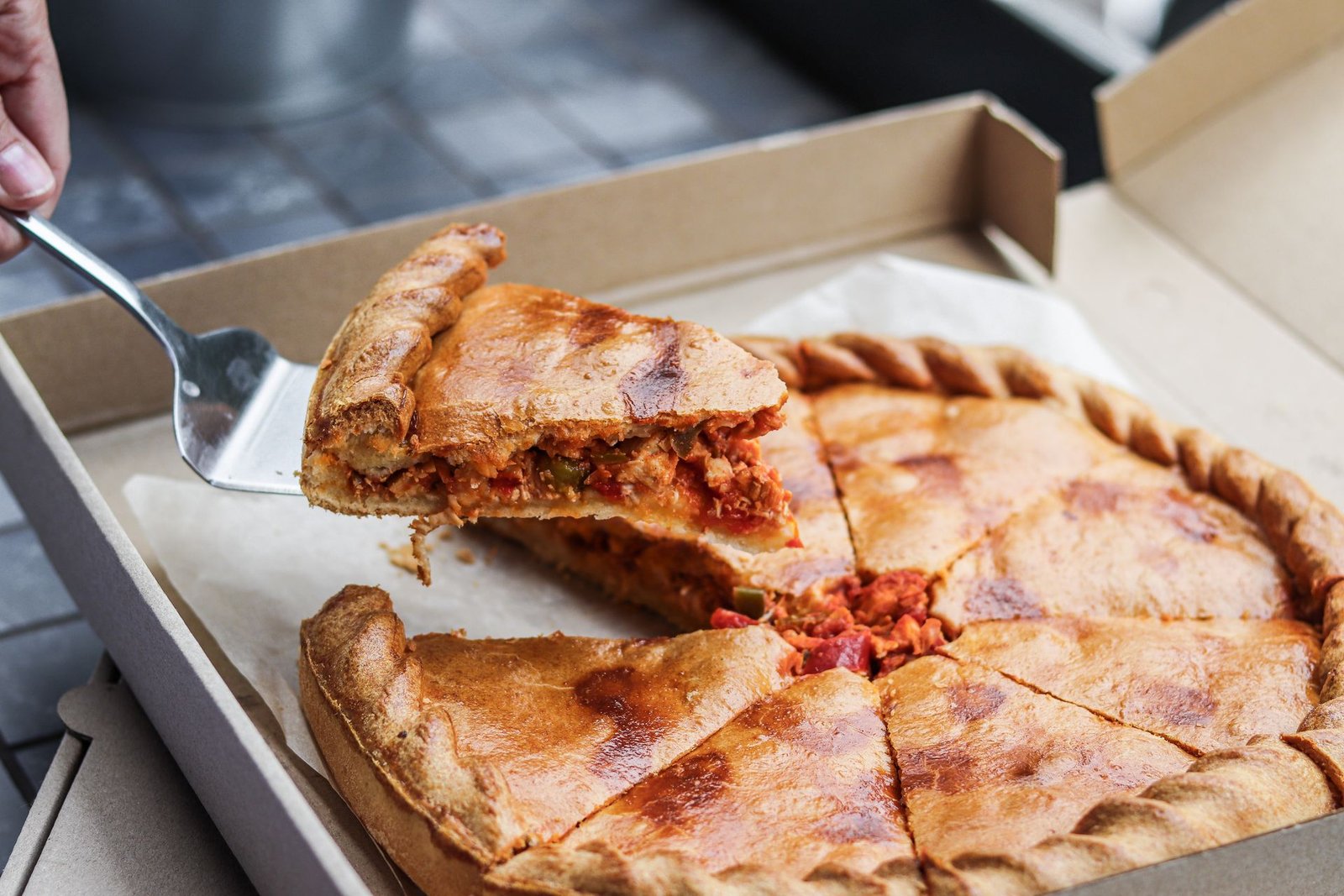
Stuffed pizza looks similar at first glance but is a different construction. It has a second thin layer of dough on top of the fillings — essentially a lid — with sauce spooned over that lid. It’s even deeper, even heavier, and slices like a savory layer cake. Giordano’s and Nancy’s are the famous stuffed-pizza shops. If your “deep dish” has dough on top, it’s stuffed.
Tavern style is Chicago’s other, older tradition: a cracker-thin crust, cut into squares (never triangles), topped edge to edge with modest cheese and toppings. It’s the everyday pizza of Chicago bars and family kitchens, and many locals will tell you it’s the real Chicago pizza. Our tavern-style pizza guide covers it in full.
The practical takeaway: if you want the tall, cheesy, fork-required experience, make deep dish. If you want something even more indulgent, look into stuffed. And if you want what Chicagoans actually eat on a Tuesday night, go tavern style.
Frequently Asked Questions
Is Chicago deep dish pizza actually pizza?
Yes — it’s a regional American pizza style with an 80-year history, and it follows the same fundamental formula (dough, sauce, cheese, baked) as every other style. The “casserole” jokes are mostly good-natured ribbing from thin-crust loyalists.
Can I make deep dish without a special pan?
Yes. A standard 12-inch round cake pan at least 2 inches deep works fine — dark, heavy pans give the best crust. A cast iron skillet also works beautifully and is arguably the easiest home option; our cast iron skillet pizza recipe uses the same heavy-pan principles. Avoid thin, flimsy pans, which can warp and bake unevenly.
Why is the sauce on top of a deep dish?
Two reasons: practicality and flavor. The cheese and toppings need protection from the 35–45 minute bake, and the sauce benefits from direct heat — it reduces, sweetens, and caramelizes. It’s the reverse of a standard pizza’s layering, and it’s the single most important technique in the style.
How long does deep dish take to bake?
Plan on 35–45 minutes at 425°F (218°C), plus 10–15 minutes of resting before slicing. Total time from oven to table is about an hour. This is not a weeknight-fast pizza — it’s a weekend project, and worth it.
What’s the best cheese for deep dish?
Sliced low-moisture, whole-milk mozzarella — a full pound or more per 12-inch pie. Avoid pre-shredded bagged cheese (the anti-caking starch ruins the melt) and fresh mozzarella (too much water for the long bake). A little provolone or white cheddar blended in adds flavor.
Conclusion
Chicago deep dish pizza rewards patience like no other style. The buttery, cornmeal-flecked crust, the pound of mozzarella melted under a bright, caramelized tomato sauce, the 45-minute bake that fills your kitchen with the smell of a Chicago pizzeria — it’s a project pie, and that’s the point. Master the reverse layering, respect the rest, and you’ll understand why this 1943 invention became a city’s signature. For your next deep dish session, start with the dough the night before, keep the layering order sacred, and don’t slice early. Your reward is the tallest, cheesiest slice in American pizza.
[…] casual bar food. Deep dish is what tourists order; tavern-style is what Chicagoans eat weekly. Our Chicago deep dish guide covers the thick side of the city’s pizza […]