

New York style pizza is the world’s most imitated pizza and, to millions of people, simply what “pizza” means in its purest, most iconic form: a large, thin, hand-tossed round with a crisp-yet-pliable crust, a tangy tomato sauce, a blanket of melted low-moisture mozzarella, and slices big enough to fold in half lengthwise and eat on the move. It was born when Neapolitan immigrants met American coal ovens and supersized appetites, and it conquered the planet one slice joint at a time — becoming the template for pizza across America and beyond.
The defining test of a New York slice is the fold. Pick it up by the crust end, fold it lengthwise, and it should hold its shape — the tip may droop slightly under the weight of cheese (New Yorkers consider a little tip-droop characterful, not a flaw), but it should never crack, never flop into a U, and never require a knife and fork. Achieving that structural sweet spot — thin enough to fold, strong enough to hold — is the entire technical challenge of the style, and it comes down to dough formula, bake temperature, and topping discipline.
This guide covers the full story: how New York style evolved from its Neapolitan roots, the exact characteristics that define it (crust, sauce, cheese, bake), a home-adapted recipe with weights in grams and cups, the technique for getting that foldable structure in a home oven, and how it differs from its cousins Neapolitan, Roman, and tavern styles. By the end, you will be pulling 16-inch pies from your oven that fold like they came from a Bleecker Street slice joint — crisp, chewy, and unmistakably New York.
🍕 Key Takeaways
- New York style evolved from Neapolitan pizza in early-1900s NYC coal ovens: bigger, thinner, baked longer at lower heat.
- Defining traits: 14–18 inch thin round, crisp-chewy crust with slight char, tangy cooked tomato sauce, low-moisture mozzarella, foldable slices.
- The dough uses bread flour, 58–62% hydration, plus oil and sugar — the oil tenderizes, the sugar aids browning at 550°F.
- Cold ferment 24–72 hours for authentic flavor and the extensibility needed to stretch a large thin skin.
- Home bake: pizza steel at oven max (500–550°F / 260–290°C), 6–8 minutes, with a well-floured peel and a confident launch.
- The fold test: a proper slice folds lengthwise without cracking; tip-droop is fine, flopping is not.
- It differs from Neapolitan (softer, smaller, hotter bake) and tavern style (cracker-crisp, cut in squares).
History: From Naples Coal to the Slice Joint
New York style begins with immigration. In the late 1800s and early 1900s, Neapolitans arrived in New York in huge numbers, bringing their pizza tradition with them. But everything about the new environment changed the pizza: American coal-fired bread ovens burned cooler and slower than Naples’ wood fires; American high-protein bread flour behaved differently than soft Italian 00; and American customers wanted bigger food, faster, cheaper. The pizza adapted — growing from a personal 10-inch pie to an 18-inch round, thinning out, and baking for 6–8 minutes at 550–650°F instead of 90 seconds at 900°F.
The traditional birthplace story centers on Gennaro Lombardi, a Neapolitan immigrant who opened what is widely considered America’s first pizzeria in Manhattan in 1905 (originally as a grocery with a coal oven). Lombardi’s coal-fired pies established the template, and his employees went on to found legendary pizzerias of their own — John Sasso and the lineage that led to John’s of Bleecker Street, Totonno’s in Coney Island — spreading the style across the boroughs. Whether or not Lombardi’s “first” claim survives historical scrutiny in every detail, the coal-oven lineage is real: New York style is coal-oven pizza adapted to gas ovens as the city modernized.
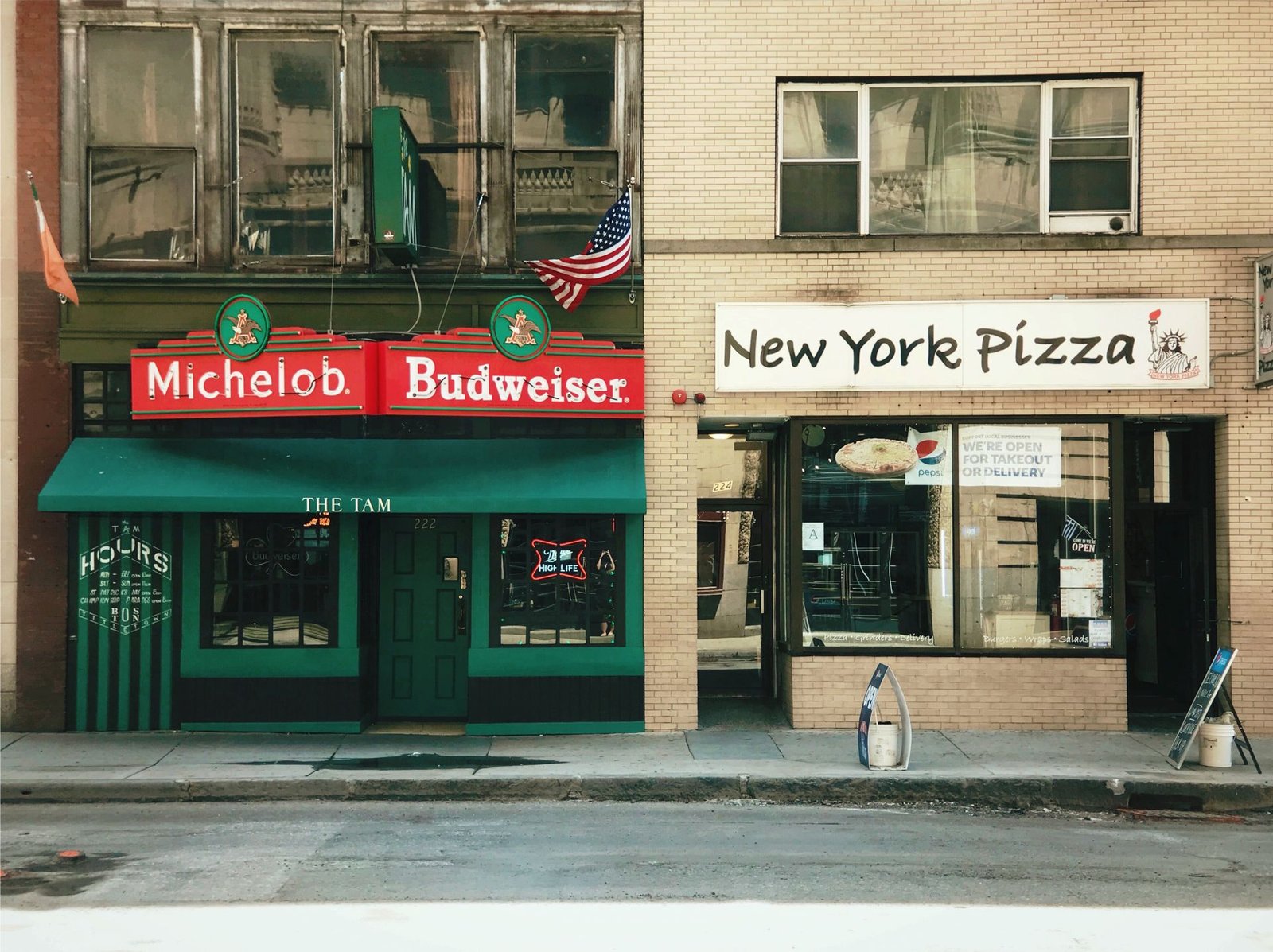
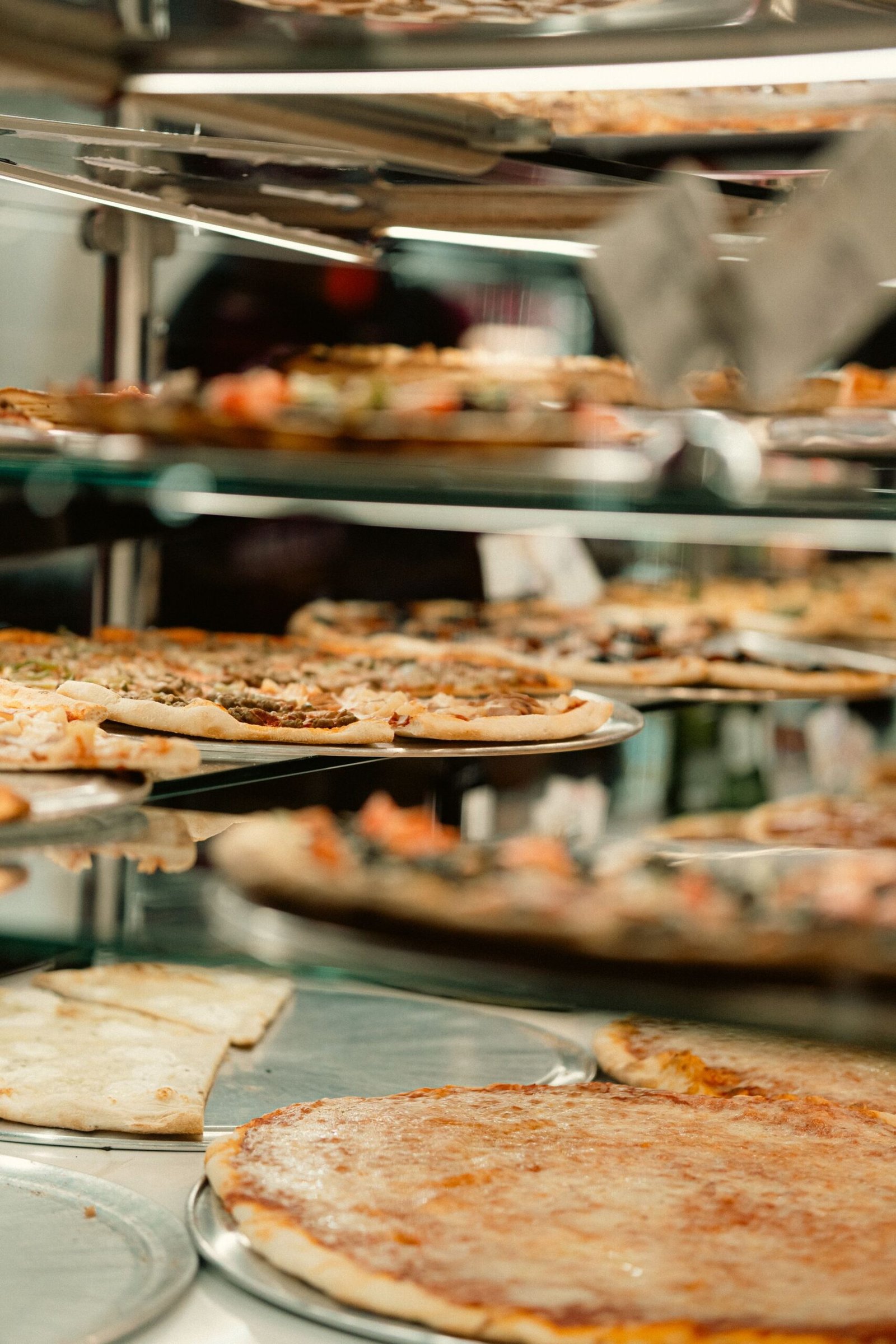
The slice joint — pizza sold by the slice, reheated to order — is New York’s great contribution to pizza culture. It emerged as the practical answer to feeding a fast-moving city: bake whole pies in the morning, sell slices all day, reheat each slice on the deck until the cheese re-melts and the bottom re-crisps. The reheating ritual actually improves the slice in some ways, driving off moisture for extra crispness. It also shaped the style’s economics: a whole 18-inch pie yields 8 generous slices, and the format turned pizza from a sit-down meal into street food you eat walking. Patsy’s, Joe’s, Di Fara, L&B Spumoni Gardens for the square Sicilian-adjacent slice — the pantheon is long, the arguments endless, and the style’s dominance so complete that “New York style” became the default American pizza abroad.
Defining Characteristics: Crust, Sauce, Cheese, Bake
The crust is the thesis statement: thin — genuinely thin, 3–4 millimeters in the center — with a modest puffy rim that is far less dramatic than Neapolitan’s cornicione. The texture is the famous crisp-chewy duality: the bottom and rim have crispness and light char from the hot deck, while the interior crumb stays soft and pliable. This pliability is structural, not a flaw — the slice must fold. The outer edge often shows a golden-brown color with darker char spots underneath, the signature of a hot steel or deck. An 18-inch pie is the classic size, cut into 8 wide slices; 14–16 inches is the practical home equivalent.
The sauce is cooked-tasting and assertive — a deliberate contrast to Neapolitan’s bright uncooked tomatoes. New York sauce is typically made from crushed tomatoes simmered with garlic, oregano, salt, olive oil, and sometimes a pinch of sugar, reduced to a thick, tangy, deeply savory layer. It is applied moderately — enough to taste in every bite, never so much that it sogs the thin crust. The oregano note is a signature; where Neapolitan uses fresh basil, New York leans on dried oregano’s punchier, more American flavor.
The cheese is low-moisture whole-milk mozzarella, shredded — never fresh mozzarella, which would flood the thin crust. It is applied edge-to-near-edge in an even layer that melts into full coverage with light browning in spots. Many slice joints blend in a little provolone for sharpness or pecorino for saltiness, and a snowfall of grated parmesan after baking is traditional. The cheese layer is generous but not blanketing; you should see sauce peeking through in places. Whole-milk (not part-skim) is the authentic choice — it melts creamier and browns better, and the style was built on it.
The bake happens at 550–650°F (290–340°C) in a deck oven for 6–8 minutes — hot enough to crisp the thin crust through, cool enough (versus Neapolitan’s 900°F) to melt the cheese fully and cook the toppings without incinerating them. The bottom should emerge golden-brown with char spots; the top should show melted, lightly browned cheese with no pallid patches. In a home oven, a preheated pizza steel at maximum temperature replicates the deck’s conductive heat, and the bake stretches to 6–9 minutes. Rotate the pie once halfway through for even browning, since most home ovens have hot spots.
New York Style Pizza Recipe for Home Ovens
This recipe makes two 14–16 inch pizzas — the largest practical size for a home oven and peel. All weights in grams with cup equivalents.
Dough: 500 g bread flour (about 4 cups; high-protein bread flour, 12.5–13% protein, is the authentic choice); 300 g water (60%, about 1¼ cups) at 70–75°F (21–24°C); 10 g fine sea salt (2 tsp); 5 g instant yeast (1½ tsp) — less than same-day doughs because of the long cold ferment; 12 g olive oil (1 tbsp, 2.4%) — tenderizes the crumb and aids browning; 8 g sugar (2 tsp, 1.6%) — feeds the yeast over the long ferment and promotes browning at home-oven temps.
Method. Mix all ingredients and knead 8–10 minutes until smooth and elastic — New York dough should pass the windowpane test, since the thin 16-inch stretch demands strong, well-developed gluten. Bulk ferment 1 hour at room temperature, then divide into two balls of about 415 g each. Cold ferment the balls in lightly oiled, covered containers for 24–72 hours (48 hours is the sweet spot — flavor deepens remarkably between day 1 and day 2). Longer than 72 hours risks over-fermentation; freeze balls you cannot bake in time.
Sauce (makes enough for 2–3 pizzas). One 28-ounce (800 g) can crushed tomatoes; 2 cloves garlic, minced; 1 teaspoon dried oregano; 1 teaspoon salt; 1 tablespoon olive oil; ½ teaspoon sugar; pinch of red pepper flakes (optional). Simmer 20–25 minutes until thick enough that a spoon leaves a trail — New York sauce should be notably thicker than Neapolitan’s. Cool before using; sauce the pizza with about ⅓–½ cup per 16-inch pie.
Cheese and toppings. 8–10 ounces (225–285 g) low-moisture whole-milk mozzarella per pizza, shredded by hand or on a box grater (pre-shredded works but melts less smoothly due to anti-caking starch). Classic toppings: pepperoni (our crispy-cupped recipe), sausage, mushrooms (pre-cooked), peppers. Keep toppings moderate — the thin crust punishes overload.
The bake. Two hours before baking, move dough balls to room temperature. Place a pizza steel on a middle rack and preheat at maximum (500–550°F / 260–290°C) for 60 minutes. Stretch each ball to 14–16 inches — the long cold ferment makes the dough wonderfully extensible; it should stretch with minimal spring-back. Transfer to a well-floured peel (semolina blend), sauce, cheese, and top quickly. Launch onto the steel and bake 6–8 minutes, rotating once, until the bottom is golden-brown with char spots and the cheese is melted with light browning. Rest 2–3 minutes on a wire rack, slice into 8, and fold.
The Fold and the Slice: Technique Notes
Stretching a 16-inch skin is the style’s core skill, and it demands properly conditioned dough — which is why the cold ferment matters so much. Cold-fermented New York dough is extensible and relaxed; same-day dough fights you past 12 inches. Give the balls their full 2-hour room-temperature warm-up, flour generously, define the rim, and use the knuckle-and-gravity method, rotating constantly for evenness. Check with the light test: the center should be even and thin but not translucent — New York style is thin, not fragile.
Launching a 16-inch pizza is the moment of truth. A standard home peel is 14 inches wide, so a 16-inch skin overhangs — work quickly and confidently, or scale to 14-inch pies while learning (a 350 g ball makes a comfortable 14-inch pizza on a standard peel, and the technique is identical). The shake test is mandatory: the dressed pizza must slide freely on the peel before it approaches the oven. If it sticks, lift and re-flour rather than forcing the launch — a folded-over launch ruins the pie and possibly your oven’s heating element.
The fold test is your quality control. A proper slice, picked up by the crust end and folded lengthwise, holds its shape with the tip drooping slightly — that slight droop under the cheese’s weight is authentic and beloved, the sign of a slice with real cheese on it rather than a stingy sprinkle. If the slice cracks when folded, the crust over-baked or the dough was too dry. If it flops into a U and will not hold the fold, the center was too thick, the toppings too wet, or the bottom under-baked. Adjust one variable at a time and re-test; the fold never lies.
Reheating deserves mention because it is part of the style’s DNA. Day-old New York pizza reheats magnificently: 5–6 minutes on a preheated steel or stone at 500°F, or the skillet method (medium heat, lid on briefly, then uncovered to re-crisp). The reheat drives off moisture and can make the bottom crisper than it was fresh — which is exactly why slice joints built their business on it. Never microwave a New York slice unless you enjoy chewing warm cardboard; the microwave steams the crust into submission in ninety seconds flat.
Building Your Slice-Joint Setup at Home
You do not need commercial equipment to make serious New York style pizza, but a few targeted purchases close most of the gap between home and slice joint. The pizza steel is first — a ¼-inch pizza steel (about 14×16 inches) costs less than a few delivered pizzas and lasts forever. Second is a wooden peel for launching and a metal peel (or the back of a sheet pan) for retrieving; wood’s porous surface releases dough more readily, which matters when you are sliding a 16-inch skin. Third, an oven thermometer: most home ovens run 25–50°F off their dials, and New York style lives or dies on true 550°F heat.
Beyond gear, adopt the slice-joint workflow. Mix dough on Sunday for Wednesday’s pizza night — the cold ferment does the flavor work while you do nothing. Ball the dough the night before baking so the balls are relaxed and ready. Prep all toppings before the oven heats: sauce made, cheese shredded, pepperoni sliced, vegetables pre-cooked. On bake night, the sequence is mechanical: oven on, steel heating, balls warming, station set, stretch, top, launch, bake, rest, slice. The whole active bake takes under 30 minutes for two pizzas once the system is in place.
One more slice-joint secret: bake one pizza at a time. Home ovens recover heat slowly, and launching a second pizza onto a steel that has not reheated gives you a pale bottom. Give the steel 10–15 minutes between pizzas to come back to temperature — use the gap to stretch and top the next one. Professionals with deck ovens do not face this; you do, and patience between pies is the fix. Two great pizzas beat three mediocre ones every time.
New York vs. Similar Styles
New York vs. Neapolitan (full Neapolitan guide): the parent and the child. Neapolitan is smaller (10–12 inches), softer, wetter-centered, baked 90 seconds at ~900°F in wood ovens, made with 00 flour and no oil or sugar, eaten with a knife and fork. New York is bigger (14–18 inches), crisp-chewy, baked 6–8 minutes at ~600°F, made with bread flour plus oil and sugar, and defined by the fold. New York kept the round shape and the tomato-mozzarella-basil DNA but rebuilt everything else for American ovens and appetites.
New York vs. New Haven (apizza). New Haven’s famous style — Sally’s, Pepe’s, Modern — is New York’s close cousin with a distinct personality: oblong rather than round, baked in coal ovens hot enough to char aggressively, with a chewier, more irregular crust and the signature white clam pie. Think of it as New York style pushed further toward char and chew by coal heat. The dough formulas overlap heavily; the oven and the shape differentiate them.
New York vs. tavern style. Chicago tavern style is New York’s crisp opposite: cracker-thin, cut in squares (“party cut”), with toppings edge-to-edge and no foldable structure whatsoever. Where New York is pliable, tavern is shattering; where New York slices are wide triangles, tavern pieces are small squares designed for bar snacking. Both are thin, but the eating experience diverges completely.
New York vs. Roman tonda. Rome’s round pizza is rolled paper-thin and baked to a uniform crisp — closer to a cracker than to bread. New York keeps a soft, foldable interior that Roman tonda deliberately eliminates. If you love New York’s chew, Roman tonda will taste austere; if you love crackle, New York will taste soft. Different philosophies of thinness.
Frequently Asked Questions
Why won’t my New York style pizza fold without cracking?
Three usual causes: the crust over-baked (pull it 1–2 minutes earlier — golden, not dark brown), the dough was under-hydrated (stay at 60%+ with bread flour), or the center was stretched too thin relative to the rim. A proper NY slice is thin but not fragile — about 3–4 mm in the center. Also check that you are using bread flour, not all-purpose; the protein difference matters for pliability.
Can I make New York style pizza without a pizza steel?
You can, but the bottom will not match a steel-baked pie. Alternatives in descending order: a preheated pizza stone (good, slightly less conductive), a preheated cast-iron pizza pan or inverted sheet pan (decent), or baking directly on the oven rack (workable for smaller pies). The steel is the closest to a deck oven’s conductive heat and worth the investment if NY style is your goal.
How long should I cold ferment New York dough?
24–72 hours, with 48 hours the sweet spot for flavor. Below 24 hours, the dough works but tastes one-dimensional. Past 72 hours, over-fermentation risk rises — the dough gets slack and sour. Use less yeast (5 g per 500 g flour) to keep the long ferment controlled, and freeze any balls you cannot bake by day 3.
What’s the difference between New York style and regular American pizza?
“Regular American pizza” usually means the thicker, softer hand-tossed style of chain pizzerias — medium thickness, soft crust, baked on screens or pans. New York style is specifically thinner, larger, crisp-chewy, deck-baked, and foldable. Chains borrowed the look but rarely the texture; a true NY slice folds, a chain slice flops or cracks.
Should New York pizza have a puffy rim like Neapolitan?
No — the rim (sometimes called the “cornicione” by NY pizzaioli too, or just the crust end) should be modest: slightly puffy, golden, with some char, but nowhere near Neapolitan’s dramatic rise. An over-puffy rim on a NY pie usually means the dough was over-proofed or the rim was not pressed enough during stretching. Define the rim, but keep it restrained.
Why do slice joints taste better than my homemade version?
Three factors: deck ovens with intense bottom heat (replicated at home with a steel), dough fermented 48+ hours (entirely replicable), and the reheat — slice joints reheat each slice to order, which re-crisps the bottom. Try reheating your homemade slices on a hot steel for 3–4 minutes; you may be surprised how close it gets. The remaining gap is usually oven heat, not skill.
[…] New York style is the opposite philosophy: a yeasted, chewy, foldable thin crust with a puffy rim, cut into large triangles. Where St. Louis is a cracker, New York is bread. See our New York style pizza guide. […]