

There is a special kind of disappointment that comes from pulling a beautiful vegetable pizza out of the oven only to find a puddle of liquid pooling in the center. Learning how to keep pizza from getting soggy is mostly about learning how to handle vegetables, because vegetables — mushrooms, zucchini, peppers, spinach, tomatoes — are the number-one moisture culprits on a home pizza. The good news is that the fix is not complicated. It is a handful of small habits that, taken together, keep the crust crisp and the toppings vibrant instead of waterlogged.
The core principle is simple: a pizza bakes for a very short time, usually six to ten minutes in a hot home oven, and that is not long enough for a thick layer of raw vegetables to release all its water, let it evaporate, and still cook through. So your job is to remove as much water as possible before the vegetables ever meet the dough. Pre-cooking, salting, draining, and slicing thin are the four pillars. Once you build these habits into your routine, you can load up a veggie pizza with confidence.
This guide walks through exactly why vegetables waterlog a pizza, which vegetables are the worst offenders, and the practical techniques — from salting and sweating to cheese barriers and hotter baking — that professional pizzerias use to keep vegetable pies crisp. These methods work whether you are making a veggie supreme loaded with toppings, experimenting with new topping combinations, or troubleshooting a pie that came out soupy last time.
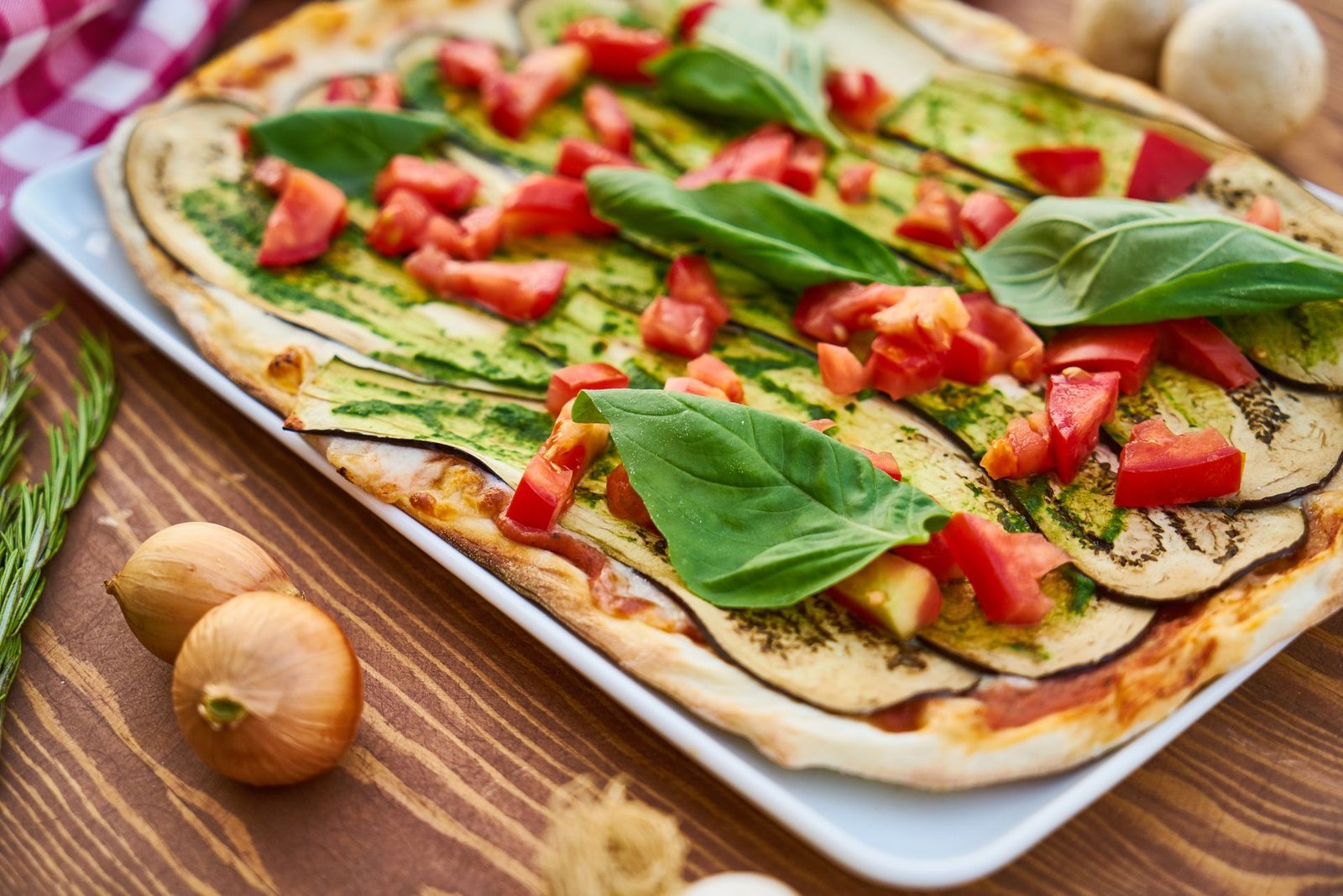
🍕 Key Takeaways
- Vegetables release water as their cell walls break down in the heat; a 6–10 minute bake is too short for all that moisture to evaporate.
- Pre-cook high-moisture vegetables (mushrooms, zucchini, spinach, peppers) by sautéing, roasting, or grilling before they go on the pizza.
- Salt sliced vegetables like zucchini, eggplant, and tomatoes 15–30 minutes ahead, then blot or rinse and pat dry — osmosis does the work for you.
- Slice vegetables thin and spread them in a single, even layer; thick chunks steam instead of roasting.
- Keep sauce thin and put down a light layer of cheese first — it acts as a moisture barrier between wet toppings and the dough.
- Bake as hot as your oven allows on a fully preheated steel or stone so the crust sets before moisture can soak in.
- Pat everything dry — even pre-cooked vegetables — right before topping, and resist the urge to overload.
Why Vegetables Make Pizza Soggy: The Moisture Problem
Fresh vegetables are mostly water. Mushrooms are around ninety percent water by weight; zucchini, peppers, spinach, and tomatoes are not far behind. Inside the oven, heat breaks down the vegetables’ cell walls, and all that water is released at once — directly onto your dough and sauce. In a long bake, like a lasagna or a casserole, that moisture has time to evaporate or be absorbed by the surrounding dish. On a pizza, where the bake is over in minutes, it has nowhere to go. It pools in the middle of the pie, turns the sauce watery, and keeps the center of the crust from ever crisping.
There is a second, sneakier problem. As vegetables release steam, that steam gets trapped under a blanket of melting cheese. Instead of roasting, your toppings end up steaming — which is why raw mushroom slices can come out rubbery and pale instead of golden, and why spinach wilts into a gray, watery mat. Understanding this is the key to learning how to keep pizza from getting soggy: every technique in this guide exists to get water out of the vegetables before baking, or to get the crust to set before water can soak in.
The worst offenders (and why)
Some vegetables are far wetter than others, and knowing the ranking helps you decide where to spend your effort:
- Fresh mushrooms — the classic offender. They release a surprising amount of liquid and go rubbery if they steam under cheese.
- Zucchini and summer squash — extremely high water content; raw slices on a pizza are a recipe for a puddle.
- Spinach and leafy greens — fresh spinach wilts down to almost nothing and releases all its water at once.
- Bell peppers — moderately wet; thick raw chunks stay crunchy while releasing water, while thin strips fare better.
- Fresh tomatoes — juicy by design; fine in moderation, disastrous in thick slices with seeds.
- Onions — less wet than the rest, but raw onion releases moisture and benefits from a quick sauté.
Drier vegetables like roasted red peppers (already cooked), olives, artichoke hearts (drained), and sun-dried tomatoes cause almost no trouble. When in doubt, ask: would I eat this raw in a salad without any liquid running out? If the answer is no, pre-treat it.
Pre-Cook (or at Least Pre-Treat) Your Vegetables
This is the single most impactful section of this guide. Pre-cooking vegetables before they go on the pizza removes the bulk of their moisture and, as a bonus, deepens their flavor. A quick sauté or roast concentrates taste through browning, so your pizza ends up more flavorful as well as drier. Choose the method that fits each vegetable.
Sauté and sweat in a hot pan
For mushrooms, peppers, onions, and zucchini, a fast sauté in a hot skillet with a little olive oil is the gold standard. Use high heat and do not crowd the pan — crowding drops the temperature and the vegetables steam instead of sear. Cook mushrooms until they give up their liquid and it evaporates, then keep going until the edges start to brown. That browning is flavor you cannot get any other way. For zucchini, two to three minutes per side in a ripping-hot pan is enough; you want color, not mush. Let sautéed vegetables cool slightly and blot any residual oil before topping.
Salt, rest, and drain
Salting draws water out of vegetables through osmosis, and it works beautifully on zucchini, eggplant, and fresh tomatoes. Slice them, salt generously on both sides, and let them rest in a colander for fifteen to thirty minutes. You will be amazed — and slightly alarmed — at how much liquid pools underneath. After resting, rinse briefly to remove excess salt (optional but recommended for eggplant), then pat thoroughly dry with paper towels or a clean kitchen towel. This technique also firms up the vegetable’s texture, so zucchini slices hold their shape on the pizza instead of collapsing.
Roast or grill in batches
Roasting at high heat (around 220°C / 425°F) on a sheet pan is the most hands-off method and ideal when you are prepping vegetables for several pizzas. Spread sliced vegetables in a single layer with space between them, toss lightly with oil and salt, and roast until they soften and the edges caramelize — usually fifteen to twenty minutes depending on the vegetable. Grilling works the same way and adds a smoky note that is fantastic on pizza. Roasted vegetables have already shed their moisture, so they go straight onto the pie with no further treatment except a quick pat-dry.
Wring out greens like you mean it
Spinach, chard, and other leafy greens need special handling. If using frozen spinach, thaw it completely and squeeze it dry in handfuls — then squeeze again. You want it almost crumbly. For fresh spinach, a thirty-second blanch followed by an ice bath, then a hard squeeze in a clean towel, gives you dense, dry greens that will not waterlog the pizza. Alternatively, scatter fresh baby spinach over the pizza after baking; the residual heat wilts it perfectly with zero sogginess risk.
Build the Pizza to Resist Moisture
Even perfectly pre-treated vegetables can make a pizza soggy if the pie is built badly. How you layer sauce, cheese, and toppings matters enormously, and these construction habits are the difference between a crisp-bottomed vegetable pizza and a floppy one. If you are working from a favorite veggie pizza formula, these tweaks slot right in.
Use less sauce — and thicker sauce
Most home pizza makers use far too much sauce. For a 12-inch pizza, two to three tablespoons is plenty; the sauce should be a thin schmear, not a deep red lake. A watery sauce is the fastest route to a soggy center, so if your homemade pizza sauce seems thin, simmer it down until it mounds on a spoon. Crushed canned tomatoes should be drained or reduced — the liquid in the can is not your friend here. And keep the sauce away from the outer edge; a clean rim (the cornicione) bakes up puffy and crisp.
Put cheese down first as a moisture barrier
Here is a pizzeria trick that costs nothing: spread a light layer of shredded low-moisture mozzarella directly on the sauce before adding vegetables, then add a little more cheese over the top of the vegetables to finish. The bottom cheese layer melts into a fat-rich barrier that physically blocks vegetable juices from reaching the dough. This is also why the choice between fresh and low-moisture mozzarella matters so much for wet-topped pies — fresh mozzarella releases its own water, while low-moisture mozzarella stays put and shields the crust.
Slice thin and spread in a single layer
Thick chunks of raw vegetables are the enemy: their interiors never get hot enough to release moisture in the time available, so they stay crunchy and weep liquid. Slice everything thin — mushrooms about 3mm, zucchini in thin half-moons, peppers in thin strips. Then spread toppings in a single, even layer with small gaps between pieces. Gaps let steam escape and hot air circulate, so the vegetables roast instead of steaming. Piling toppings into a mountain traps steam underneath and guarantees a soggy middle, no matter how well you pre-cooked.
Finish wet toppings after the bake
Some toppings simply do not belong in the oven at all. Fresh arugula, basil, cherry tomato halves, and delicate greens are far better scattered over the pizza the moment it comes out. The residual heat wilts them just enough while their juices stay on top of the finished pie rather than soaking into it. This is standard practice in Italy — a margherita gets its basil after baking, not before — and it is the easiest sogginess prevention of all for the most delicate vegetables.
Bake Hot and Fast on a Properly Preheated Surface
Everything above is about reducing the water that reaches the dough. This section is about making sure the dough can defend itself against whatever moisture remains. A pizza crust sets through two things: bottom heat that crisps and browns the underside, and ambient heat that cooks the top. If the bottom is under-heated, it stays pale and absorbent — a sponge waiting for vegetable juices.
Preheat your steel or stone for a full hour
This is non-negotiable for wet-topped pizzas. A pizza steel or stone needs 45 to 60 minutes at your oven’s maximum temperature to become fully saturated with heat. A surface that has only preheated for fifteen minutes feels hot, but it does not hold enough thermal energy to crisp the bottom of the crust before the top finishes. When the pizza hits a truly screaming-hot surface, the bottom sets almost immediately, forming a crisp barrier that resists soaking. Our guide to getting a crispy crust at home covers this in more depth, and it matters doubly for vegetable pizzas.
Use your oven’s maximum temperature
Most home ovens top out around 260–290°C (500–550°F). Use all of it. Higher heat means a shorter bake, which means less time for vegetables to release water before the crust is done. If your oven has a broiler, consider finishing the pizza under it for the last 60–90 seconds to drive off surface moisture and spot-char the vegetables — just watch it like a hawk, because the line between charred and burnt is thin. The principles of baking hotter and shorter apply here even though you are using a home oven.
Ventilate the oven
Steam is the enemy of crispness, and a closed oven traps it. If your oven allows it, crack the door open for the last minute of baking, or bake on a lower-middle rack where hot air circulates freely. Some bakers swear by switching the oven to convection (fan) mode for the final minutes to blow moisture off the surface. Whatever your setup, the goal is the same: give steam somewhere to go instead of letting it settle back onto the pizza.
Do not bake two wet pizzas at once
Two vegetable pizzas in the oven double the steam load, and most home ovens cannot vent it fast enough. Bake one at a time, and let the oven recover for five to ten minutes between pies so the steel or stone reheats fully. Patience here is the difference between two crisp pizzas and two limp ones.
What About Frozen, Canned, or Jarred Vegetables?
Convenience vegetables can absolutely work on pizza — you just need to treat them correctly, because they often carry more water than fresh.
Frozen vegetables must be thawed and drained before use, never scattered on frozen. Thaw in a colander, then squeeze or press out the liquid. Frozen peppers and onions are actually convenient for pizza once thawed and patted dry, because the freezing process has already broken down their cell walls — a quick sauté finishes the job. Frozen spinach, as mentioned, needs the full squeeze-dry treatment.
Canned and jarred vegetables — artichoke hearts, roasted red peppers, sun-dried tomatoes, olives, canned mushrooms — should be drained thoroughly and patted dry. Marinated artichokes and sun-dried tomatoes packed in oil are already low-moisture and pizza-ready after a quick blot; water-packed versions need more draining. Avoid canned mushrooms if you can: they are spongy and bland compared to fresh mushrooms that you sauté yourself in five minutes, and they are one of the pizza toppings worth skipping in favor of the real thing.
Jarred roasted red peppers deserve a special mention as a near-perfect pizza vegetable: already cooked, flavorful, and relatively dry after draining. Blot them well and they behave beautifully.

Putting It All Together: How to Keep Pizza from Getting Soggy Every Time
If all of this feels like a lot, here is the whole system condensed into the order you would actually do it on pizza night:
- 30 minutes before: salt zucchini, eggplant, or tomato slices and leave them in a colander.
- While the oven preheats (45–60 min): sauté mushrooms, peppers, and onions in batches over high heat; roast anything else on a sheet pan.
- Rinse and pat: rinse salted vegetables, then pat everything dry — sautéed, roasted, drained, all of it.
- Stretch the dough and keep it on the thinner side in the center; a thick, doughy center plus wet toppings is the worst combination.
- Sauce thin — two to three tablespoons, kept away from the rim.
- Cheese barrier first, then a single even layer of thin-sliced vegetables, then a light final sprinkle of cheese.
- Launch onto a fully preheated steel or stone at maximum oven temperature; finish under the broiler if needed.
- Cool on a wire rack for two to three minutes before slicing — this lets residual steam escape from underneath instead of condensing on the pan and re-softening the bottom.
Follow that workflow and you will know how to keep pizza from getting soggy every single time, no matter how generously you load the vegetables.
Frequently Asked Questions
Why is the middle of my pizza soggy but the edges are fine?
The center is the last part of the pizza to cook and the place where moisture pools. Vegetable juices and thin sauce migrate toward the middle as the pizza bakes. Fix it by using less sauce, slicing vegetables thinner, keeping toppings in a single layer, and making sure your baking surface is fully preheated so the center bottom sets quickly.
Should I cook vegetables before putting them on pizza?
For high-moisture vegetables — mushrooms, zucchini, peppers, spinach, eggplant — yes, almost always. A quick sauté, roast, or salt-and-drain removes most of the water that would otherwise end up in your crust. Drier toppings like olives, drained artichokes, and sun-dried tomatoes can go on raw without trouble.
Does less cheese help prevent a soggy pizza?
Moderation helps, but the trick is placement, not just quantity. A light layer of low-moisture mozzarella directly on the sauce acts as a fat barrier that shields the dough from vegetable juices. Overloading cheese on top, though, traps steam underneath and makes things worse — so keep the top layer light.
Can I use a pizza screen to reduce sogginess?
Yes. A pizza screen allows hot air to reach the bottom of the crust and lets steam escape downward, which helps with wet toppings. Start the pizza on the screen, then slide it directly onto the hot stone or steel for the last couple of minutes for maximum bottom crispness.
Why do my mushrooms turn rubbery on pizza?
Rubbery mushrooms are steamed mushrooms. Thick raw slices trapped under cheese release their water into a sealed, steamy environment and never get hot enough to brown. Slice them thin (about 3mm), sauté them first until they release their liquid and start to brown, and spread them in a single layer with gaps.
Is it better to put vegetables under or over the cheese?
Both positions have a role. A light layer of cheese under the vegetables protects the crust from moisture. A light sprinkle of cheese over the vegetables helps them brown and anchors them to the pie. What you want to avoid is burying raw, wet vegetables under a thick cheese blanket — that is how you get steamed, soggy toppings.
[…] and cheese. That last point is the real superpower: it’s why par-baking is the answer to soggy pizza in loaded styles, and why it rescues pizzas topped by enthusiastic guests who don’t […]