

Every great pizza is a combination — and the difference between a random pile of toppings and a truly memorable pie is intention. The best pizza topping combinations balance flavors (salty, sweet, acidic, rich), textures (crisp, creamy, chewy), and moisture (because a great combination that turns the crust soggy isn’t great at all, no matter how good it sounds). Whether you’re a pepperoni purist or the kind of person who puts figs and prosciutto on everything, this list has your next pizza night covered — and probably the five after that.
We’ve organized these 25 combinations from timeless classics through modern favorites to genuinely creative territory — each with the specific cheeses, sauces, and prep notes that make it work reliably in a home oven. Many link to our full recipes where we’ve developed them in depth, so you can go from inspiration to a tested, step-by-step method in one click. And at the end, you’ll find the principles for inventing your own combinations, so this list becomes a starting point for your own creativity rather than a limit.
🍕 Key Takeaways
- The best pizza topping combinations balance salty, sweet, acidic, and rich flavors — plus contrasting textures.
- Limit toppings to 3–5 per pizza; more than that muddies flavors and risks a soggy crust.
- Pre-cook watery toppings (mushrooms, spinach, fresh sausage) so they don’t flood the pizza in the oven.
- Delicate toppings (arugula, prosciutto, fresh herbs, burrata) go on after baking, not before.
- Match sauce to toppings: bright tomato for classics, white garlic bases for rich combos, BBQ for smoky-sweet ones.
- Every combination below works on a standard 12-inch pizza with 6–8 oz of cheese — scale up for crowds.
- When inventing your own, follow the formula: base + 1 star + 1–2 supporters + 1 finisher.
The Best Pizza Topping Combinations: The Classics (1–8)
These are the combinations that built pizza’s global reputation. Master these before experimenting — they’re classics because the flavor logic is flawless.
1. Margherita. Tomato sauce, fresh mozzarella, fresh basil, olive oil. The original, from Naples 1889: three ingredients in the colors of the Italian flag. Simplicity is the whole point — with so little to hide behind, every ingredient must be excellent. Our classic Margherita pizza recipe covers the authentic method.
2. Pepperoni. Tomato sauce, low-moisture mozzarella, pepperoni — ideally natural-casing stick pepperoni sliced thick so the edges crisp into savory cups that hold their rendered fat. America’s favorite for good reason: the pepperoni’s spice and fat against the clean mozzarella is a perfect two-note harmony. Our homemade pepperoni pizza recipe nails the cup-and-char technique.
3. Quattro Formaggi (Four Cheese). Mozzarella, fontina, gorgonzola, Parmigiano-Reggiano — no tomato sauce, just olive oil or a light white base. Each cheese does a job: mozzarella melts, fontina creams, gorgonzola punches, Parmigiano finishes. Our four cheese pizza recipe balances the blend.
4. Hawaiian. Tomato sauce, mozzarella, ham, pineapple. Controversial, beloved, and — when done right — genuinely delicious: the ham’s saltiness against the pineapple’s juicy sweetness is a textbook sweet-salty balance. The key is restraint: modest pineapple, well-drained, so it doesn’t flood the pie. Our Hawaiian pizza recipe does it justice.
5. Veggie Supreme. Tomato sauce, mozzarella, bell peppers, red onion, mushrooms, black olives — the loaded classic. Colorful, satisfying, and the ultimate test of moisture management, since every vegetable releases water in the oven. Pre-cook the mushrooms and peppers first, slice everything thin, and don’t overload. Our veggie supreme pizza recipe shows how to keep it crisp instead of soggy.
6. Meat Lovers. Tomato sauce, mozzarella, pepperoni, Italian sausage, bacon, ham. The maximalist answer — unapologetically rich and savory, built for appetites that consider restraint a rumor. Pre-cook the sausage and bacon (raw bacon on pizza is a grease disaster), and go easy on the sauce since the meats bring their own moisture and fat.
7. Mushroom & Thyme. Olive oil base, mozzarella and fontina, sautéed mushrooms, fresh thyme, a shower of Parmigiano after baking. Earthy, elegant, and proof that restraint beats abundance. Use a mix of mushroom varieties for depth. Our mushroom pizza recipe with garlic butter is the template.
8. Marinara. Tomato sauce, sliced garlic, oregano, olive oil — no cheese at all. The oldest pizza of all, from Naples: pure tomato and garlic on a blistered crust. It’s vegan by tradition, not by trend, and it lets a great homemade sauce shine completely. Don’t skip it just because there’s no cheese — it’s a revelation when the tomatoes are excellent.
Modern Favorites (9–16): The New Canon
These emerged in the last few decades and earned permanent menu spots through sheer deliciousness.
9. BBQ Chicken. BBQ sauce base (go easy — a thin layer; too much makes the pizza candy-sweet and soggy), mozzarella and smoked gouda, grilled chicken, red onion, cilantro after baking. Sweet, smoky, tangy — California Pizza Kitchen made it famous in the 1980s and it never left. Our BBQ chicken pizza recipe balances the sauce so it doesn’t overwhelm.
10. Buffalo Chicken. Buffalo sauce-tossed chicken, mozzarella, blue cheese crumbles, ranch or blue cheese drizzle, celery-leaf garnish if you’re feeling it. All the flavors of wings on a pizza. Add the blue cheese in the last few minutes so it softens without disappearing. Our buffalo chicken pizza recipe has the full build.
11. Pesto Chicken. Basil pesto base (instead of tomato — spread it thinner than you think, since pesto is rich), mozzarella, grilled chicken, sun-dried tomatoes, pine nuts after baking. Fresh, herby, and rich — the pesto fries slightly at the edges in the best way. Our pesto chicken pizza recipe covers homemade pesto ratios that won’t turn brown.
12. White Pizza (Bianca). Garlic-infused olive oil base, ricotta dollops, mozzarella, Parmigiano — no tomato. Creamy, garlicky comfort. Season the ricotta with salt, pepper, and lemon zest so it doesn’t taste flat. Our white pizza with ricotta and garlic recipe is the definitive version.
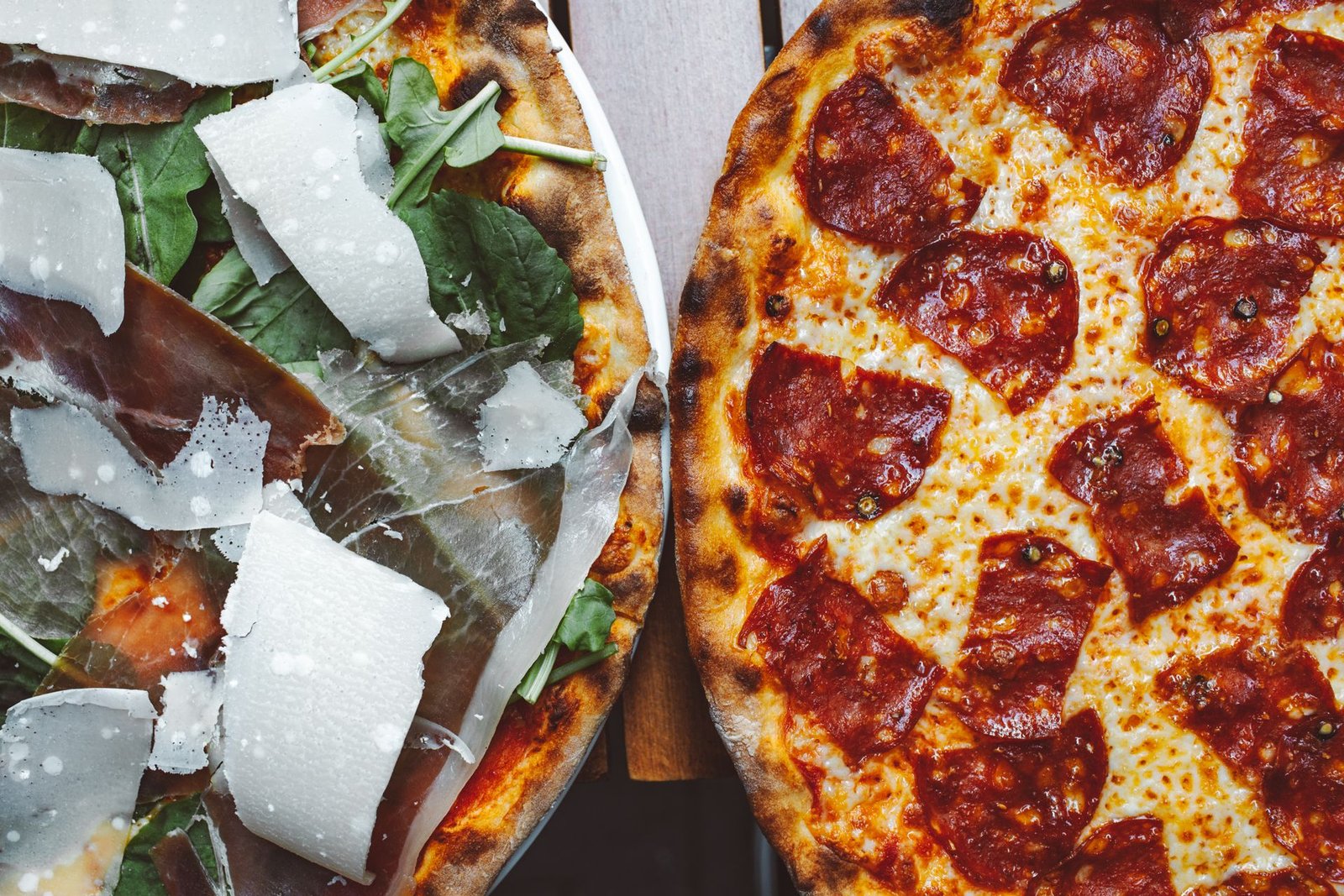
13. Prosciutto & Arugula. Tomato sauce, fresh mozzarella, prosciutto and arugula added after baking, shaved Parmigiano, lemon-olive oil drizzle. The hot-cold, rich-fresh contrast is the entire appeal — the prosciutto warms through from the residual heat and the arugula stays peppery and crisp. Never bake the arugula; it turns bitter and sad. This is the pizza to make when you want to impress with minimal effort.
14. Breakfast Pizza. Olive oil or sausage-gravy base, mozzarella and cheddar, scrambled eggs (added halfway through baking), bacon, green onions. The eggs finish in the oven’s heat — pull the pizza when they’re just set. Our breakfast pizza recipe times it perfectly.
15. Taco Pizza. Refried-bean or seasoned tomato base, mozzarella and cheddar, seasoned ground beef, then shredded lettuce, diced tomato, and sour cream drizzle after baking. Unapologetically fun. The cold toppings go on after — hot lettuce is a crime.
16. Mediterranean. Tomato sauce, mozzarella, feta, Kalamata olives, red onion, roasted red peppers, oregano. Briny, bright, and satisfying — the feta goes on before baking (it softens but holds), with a squeeze of lemon after for lift.
Creative & Adventurous (17–25): For the Bold
These push boundaries — and each one works because the flavor logic is sound, not because it’s weird for weird’s sake.
17. Fig, Prosciutto & Gorgonzola. Fig jam spread thin (or fresh figs, halved) as the base, mozzarella, prosciutto draped on after baking, gorgonzola crumbles, arugula, balsamic glaze. Sweet, salty, funky, peppery — every flavor axis covered in a single slice. Peak fig season (late summer) makes this transcendent; out of season, good fig jam works beautifully.
18. Pear, Walnut & Blue Cheese. Olive oil base, mozzarella, thin-sliced pear, toasted walnuts, blue cheese crumbles, honey drizzle after baking. The pear caramelizes slightly, the honey tames the blue cheese, the walnuts add crunch. An autumn showstopper.
19. Clam Pie (White Clam). Olive oil and garlic base, chopped clams (canned is traditional — this is the New Haven style pioneered by Frank Pepe’s), mozzarella or Pecorino, oregano, lemon squeezed over after baking. Briny, garlicky, and utterly distinctive — it tastes like the Connecticut shoreline. Drain the clams very well; this is a moisture-management pizza where the topping is nearly all water.
20. Carbonara Pizza. No sauce — just olive oil, mozzarella, then pancetta or guanciale crisped first, cracked black pepper, and an egg cracked on top in the last 2 minutes so the yolk stays runny, finished with Pecorino Romano. Rich beyond reason — cut into it tableside and let the yolk run over the hot cheese. Serve immediately; the yolk waits for no one.
21. Thai Chicken. Peanut-sauce base (thinned slightly so it spreads), mozzarella, grilled chicken, shredded carrots, green onions, cilantro and crushed peanuts after baking, sriracha drizzle. Sweet-salty-spicy-crunchy — the peanut sauce caramelizes at the edges beautifully, and the cold crunchy toppings against the hot pizza make every bite interesting.
22. Reuben Pizza. Thousand Island or mustard base, mozzarella and Swiss, corned beef, sauerkraut (squeezed very dry), caraway seeds. All the deli flavors, hot and melty. The sauerkraut must be squeezed nearly dry or it floods the crust.
23. Potato, Rosemary & Pancetta. Olive oil base, thin-mandolined potato slices (tossed in olive oil and salt so they crisp rather than steam), mozzarella, pancetta, rosemary, cracked pepper. The Roman classic — a staple of pizza al taglio shops — the potato turns creamy-crisp and the rosemary perfumes everything. Slice the potato paper-thin; thick slices stay raw in the middle.
24. Butternut Squash & Sage. Olive oil base, roasted butternut squash, mozzarella and fontina, fried sage leaves, brown-butter drizzle after baking. Sweet, nutty, autumnal — roast the squash first until caramelized at the edges.
25. Dessert Pizza. Nutella or sweetened mascarpone spread on a par-baked crust, sliced strawberries, toasted hazelnuts, powdered sugar after baking. Serve warm, cut small — it’s rich. Our dessert pizza recipe covers sweet doughs, fruit variations, and a s’mores version that kids go crazy for.
Seasonal Combinations: What to Make Right Now
Pizza is seasonal cooking if you let it be — produce at its peak needs less help. Rotate these through the year:
Spring: Asparagus, Lemon & Ricotta. Olive oil base, mozzarella, blanched asparagus spears, ricotta dollops, lemon zest and Parmigiano after baking. Bright, green, and delicate — the asparagus should be just tender, so blanch it first and add it in the last half of the bake.
Summer: Heirloom Tomato & Basil (no sauce). Sliced heirloom tomatoes directly on the dough with olive oil, fresh mozzarella, sea salt — no sauce at all. In August, when tomatoes are perfect, this beats any sauced pizza. Add torn basil after baking.
Summer: Zucchini, Mint & Ricotta. Olive oil base, thin-shaved zucchini ribbons, mozzarella, ricotta dollops, fresh mint and lemon zest after baking. Light, fresh, and surprising — the mint is the move that makes it.
Fall: Butternut Squash & Sage (see #24 above) — roast the squash until caramelized; it’s the defining fall pizza.
Fall: Apple, Cheddar & Bacon. Olive oil base, white cheddar, thin-sliced apple, cooked bacon, red onion, thyme. Sweet-tart apple against sharp cheddar and smoky bacon is a revelation — use a firm, tart apple so it holds up.
Winter: Kale, Sausage & White Bean. Garlic olive-oil base, mozzarella, crumbled Italian sausage, massaged kale ribbons, creamy white beans, chili flakes. Hearty without being heavy — the beans add a creamy contrast that makes this eat like a meal.
Winter: Caramelized Onion, Gruyère & Thyme. French-onion-soup pizza: deeply caramelized onions, Gruyère and mozzarella, fresh thyme, a splash of sherry vinegar after baking. Sweet, savory, and deeply comforting on a cold night.
Seasonal cooking also means your pizzas cost less and taste better — peak produce needs minimal seasoning. Let the calendar pick your toppings and you’ll never make a boring pizza.
The Rules for Building Great Combinations
Want to invent number 26? These principles separate inspired combinations from random piles:
The 3–5 topping rule. Three to five toppings (counting cheese and sauce) is the sweet spot. Fewer and the pizza feels bare; more and flavors muddle while moisture and weight overwhelm the crust. Every combination above obeys this — count them.
Balance the flavor axes. Great combinations hit at least three of the four: salty (cured meats, aged cheese, olives), sweet (pineapple, figs, caramelized onion, honey), acidic (tomato sauce, lemon, vinegar drizzles), and rich/fatty (cheese, olive oil, bacon). Hawaiian works because it’s salty + sweet. Prosciutto-arugula works because it’s salty + rich + fresh-bitter + acidic (lemon). If your combination tastes flat, it’s usually missing acid — a squeeze of lemon or a vinegar drizzle fixes more pizzas than any other single move.
Contrast textures. Creamy ricotta against crisp crust. Crunchy walnuts against soft pear. Crispy pepperoni cups against molten cheese. Texture contrast is what makes a pizza interesting after the third slice, not just the first.
Manage moisture ruthlessly. This is the unglamorous rule that determines success. Pre-cook mushrooms, spinach, sausage, and any vegetable that’s more than 85% water. Drain canned ingredients (clams, artichokes, pineapple). Squeeze sauerkraut and thawed spinach nearly dry. Pat fresh mozzarella. Our guide to preventing soggy pizza is the full manual — and our toppings to avoid list covers the ingredients that cause the most trouble.
Respect the bake. Delicate things burn: fresh herbs (except hardy rosemary), arugula, prosciutto, burrata, honey drizzles all go on after baking. Dense things undercook: thick sausage chunks, raw potato slices, whole cherry tomatoes need pre-cooking or thin slicing. Match every topping’s cooking needs to the 6–12 minute window.
The formula: base + star + supporters + finisher. Pick a base (tomato, white, BBQ, pesto, olive oil), one star ingredient (the thing you’d name the pizza after), one or two supporters (cheeses, vegetables, cured meats that back up the star), and one finisher (added after baking: fresh herbs, a drizzle, a grating of hard cheese). Run any combination through this formula and weak ideas reveal themselves immediately.
Prep-Ahead Strategy for Topping Bars
If you’re making several pizzas — for a party or a pizza night with options — prep toppings assembly-line style:
- Proteins: Cook sausage, bacon, and chicken fully; slice pepperoni and cured meats; keep cold toppings (prosciutto) separate for post-bake.
- Vegetables: Slice peppers and onions; sauté mushrooms; roast squash or peppers; squeeze-dry anything canned or thawed.
- Cheeses: Shred mozzarella fresh (never bagged — see our best cheese for pizza guide); crumble blue cheese; grate Parmigiano.
- Finishers: Chop herbs, make drizzles (balsamic glaze, honey, ranch), slice lemons.
- Sauces: Portion homemade pizza sauce, pesto, and BBQ into squeeze bottles.
Set everything out in the order of assembly — sauce, cheese, toppings, finishers — and pizza night runs itself. For party quantities and timing, our pizza party hosting guide and family pizza night ideas have you covered.
Frequently Asked Questions
How many toppings should I put on a pizza?
Three to five total, including cheese and sauce. More than five muddles flavors and overloads the crust with moisture and weight. If you want variety, make two pizzas with different combinations rather than one overloaded one.
What are the most popular pizza toppings?
Pepperoni is by far the most popular in the US, followed by mushrooms, onions, sausage, bacon, and extra cheese. But popularity isn’t a quality ranking — the best topping is the one that balances your specific combination.
Should toppings go under or over the cheese?
The standard order is sauce, then cheese, then toppings — the cheese anchors toppings and they crisp in the oven’s heat. Exceptions: delicate toppings (basil, arugula, prosciutto) go on after baking; heavy or wet toppings sometimes go under a light cheese layer to protect them. Deep-dish and Detroit styles have their own traditional orders — see our Chicago deep dish guide and Detroit style guide.
How do I keep vegetable toppings from making pizza soggy?
Pre-cook them. Sauté mushrooms, wilt spinach and squeeze it dry, roast peppers and squash, and drain anything canned. Raw vegetables release their water in the oven faster than it can evaporate. Our soggy-pizza prevention guide covers the complete technique.
Can I use leftover cooked meats as pizza toppings?
Absolutely — leftover roast chicken, pulled pork, taco meat, and even Thanksgiving turkey make excellent pizza toppings. Dice or shred them, distribute evenly, and remember they’re already cooked, so they just need to heat through. It’s one of the best uses for leftovers — see our leftover pizza ideas for more.
What’s a good pizza topping combination for kids?
Keep it simple and familiar: cheese pizza with pepperoni, or ham and pineapple. Let kids build their own from a small topping bar — participation beats sophistication at that age, and they’re far more likely to eat what they made. Our pizza for kids guide has 15 ideas they’ll actually eat.
What cheese works best with creative topping combinations?
Low-moisture whole-milk mozzarella remains the best base for almost everything — it melts reliably and lets the star toppings shine. Add a flavor cheese matched to the combination: fontina for creamy-savory combos, smoked gouda for BBQ and bacon builds, feta for Mediterranean, blue cheese for fruit-and-nut pizzas. Our best cheese for pizza guide covers blending in depth.
Conclusion
The 25 best pizza topping combinations share a secret: none of them are accidents. Margherita balances bright tomato against milky cheese and fresh basil. Hawaiian pairs salty ham with sweet pineapple. Fig-prosciutto-gorgonzola hits sweet, salty, funky, and peppery in every single bite. Learn the underlying logic — 3 to 5 toppings, balanced flavor axes, contrasting textures, ruthless moisture management, the base-star-supporters-finisher formula — and you can invent combinations as good as any on this list. Keep a topping-bar mindset: prep components ahead, let people build their own, and watch which combinations disappear first. Start with the classics to calibrate your palate, try one creative combination that scares you just a little, and remember: the best pizza topping combination is the one that makes you want a second slice.
[…] These methods work whether you are making a veggie supreme loaded with toppings, experimenting with new topping combinations, or troubleshooting a pie that came out soupy last […]