

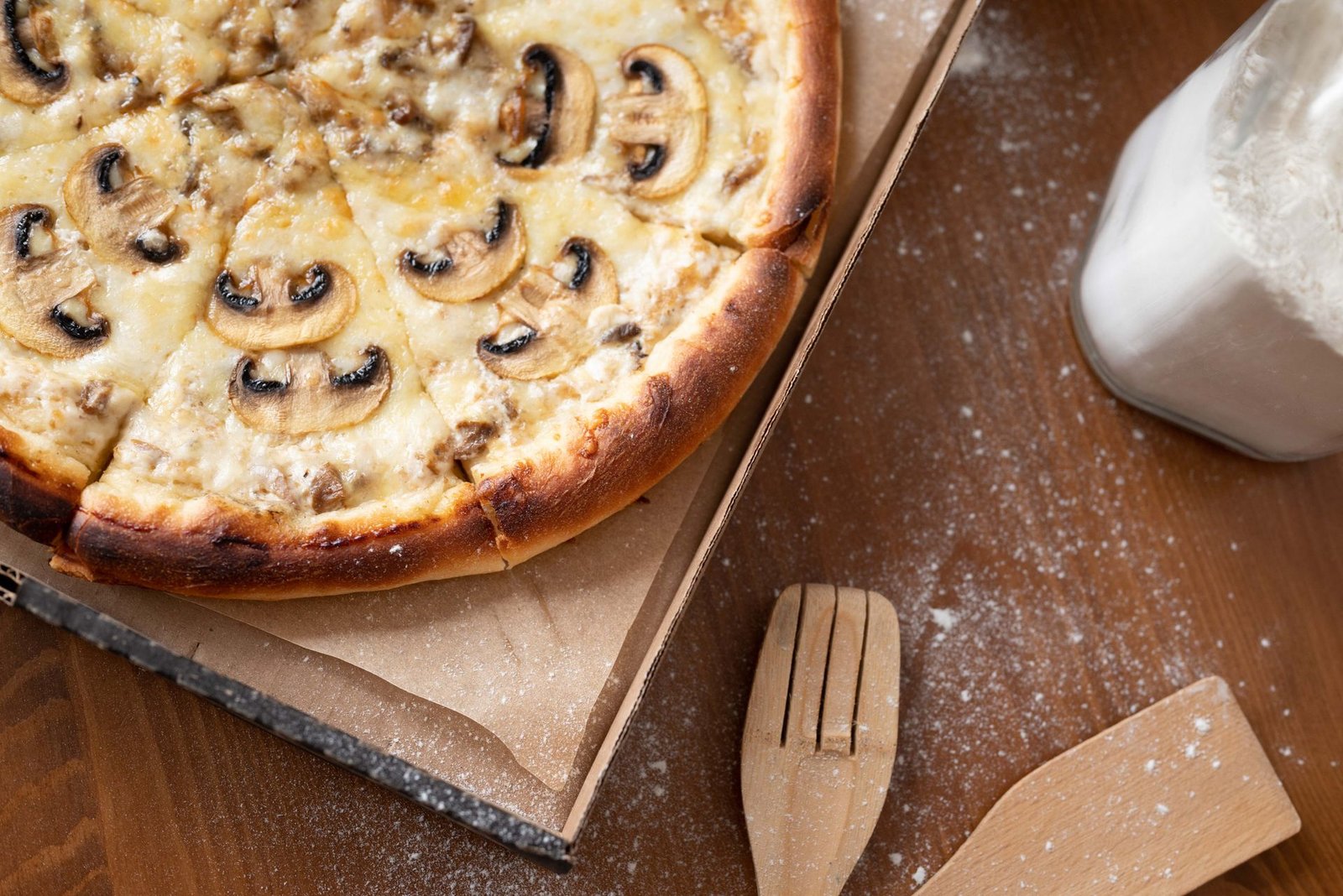
Mushroom pizza is where simplicity becomes sophistication. Earthy, deeply savory mushrooms, sweet garlic butter, fresh thyme, and melted mozzarella on a blistered crust — it tastes like something from a wood-fired restaurant, but it is one of the easiest pizzas to make at home. A great mushroom pizza recipe is all about treating the mushrooms right: most versions fail because raw mushrooms go straight onto the pie, where they steam, release floods of water, and taste blandly of nothing.
Mushrooms are around 90% water, and they surrender it the moment heat hits them. On a pizza, that means a soggy center and pale, rubbery fungi instead of the deeply browned, meaty, umami-packed topping you are after. The fix — a hard sear in garlic butter before the mushrooms ever meet the dough — does double duty: it drives off the water and builds the caramelized, roasted flavor that makes mushrooms taste like themselves, only more so. Combined with fresh thyme (mushroom’s best herbal friend) and a garlic-butter base instead of plain oil, this pizza delivers a depth of flavor that belies its short ingredient list.
This recipe uses a mix of mushroom varieties for complexity, though humble cremini work beautifully on their own. You will learn the searing technique that guarantees browned-not-steamed mushrooms, why garlic butter beats olive oil as the base here, and how thyme, Parmesan, and a bright finish keep the earthy richness from tasting one-note.
🍕 Key Takeaways
- Sear mushrooms hard in garlic butter before topping — raw mushrooms steam, release water, and taste bland on pizza.
- Cook mushrooms in a single uncrowded layer; crowding steams them instead of browning them.
- A garlic-butter base (not plain oil) gives the pizza its signature rich, savory character.
- Mix mushroom varieties for depth, or use all cremini — both work when seared properly.
- Fresh thyme goes on before baking; its flavor blooms in the heat, unlike delicate basil.
- Bake at maximum heat (500–550°F / 260–290°C) on a preheated steel or stone for 6–9 minutes.
- Cool leftovers within 2 hours, refrigerate 3–4 days, and reheat in a skillet or hot oven.
Why Mushrooms Need a Head Start
The mushroom’s structure explains everything about how to cook it. A mushroom is essentially a sponge of water held together by delicate cell walls. When those walls hit heat, they collapse and release their water all at once — which is why mushrooms added to a hot pan first sizzle, then go quiet and swim, then sizzle again once the water evaporates. That three-act play is the key to mushroom cookery: browning only begins after the water leaves.
On a pizza, there is no time for the full play. A 7-minute bake is not long enough to drive off a mushroom’s water and then brown it — so raw mushrooms emerge pale, shrunken, and sitting in a puddle. Pre-searing gives the mushrooms their full cooking arc in the skillet, where you control the heat and the water can escape freely. What goes on the pizza is already browned, concentrated, and essentially moisture-stable; the oven then just heats it through and melds it with the cheese.
The sear also builds flavor through caramelization. Mushrooms contain natural sugars and abundant glutamates (the compounds behind umami), and high, dry heat transforms both — the sugars brown into nutty sweetness, the glutamates concentrate into deep savoriness. A raw mushroom tastes faintly of damp earth; a well-seared one tastes meaty, nutty, and complex. It is the single biggest flavor upgrade available to any mushroom dish, pizza included. The same principle drives our veggie supreme, where the mushroom sauté is the anti-sogginess secret.
Variety matters too, though less than technique. Cremini (baby bellas) are the workhorse: firm, flavorful, widely available, and they brown beautifully — if you buy one mushroom for pizza, make it cremini. Shiitakes add a smoky, almost bacony depth (remove the tough stems, which stay woody even when cooked). Oyster mushrooms get wonderfully crisp at the edges, almost like little chips. Portobellos are the meatiest of all but release the most water, so sear them especially aggressively and consider scooping out the dark gills, which can discolor the pizza. A mix of two or three types gives the pizza a range of textures and flavors that a single variety cannot — but if all you have is a box of cremini, sear them well and you will still make an excellent pizza.
Ingredients for Mushroom Pizza
Makes two 12-inch pizzas. The dough is a standard same-day dough; a cold-fermented dough adds a subtle tang that complements the earthy toppings.
For the dough (makes 2 balls, ~250g each)
- 500g bread flour (about 4 cups spooned and leveled)
- 325g lukewarm water (about 1⅓ cups)
- 10g fine sea salt (about 2 teaspoons)
- 7g instant dry yeast (one standard packet)
- 15g extra-virgin olive oil (about 1 tablespoon), plus more for the bowl
For the garlic butter mushrooms (enough for 2 pizzas)
- 1 lb (450g) mixed mushrooms (cremini, shiitake, oyster, or all cremini), sliced ¼ inch thick
- 3 tablespoons unsalted butter
- 1 tablespoon olive oil
- 3 cloves garlic, thinly sliced
- 1 teaspoon fresh thyme leaves, plus more for topping
- ¾ teaspoon fine sea salt
- ½ teaspoon cracked black pepper
For the garlic butter base (enough for 2 pizzas)
- 3 tablespoons unsalted butter, melted
- 1 clove garlic, grated
- Pinch of fine sea salt
For topping each 12-inch pizza
- About 1½ tablespoons garlic butter base
- 4 oz (115g) low-moisture whole-milk mozzarella, shredded by hand
- Half of the seared mushrooms
- 1 tablespoon finely grated Parmigiano-Reggiano
- ½ teaspoon fresh thyme leaves
To finish
- Extra-virgin olive oil, for drizzling
- Flaky sea salt (optional)
- Optional: a few drops of truffle oil or a squeeze of lemon
A note on thyme: fresh thyme is non-negotiable here — dried thyme tastes dusty and muted by comparison, and this pizza is simple enough that the herb’s quality shows. Strip the leaves from woody stems by pinching at the top and pulling downward; the tender top sprigs can go on whole. Thyme is one of the few herbs that improves with oven heat (unlike basil, which should go on after baking), so it seasons the pizza from inside the bake rather than just garnishing the top. If your thyme is looking tired, rosemary — used sparingly, since it is much stronger — is the closest substitute.
Step-by-Step Method
Step 1: Mix, knead, and ferment the dough
Whisk flour and yeast, add water and oil, mix to a shaggy mass, rest 15 minutes, add salt, and knead 8–10 minutes until smooth and elastic. Bulk ferment covered in an oiled bowl for 1.5–2 hours until doubled. Full method: how to make pizza dough.
Step 2: Sear the mushrooms (the critical step)
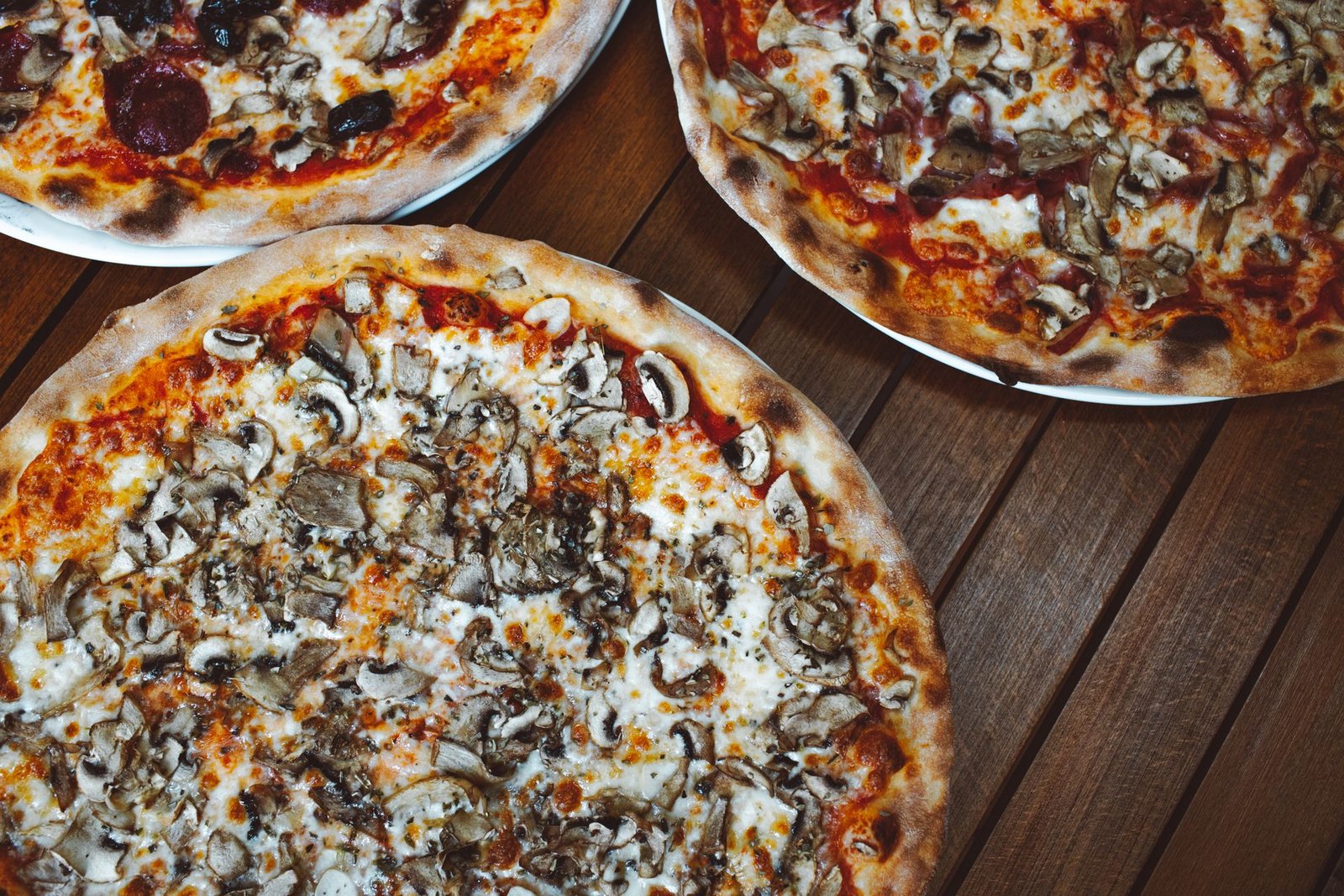
Heat the butter and olive oil in a large skillet over medium-high heat until the butter foams and just begins to smell nutty. Add the sliced mushrooms in a single layer — work in two batches if your skillet is crowded; overlapping mushrooms steam instead of sear. Cook undisturbed for 2–3 minutes until deeply golden on one side, then stir, add the sliced garlic and thyme, and cook 3–4 minutes more until the mushrooms are browned all over and any released liquid has evaporated. Season with salt and pepper. The mushrooms should look shrunken, deeply browned, and glossy — not pale or swimming. Set aside.
Step 3: Make the garlic butter base
Stir the grated garlic and pinch of salt into the melted butter. This takes 30 seconds and can be done while the mushrooms cool. Keep it warm but not hot.
Step 4: Ball the dough
Divide the risen dough into two ~250g balls, shape tight, and proof covered on a floured tray for 30–60 minutes until puffy. Shred the mozzarella and grate the Parmigiano while you wait.
Step 5: Preheat the oven
Steel or stone on an upper-middle rack, oven at maximum (500–550°F / 260–290°C), preheated for a full hour. The butter base browns faster than an oil base, so the hot, fast bake is ideal — it crisps the crust before the butter can over-brown. See the pizza oven temperature guide.
Step 6: Stretch the base
Press and stretch a dough ball to 12 inches with a 1-inch rim, transfer to a lightly floured pizza peel, and shake to confirm it slides. Refresher: how to stretch pizza dough without tearing.
Step 7: Brush with garlic butter
Brush about 1½ tablespoons of the garlic butter over the stretched dough, edge to rim-bare. It should glisten evenly — this is the flavor foundation, so do not skimp, but do not pool it either.
Step 8: Cheese, then mushrooms, then thyme
Scatter the shredded mozzarella evenly. Arrange the seared mushrooms in a single layer over the cheese — every piece already browned and delicious. Dust with the Parmigiano-Reggiano and scatter the fresh thyme leaves over the top. The thyme will crisp slightly in the heat and perfume the whole pizza.
Step 9: Bake 6–9 minutes
Launch onto the hot steel and bake until the crust is deep golden with charred spots, the cheese is melted with amber patches, and the mushroom edges show extra crisping — 6–9 minutes at max heat. The butter base encourages beautiful browning; start checking at 5 minutes and pull the pizza when the cheese is amber rather than deep brown.
Step 10: Finish and rest
Slide onto a wire rack or board. Drizzle lightly with olive oil, add a pinch of flaky salt if using, and rest 1–2 minutes so the cheese sets. If using truffle oil, add just a few drops now — it is potent and should be a whisper, not a shout. A squeeze of lemon is the brighter alternative. Slice and serve; repeat with the second pizza.
Pro Tips for the Best Mushroom Pizza
Single layer in the skillet, always. The difference between seared and steamed mushrooms is crowding. If the mushrooms overlap, they trap the water they release and simmer in it — pale, rubbery, bland. Two uncrowded batches take 10 minutes total and produce mushrooms worth eating on their own. This is the technique; everything else is commentary.
Don’t salt until the end of the sear. Salt draws water out of mushrooms, which is the opposite of what you want during browning. Sear first, salt once the mushrooms are browned — the salt then seasons the concentrated, caramelized flesh rather than flooding the pan early. You will notice the difference in both browning and final texture.
Slice thick, not thin. Quarter-inch slices are ideal: thick enough to stay meaty and juicy inside while the outsides crisp, thin enough to heat through on the pizza. Paper-thin slices dry out and vanish; thick chunks stay spongy. The ¼-inch slice is the sweet spot for both the sear and the bake.
Butter for the base, not just oil. Olive oil is the default pizza base fat, but butter’s milk solids brown into nutty, toasty flavor that harmonizes with mushrooms in a way oil cannot. The garlic butter base is what makes this pizza taste like a restaurant dish rather than a homemade experiment. Clarified butter or ghee works if you want the flavor with less browning risk.
Mix your mushrooms when you can. Cremini for the meaty backbone, shiitake for smoky depth, oyster for crispy edges — each brings something different, and the variety makes the pizza taste composed rather than monotonous. That said, a full pound of well-seared cremini beats a poorly seared mix every time. Technique first, variety second.
Finish with contrast. Earthy richness needs a bright or salty counterpoint, which is why the recipe offers lemon, flaky salt, or truffle oil at the end. The lemon is the safest choice — its acidity lifts the umami the way tomato sauce lifts a red pie. Truffle oil is the luxurious choice; use literally a few drops, since its flavor is aggressive and can bulldoze the mushrooms’ subtlety.
Variations Worth Trying
Mushroom and taleggio
Swap half the mozzarella for taleggio (rind removed, sliced thin) — it melts into a funky, creamy layer that is mushroom’s soulmate. Reduce the Parmigiano slightly since taleggio is saltier. This is the connoisseur’s version.
Spinach and mushroom white pizza
Add the garlic-butter mushrooms to our white pizza with ricotta and garlic architecture: garlic oil base, mozzarella, seasoned ricotta dollops, seared mushrooms, thyme. The ricotta’s creaminess against the earthy mushrooms is superb — just be sure to squeeze the spinach very dry.
Sausage and mushroom
Add 4 oz of Italian sausage (casings removed, crumbled and pre-cooked until browned) scattered with the mushrooms. The fennel and pork fat amplify the savory depth enormously. Pre-cook the sausage fully — raw sausage on a quick pizza bake will not cook through reliably.
Truffle mushroom pizza
Use the classic recipe, finish with a few drops of white truffle oil and extra Parmigiano, and optionally shave fresh truffle over the hot pizza if you have access to it. Restraint with truffle products is essential — they are garnishes, not sauces.
Grilled mushroom pizza
Grill thick mushroom slices (portobello caps or king oyster, sliced lengthwise) directly on hot grates until marked, then slice and use as the topping. The grill’s smoke adds a dimension the skillet cannot. Our grilled pizza guide covers grilling the crust as well.
Storage, Reheating & Food Safety
Storing leftovers: Cool to room temperature within 2 hours, then refrigerate airtight for 3–4 days. Mushroom pizza reheats very well — the seared mushrooms stay flavorful. Full guide: how long leftover pizza lasts.
Reheating: Skillet method (medium heat, 2–3 minutes, lid on at the end) re-crisps the crust and re-warms the mushrooms without drying them. A 375°F (190°C) oven for 8–10 minutes works too. Avoid the microwave, which makes mushrooms rubbery. All methods: how to reheat pizza.
Freezing: Cool completely, wrap slices individually, freeze up to 2 months. Reheat from frozen at 400°F (200°C) for 10–12 minutes. The mushrooms hold up better than most toppings to freezing.
Food safety notes: Buy mushrooms from a reputable source, use them within a few days, and discard any that are slimy, dark-spotted, or smell off — fresh mushrooms should smell faintly earthy and feel dry and firm. Wash or brush off growing medium before slicing (a quick rinse is fine; the sear drives off the surface water). As with all pizzas, cool leftovers within 2 hours, refrigerate promptly, and reheat until steaming hot throughout. Never eat wild-foraged mushrooms unless identified by an expert — stick to cultivated varieties for pizza.
Frequently Asked Questions
Should you cook mushrooms before putting them on pizza?
Yes — always. Raw mushrooms release their water on the pizza, turning the center soggy while staying pale and bland themselves. A 7–8 minute hard sear in garlic butter drives off the water and builds the browned, meaty flavor that makes mushroom pizza worth making.
What mushrooms are best for pizza?
Cremini are the best all-rounder: flavorful, firm, and widely available. Shiitakes add smoky depth, oysters get crisp at the edges, and portobellos are meaty but release a lot of water (sear them especially well). A mix of two or three types gives the most interesting pizza.
How do you keep mushroom pizza from getting soggy?
Pre-sear the mushrooms until their liquid evaporates, arrange them in a single layer, keep the base fat layer thin, and bake on a fully preheated steel or stone at maximum heat. Our soggy pizza prevention guide covers the general principles in depth.
Can I use canned mushrooms?
You can, but the result is a shadow of fresh — canned mushrooms are already waterlogged and have a soft, uniform texture with muted flavor, since the canning process cooks them in liquid. If you must use them, drain them extremely well, pat dry, and sear hard to drive off as much liquid as possible and build at least some browning. Fresh mushrooms are one of the highest-return upgrades in all of pizza making; the price difference is small and the flavor difference is enormous.
What cheese goes with mushroom pizza?
Low-moisture mozzarella for the melt, Parmigiano-Reggiano for salty depth — the combination in this recipe, chosen because neither competes with the mushrooms’ earthiness. Fontina adds nutty creaminess, taleggio brings funky richness, and Gruyère adds alpine depth; all three are excellent upgrades or swaps depending on your mood. What to avoid: strongly flavored blues in large amounts (they bulldoze the mushrooms) and fresh mozzarella (too watery for this application). See our best cheese for pizza for the full guide to pairing.
Can I make mushroom pizza with a white sauce instead of garlic butter?
Yes — a thin béchamel or the seasoned ricotta from our white pizza both pair beautifully with seared mushrooms. The garlic butter base is the simplest and, to our taste, the best — but the mushrooms are the star, and they shine on any creamy white base.
The Bottom Line
A great mushroom pizza recipe is a lesson in respecting your ingredients from the very first slice of the knife to the final drizzle of oil. sear the mushrooms hard so they brown instead of steam, build on garlic butter instead of plain oil, season with thyme that blooms in the heat, and finish with something bright. Do that and a handful of humble fungi becomes one of the most sophisticated pizzas you can make at home — proof that the best pizzas are not always the most complicated ones, just the most carefully cooked. Keep exploring our pizza recipes for more ways to let simple ingredients shine bright on a blistered crust.