

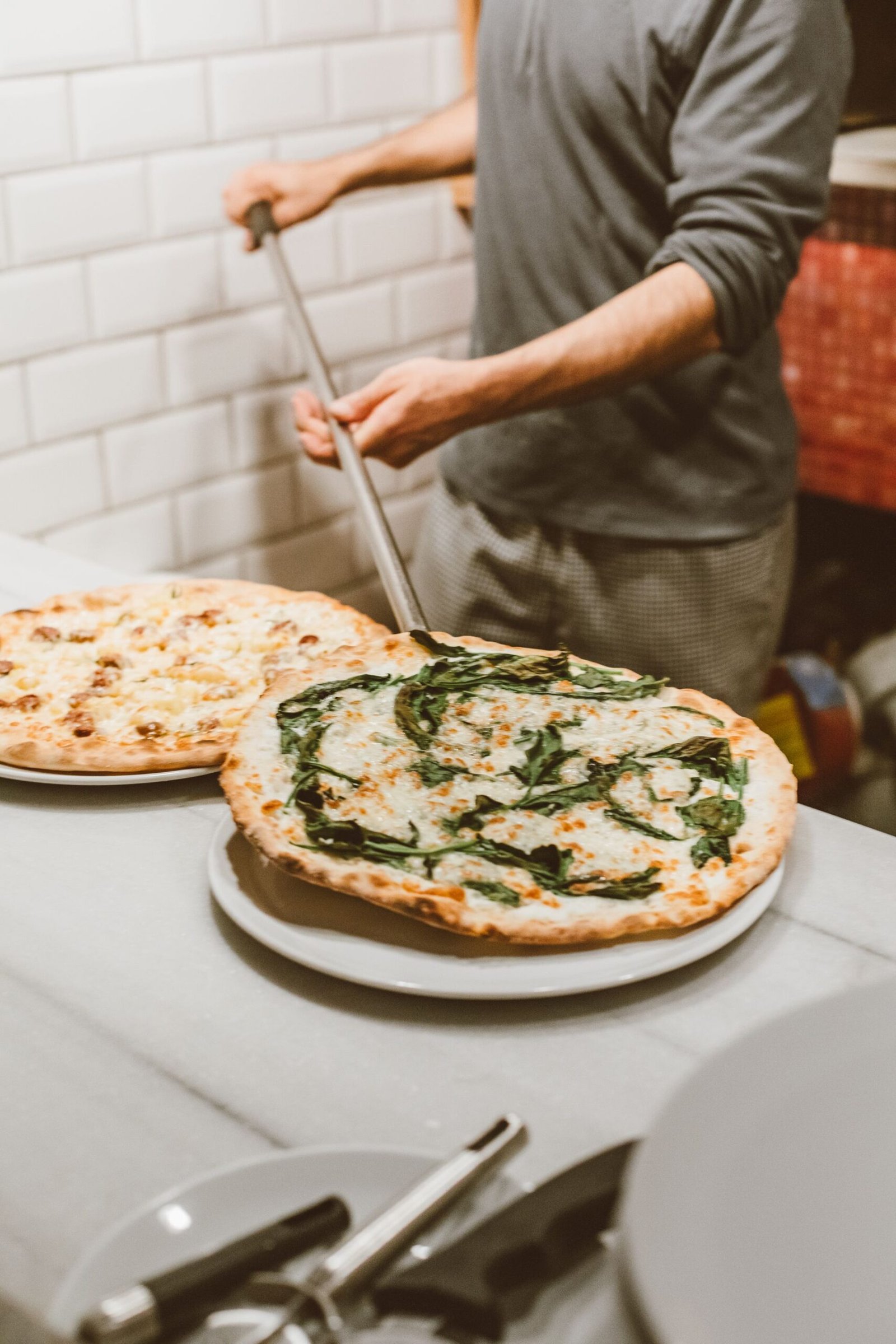
Strip away the tomato sauce and pizza reveals a quieter, creamier side. A classic white pizza recipe replaces red sauce with garlic-infused olive oil and builds on it with dollops of ricotta, melted mozzarella, and a snowfall of Parmesan — rich, savory, aromatic, and deeply comforting. It is the pizza for people who find tomato sauce too acidic, and for anyone who has ever wondered what pizza tastes like when cheese and garlic get the whole stage.
But white pizza has a well-earned reputation for blandness, and the reputation is deserved when it is made carelessly. Without tomato’s acidity and brightness, there is nothing to hide behind: under-salted ricotta tastes like paste, raw garlic turns harsh or burns, and a timid hand with seasoning produces a pizza that is rich but boring. This recipe is built around aggressive, deliberate seasoning — the ricotta is salted and brightened with lemon, the garlic is mellowed in warm oil rather than scattered raw, and fresh herbs and cracked pepper finish what the oven starts.
You will learn the three-component architecture of a great white pizza (flavored oil base, seasoned ricotta, melting cheeses), how to keep the garlic sweet rather than bitter, and the finishing touches that lift the whole pie from comforting to craveable. It is a simple pizza that rewards attention to detail — and a perfect canvas for variations, from spinach to prosciutto.
🍕 Key Takeaways
- Season the ricotta aggressively with salt, lemon zest, and pepper — bland ricotta is the number one white-pizza failure.
- Mellow garlic in warm olive oil instead of scattering it raw; raw garlic burns and turns bitter at pizza temperatures.
- Use whole-milk ricotta (drained if watery) — part-skim ricotta is grainy and releases too much water.
- Dollop ricotta in spoonfuls rather than spreading it; the pockets stay creamy instead of drying out.
- Bake at maximum heat (500–550°F / 260–290°C) on a preheated steel or stone for 6–9 minutes.
- Finish with fresh herbs, lemon, and good olive oil after baking for brightness the rich base needs.
- Cool leftovers within 2 hours, refrigerate 3–4 days, and reheat in a skillet or hot oven.
Why White Pizza Goes Bland (And How Seasoning Fixes It)
Tomato sauce does an enormous amount of invisible work on a pizza: it brings acidity that cuts richness, salt that seasons everything it touches, and a bright, fruity flavor that keeps cheese from tasting monotonous. Remove it and all three jobs fall to you. Most white pizza recipes fail because they treat the absence of sauce as simply “skip the sauce step” rather than as a seasoning problem to solve.
The solution has three parts. First, the ricotta must be seasoned like a dish on its own, not treated as a neutral dairy product. Whole-milk ricotta, a full teaspoon of salt per cup, lemon zest for brightness, cracked black pepper, and optionally a little grated Parmesan mixed in — tasted and adjusted before it ever meets the dough. If the seasoned ricotta does not taste delicious on a spoon, it will not taste delicious on a pizza. This is the step that separates memorable white pizza from forgettable.
Second, the garlic must be tamed. Raw minced garlic scattered on a pizza at 550°F does not roast into sweetness — there is not enough time, and the exposed bits scorch into bitterness while the buried bits stay harsh and pungent. This is the most common technical error in white pizza, and it is why so many homemade versions have an acrid edge. Instead, this recipe warms sliced garlic gently in olive oil until fragrant and just golden, creating a mellow, sweet garlic oil that flavors the entire base without a single burnt or raw bite. The softened garlic slivers themselves go on the pizza, sweet and golden, like little flavor jewels. The same technique powers our garlic knots — once you learn it, you will use it everywhere.
Third, the finish must bring brightness. Richness without contrast is tiring to eat — that is why the recipe finishes the hot pizza with fresh basil or parsley, a squeeze of lemon, and a thread of your best olive oil. These are not garnishes; they are structural. The herbs add fresh aroma, the lemon adds the acidity the tomato sauce would have provided, and the oil adds fruity depth. Skip them and the pizza is good; include them and it is the pizza people ask about.
Ingredients for White Pizza with Ricotta and Garlic
Makes two 12-inch pizzas. The dough is a standard same-day dough; a cold-fermented dough brings a pleasant tang that white pizza particularly welcomes.
For the dough (makes 2 balls, ~250g each)
- 500g bread flour (about 4 cups spooned and leveled)
- 325g lukewarm water (about 1⅓ cups)
- 10g fine sea salt (about 2 teaspoons)
- 7g instant dry yeast (one standard packet)
- 15g extra-virgin olive oil (about 1 tablespoon), plus more for the bowl
For the garlic oil base (enough for 2 pizzas)
- 4 tablespoons extra-virgin olive oil, plus more for finishing
- 4 cloves garlic, thinly sliced
- ¼ teaspoon fine sea salt
- ¼ teaspoon cracked black pepper
- Pinch of red pepper flakes (optional)
For the seasoned ricotta (enough for 2 pizzas)
- 1½ cups (about 375g) whole-milk ricotta
- 1 teaspoon fine sea salt, plus more to taste
- 1 teaspoon lemon zest (from about 1 lemon)
- ½ teaspoon cracked black pepper
- 2 tablespoons finely grated Parmigiano-Reggiano
For topping each 12-inch pizza
- About 1½ tablespoons garlic oil (with some garlic slivers)
- 4 oz (115g) low-moisture whole-milk mozzarella, shredded by hand
- Half of the seasoned ricotta (about ¾ cup), in dollops
- 1 tablespoon finely grated Parmigiano-Reggiano, for dusting
To finish
- Fresh basil or flat-leaf parsley leaves
- Lemon wedges, for squeezing
- Extra-virgin olive oil, your best bottle
A note on ricotta: quality varies enormously. Good whole-milk ricotta should be thick, creamy, and milky-sweet — not watery or grainy. If yours pools liquid, drain it in a fine-mesh sieve lined with cheesecloth for 30 minutes (or overnight in the fridge) — you will be amazed how much water comes out and how much better the texture becomes. Supermarket tubs vary widely; Italian-deli fresh ricotta is worth seeking out for this pizza, where ricotta is a headline ingredient rather than a background note. Our guide to the best cheese for pizza covers ricotta selection in more depth.
Step-by-Step Method
Step 1: Mix, knead, and ferment the dough
Whisk flour and yeast, add water and oil, mix to a shaggy mass, rest 15 minutes, add salt, and knead 8–10 minutes until smooth and elastic. Bulk ferment covered in an oiled bowl for 1.5–2 hours until doubled. Full method: how to make pizza dough.
Step 2: Make the garlic oil
Warm the 4 tablespoons of olive oil in a small pan over low heat. Add the sliced garlic and cook gently, stirring, for 3–4 minutes until the garlic is fragrant, softened, and just barely golden at the edges — not brown. Browning equals bitterness. Remove from heat, stir in the salt, pepper, and red pepper flakes if using, and let cool. The oil will be deeply aromatic. This keeps for days refrigerated and is also the base of our garlic knots — make extra.
Step 3: Season the ricotta
In a bowl, stir the ricotta with the salt, lemon zest, black pepper, and grated Parmigiano until uniform. Taste it — it should taste bright, well-salted, and delicious on its own, like the filling of the best lasagna you have had. Adjust salt and lemon until it does. If the ricotta seems loose or watery, drain it first (see the note above). Cover and refrigerate until topping time.
Step 4: Ball the dough
Divide the risen dough into two ~250g balls, shape tight, and proof covered on a floured tray for 30–60 minutes until puffy. Shred the mozzarella while you wait.
Step 5: Preheat the oven
Steel or stone on an upper-middle rack, oven at maximum (500–550°F / 260–290°C), preheated for a full hour. White pizzas show browning more visibly than red-sauce pies (no red to hide behind), so the hot, fast bake matters for both texture and appearance. See the pizza oven temperature guide.
Step 6: Stretch the base
Press and stretch a dough ball to 12 inches with a 1-inch rim, transfer to a lightly floured pizza peel, and shake to confirm it slides. Refresher: how to stretch pizza dough without tearing.
Step 7: Brush with garlic oil
Brush about 1½ tablespoons of the garlic oil over the stretched dough, edge to rim-bare, distributing some of the softened garlic slivers across the surface. The dough should glisten evenly — this thin layer carries the pizza’s foundational flavor.
Step 8: Add mozzarella, then ricotta dollops
Scatter the shredded mozzarella evenly — it forms the melty base layer. Then add the seasoned ricotta in generous tablespoon-size dollops, spaced across the pizza (about 6–8 dollops per pie). Do not spread or flatten them; the mounds stay creamy inside while their surfaces pick up golden color. Dust everything with the grated Parmigiano-Reggiano.
Step 9: Bake 6–9 minutes
Launch onto the hot steel and bake until the crust is deep golden with charred spots, the mozzarella is melted with amber patches, and the ricotta dollops are set with golden tops — 6–9 minutes at max heat. The ricotta should look set and lightly colored, not wet or weeping. Start checking at 5 minutes.
Step 10: Finish bright
Slide onto a wire rack or board. Immediately scatter fresh basil or parsley, squeeze half a lemon over the whole pizza, and drizzle with your best olive oil. Rest 1–2 minutes, slice, and serve. The contrast between the rich, creamy pizza and the bright, herbal finish is the entire point — do not skip it. Repeat with the second pizza.
Pro Tips for the Best White Pizza
Taste the ricotta before it goes on. This bears repeating because it is the whole recipe in one habit: the seasoned ricotta mixture should be delicious on a spoon. Under-salted, unbrightened ricotta bakes into blandness that no amount of finishing can fix. Salt, lemon zest, pepper, taste, adjust — every time.
Dollop, don’t spread. Spread ricotta forms a thin layer that dries out and can weep water; dollops stay creamy in the center with beautifully browned tops. Tablespoon-size mounds, spaced an inch or so apart, give you pockets of creamy contrast against the melted mozzarella. It also looks dramatically better — rustic and generous rather than flat.
Keep the garlic golden, never brown. The line between sweet, mellow garlic and bitter garlic is the line between pale gold and brown. Cook it low and slow, pull it at fragrant-and-soft, and remember it keeps cooking in the residual heat. If you ever overshoot and the garlic browns, start over — bitter garlic oil will haunt the whole pizza.
Whole-milk ricotta or nothing. Part-skim ricotta is grainier, wetter, and less flavorful — three strikes on a pizza where ricotta is the star. Check the label: you want whole milk as the primary ingredient, minimal gums or stabilizers, and a thick, spoonable texture. Drain any brand that pools liquid.
Don’t overload the mozzarella either. White pizza tempts over-cheesing because cheese is the topping. But the 4-ounce mozzarella base plus the ricotta dollops is already rich; more mozzarella just adds grease and buries the ricotta’s delicate flavor. Restraint lets each dairy component speak.
The lemon squeeze is structural, not decorative. Without tomato acidity, white pizza needs an acid source, and fresh lemon is the cleanest one. Half a lemon per pizza, squeezed over the hot pie, brightens every bite. Bottled lemon juice is a distant second — the fresh zest and juice together are what you want. If citrus on pizza sounds odd, try it once; the logic becomes clear on the first bite.
Variations Worth Trying
White pizza with spinach
Wilt 4 oz of fresh spinach (sauté until just collapsed, then squeeze very dry in a towel — spinach holds shocking amounts of water), chop, and scatter it over the mozzarella before adding the ricotta dollops. The earthy green is a classic pairing with the creamy base. Drying the spinach thoroughly is essential; see our soggy pizza prevention guide for why.
Mushroom and thyme white pizza
Sauté sliced mushrooms until deeply browned (the method from our mushroom pizza), scatter over the mozzarella, add the ricotta dollops, and finish with fresh thyme leaves instead of basil. Earthy, elegant, and deeply savory.
Prosciutto and arugula white pizza
Bake the classic white pizza, then top with torn prosciutto and a handful of arugula dressed lightly in lemon and olive oil. The salty ham and peppery greens against the creamy base is one of the great pizza combinations — rich, fresh, and salty all at once.
Four-cheese white pizza
Fold the white-pizza architecture into our four cheese pizza: keep the garlic oil base, use mozzarella + fontina as the melt, add the seasoned ricotta dollops, and finish with gorgonzola crumbles and Parmigiano. It is the richest pizza in this series — serve in smaller slices.
Clam white pizza (New Haven style)
Drain canned chopped clams very well, scatter over the garlic-oil base with mozzarella (skip the ricotta), add oregano and red pepper flakes, and bake. Finish with lemon and parsley. It sounds unusual; it tastes like the seaside. This is the white-pizza tradition of New Haven’s famous pizzerias, adapted for home ovens.
Storage, Reheating & Food Safety
Storing leftovers: Cool to room temperature within 2 hours, then refrigerate airtight for 3–4 days. White pizza reheats particularly well — the ricotta dollops stay creamy. Full guide: how long leftover pizza lasts.
Reheating: Skillet method (medium heat, 2–3 minutes, lid on at the end) is ideal; it re-crisps the bottom without drying the ricotta. A 375°F (190°C) oven for 8–10 minutes is the runner-up. Add a fresh squeeze of lemon after reheating to wake the flavors back up. All methods: how to reheat pizza.
Freezing: Cool completely, wrap slices individually, freeze up to 2 months. Reheat from frozen at 400°F (200°C) for 10–12 minutes. Ricotta can weep slightly after freezing; a fresh herb and lemon finish covers it.
Food safety notes: Ricotta is a fresh, high-moisture cheese — treat it as perishable. Keep it refrigerated until use, check the use-by date, and discard any that smells sour or shows discoloration. Do not leave the seasoned ricotta mixture on the counter during a long prep; 2 hours at room temperature is the limit. The same 2-hour rule governs the finished pizza. Reheat leftovers until steaming hot throughout.
Frequently Asked Questions
What is white pizza?
Pizza made without tomato sauce — the “white” refers to the sauceless, cheese-and-oil base. It typically uses garlic-infused olive oil, ricotta, mozzarella, and herbs. It is a staple of Italian-American pizzerias and the traditional base of New Haven-style clam pizza.
Why is my white pizza bland?
Under-seasoned ricotta is the cause nine times out of ten. The ricotta mixture must be salted, peppered, and brightened with lemon zest until it tastes great on its own — taste it on a spoon and be honest with yourself. Other contributors: raw instead of mellowed garlic, no acidic finish (lemon), no fresh herbs, and under-salting the dough itself. Seasoning is the entire recipe; when a white pizza disappoints, the answer is almost always “more salt, more lemon, more herbs,” not “more cheese.”
Can I make white pizza without ricotta?
Yes — use the garlic oil base with mozzarella, fontina, and Parmigiano (essentially our four cheese pizza architecture), which gives you a flowing, uniform cheese layer instead of distinct creamy pockets. Or try a béchamel base: ½ cup of thick béchamel spread thin, topped with mozzarella. Béchamel gives a rich, uniform creaminess that some prefer to ricotta’s texture, and it browns beautifully. A third option is mascarpone dollops, which are richer and silkier than ricotta — use sparingly, as a little goes a long way.
How do I keep the garlic from burning?
Mellow it in warm oil before it ever meets the oven, as this recipe does — never scatter raw minced garlic on a pizza bound for 550°F. Sliced (not minced) garlic in oil, cooked to just golden, gives sweet flavor with no bitter burnt bits.
Can I add tomato sauce to white pizza?
That would make it not white pizza — but a light swoosh of tomato sauce under the cheese with the ricotta dollops on top is a delicious hybrid some pizzerias serve as a “half-white.” There are no rules in your kitchen; just know the classic is sauceless.
What’s the best flour for white pizza dough?
The same as for any pizza — bread flour or “00” for structure and chew. White pizza’s creamy toppings pair especially well with a flavorful, well-fermented crust, so consider our cold-fermented dough. Our flour guide compares the options.
The Bottom Line
A great white pizza recipe proves that pizza never needed tomato sauce — it needed seasoning. Salted, lemon-brightened ricotta in creamy dollops, sweet mellowed garlic in fragrant oil, a hot fast bake, and a bright herbal finish: that is the whole architecture, and it produces a pizza that is rich without being heavy, simple without being boring. It is the connoisseur’s comfort pizza, and once it is in your rotation, the red-sauce pies will have to share the spotlight — which, for a pizza this good, is exactly as it should be. Make it this weekend — you will love it. Keep exploring our pizza recipes for more ways to think beyond the sauce.