

A countertop pizza oven promises something that sounds almost too good: pizzeria-level heat — the kind that blisters a Neapolitan crust in ninety seconds — from a box that plugs into a regular wall outlet and lives next to your toaster. No gas line, no backyard, no chimney, no building a wood fire at 5 PM on a Tuesday. Just plug in, preheat, and launch. If you’ve ever priced out an outdoor pizza oven or despaired at your home oven’s 550°F ceiling, the appeal is obvious. But are these compact electric ovens actually worth the money and the counter space? The honest answer is: it depends entirely on what kind of pizza you want to make and how often.
To be clear about what we’re discussing: a countertop pizza oven is a dedicated electric oven designed to sit on your kitchen counter and bake pizza — and mostly pizza — at temperatures far beyond a conventional oven. The well-known examples heat a cordierite stone deck with powerful top and bottom elements, reaching 700 to 850°F on a standard household circuit. They’re distinct from toaster ovens (which can’t touch these temperatures), from outdoor gas and wood-fired ovens (which need open air), and from the pizza setting on a fancy range. This is a single-purpose appliance, and judging it fairly means judging it as one.
I’ve watched this category mature from a curiosity into a genuinely compelling option, and the verdict isn’t the simple yes-or-no that reviews tend to give. For the right person — someone who makes pizza weekly, craves Neapolitan-style results, and can’t have an outdoor oven — a countertop pizza oven is transformative. For someone who makes pizza monthly and is happy with New York–style pies, it’s an expensive way to save twenty minutes of preheat. This guide lays out the real capabilities, the genuine limitations, and who should actually buy one.
🍕 Key Takeaways
- A countertop pizza oven is an electric, indoor-only appliance that reaches 700–850°F — far hotter than a conventional home oven’s 500–550°F ceiling.
- The heat advantage is real: genuine Neapolitan-style bakes in 60–90 seconds, with leopard-spotted crusts a home oven can’t produce.
- Expect to pay a premium for that heat, and to dedicate permanent counter space — these are bulky, single-purpose machines.
- Most models max out at 12-inch pizzas, so they’re built for personal pies, not party-size bakes.
- They’re worth it for weekly pizza makers chasing high-heat styles; occasional bakers are better served by a steel in their regular oven.
- Preheat fully, learn your model’s hot spots, and turn the pizza mid-bake — technique still matters at 800°F.
What a Countertop Pizza Oven Actually Is
Strip away the marketing and a countertop pizza oven is a small, heavily insulated electric box with one job. Inside you’ll find a cordierite or similar stone deck on the bottom and powerful heating elements above and often below it. The insulation — much thicker than a toaster oven’s — is what lets it hold 700°F+ without melting your cabinets or tripping breakers. Most models run on a standard 120-volt household outlet, which is both the magic and the limitation: no special wiring needed, but there’s a hard ceiling on how much power (and therefore heat) the design can deliver.
The cooking chamber is small by necessity. A 12-inch pizza capacity is the standard; a few models stretch to accommodate slightly larger, and a few are limited to 10 inches. That compact chamber is actually a thermal advantage — less air to heat means faster preheats (typically 15 to 25 minutes to full temperature, versus 45 to 60 for a home oven with a stone) and intense radiant heat from the close ceiling, which is what gives you that top-side char. Controls range from simple dial thermostats to digital interfaces with style presets (Neapolitan, thin-and-crispy, pan, frozen), and most include an interior light so you can watch the bake without opening the door and dumping heat.
What it is not: a general-purpose oven. You can bake flatbreads, roast vegetables, and reheat pizza beautifully in one, but the chamber is too small and too pizza-shaped for a sheet pan of cookies or a roast chicken. Think of it the way you’d think of a stand mixer — a superb tool for its purpose that earns its counter space through frequency of use. If you’re still surveying the whole landscape of home pizza equipment, our home pizza oven buying guide compares countertop electrics against outdoor gas, wood-fired, and other options side by side.
Countertop Pizza Oven vs Regular Oven: The Honest Comparison
The core question most buyers are really asking is: what does this do that my oven with a pizza steel doesn’t? The answer comes down to temperature and what temperature unlocks. A conventional home oven tops out around 500 to 550°F. At those temperatures, with a good steel, you can make outstanding New York–style pizza — crisp, foldable, cheesy-edged — and there’s a strong argument that you should master that before spending a cent on new equipment. Our guide to great pizza in a home oven proves the point in detail.
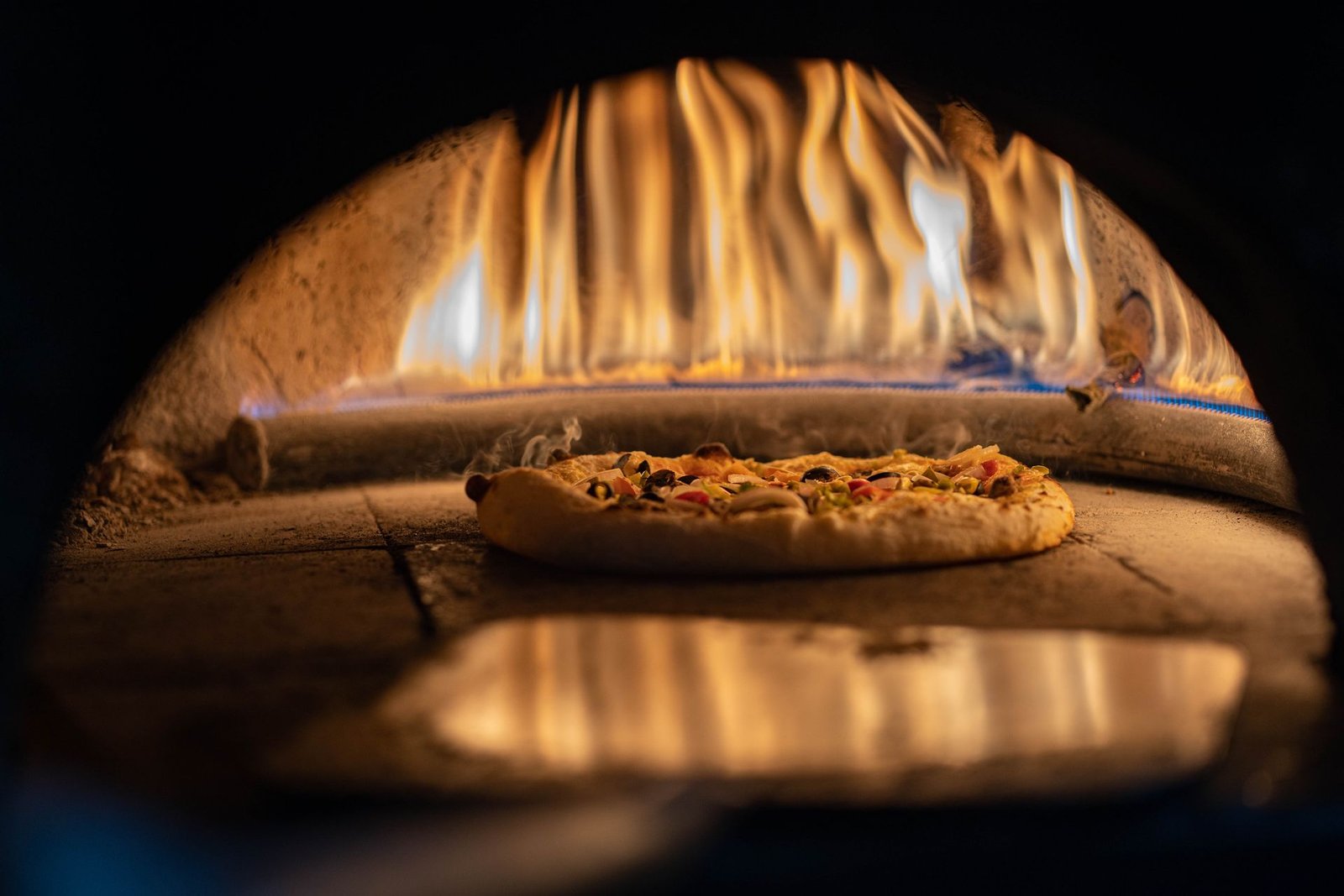
But 550°F cannot do what 800°F does, and the difference isn’t subtle — it’s a different category of pizza. True Neapolitan pizza, as defined by centuries of tradition in Naples (more on that in our Neapolitan pizza guide), bakes in 60 to 90 seconds at extreme heat. That violent, fast bake is what creates the signature puffy, airy cornicione with leopard-spot charring, a tender interior crumb, and a soft, soupy center that a longer bake would dry out. A home oven physically cannot produce this; the dough would need 6 to 8 minutes at 550°F, by which time the structure has set dense and the cheese has gone from melted to greasy. A countertop pizza oven at 750 to 850°F gets you genuinely close to the real thing — not identical to a wood-fired Neapolitan oven, but recognizably in the family.
Speed is the second real advantage. Preheat times of 15 to 25 minutes versus up to an hour, and bakes measured in seconds rather than minutes, change the texture of pizza night. A weeknight pizza becomes plausible. Energy use is a wash or better: yes, the elements draw serious wattage, but for a fraction of the time of a full-size oven heating a cavernous box. Where the regular oven claws back ground is versatility and capacity — it bakes a 16-inch pizza, handles sheet pans, and was already sitting in your kitchen for free.
The Real Pros and Cons
Let’s put the marketing aside and tally honestly.
Pros. The heat is genuine, not a gimmick — 700°F+ on a household outlet is an engineering achievement that directly translates to better pizza for high-heat styles. Preheat is fast, bakes are fast, and weeknight pizza becomes realistic. There’s no installation, no fuel to buy, no weather dependency, and no learning to manage a live fire the way wood-fired baking demands. For apartment dwellers and anyone without outdoor space, it’s the only path to true high-heat pizza at home. Cleanup is minimal — the extreme heat incinerates most spills, and the stone needs only brushing. And compared with building or buying an outdoor oven setup, the total cost of entry is lower and the commitment is reversible: it plugs in, and it can be unplugged.
Cons. Price is the first one: quality countertop pizza ovens sit firmly in the appliance-investment bracket, multiples of what a great pizza steel costs. Counter space is the second — these are bulky boxes, roughly the footprint of a large microwave but taller, and they need clearance around them during use. They are unapologetically single-purpose; if you make pizza twice a month, that’s a lot of counter dedicated to a twice-a-month activity. The 12-inch size cap frustrates anyone used to 16-inch pies or feeding a crowd — you’ll be baking personal pizzas in rotation. And while 800°F is thrilling, it’s also unforgiving: the line between leopard-spotted and incinerated is about thirty seconds, so there’s a real learning curve despite the simple controls.
There’s also the honest caveat that heat isn’t everything. A countertop electric oven gives you temperature, but it doesn’t give you wood smoke, and it doesn’t give you the cavernous radiant dome of a true Neapolitan oven. What it produces is best described as excellent high-heat pizza — a category worth celebrating on its own terms, but worth understanding before you buy. Our wood-fired vs gas comparison explores what flame and fuel add beyond raw temperature, if you’re weighing the full spectrum.
Who Should (and Shouldn’t) Buy One
You should buy one if: you make pizza at least a couple of times a month and want Neapolitan or other high-heat styles that your oven can’t produce; you live in an apartment or a home without usable outdoor space; you love the idea of 90-second bakes and fast preheats; or you’ve already mastered steel-baked New York–style pizza and want the next frontier. The weekly pizza maker who dreams of leopard-spotted cornicioni is the ideal customer — for them, the cost per bake drops fast and the joy per bake stays high.
You should skip it if: you make pizza occasionally and are happy with the results from your home oven; counter space is already a battleground in your kitchen; you primarily want large pizzas for parties (the 12-inch cap will annoy you); or the budget would strain — a $50 steel in the oven you already own produces genuinely great pizza, and no appliance compensates for unpracticed dough skills. Beginners, frankly, should start with a steel: learn dough, launching, and heat management for cheap, then upgrade when your skills exceed your oven’s ceiling rather than before.
The maybe zone: small households who’d love faster weeknight pizza but balk at the price. Here the math is personal — how much is 30 minutes of preheat worth to you, twice a week, for years? There’s no wrong answer, only an honest one. And if outdoor space exists, compare carefully with outdoor options in our outdoor pizza oven guide before committing to the countertop.

What to Look for When Shopping
Not all countertop pizza ovens are created equal, and the spec sheet tells you most of what matters. Maximum temperature is the headline number: look for at least 750°F if Neapolitan-style baking is your goal. Models topping out at 600 to 650°F still beat a home oven, but they land in an awkward middle — not hot enough for true 90-second bakes, yet priced like the real thing. The extra hundred degrees at the top of the range is where the magic lives.
Independent top and bottom heat control separates the great from the merely good. Pizza is a two-sided cooking problem — the deck crisps the bottom while the ceiling chars the top — and being able to bias heat up or down lets you fix a bottom that’s browning too fast or a top that needs more char. Preset programs (Neapolitan, thin-and-crispy, pan, frozen) are genuinely useful for beginners, but make sure manual control exists underneath for when your skills outgrow the presets.
Deck size and chamber height determine what you can actually bake. Twelve inches of deck is the sweet spot; check that the chamber height clears a puffy cornicione plus your peel’s angle of attack. A viewing window or interior light sounds like a luxury until your first 90-second bake, when opening the door to check progress dumps the heat you’re paying for. Build quality matters more here than in most appliances — thick insulation, a solid door hinge, and a stone that isn’t paper-thin all translate directly to heat retention and longevity. Finally, check the warranty and support: these ovens live brutal thermal lives, and a manufacturer that stands behind the heating elements for more than a year is telling you something about build confidence.
Price-wise, expect the capable models to sit well above impulse-buy territory. That stings until you amortize it: a weekly pizza maker will run hundreds of bakes through the oven in its first few years, bringing the per-pizza cost of the appliance down to pocket change. The expensive mistake isn’t buying a good one — it’s buying a cheap one that can’t reach real pizza temperatures and ends up as a bulky toaster oven.
Getting the Most From Your New Oven
Buying the oven is the easy part; the first month is where owners separate into delighted and disappointed. Preheat fully, every time. The stone deck needs to be saturated with heat, not just the air around it — give it the full recommended preheat (usually 20+ minutes at max) and verify with an infrared thermometer if you own one. Launching onto an under-soaked deck is the number one cause of pale, soft bottoms in these ovens, exactly as it is in regular ovens.
Learn the hot spots. Every model has them — usually toward the back or under the top element. Your first few bakes should be experiments: launch, watch, note where charring happens fastest. Then turn the pizza mid-bake, typically once around the 45-second mark for Neapolitan-style bakes. A small turning peel is worth its weight here; long tongs work in a pinch but disturb the bake more.
Match dough to heat. High-heat baking rewards wetter, well-fermented doughs — the classic Neapolitan-style doughs at 60%+ hydration with 00 flour — and punishes heavy, sugary, or overloaded pizzas, which scorch before they cook through. Keep toppings light for 90-second bakes; save the loaded deep-dish ambitions for lower temperatures. For temperature targets across styles, our pizza oven temperature guide gives you the numbers to aim for.
Clean like you mean it, but gently. After each session, once the oven is cool, brush the stone deck clean of flour and debris — never soap, never water on a hot stone, the same rules as any pizza stone. Wipe the interior with a dry cloth. The extreme heat does most of the cleaning for you by carbonizing spills; you’re just sweeping up the ash. With that minimal care, the oven will perform consistently for years.
Beyond Margherita: What Else to Cook in It
Once the oven is on your counter, the margherita is just the beginning. The intense top-and-bottom heat is a playground for anything flat, fast, and char-friendly. Thin-and-crispy bar-style pizzas are superb — the aggressive bottom heat sets an almost cracker-like base in minutes. Flatbreads and pita puff dramatically in the fierce heat; a 60-second pita with a fully separated pocket feels like a magic trick the first time. Calzones and stromboli work if you keep them modest in size and dock the dough so steam escapes.
It’s also a secret weapon for vegetables: sliced eggplant, zucchini, and peppers char beautifully on the hot deck in a few minutes, and you can finish them with nothing but olive oil and salt. Reheating leftover pizza in a countertop oven beats every other method for speed plus crispness — two minutes on the hot stone and the crust re-crisps as if freshly baked. What doesn’t work: anything thick that needs slow, even cooking (save the deep-dish for a conventional oven), anything oversized, and anything heavily sugared that will scorch in seconds. Learn the oven’s personality with simple bakes first, then get creative — the chamber rewards experimentation as long as you respect the heat.
Frequently Asked Questions
Are countertop pizza ovens worth it?
For the right buyer, absolutely: weekly pizza makers who want true high-heat styles (Neapolitan and similar) that a home oven can’t produce will find the investment transformative. For occasional bakers happy with New York–style results, a pizza steel in the existing oven delivers 80% of the joy for a fraction of the cost and zero counter space.
How hot do countertop pizza ovens get?
Quality electric models reach 700 to 850°F (roughly 370 to 450°C) on a standard household outlet — far beyond a conventional oven’s 500 to 550°F ceiling. That heat is what enables 60- to 90-second Neapolitan-style bakes with proper char and puff.
Can you cook anything besides pizza in them?
Yes, within limits: flatbreads, pita, roasted vegetables, and reheating pizza all work beautifully. But the small, pizza-shaped chamber won’t fit sheet pans or large roasts, so it can’t replace your main oven — it’s a specialist, not a generalist.
Do they use a lot of electricity?
They draw high wattage while heating, but only for 20 to 30 minutes of preheat plus short bakes — far less total energy than running a full-size oven at max for an hour. For typical pizza-night use, the impact on your electric bill is modest.
What’s the biggest pizza a countertop oven can make?
Twelve inches is the standard maximum, with some models limited to 10 inches. If you regularly make 16-inch pizzas or cook for crowds, this size cap is a genuine limitation — you’ll be baking personal pizzas in rotation.
Do I still need a pizza peel?
Yes — a peel (or two, including a small turning peel) remains essential for launching and retrieving pizzas in the small, intensely hot chamber. Launching by hand at 800°F is not an option, and tongs alone make turning awkward.
Conclusion
So, are countertop pizza ovens worth it? If you’re chasing true high-heat pizza at home — leopard-spotted Neapolitan-style crusts, 90-second bakes, weeknight pizza nights — and you make pizza often enough to justify the counter space, a countertop pizza oven is one of the best purchases a pizza obsessive can make. If your pizza nights are occasional and your oven-and-steel setup already makes you happy, save your money and your counter. Either way, the deciding factor is honest self-assessment, not marketing. Browse our ovens and equipment guides to keep researching, and let your pizza habits — not hype — make the call.