

An outdoor pizza oven changes pizza night from a kitchen task into an event. There is something about cooking over real fire in the open air — the flames, the smell of wood smoke, friends gathered around watching pizzas puff and char in ninety seconds — that a kitchen oven cannot replicate. But choosing the right outdoor pizza oven means choosing a fuel, and wood, gas, and pellet each create a completely different ownership experience.
This guide compares the three fuels head to head on everything that matters in real life: heat performance, flavor, convenience, fuel cost and sourcing, setup requirements, maintenance, and who each one actually suits. No brand worship, no spec-sheet racing — just honest, practical comparison so you can buy the oven you will still love in three years.
If you are earlier in the journey and still deciding between indoor and outdoor options, our home pizza oven buying guide covers the full landscape. And once you own one, our pizza oven temperature guide will help you master its heat.
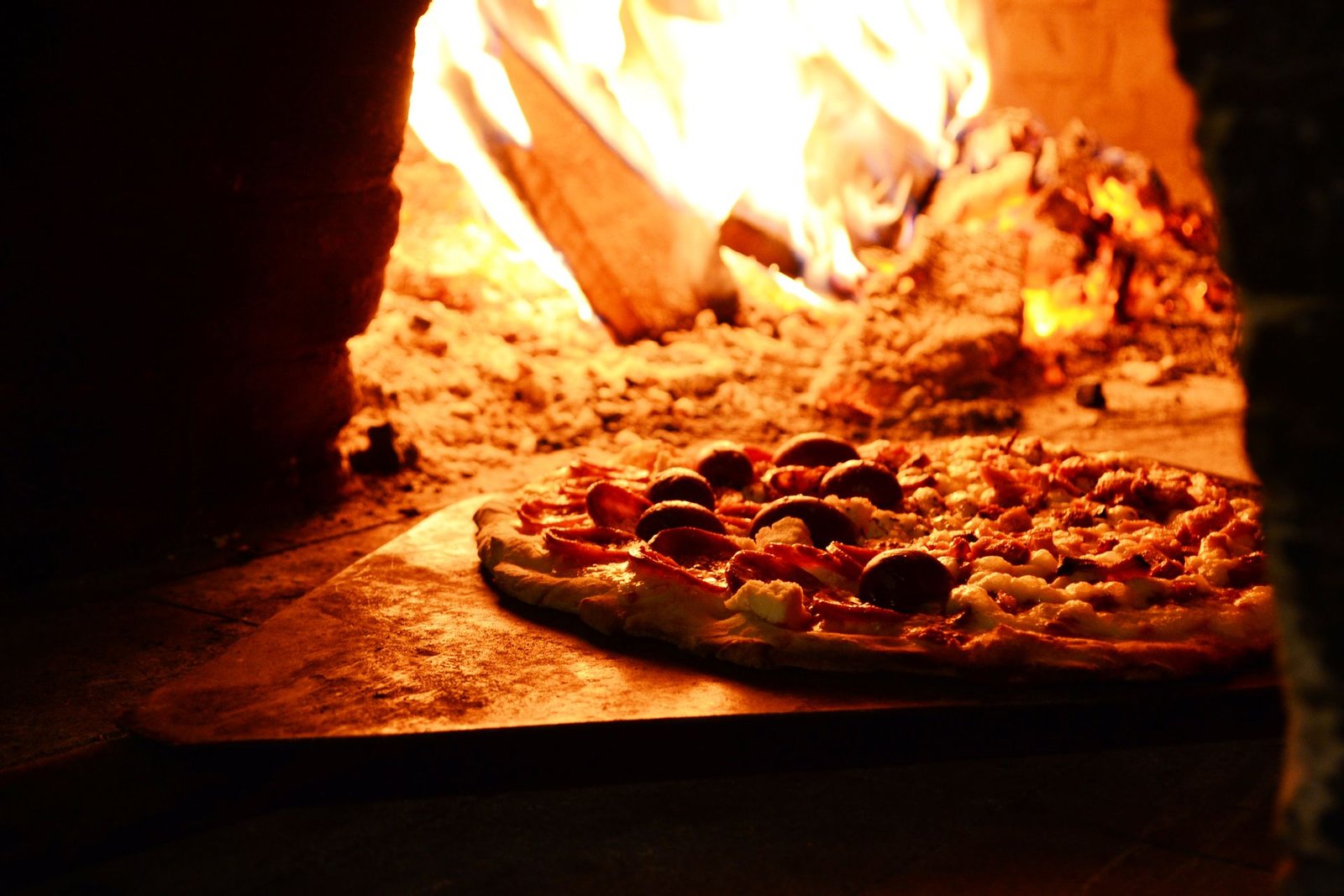
🍕 Key Takeaways
- All three fuels can reach 450°C+ (850°F+) and make superb pizza — fuel choice is about lifestyle fit, not pizza quality ceilings.
- Wood-fired ovens offer the full ritual: fire-building, flame management, and a subtle smoke note, with the most hands-on effort.
- Gas ovens are the easiest to own: dial-controlled heat, 15-minute warm-ups, and no ash or fuel storage hassles.
- Pellet ovens split the difference: real wood fuel with automated feeding, at the cost of mechanical complexity.
- Budget beyond the oven: fuel, covers, peels, thermometers, and a heat-safe setup location all add to the real cost.
- Check local fire codes, burn bans, and smoke regulations before buying — they rule out options for some owners.
Wood-Fired Outdoor Ovens: The Ritual
How they work
A wood-fired oven is a insulated chamber — usually a dome or barrel shape — with a stone or refractory deck. You build a hardwood fire inside, let it heat the dome and deck for 30–45 minutes, then push the coals to the back or side and cook pizzas on the hot deck next to the live flame. The flame rolling across the dome ceiling cooks the top of the pizza while the saturated deck crisps the bottom. Temperatures of 450–500°C (850–950°F) are standard, producing 60–90 second bakes.
What is genuinely great
The experience is unmatched. Building and tending a fire, watching the dome go from black to clear (a traditional sign the oven is ready), sliding pizzas next to live flames — it is cooking as theater, and guests love it. The heat is fierce and the pizzas show it: puffy, leopard-spotted crusts with a faint but real wood-smoke note in the background. A wood oven also stays useful beyond pizza: once the fire dies down, the retained heat roasts meats, bakes bread, and slow-cooks dishes for hours. It is the most versatile of the three.
The honest costs
Wood-fired is the most demanding option. You need a supply of properly seasoned hardwood — not construction lumber, not softwood, not damp logs — and you need somewhere dry to store it. Heat-up takes 30–45 minutes of active fire management. Every session ends with ash cleanup. Your pizzas will vary more from bake to bake because you are managing a live fire, not turning a dial; the learning curve is the steepest of the three fuels. And weather matters: wind and rain complicate fire management significantly.
Gas Outdoor Ovens: The Pragmatist’s Choice
How they work
Gas ovens burn propane (from a standard tank) or natural gas (from a home line) through a burner — usually at the back or side of the chamber — heating the stone deck and the air to 450–500°C (850–950°F). Heat-up takes 15–20 minutes, temperature is controlled with a dial, and the flame stays consistent without tending. It is the closest thing to an appliance among outdoor ovens.
What is genuinely great
Convenience dominates. Light it, wait fifteen minutes, and bake — on a weeknight, after work, with no planning. Temperature control is precise and repeatable: the fifth pizza bakes like the first, which makes gas the easiest fuel for learning dough and launching technique without fire management as a confounding variable. There is no ash, no wood storage, no smoke complaints from neighbors, and propane is widely available. For most households, gas produces the most pizza per year simply because it gets used the most.
The honest costs
You trade ritual for convenience, and some cooks miss the fire. The flavor difference vs wood is real but small — more on that in our wood-fired vs gas comparison — and mostly matters to people who have tasted both many times. You are tied to propane refills or a gas line installation. And gas ovens, while consistent, teach you less about fire; if you dream of mastering wood-fired cooking eventually, gas will not get you there.
Pellet Outdoor Ovens: The Middle Path
How they work
Pellet ovens burn compressed hardwood pellets fed automatically from a hopper by an auger, with a fan managing combustion. You load the hopper, ignite, and the oven feeds itself, reaching 450°C+ (850°F+) with real wood fuel and minimal tending. It is wood fire with the labor automated away.
What is genuinely great
You get genuine wood fuel — real hardwood, real subtle smoke — with gas-like convenience. Heat-up is faster than log-burning (typically 15–25 minutes), temperature holds steadier than a hand-managed fire, and there is no log-splitting, fire-building skill, or constant tending. For cooks who want the wood story without the wood labor, pellets are a compelling compromise.
The honest costs
Complexity is the trade. An auger, fan, and igniter mean electrical dependence (you need an outlet) and more parts that can eventually fail — a pellet oven has failure modes that a simple steel box with a gas burner does not. Pellets must be kept completely dry (wet pellets swell and jam the auger) and bought in bulk for economy, so you need dry storage space. Pellet availability varies by region; confirm a reliable local supply before buying. And while the smoke note is real, it is milder than a log fire’s — pellet partisans and log purists will debate this endlessly.
Head-to-Head Comparison
| Factor | Wood-fired | Gas | Pellet |
|---|---|---|---|
| Max temperature | 450–500°C+ | 450–500°C | 450°C+ |
| Heat-up time | 30–45 min (active) | 15–20 min (passive) | 15–25 min (mostly passive) |
| Temperature control | Manual, skill-based | Dial-precise | Automated, steady |
| Flavor | Subtle wood-smoke note | Clean, neutral | Mild wood note |
| Effort per session | High (fire, tending, ash) | Low (light and bake) | Medium-low (load hopper) |
| Fuel sourcing | Seasoned hardwood + dry storage | Propane refills or gas line | Dry pellet storage + supplier |
| Learning curve | Steepest | Gentlest | Moderate |
| Mechanical complexity | Low (few parts to fail) | Low | Higher (auger, fan, igniter) |
| Neighbor/weather sensitivity | Highest (smoke, wind) | Lowest | Low-moderate |
| Beyond pizza | Excellent (retained-heat cooking) | Good | Good |
Every fuel can make a world-class pizza. The table is about choosing your relationship with the oven.
A typical Friday night with each fuel
Spec tables are useful, but ownership is felt in the rhythm of a session. Here is what pizza night actually looks like with each fuel.
Wood-fired, 6pm: You carry an armload of seasoned oak from the woodshed and build the fire. By 6:30 the dome is heating and you are feeding it every ten minutes, watching the soot burn off the dome interior — the traditional sign of readiness. At 6:45 the deck is saturated; you push the coals aside, brush the deck, and launch the first pizza next to live flames. Between pizzas you nudge the fire, add a log when the flame dips, and turn each pie to manage the hot side. By 8:30 you have made eight pizzas, the oven is still roaring, and you rake the coals for tomorrow’s retained-heat roast. Total active tending: most of the evening — which was the point.
Gas, 6pm: You turn the dial, confirm ignition, and go back inside to stretch dough. At 6:20 the infrared thermometer shows the deck is ready. You launch pizzas every six to eight minutes, turning once, with the flame holding steady the whole time — no tending, no adjustments beyond an occasional dial tweak. By 7:30 you have made eight pizzas, turn the dial off, and go eat. Total active tending: essentially zero beyond the baking itself.
Pellet, 6pm: You fill the hopper, press ignite, and prep dough while the oven climbs. At 6:20 it is at temperature and holding. Sessions feel much like gas — steady heat, minimal intervention — except you top up the hopper once mid-evening and hear the auger cycling. Afterward, you run the shutdown cycle and brush out a small amount of fine ash. Total active tending: a few minutes.
Neither rhythm is better in the abstract. The question is which one you want two hundred Friday nights from now.
Maintenance compared
Wood-fired maintenance is manual but simple: remove ash after every few sessions (a metal ash can, never plastic), brush the deck, and occasionally brush the chimney if your oven has one. The oven itself has almost nothing to break — no electronics, no moving parts. Covers and door seals wear over years.
Gas maintenance is minimal: keep the burner ports clear of debris and spider webs (a common cause of uneven flames), check gas connections for leaks seasonally with soapy water, and replace the stone if it eventually cracks. The burner and ignition are the only parts that can fail, and both are usually replaceable.
Pellet maintenance is the most involved: empty and clean the burn pot regularly, keep the auger free of pellet dust, ensure the hopper stays dry, and clean the fan intake. Most pellet ovens have more replaceable parts — igniters, fans, controllers — which is the price of automation. Follow the manufacturer’s cleaning schedule and the oven stays reliable; neglect it and you will learn how an auger jam ruins a pizza night.
Across all three, the fitted cover is the unsung hero: an oven stored dry and covered lasts years longer than one left exposed, regardless of fuel.
Fuel: Cost, Sourcing, and Storage
This section deserves emphasis because it surprises buyers more than any other. The oven is a one-time purchase; fuel is forever.
Wood costs vary wildly by region — in some areas seasoned hardwood is cheap and plentiful; in others it is a specialty purchase. You need roughly a wheelbarrow-sized stack per long session for a portable oven, and it must be seasoned (dried 6–12 months) hardwood: oak, beech, maple, or fruit woods. Green or softwood smokes excessively and heats poorly. Storage means a dry woodshed or covered rack — a tarp on the ground grows mold.
Gas is the most predictable: a standard propane tank lasts many pizza sessions, and refills or exchanges are available nearly everywhere. If you have a natural gas line, plumbing the oven in removes refills entirely. Per-pizza fuel cost is generally the lowest of the three in most markets.
Pellets are economical when bought in bulk bags or by the pallet, expensive in small bags. They must stay bone-dry — a bag left open in humidity is ruined. Food-grade hardwood pellets (not heating pellets, which may contain softwood or additives) are the right choice.
Before committing to any fuel, price a year’s worth in your area and confirm you have the storage. An oven you cannot afford to fire is garden furniture.
Owning an Outdoor Pizza Oven: Setup & Upkeep
Where it lives
Every outdoor oven needs a level, non-combustible surface — a stone patio, concrete pad, or purpose-built stand — with the manufacturer’s specified clearance from walls, fences, railings, and anything overhead. Heat radiates in all directions, and “it seemed far enough” is how fences get scorched. Wind exposure matters enormously: a sheltered corner holds temperature with far less fuel than an exposed windy spot, and wind makes wood-fire management genuinely difficult. If possible, position the oven where you can see it from the kitchen — you will check on it constantly while prepping.
What the regulations say
Check before you buy, not after. Some municipalities restrict open wood burning, some homeowner associations ban visible flames or smoke, and burn bans during dry seasons can sideline a wood oven for months. Gas ovens face fewer restrictions but still need clearance compliance. A quick call to your local fire department or a read of your HOA rules takes ten minutes and prevents an expensive mistake.
Safety essentials
Keep a fire extinguisher rated for grease and wood fires within reach — not in the garage, within reach. Never leave a wood-fired oven unattended while lit. Exterior surfaces get hot enough to cause serious burns; establish a kid-and-pet perimeter and enforce it. Let the oven cool completely before covering it. Store propane tanks upright, outdoors, away from the oven’s heat. Our full pizza oven safety guide covers all of this in detail — read it before your first firing, whichever fuel you choose.
Accessories you will actually need
Beyond the oven itself, budget for: a launching peel and a turning peel, an infrared thermometer (deck temperature is everything), heat-resistant gloves, a deck brush, and a fitted weatherproof cover. Our pizza oven accessories guide ranks the full list by actual usefulness — buy the essentials first and add nice-to-haves later.
Which outdoor pizza oven fuel should you choose?
Forget ranking; match the fuel to the cook:
- Choose wood if the fire is the point — you enjoy process, you want the full ritual, you have dry hardwood storage, and your local rules allow it. You will work harder per pizza and love it.
- Choose gas if you want maximum pizza with minimum friction — weeknight bakes, consistent results while learning, no fuel storage headaches. The oven that gets used is the best oven.
- Choose pellet if you want real wood fuel without fire-tending, have dry pellet storage and a reliable supplier, and accept a bit more mechanical complexity for the convenience.
And a genuinely useful tiebreaker: think about who else will use the oven. If a partner, teenager, or friend will fire it up solo, gas’s simplicity wins. If it is your personal hobby sanctuary, wood’s demands are pleasures. Buy for the household, not just yourself.
There is also no rule against starting simple and upgrading. Many wood-fired devotees started on gas, learned dough and launching without fire stress, and moved to wood when they were ready for the next challenge. The skills transfer completely — only the fire management is new.
Frequently Asked Questions
Can you taste the difference between wood, gas, and pellet pizza ovens?
Honestly? Slightly. In blind tastings, most people detect a subtle smoke background in wood-fired crusts that gas lacks, with pellet in between. But the difference is small compared to the difference that dough, fermentation, and technique make. A great pizzaiolo on gas beats a mediocre one on wood every time. Do not choose wood for flavor alone — choose it for the experience.
How much space do I need for an outdoor pizza oven?
The oven itself needs only a few square feet, but the working zone needs more: clearance on all sides per the manufacturer (often 1–3 feet from combustibles), room to stand and maneuver a long peel, and nearby space for a prep table and fuel storage. A 10×10 foot patio corner comfortably hosts a portable oven setup; measure your actual space against the oven’s footprint plus clearances before ordering.
Are outdoor pizza ovens allowed in all areas?
No. Local fire codes, burn bans, HOA rules, and rental agreements can restrict or prohibit wood-fired ovens in particular. Gas faces fewer restrictions but is not exempt everywhere. Check with your local fire department and read your HOA or lease terms before purchasing — this is a ten-minute check that prevents a very expensive mistake.
What is the cheapest outdoor pizza oven fuel to run?
In most markets, gas (propane or natural gas) has the lowest per-pizza fuel cost and the most predictable pricing. Wood costs vary enormously by region — cheap where hardwood is plentiful, pricey where it is not. Pellets are economical in bulk where supply is good. Price a year of your actual usage locally before deciding.
Can I use an outdoor pizza oven in winter?
Yes, with adjustments. Cold air and wind increase heat-up time and fuel consumption, and you will work harder to hold temperature — a windbreak helps enormously. Gas handles cold most gracefully; wood demands more tending. Clear snow and ice from around the oven, dress warmly, and expect sessions to take a bit longer. Many owners find winter pizza nights wonderfully cozy.
Do outdoor pizza ovens work for anything besides pizza?
Absolutely — this is one of their best arguments. Wood-fired ovens excel at retained-heat cooking after the fire dies: roasts, bread, braises, and even slow overnight dishes. Gas and pellet ovens handle roasting, searing steaks, and baking flatbreads beautifully. If you love live-fire cooking generally, the oven earns its keep far beyond pizza night. For grill-based alternatives, our grilled pizza guide covers the smoky-crust approach with equipment you may already own.
How long does it take to learn each fuel?
Gas is usable on day one — if you can launch a pizza, you can bake on gas. Pellet takes two or three sessions to understand the feed behavior and temperature rhythms. Wood takes longer: expect five to ten sessions before fire management feels natural, though your pizzas will be good well before that. The learning is part of the pleasure for wood enthusiasts and part of the cost for everyone else.
Which outdoor pizza oven fuel is best for beginners?
Gas, by a wide margin. It removes fire management from the learning curve so you can focus on dough, launching, and timing — the skills that actually determine pizza quality. Many experienced wood-fired cooks started on gas and switched later with their fundamentals already solid.
[…] you are also considering pellet as a third option, our outdoor pizza oven guide compares all three fuels side by side. And for the numbers behind the heat discussion, our pizza […]