

It’s one of the most-asked questions in all of food: how long does pizza last once the party’s over and the box is sitting on the counter? The tempting answer — the one generations of college students and midnight snackers have lived by — is “until it looks weird.” The real answer is more precise, and worth knowing, because pizza sits squarely in the category of foods where guessing wrong has consequences. Cheese, sauce, and meat toppings make leftover pizza a genuinely perishable food, not the indestructible snack its reputation suggests.
Here’s the good news: the rules are simple, and once you know them, leftover pizza becomes one of the most rewarding foods to keep around. A couple of small habits — refrigerating promptly, storing properly, reheating to the right temperature — stretch your pizza’s safe life from a couple of hours to the better part of a week (or months, in the freezer), while keeping the texture and flavor worth coming back for. The difference between pizza that’s safely delicious on day three and pizza that’s a gamble is entirely in the handling.
This guide gives you the exact timelines for room temperature, fridge, and freezer; explains the 2-hour rule and why it exists; shows you how to store slices so they stay good; teaches you to spot pizza that’s turned; and covers safe reheating. No fear-mongering, no myths — just the practical food-safety knowledge every pizza lover should have.
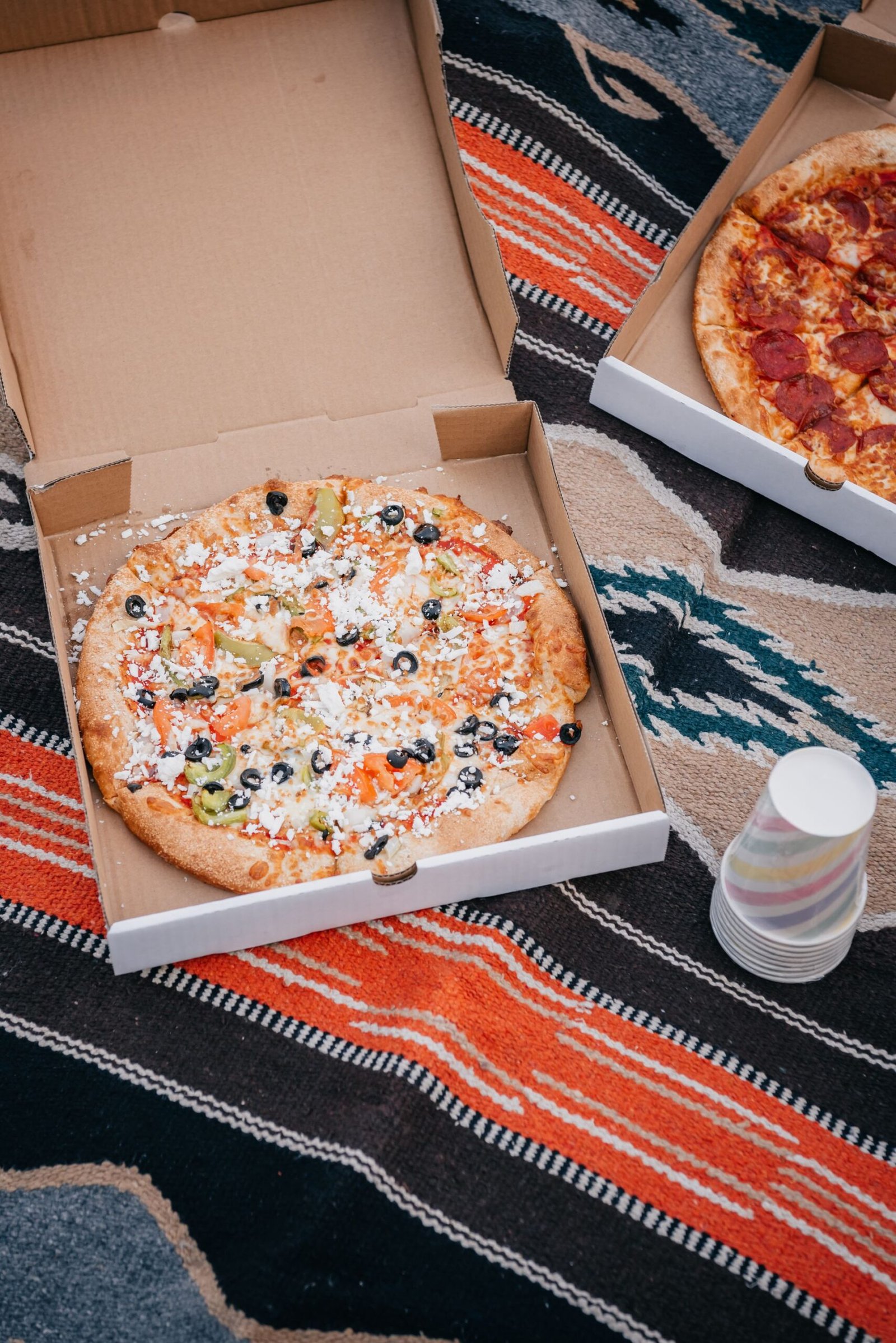
🍕 Key Takeaways
- At room temperature, pizza is safe for up to 2 hours (1 hour if it’s above 90°F) — then it must be refrigerated.
- In the fridge, properly stored leftover pizza lasts 3 to 4 days.
- In the freezer, well-wrapped pizza keeps for 1 to 2 months with good quality.
- Cool slices before packing, store airtight with parchment between slices, and never leave the box out overnight.
- Reheat leftovers until steaming hot throughout — 165°F (74°C) internal — and only reheat what you’ll eat.
- When in doubt, throw it out: off smells, sliminess, or mold mean the pizza is done, no matter what the calendar says.
How Long Does Pizza Last? The Short Answers
Let’s lead with the numbers, then explain the reasoning behind them. At room temperature: 2 hours maximum. From the moment the pizza comes out of the oven, a clock starts. Two hours of sitting out — on the counter, on the coffee table during the game, in the box on the way home — is the safe limit. If the environment is hot (above 90°F, think summer picnic or a sweltering party), that limit drops to 1 hour. After that, the pizza needs to be refrigerated or it should be discarded. The box left out overnight is not “probably fine” — it’s firmly in unsafe territory, no matter how normal it looks and smells.
In the refrigerator: 3 to 4 days. Once properly cooled and stored airtight at 40°F or below, leftover pizza stays safe for three to four days. Day-two pizza is a beloved institution; day-three pizza is still perfectly good; by day four you’re at the boundary, and beyond that you’re gambling. Note that this timeline assumes the pizza was refrigerated promptly — a pie that sat out for six hours before being fridged doesn’t get a fresh 3-to-4-day clock. The room-temperature hours count.
In the freezer: 1 to 2 months for best quality. Frozen solid at 0°F, pizza stays safe indefinitely in the strict technical sense — freezing halts bacterial growth — but quality degrades over time. One to two months is the window where a well-wrapped slice reheats beautifully; beyond that, freezer burn and flavor loss creep in. For the full method on freezing (and the related skill of freezing dough), see our guide to how to freeze pizza dough — many of the wrapping principles transfer directly.
These timelines apply to standard pizzas with cheese, sauce, and typical toppings. Pizzas with highly perishable toppings — seafood, for instance — deserve the shorter end of every range. And every timeline assumes proper storage, which is where most people go wrong.
The 2-Hour Rule, Explained
The 2-hour rule isn’t arbitrary caution — it’s built on how bacteria actually behave. There’s a temperature range, roughly 40°F to 140°F (4°C to 60°C), often called the danger zone, where bacteria multiply rapidly — doubling in as little as 20 minutes under ideal conditions. Your refrigerator holds food below 40°F; your oven holds it above 140°F. A pizza sitting on the counter drifts into the danger zone as it cools, and once there, the bacterial clock runs fast. Two hours is the widely accepted safe cumulative limit in that zone.
Pizza is a particularly good candidate for this concern because of its toppings. Cheese and dairy, cooked meats, and moist vegetable toppings are all foods that bacteria colonize readily — a plain breadstick is far less risky than a sausage-and-mushroom slice, because there’s less for microbes to work with. The sauce’s acidity offers mild protection, but not nearly enough to matter. This is also why the rule is cumulative: an hour on the counter at the party, plus another hour in the car, plus an hour on your kitchen counter while you “get around to it” equals three hours — over the limit, even though no single stretch felt long.
The practical takeaway is refreshingly simple: when the eating stops, the refrigerating starts. Don’t wait for the pizza to cool completely on the counter — lukewarm is fine to refrigerate (despite the old myth, modern fridges handle it; just don’t pack a steaming-hot whole pie in a sealed container). Set a mental timer at pizza night: two hours after the pizza arrives or comes out of the oven, leftovers go into the fridge. Make it a habit and you’ll never have to wonder. For help planning quantities so you’re not drowning in questionable day-five slices, our how much pizza per person guide keeps orders — and leftovers — sane.
How to Store Leftover Pizza Properly
Good storage is what separates day-three-delicious from day-three-regret, and most people’s method — the open box shoved in the fridge — is close to the worst option. The cardboard box is designed for transport, not storage: it lets air circulate freely, drying out the crust while the pizza absorbs every odor in your refrigerator. Here’s the method that actually works.
Step 1: Cool briefly, then pack. Let slices cool until they’re no longer steaming — about 20 to 30 minutes — but don’t leave them out for hours waiting for room temperature. Slightly warm is fine to pack. Step 2: Separate and wrap. Place parchment or wax paper between stacked slices so they don’t fuse into a single cheesy monolith, then seal in an airtight container or zip-top bag with the air pressed out. Individual wrapping in plastic wrap or foil also works well and makes grab-and-reheat easy. Step 3: Refrigerate promptly at 40°F or below, on a shelf rather than in the door (the door is the warmest, most temperature-variable spot in the fridge).
For freezing, the same principles apply with more armor: wrap slices individually in plastic wrap, then add a layer of foil or slide them into a freezer bag with air removed. The double wrap fights freezer burn, which is the main quality killer. Label with the date — frozen pizza all looks the same after a month, and the label keeps you within the 1-to-2-month quality window. Freeze flat if you can; it speeds freezing (faster freeze = smaller ice crystals = better texture) and stacks neatly.
Two myths to retire: first, that you must cool pizza completely before refrigerating — you don’t; getting it cold fast matters more than avoiding a few degrees of fridge warming, so don’t leave it out for hours “cooling.” Second, that the box in the fridge is fine — it isn’t, for the air-circulation reasons above. Five minutes of proper packing buys you days of better, safer leftovers.
Why Leftover Pizza Changes: The Science of Staling
Ever wonder why day-old pizza tastes so different even before safety enters the picture? It’s chemistry, and understanding it makes you better at both storing and reheating. The main culprit is starch retrogradation: as the crust cools, starch molecules that gelatinized during baking begin to re-crystallize, firming and drying the crumb. This happens fastest at refrigerator temperatures — which is the great irony of leftover pizza. The fridge keeps it safe but accelerates staling; room temperature stales slower but isn’t safe. There’s no winning this trade-off, only managing it — and reheating reverses retrogradation beautifully, which is why a proper reheat tastes so much better than a cold slice.
Moisture migration is the second force. Water moves from wet to dry within the slice: sauce moisture creeps into the crust (hello, soggy bottom), while the exposed crust edges lose moisture to the air (hello, cardboard rim). Airtight storage slows this dramatically by limiting air circulation — another reason the open box is the enemy. Separating slices with parchment prevents the cheese-to-cheese moisture trap that turns stacked slices gummy.
Cheese changes too. Refrigeration firms mozzarella’s protein structure, which is why cold pizza cheese feels rubbery rather than creamy. Gentle, even reheating relaxes those proteins back toward their melty state — but overheating squeezes out fat and water, leaving grease pools and tough cheese. That’s the scientific case for moderate reheat temperatures and against the microwave’s violent, uneven heating. None of this is dangerous — it’s pure texture science — but it explains why the storage and reheating methods in this guide produce such dramatically better results than neglect. Treat the chemistry with respect and day-three pizza can genuinely rival day one.
How to Tell If Leftover Pizza Has Gone Bad
Timelines are guidelines; your senses are the final judge — with one critical caveat. Smell it. Sour, off, or unusually yeasty odors mean the pizza has turned, even if it looks fine. Fresh leftover pizza smells like pizza; spoiled pizza announces itself. Feel it. Slimy or tacky cheese, a crust that’s gone gummy in a way reheating can’t fix — those textures signal bacterial activity, not just staleness. Look at it. Visible mold (fuzzy spots, often green, white, or black), dramatic discoloration, or toppings that have darkened and broken down are all discard signals. Mold on one slice doesn’t mean neighboring slices are safe, either — spores spread invisibly.
Here’s the caveat that matters: you cannot always tell. Some harmful bacteria don’t change the smell, taste, or appearance of food at all. That’s precisely why the timelines exist — they’re the safety net for the cases your senses can’t catch. A slice that’s been in the fridge for eight days might smell perfectly normal and still be unsafe. This is the foundation of the golden rule of leftovers: when in doubt, throw it out. No slice of pizza is worth the misery of food poisoning, and the cost of replacing it is trivial compared to the cost of guessing wrong.
One more judgment call people get wrong: the “it was only out for a few hours” rationalization. “A few hours” is exactly the danger zone the 2-hour rule describes. The pizza that sat on the counter from dinner through the late movie and into the night has been out far too long, regardless of how it looks. Discard it, learn the habit, and refrigerate promptly next time. Your future self — the one enjoying safe, delicious day-two pizza — will thank you.
Special Situations: Delivery, Parties, and Power Outages
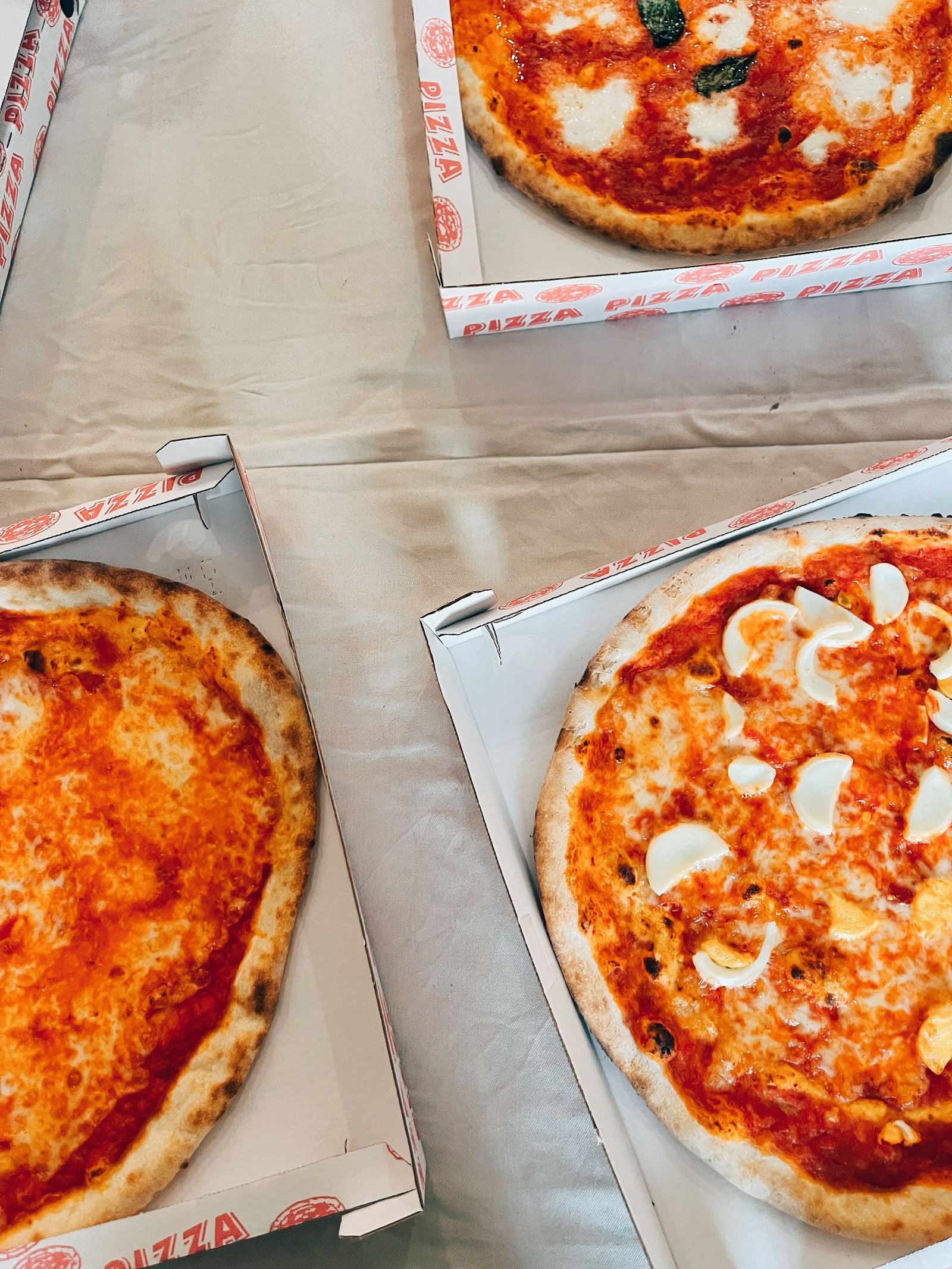
Not all leftover pizza starts its clock in your kitchen. Delivery pizza is the big one: the 2-hour countdown starts when the pizza comes out of the restaurant’s oven, not when it arrives at your door. A delivery that took 45 minutes in a hot bag has already used nearly half its room-temperature budget — so refrigerate delivery leftovers sooner rather than later, and be extra strict about the overnight box. When ordering, our how to order pizza guide’s quantity advice helps you land closer to “just enough” in the first place.
Parties and buffets are where the 2-hour rule gets violated most cheerfully. A grazing table with pizza out for the whole event is a food-safety failure disguised as hospitality. The fix is easy: put out half the pizza at a time and replenish from a warm oven every hour or so, keeping the rest refrigerated (or at least covered and cool) until its turn. Discard anything that’s been sitting out past the 2-hour mark rather than folding it back into the fridge supply — once it’s over the line, refrigeration doesn’t reset the clock.
Restaurant leftovers follow the same rules, with one addition: get them home and refrigerated fast. The box riding in a warm car for an hour after dinner counts fully against the 2 hours. If the drive is long or it’s a hot day, it’s worth asking for the box to be kept cool — or simply planning to eat the leftovers within the window rather than saving them.
Power outages deserve a special mention. If the fridge loses power, a closed refrigerator keeps food safe for about 4 hours; a closed freezer keeps things frozen for roughly 24 to 48 hours depending on how full it is. After that, perishables — including your leftover pizza — should be discarded. “But it still feels cool” isn’t a reliable test; when in doubt, throw it out applies with full force here. A $15 fridge thermometer takes the guessing out of it: 40°F or below is safe, above that the clock is running.
Reheating Leftovers Safely
Proper storage gets the pizza safely to day three; proper reheating gets it safely onto your plate. The core rule: reheat until steaming hot throughout, reaching 165°F (74°C) internal temperature. That temperature is the standard for safely reheating leftovers generally, and a food thermometer takes the guesswork out — especially for thick-crust slices where the center lags behind the surface. “Hot on top” isn’t the target; heated through is.
Reheat only once, and only what you’ll eat. Every cool-down and reheat cycles the food through the danger zone again, and quality degrades with each round. Pull out the slices you’ll actually eat, reheat those, and leave the rest properly stored. If you reheated too much, that extra slice needs to be eaten or discarded — not returned to the fridge for a third act.
Method matters for both safety and texture. The oven (450°F, 8–10 minutes) and the skillet (a few minutes covered) both bring slices to safe temperatures while re-crisping the crust; the microwave heats unevenly and can leave cold spots where bacteria survive, which is one more reason it ranks last. Our complete how to reheat pizza guide ranks all five methods with exact times and temperatures. And a final safety note for the planners: if you’re hosting a pizza party, build the 2-hour rule into your timeline — put half the pizzas out at a time and refresh from the oven, rather than laying out the whole spread for a four-hour grazing session.
Frequently Asked Questions
How long does leftover pizza last in the fridge?
Properly stored in an airtight container at 40°F or below, leftover pizza lasts 3 to 4 days. That clock starts when the pizza was baked, not when you refrigerated it — so pizza that sat out for hours before being fridged has less safe time remaining.
Can you eat pizza that’s been left out overnight?
No — discard it. Pizza left at room temperature for more than 2 hours (1 hour above 90°F) has spent too long in the bacterial danger zone. It may look and smell normal, but harmful bacteria don’t always announce themselves. When in doubt, throw it out.
How long does pizza last in the freezer?
Well-wrapped pizza keeps best quality for 1 to 2 months in the freezer. It remains technically safe beyond that (freezing halts bacterial growth), but freezer burn and flavor loss make it progressively less worth eating.
Should you refrigerate pizza in the box?
It’s better than leaving it out, but far from ideal. The box allows air circulation that dries out the crust and lets the pizza absorb fridge odors. Transfer slices to an airtight container or wrap individually — it takes five minutes and doubles the enjoyment of your leftovers.
How can you tell if leftover pizza is bad?
Off or sour smells, slimy textures, visible mold, or significant discoloration all mean discard. But remember: some harmful bacteria cause no detectable changes, which is why the timelines (2 hours out, 3–4 days refrigerated) are the real safety net.
What temperature should reheated pizza reach?
165°F (74°C) internal temperature — steaming hot throughout. Use a food thermometer for thick slices where the center heats slower than the surface. Reheat only what you’ll eat, and don’t reheat the same slice twice.
Conclusion
So, how long does pizza last? Two hours on the counter, three to four days in the fridge, one to two months in the freezer — with prompt refrigeration, airtight storage, and a 165°F reheat tying it all together. Those aren’t fussy rules; they’re the small habits that turn leftover pizza from a gamble into one of life’s great second-day pleasures. Master them once and you’ll never eye a day-old slice with suspicion again — you’ll know exactly how it was stored, how long it’s been, and how to bring it back to crispy, steaming-hot glory. And when plain reheating feels too routine, our 15 creative leftover pizza ideas will transform those safely stored slices into something entirely new — because the best leftover pizza is the kind you safely store, properly reheat, and actually look forward to. For more guides on enjoying pizza to the fullest, browse our pizza culture and ordering collection.
[…] refrigerate leftovers within 2 hours of baking, keep 3–4 days, and reheat until steaming hot. Our leftover pizza storage guide has the full timelines. And the usual meat rule applies every time: any raw meat toppings must be […]