

Ordering pizza looks like the simplest thing in the world — until you’re staring at a menu with six sizes, forty toppings, three crust options, and a deals page that reads like a tax code, while four hungry people shout conflicting preferences behind you. Most of us default to the same order every time, overpay for the wrong sizes, and never discover the customization options that would have made the pizza twice as good. Learning how to order pizza like a pro isn’t about being fussy; it’s about getting more pizza, better pizza, for less money, with less stress.
The pros — the friend everyone trusts with the group order, the office manager who feeds twenty people without breaking a sweat — aren’t working from secret knowledge. They’re working from a short set of principles: size math that exposes the real value, deal-stacking habits, customization language that gets the kitchen to make your ideal pie, and quantity planning that ends the eternal “we ordered too much / too little” cycle. None of it is complicated. All of it is learnable in one read.
This guide covers all of it: the size-value math that changes how you order forever, how to find and stack deals, the customization moves worth knowing (and the ones that backfire), how to order for groups of any size, and the delivery-versus-carryout decision. By the end, you’ll be the person everyone hands the phone to.
🍕 Key Takeaways
- Large pizzas are almost always the best value — an 18-inch pie has more than double the area of a 12-inch, usually for far less than double the price.
- Compare deals by price per pizza and price per person, not by headline discounts — “50% off” on an inflated base price often loses to a straightforward coupon.
- Customize with purpose: light sauce, extra-crispy bake, half-and-half toppings, and easy-on-the-cheese are free upgrades at most shops.
- Plan 2–3 slices per adult for a meal (more for teenagers and big appetites), and order variety across pies rather than loading everything onto one.
- Carryout is usually cheaper than delivery once fees and tips are counted — decide based on the real total, not the menu price.
- For groups, order a mix of crowd-pleasers and one adventurous pie; label dietary-specific pizzas clearly when they arrive.
Size Math: The Secret That Changes Everything
Here’s the single most valuable thing to know about ordering pizza: pizza value scales with area, but prices don’t. A 12-inch pizza has about 113 square inches of pizza. An 18-inch pizza has about 254 square inches — nearly two and a quarter times as much food. Yet the 18-inch typically costs only 40 to 60 percent more than the 12-inch. Every time you order two mediums instead of one large, you’re paying a substantial premium for the same amount of food, cut into smaller boxes.
The math generalizes into a rule of thumb: when in doubt, size up. One large almost always beats two smalls on both price and simplicity. Two larges beat three mediums. The exceptions are real but narrow: when half the group wants entirely different toppings (though half-and-half pies solve most of this), when you need variety more than volume, or when a shop’s deal structure specifically rewards smaller sizes. But as a default, the bigger pie wins — and the bigger the size gap, the bigger the win. Going from personal-sized to large can easily double your food-per-dollar.
Use this at the menu stage: when a shop lists small, medium, large, and extra-large, do a quick area comparison in your head. Diameter squared is what matters (area grows with the square of the diameter), so an 18-inch isn’t “a bit bigger” than a 14-inch — it’s roughly 65% more pizza. If the price jump is less than the area jump, you’re getting a deal. Chain apps sometimes show price-per-size plainly enough to make this easy; at local shops, a moment of mental math at the counter pays off for years. And if you’re feeding a crowd and wondering how many pies that math implies, our how much pizza per person guide turns headcounts into exact orders.
Deals, Coupons, and Timing: The Art of Paying Less
Pizza pricing is a game, and the house expects you to play. Start with the deals page, not the menu. Chains run perpetual promotions — carryout specials, two-for deals, weekday discounts — that beat menu prices by wide margins. The trick is comparing like with like: a “large 2-topping for $12.99” carryout special versus a “$7.99 medium” deal requires the size math above to evaluate. Calculate the total for what you’re actually ordering under each promotion, and pick the lowest real number.
Coupons still work, even in the app era. Mailer coupons, email-list codes, and app-exclusive offers stack in the sense that you should always check all three before ordering — the best price is rarely the first one you see. Many chains let you apply one promo code per order, so test a couple at checkout; apps make this frictionless. Timing matters too: weekday specials (traditionally slower days for pizzerias) are often the deepest discounts, and ordering slightly off-peak can mean faster, hotter delivery as a bonus.
Loyalty programs are worth joining if you order even monthly — points accumulate into free pizzas faster than most people expect, and birthday rewards are nearly universal. Carryout versus delivery deserves its own cold-eyed comparison: delivery fees, service fees, and driver tips can add 30% or more to the order total, while carryout specials are often priced specifically to reward you for driving. If the shop is ten minutes away, carryout is usually the pro move — hotter pizza, lower cost, zero tip math. Finally, don’t sleep on local shops’ specials: the independent pizzeria’s Tuesday two-for-one or family bundle often beats the chains on both price and quality, and it keeps money in the neighborhood. Speaking of feeding the neighborhood, if your order is really an event, our pizza catering guide covers the economics of going bigger than delivery.
Customization Like a Pro: Getting Your Ideal Pie
Here’s where ordering goes from transactional to artful. Most pizzerias can do far more than the menu suggests — you just have to ask in the kitchen’s language. These are the customization moves that consistently produce better pizza.
Bake instructions. “Well-done” or “extra-crispy” is the single highest-impact request you can make, especially at chains where the standard bake trends pale and floppy. It costs nothing and transforms the crust. Conversely, “light bake” keeps thin crusts tender if that’s your preference. This one phrase signals to the kitchen that you care, and the result is almost always better.
Sauce and cheese adjustments. “Light sauce” prevents the soggy-center syndrome that plagues heavily sauced pies; “extra sauce” (sometimes a small upcharge) is for the sauce-forward among us. “Easy on the cheese” or “light cheese” lets toppings and crust shine instead of drowning — a revelation on veggie pizzas. “Extra cheese” is the classic indulgence; just know it can make the pie heavier and greasier, so it’s best on sturdy crusts.
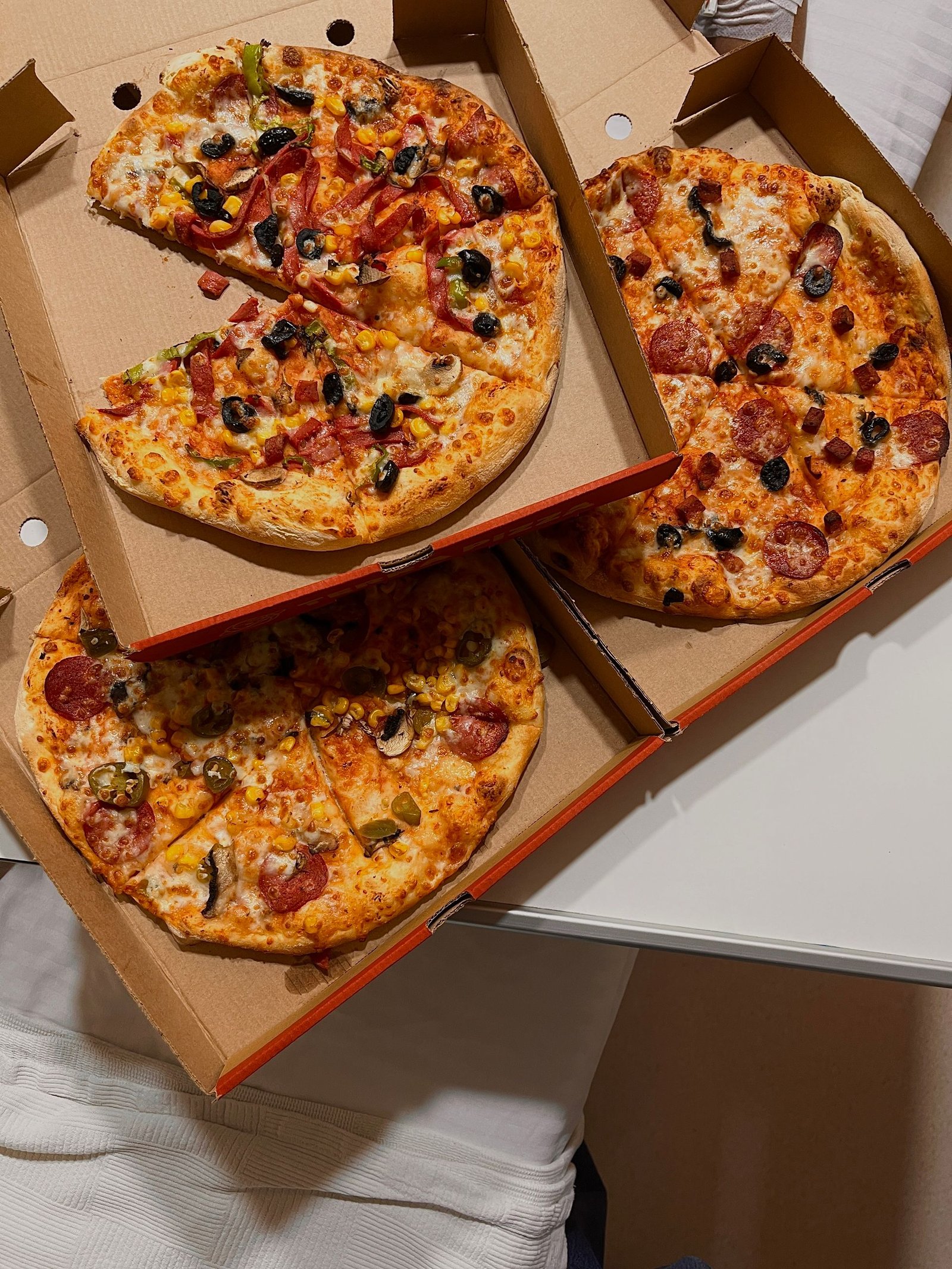
Topping strategy. Half-and-half pies are the group-order superpower: pepperoni on one side, veggie on the other, and suddenly one pizza serves two factions. Most shops do this happily, sometimes with a small charge for premium toppings on the half. “Toppings under the cheese” is an insider move that keeps pepperoni from curling into grease cups and anchors loose toppings. And be strategic about quantity: more than four or five toppings on one pie usually means a soggy, muddled result — split ambitious combinations across two pizzas instead. For inspiration on combinations that actually work, our best pizza topping combinations list is built for this moment.
Crust choices. Know your options before you call: thin, hand-tossed, pan, and stuffed crust behave very differently, and the right choice depends on the toppings. Heavy, wet toppings need a sturdy pan or hand-tossed base; delicate topping combos shine on thin. If you’re torn between styles generally, our thin crust vs thick crust guide breaks down the trade-offs. Garlic-butter crust brushing, parmesan dusting, and crust dips are cheap add-ons that elevate the often-ignored outer edge.
What to avoid. Customization has limits: ultra-complicated orders (“half pepperoni light cheese well-done, other half… “) during the Friday dinner rush invite errors — save the architectural masterpieces for off-peak. And don’t over-customize a style that doesn’t want it: ordering a Neapolitan-style pie “extra crispy with ranch drizzle” at a traditional shop is a fast track to disappointment. Match your asks to the kitchen’s strengths.
Ordering for Groups: Quantity, Variety, and Dietary Needs
Group ordering is where pros earn their reputation, and it’s mostly planning. Quantity first: the standard planning figure is 2 to 3 slices per adult for a meal, leaning to 3 for teenagers, big appetites, or when pizza is the only food. For a two-hour party with other snacks, 2 slices per person suffices; for a dedicated pizza-night dinner, plan 3. Kids generally eat 1 to 2 slices depending on age. When in doubt, round up slightly — leftover pizza is a feature, not a bug, provided you store it right (see our leftover pizza safety guide).
Variety beats volume on any single pie. For a group of eight, three different large pizzas (say, pepperoni, veggie supreme, and BBQ chicken) make everyone happier than three identical pepperonis. The formula: at least one absolute crowd-pleaser (pepperoni or cheese), one vegetarian-friendly option, and one adventurous or specialty pie. Half-and-half pies stretch variety further without multiplying the pizza count.
Handle dietary needs explicitly. Ask about them before ordering, not after the pizzas arrive. Most shops offer gluten-free crusts and dairy-free cheese now — but they’re often prepared in the same kitchen, so severe allergies warrant a direct conversation with the shop. When the order arrives, label or segregate the special-diet pizzas immediately; a sticky note on the box takes five seconds and prevents the miserable “which one was gluten-free?” archaeology. For full party logistics — timing, setup, and serving flow — our how to host a pizza party guide is the companion piece to this one.

Delivery vs Carryout vs Dine-In: Making the Call
Each ordering channel has a distinct cost and quality profile, and the pro move is choosing deliberately rather than by habit. Delivery wins on pure convenience — hot pizza at your door with zero effort. You pay for it: delivery fees, service fees, and the driver’s tip routinely add a third or more to the bill, and the pizza spends 15 to 30 minutes steaming in a box, which softens even great crusts. Pro delivery tips: order carryout-adjacent timing (not the absolute peak rush), meet the driver promptly so the pizza doesn’t sit, and tip fairly — your future deliveries will be faster.
Carryout is the value-and-quality champion for most orders. No fees, often exclusive carryout pricing, and you control the timeline — leave when the tracker says it’s in the oven, arrive as it comes out, and the pizza is minutes old when you eat it. The cost is your time and fuel, which for a nearby shop is trivial. If quality matters to you, carryout beats delivery nearly every time.
Dine-in at a proper pizzeria is a different experience entirely: pizza seconds from the oven, at its absolute peak, often with options (wood-fired pies, by-the-slice variety) that don’t travel well. For New York–style slices especially, with their thin and foldable crust, eating on-site is transformative — the crust never gets a chance to steam itself soft. The trade-off is price (full menu, no deals) and time. And for the truly undecided, there’s a fourth option worth mentioning: a great frozen pizza — upgraded properly with extra cheese and fresh toppings — can beat mediocre delivery on both cost and quality — keep a couple in the freezer as your ordering safety net.
Tipping and Ordering Etiquette
Pros tip well and order considerately — it’s part of the craft. For delivery, 15–20% of the pre-tax total (or a few dollars minimum, whichever is more) is the standard in the U.S.; more in bad weather, for large or complicated orders, or when the driver clearly hustled. Remember the delivery fee on your receipt goes to the store, not the driver — the tip is separate and it’s the driver’s actual wage for your run. Good tippers get remembered: regulars who tip fairly consistently report faster, friendlier service, because drivers and dispatchers absolutely prioritize them.
For carryout, tipping is optional but appreciated — a dollar or two for a straightforward order, more if the staff handled complex customizations or a huge party order with care. Nobody expects 20% at the pickup counter, but the gesture is noticed. At the table, standard restaurant tipping applies.
Etiquette beyond tipping: don’t order the most complicated custom pie of your life at 7 PM on a Friday — kitchens are slammed and your architectural masterpiece will either be wrong or slow everyone’s order. Be decisive when you call: have sizes, toppings, and address ready before dialing. Answer the door promptly for delivery — every minute the driver waits is a minute your pizza steams itself soggy and a minute they’re not earning on the next run. And give feedback kindly: if an order is wrong, a calm call gets it fixed fast; regulars who are gracious about occasional mistakes get legendary service in return. The pro reputation is built as much on how you treat the people making your pizza as on what you order.
How to Order Pizza Online: Getting It Right the First Time
Most pizza is ordered through apps and websites now, and the digital channel has its own pro moves. Save your setup. Create an account, save your address (with gate codes, apartment numbers, and any delivery quirks spelled out), save your payment method, and build your usual orders as saved favorites. The five minutes of setup pays off forever — reordering your perfect pie becomes two taps, and you’ll never again mistype an address while hungry.
Use the special-instructions field deliberately. This is where “well-done bake,” “light sauce,” “cut into squares,” or “extra crispy crust” goes. Keep instructions short, polite, and unambiguous — kitchens process dozens of these an hour, and “please make it really really crispy but not burnt and go easy on the sauce but not too easy” gets interpreted creatively. One clear request per line works best. For anything genuinely complex, pick up the phone: a 60-second call during off-peak hours beats a garbled instruction field every time.
Double-check before you submit. The classic online-ordering errors are all avoidable: wrong store location selected (especially with chains — verify the address, not just the brand), AM/PM mistakes on scheduled orders, forgetting to apply the promo code, and the dreaded duplicate submission when the app lags (wait for confirmation before tapping again). Review the full order summary — sizes, quantities, toppings, total — before paying. Screenshots of confirmation numbers save headaches if anything goes wrong.
Time it smartly. Trackers are genuinely useful: start heading out for carryout when the order hits the oven, not when you submit it. For delivery, ordering 15 minutes before the true peak (say, 5:45 instead of 6:30 on a Friday) often means a meaningfully faster, hotter pizza. And scheduled ordering is underused — most apps let you place an order hours ahead for a specific time, which is perfect for parties: schedule the pizzas to arrive when guests do, not when you remember to order.
Frequently Asked Questions
How many pizzas should I order for 10 people?
Plan 2–3 slices per adult. For 10 adults at a meal, that’s roughly 25–30 slices — about three to four large pizzas depending on slice count. Round up slightly; leftovers are a bonus. Our quantity calculator guide has the full breakdown for any group size.
Is it cheaper to order one large or two mediums?
Almost always one large. Pizza area grows with the square of the diameter, so a large contains far more than twice a small’s worth relative to its price premium. Do the size math: compare total square inches against total price.
How do I get the best pizza deals?
Check the deals page before the menu, compare promotions by real total (not headline discounts), look for coupon codes and app exclusives, order carryout when possible, and join loyalty programs. Weekday specials are often the deepest discounts.
Can I customize a pizza when ordering online?
Yes — most ordering apps and sites have special-instruction fields for bake preferences (well-done), sauce and cheese levels, and topping placement. For complex customizations, calling the shop directly during off-peak hours gets the best results.
What’s the best way to order pizza for a group with different tastes?
Order variety across multiple pies rather than loading everything onto one: a crowd-pleaser, a vegetarian option, and a specialty pie, plus half-and-half pies to bridge divides. Ask about dietary needs beforehand and label special pizzas on arrival.
Is delivery or carryout better?
Carryout usually wins on both cost (no fees or tip) and quality (fresher, crisper pizza). Delivery wins on convenience. Compare the real totals — fees and tips often add 30%+ — and choose based on what matters more for that particular night.
Conclusion
Learning how to order pizza like a pro comes down to a handful of habits: size up for value, shop the deals page before the menu, customize with the kitchen’s language, plan quantities generously, and choose your channel — delivery, carryout, or dine-in — with open eyes about the real costs. Do that, and every order gets better pizza to more happy people for less money. Now you’re the one everyone hands the phone to — and with these skills, you’ll earn it. For more ways to master every side of pizza night, explore our pizza culture and ordering guides.