

A pizza party is the rare kind of gathering that practically plans itself — and yet the difference between a forgettable one and a legendary one comes down to a handful of decisions you make before anyone arrives. How to host a pizza party well isn’t about gourmet credentials or expensive equipment. It’s about getting the quantities right so nobody goes hungry, setting up the space so people can actually mingle, and choosing a format — ordered, homemade, or DIY — that matches your guest list and your energy level.
Whether you’re hosting eight friends for the big game, thirty kids for a birthday, or the whole neighborhood on a summer evening, the playbook is the same. Plan the food math first, build the setup around how people will move and eat, add one or two touches that make it feel like an event rather than just dinner, and have a plan for the inevitable leftovers. This guide walks through all of it: guest planning, ordering versus making, exact quantities, drink and side pairings, day-of timelines, and the small details that separate good hosts from great ones.

🍕 Key Takeaways
- Pick your format first: ordering in is easiest, DIY pizza bars are most fun, and catering works best for 25+ guests.
- Plan on 3–4 slices per adult and 2–3 per child, then round up — running out of pizza is the one unforgivable hosting sin.
- Order or bake about 60% classic crowd-pleasers (cheese, pepperoni) and 40% adventurous options.
- Set up food stations away from the main hangout area so guests can graze without creating a traffic jam.
- Keep drinks simple: a signature drink plus water and soda covers almost every crowd.
- Have a day-of timeline: food ready 15 minutes before guests arrive, not 15 minutes after.
Step 1: Choose Your Pizza Party Format
Every successful pizza party starts with one decision: where is the pizza coming from? Each format has a personality, a price point, and a workload. Pick the one that fits your crowd.
Ordering in is the path of least resistance and the right choice for most parties. You get variety with zero cooking, predictable timing, and easy scaling — most pizzerias offer deals on multiple large pizzas. The downsides: cost adds up fast for big groups, and you’re at the mercy of delivery timing on busy nights (order earlier than you think; Friday at 7pm is everyone’s pizza o’clock). Pro move: order from two different places if your group is split between thin-crust loyalists and deep-dish devotees.
The DIY pizza bar is the most memorable format and a genuine activity, not just a meal. You provide dough, sauce, cheese, and toppings; guests build their own. It’s ideal for groups of 6–16 where people enjoy participating, and it’s a lifesaver for mixed dietary needs since everyone controls their own pie. The workload is real — prep, oven management, and keeping the topping station stocked — but guests consistently rate DIY parties as more fun. Our family pizza night ideas guide has topping-bar setup tips that scale up perfectly for parties.
Hiring pizza catering makes sense once you cross about 25 guests or want a showpiece element. Many pizzerias and mobile wood-fired oven caterers will come to you, which turns the food into entertainment. It’s the priciest option but the lowest-effort one at scale — worth pricing out before you dismiss it. Our pizza catering guide breaks down how catering works and what to expect on pricing and logistics.
The hybrid approach — order the bulk pizzas and add one DIY station or a dessert pizza — gives you reliability plus a fun element. For most hosts, this is the sweet spot: the ordered pizzas guarantee nobody goes hungry, while the interactive station gives the party its personality.
Step 2: Nail the Guest List and Invitations
The guest list determines everything downstream: quantities, format, and setup. For a pizza party, the ideal size depends on your space more than your ambition. Eight to twelve people is the sweet spot for a house party — enough energy, easy conversation, manageable food math. Beyond twenty, you’re running an event, and you should plan (and possibly cater) accordingly.
Send invitations with the details that actually matter for a pizza party: date, time, address, and — critically — whether guests should eat beforehand or arrive hungry. “Dinner will be served around 7” prevents the awkward 6:30 arrivals hovering over an empty table. If you’re doing DIY, mention it in the invite (“we’ll be making our own pizzas — aprons optional, appetites required”) so guests arrive in the right mindset. Always ask about dietary restrictions and allergies in the invite; for a pizza party, you need to know about gluten intolerance, dairy allergies, and vegetarian or vegan needs before you shop.
Timing matters too. For an evening party, invite people 30 minutes before you plan to serve — guests trickle in, and the food should be ready when the room fills, not when the first person arrives. For kids’ parties, late morning or mid-afternoon slots work best; a 2pm pizza party with cake at 3:30 is a classic for a reason.
How Much Pizza to Order: The Quantities That Matter
This is where parties are won or lost. The golden rule: plan 3 to 4 slices per adult and 2 to 3 slices per child, then round up. It is always better to have leftover pizza (a gift) than to run out (a disaster). Teenagers eat like adults — sometimes like two adults — so count anyone over about thirteen in the adult column.
Pizza math by size helps you translate slices into actual orders. A 12-inch small pizza yields about 6 slices, a 14-inch medium yields 8, a 16-inch large yields 10–12, and an 18-inch extra-large yields 12–14. For a party of 12 adults at 3.5 slices each, you need roughly 42 slices — that’s about four large pizzas, and you’d be wise to make it five. Variety matters as much as volume: aim for roughly 60% safe classics (cheese, pepperoni, veggie) and 40% interesting options (BBQ chicken, white pizza, supreme). The classics will vanish first — that’s normal, and it’s why you ordered extra.
Several factors push your numbers up: if pizza is the only food (no substantial sides), add a slice per person. If the party spans a mealtime plus several hours of hanging out, people graze — add another pizza or two for a group of fifteen. If alcohol is flowing, appetites rise. And if it’s a kids’ party with activities, kids eat less during the chaos but demolish pizza afterward, so time your serving accordingly. For the full breakdown with worked examples and a party calculator walkthrough, see our detailed guide on how much pizza to order per person.
One more quantity people forget: the buffer pizza. Order or bake one more pizza than your math says you need, in the most universally loved variety (cheese or pepperoni). If it’s untouched, it’s tomorrow’s lunch. If the party runs long and appetites surprise you, you’re a hero.
Setting Up the Space: Stations, Flow, and Seating
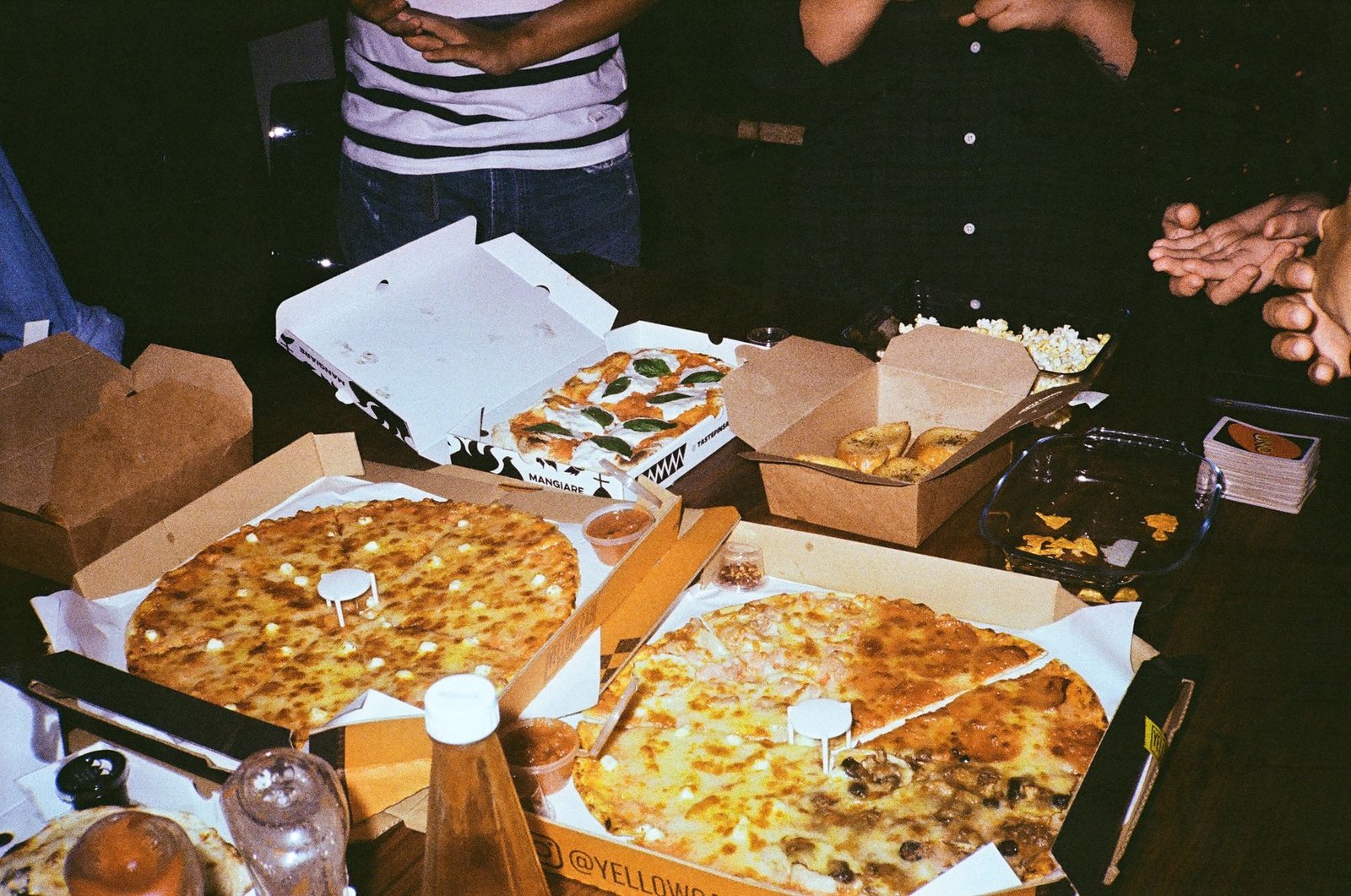
Great party setup is invisible — guests just notice that everything is easy. The core principle: separate the food from the hangout. Put the pizza station, drinks, and sides in one area (kitchen or dining table) and let people carry plates back to where they’re actually socializing. Nothing kills a party vibe like twenty people queuing in a hallway.
The pizza station needs heat management. If you’re ordering in, keep pizzas in their boxes stacked in a warm (not hot) oven — around 200°F — with the boxes slightly vented so steam doesn’t sog the crusts. Set out a stack of sturdy paper plates (not the flimsy kind; pizza is heavy), napkins, and any extras: parmesan, red pepper flakes, ranch, garlic butter. Label the pizzas if you ordered variety — a sticky note on each box (“pepperoni,” “veggie,” “half cheese/half mushroom”) saves everyone from playing topping roulette.
The drink station should be self-serve and separate from the food line. A large tub or cooler with ice, sodas, sparkling water, and beer (if appropriate) plus a big dispenser of water with lemon covers nearly every crowd. For an adult party, add one simple signature drink rather than a full bar — a big-batch sangria or a pizza-friendly red wine keeps it festive without turning you into a bartender. Our pizza and wine pairing guide has bottle recommendations for every pizza style.
Sides and extras round out the table without much effort: a big green salad (the acidity cuts the richness of pizza beautifully), garlic knots or breadsticks, and a simple dessert. Don’t overthink sides — pizza is the star, and sides exist to add freshness and fill gaps, not to compete.
Seating is the detail hosts most often under-plan. Not everyone needs a dining chair, but everyone needs somewhere to put a plate down. Scatter side tables, use the coffee table, put out the folding chairs. For outdoor parties, blankets and a few coolers-as-tables work fine. The goal is grazing comfort, not a formal dinner.
The Day-Of Timeline
A relaxed host is a good host, and relaxation comes from a timeline. Here’s a battle-tested one for a 7pm party:
Two days before: Send a reminder message with parking or entry details. Confirm any catering or large delivery orders. Buy drinks, ice, plates, and napkins — the non-perishables.
The day before: Shop for perishables if you’re doing DIY. Prep anything that holds well: shred cheese, slice vegetables, make dough (it improves with an overnight rest — see our cold ferment pizza dough guide if you want to go deep). Charge your Bluetooth speaker. Clear surfaces.
Morning of: Set up stations — tables, tablecloths, drink tub. Arrange seating. If DIY, portion dough balls and set out topping bowls (covered) so you’re not scrambling later.
Two hours before: Preheat ovens. If ordering delivery, place the order now for a 6:45 arrival — delivery on weekend evenings routinely runs 45–75 minutes, and early pizza stays warm far better than late pizza stresses you out.
30 minutes before: Light candles or turn on the playlist. Set out any room-temperature items. Take a breath. Change your shirt.
Guests arrive: Greet, point to drinks, and don’t fuss. The food should be ready or imminently ready — the single biggest hosting mistake is still cooking when the doorbell rings.
Touches That Make It Memorable
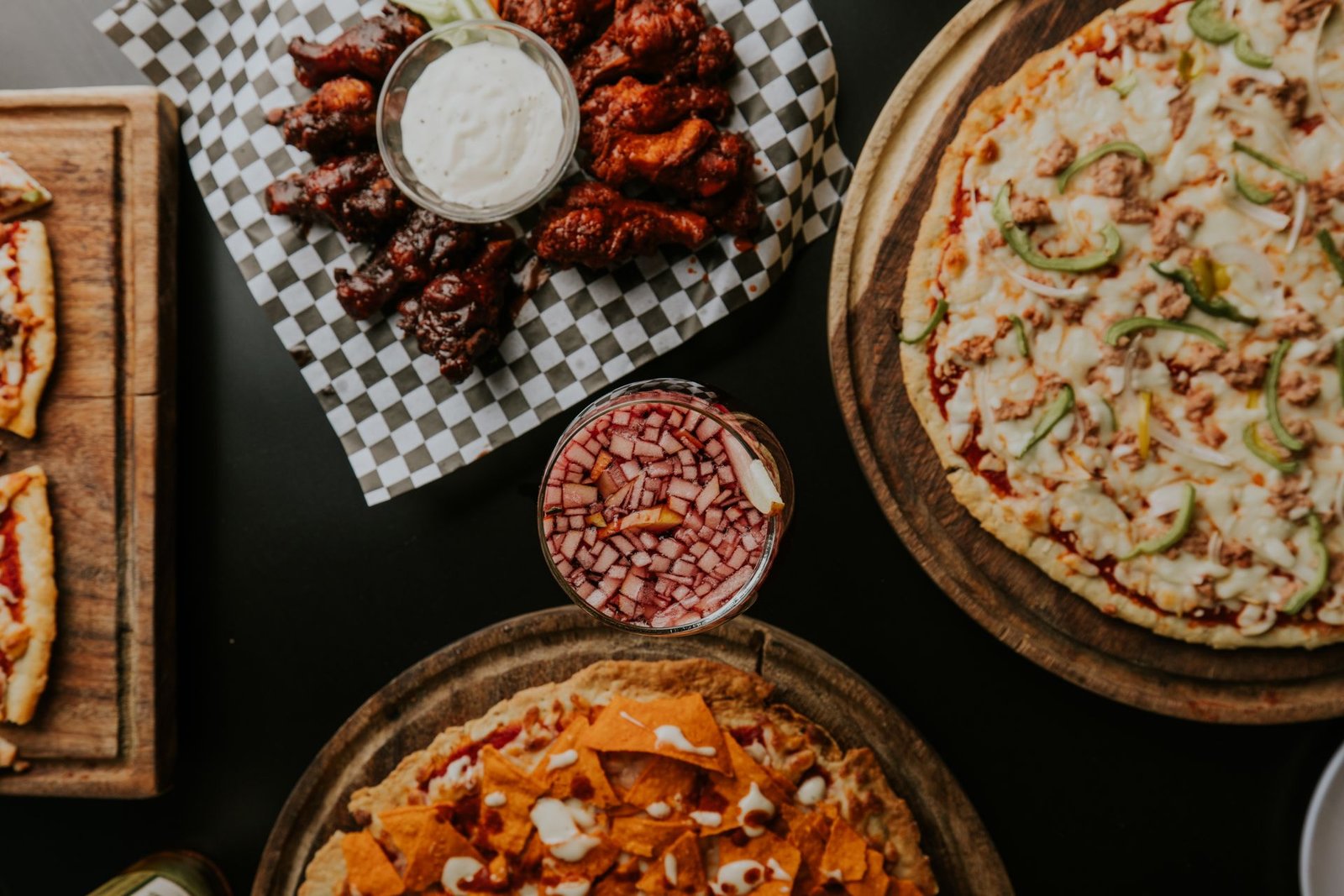
Once the fundamentals are solid, one or two signature touches elevate the night. A pizza-rating ballot — little cards where guests score each pizza on crust, sauce, and creativity — turns tasting into a game and gives people something to talk about. A “build the weirdest pizza” contest with a silly prize produces legendary combinations and better stories than any playlist.
For kids’ parties, a decorate-your-own-pizza-box craft station keeps early arrivals busy while you finish setup, and they take home their creation. For adult parties, a blindfolded topping taste-test is absurd and wonderful. And for any party, a dessert pizza — Nutella, cinnamon sugar, fresh fruit — served as the finale signals the night is winding down on a high note. Our dessert pizza recipe has you covered.
Music deserves a thought: build a playlist in advance (collaborative playlists where guests add songs are fun), keep the volume at conversation level during dinner, and save the louder stuff for later. Lighting matters more than decorations — dim the overheads, use lamps or string lights, and the whole room feels intentional.
Finally, plan the leftover strategy before the party, not during it. Have foil, containers, or pizza boxes ready, and actively offer guests slices to take home — it clears your fridge and sends people off happy. Whatever remains, our guide to how to reheat pizza will make day-two slices taste nearly as good as party night.
How to Host a Pizza Party for Different Occasions
The basic playbook above works everywhere, but tailoring the party to the occasion is what makes it feel designed rather than default. Here are proven formats for the most common pizza party scenarios.
Kids’ birthday party. Keep it short (two hours is plenty), keep it active, and serve the pizza after the main activity, not before — sugar-plus-excitement plus a full stomach is a recipe for chaos in reverse order. A DIY mini-pizza station doubles as the activity: kids build their own on small bases, you bake them in batches, and they eat their creations. Have plain cheese bases ready for the cautious ones, and time cake for about 30 minutes after pizza. Goodie bags with a mini rolling pin or pizza cutter are cheap and on-theme.
Game day / sports watch party. The TV is the centerpiece, so arrange seating around it first and put food where people can graze without blocking anyone’s view — a side table or kitchen island works better than a dining table everyone must sit at. Order more pizza than usual (grazing over three hours adds up), keep the variety simple (classics disappear fastest during games), and set up the drink station for self-service so nobody misses a play. Halftime is your moment: bring out the dessert pizza or a fresh hot batch.
Teen hangout. Teenagers want autonomy, not activities. The DIY bar is perfect — give them dough, toppings, and an oven schedule, then get out of the way. Buy more food than you think is reasonable; a group of six teenagers can genuinely eat four large pizzas. Keep the music in their hands (hand over the aux cord or the collaborative playlist) and have a late-night snack ready — pizza rolls or a second round of DIY around 10pm extends the night beautifully.
Neighborhood / block party. Scale changes everything: this is where catering or a rented mobile pizza oven earns its keep. For a crowd of 30+, trying to DIY in a home oven is a bottleneck nightmare — you’ll be baking for three hours while everyone else socializes. If catering isn’t in the budget, do a potluck-style pizza party: you provide dough, sauce, and cheese, and each household brings toppings or a baked pizza to share. Set up outdoors if weather allows, with folding tables for food and blankets or lawn chairs for seating.
Office / work party. Keep it simple and inclusive: order variety from a well-reviewed local place, label everything clearly, and make sure vegetarian, gluten-free, and dairy-free colleagues have real options — not afterthoughts. Lunchtime office parties need less food per person (people eat lighter at work events), but order the buffer pizza anyway. If it’s after-hours, the rules relax back toward a normal party.
Frequently Asked Questions
How far in advance should I order pizza for a party?
For delivery, place your order 60–90 minutes before you want to eat on a weekend evening — Friday and Saturday nights are peak times and deliveries routinely run long. For large orders (8+ pizzas), call the pizzeria a day ahead to confirm they can handle it, then call again on the day to fire the order. Catering needs one to two weeks of lead time.
What’s the best pizza variety mix for a mixed crowd?
Roughly 60% classics (cheese, pepperoni, veggie supreme) and 40% interesting (BBQ chicken, white pizza, Hawaiian, buffalo chicken). Always include at least one plain cheese pizza — it’s the safe harbor for picky eaters, kids, and anyone with topping-specific restrictions. Label everything.
How do I keep pizza warm for a party?
Keep boxed pizzas in an oven set to about 200°F with the boxes slightly open to vent steam. For longer parties, have pizzas arrive or finish baking in two waves rather than all at once — the second wave served hot beats a mountain of lukewarm pizza. Avoid the microwave for holding; it makes crusts rubbery. If you’re serving outdoors in cool weather, wrap the stacked boxes in a clean bath towel for extra insulation — it genuinely helps.
Should I ask guests to contribute?
It’s perfectly fine to make it collaborative — “we’re providing pizzas and drinks, bring a side or dessert if you’d like” works well for casual friend groups. For kids’ birthday parties or more formal hosting, provide everything yourself. Never ask guests to pay for their share at a party you invited them to.
How do I handle dietary restrictions at a pizza party?
Ask in the invitation, then make sure at least one pizza (or DIY option) works for each restriction present: a gluten-free crust option, a dairy-free cheese pizza, a solid vegetarian choice. Keep allergen-sensitive pizzas on a separate surface and label them clearly. The DIY format handles this most gracefully since everyone builds their own.
What should I do with all the leftover pizza?
Offer slices to guests as they leave (have foil or containers ready), then store the rest properly — refrigerate within two hours and eat within a few days. Leftover pizza is incredibly versatile: see our leftover pizza ideas for fifteen creative ways to use it, from breakfast hashes to croutons.
Your Party, Your Rules
Learning how to host a pizza party is really about learning to be the kind of host who plans the unglamorous stuff — quantities, timing, flow — so the glamorous stuff takes care of itself. Get the math right, set up stations that keep people moving, add one personal touch that makes the night yours, and keep the oven hot and the drinks cold. Then stop fussing and enjoy your own party; a host who’s having fun is the best party trick there is, and your guests will remember the laughter far longer than they’ll remember the logistics. For more inspiration, browse our pizza culture and ordering guides — from wine pairings to pizza night traditions — and start planning a night your guests will talk about.
[…] you use them — and a pizza trivia night is one of the best themes for a family pizza night or a pizza party you’ll ever host. Here’s how to run […]
[…] while everyone else parties. Tip 20–25% minimum on these nights. If you’re hosting a pizza party on a big game day, build the bigger tip into your party budget from the […]