

Pizza and wine might be the most underrated pairing in all of food and drink. We obsess over which wine goes with steak or salmon, yet the humble pizza — with its endless combinations of crust, sauce, cheese, and toppings — gets relegated to beer and soda by default. That’s a missed opportunity. A thoughtful pizza and wine pairing can turn an ordinary Friday night into something genuinely memorable, and you don’t need a sommelier’s vocabulary or a fancy cellar to get it right.
The good news is that pizza is one of the most wine-friendly foods on the planet. Its core flavors — bright tomato acidity, rich melted cheese, savory toppings — play well with an enormous range of wines, from crisp Italian whites to bold reds to bubbly Prosecco. The rules are simpler than you think, the stakes are low (it’s pizza night, not a wine tasting exam), and the payoff is real: the right bottle makes every slice taste better. This guide covers the basic principles, specific pairings for every major pizza style, budget-friendly bottle picks, and the combinations to avoid.

🍕 Key Takeaways
- Match the wine’s weight to the pizza’s richness: light pizzas want light wines, heavy pizzas can handle bold reds.
- Tomato sauce loves acidity — Italian reds like Chianti, Barbera, and Montepulciano are classic matches for a reason.
- Sparkling wine (Prosecco, Cava) is the secret weapon: it cuts through cheese and works with almost any pizza.
- White pizzas pair beautifully with white wines — Pinot Grigio, Vermentino, or an unoaked Chardonnay.
- Spicy toppings call for off-dry or fruity wines that cool the heat instead of fighting it.
- You don’t need expensive bottles: plenty of excellent pizza wines cost under $15.
Why Pizza and Wine Work So Well Together
At its core, wine pairing is about balance: matching intensity, complementing flavors, and using contrast (like acidity or bubbles) to refresh the palate between bites. Pizza happens to be built from components that wine loves. Tomato sauce brings bright acidity, which harmonizes with the acidity in wine rather than clashing with it — this is why Italian reds and margherita pizza feel like they were made for each other (they essentially were). Melted cheese brings fat and richness, which calls out for wines with acidity, tannins, or bubbles to cut through it and keep each bite tasting fresh instead of heavy.
Then there’s the topping dimension, which is where pairing gets fun. Salty cured meats like pepperoni and prosciutto love fruity reds. Earthy mushrooms cozy up to Pinot Noir. Sweet elements — caramelized onions, pineapple, BBQ sauce — want wines with a touch of fruit sweetness or at least ripe fruit character. And spicy toppings (jalapeños, hot honey, spicy salami) are tamed by wines with a little residual sugar or lower alcohol, since alcohol amplifies the burn of capsaicin.
The other reason this pairing is so forgiving: pizza night is casual. Nobody is grading you. If you pour a Chianti with a pepperoni pizza and it sings, great. If you open a random bottle from the rack and it’s just fine, the pizza is still delicious and the company is still good. The goal here is to nudge your odds toward “great” with a few principles, not to create anxiety about getting it “right.”
The Basic Rules of Pizza and Wine Pairing
You can go far with just five principles:
1. Match weight with weight. A delicate margherita gets overwhelmed by a massive Cabernet, and a loaded meat-lovers pizza makes a whisper-light Pinot Grigio disappear. Light pizza, lighter wine; rich pizza, bigger wine.
2. Acidity loves acidity. Tomato-based pizzas have natural acidity from the sauce. Pair them with wines that have good acidity of their own — most Italian reds and whites qualify — and the two will taste brighter together. Low-acid, super-ripe wines can taste flat next to tomato sauce.
3. Bubbles fix everything. When in doubt, open something sparkling. Prosecco, Cava, or even a domestic sparkling wine cuts through cheese and fat, handles spicy and salty toppings gracefully, and feels festive. It’s the single most versatile pizza wine there is.
4. Tannins need fat. Big, tannic reds (think young Cabernet or Barolo) can taste harsh and bitter on their own, but the fat in cheese and cured meats softens tannins beautifully. That’s why a hearty red works with a meaty pizza but bullies a plain cheese slice.
5. Sweet tames heat. Spicy pizza plus high-alcohol dry red equals a mouth on fire. An off-dry Riesling, a fruity Lambrusco, or even a slightly sweet rosé cools the burn and lets you actually taste the pizza.
One more practical note: serve reds with pizza slightly cool — around 60–65°F, not warm room temperature. A red that’s too warm tastes soupy and alcoholic next to hot pizza. Twenty minutes in the fridge before serving makes a noticeable difference.
Pizza and Wine Pairing by Pizza Style
Here’s where theory meets the table. Find your pizza, pour accordingly.
Margherita and Classic Cheese Pizza
The quintessential pairing: a medium-bodied Italian red with good acidity. Chianti (Sangiovese-based) is the textbook match — its cherry fruit and savory herbs mirror the tomato and basil, and its acidity dances with the sauce. Barbera is another superb choice, often even better: bright, juicy, low tannin, and practically designed for tomato-based dishes. Montepulciano d’Abruzzo offers a slightly richer, darker-fruit alternative at a friendly price. If you prefer white, a crisp Vermentino or Pinot Grigio works beautifully with the fresh mozzarella and basil.
Pepperoni Pizza
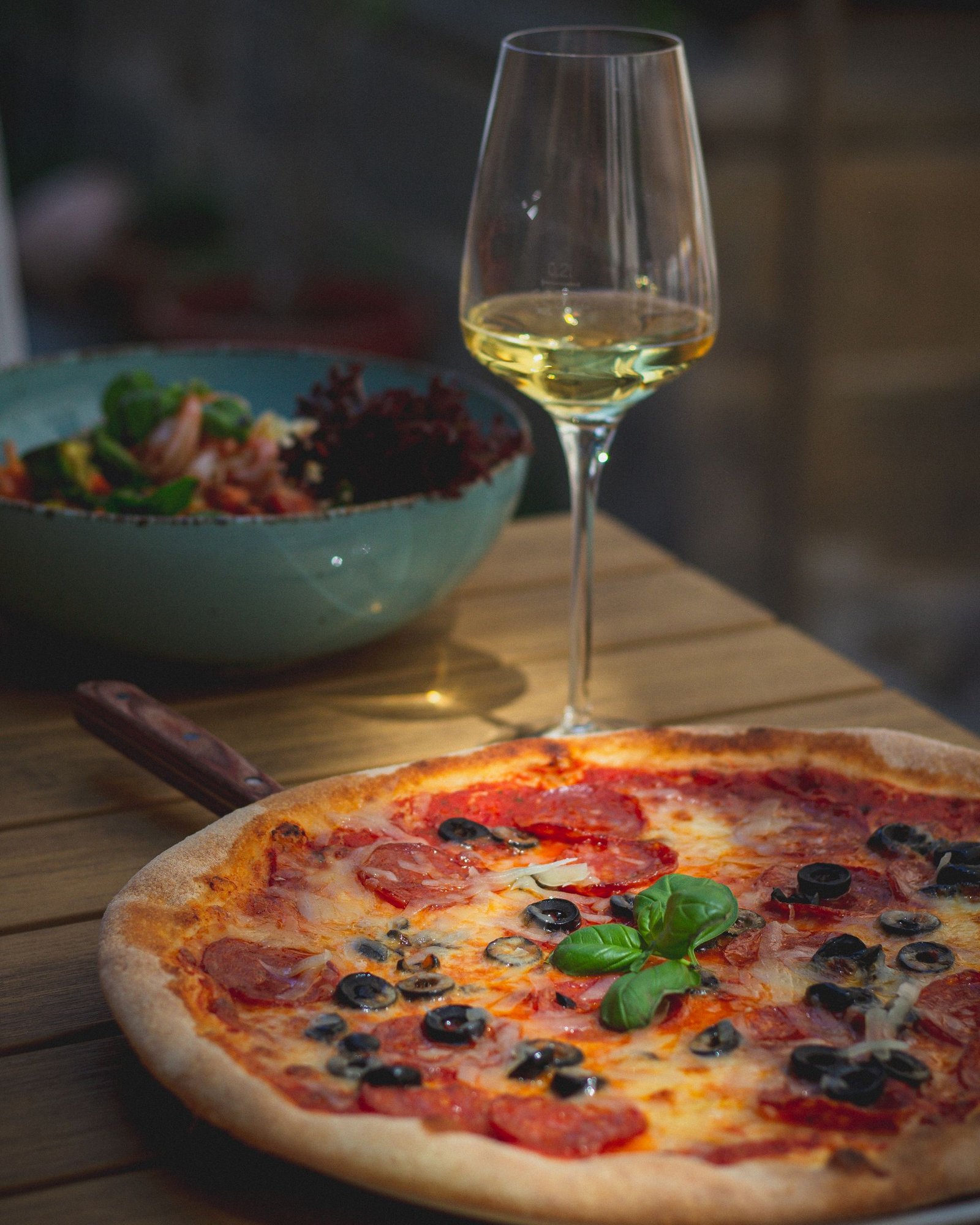
Pepperoni brings salt, fat, and spice — it wants a red with enough fruit and structure to stand up to it. Zinfandel is a crowd-pleasing match: ripe, spicy, and bold enough for the pepperoni’s punch. Chianti Classico or a Sangiovese blend handles it with more elegance. For something different, a chilled Lambrusco (the dry, sparkling red kind, not the sweet stuff) is phenomenal — the bubbles and bright fruit cut through the grease and spice like nothing else.
Veggie Supreme and Mushroom Pizza
Vegetable-heavy pizzas are lighter and often earthier. Pinot Noir is the classic mushroom-pizza pairing — its earthy, forest-floor notes are a natural echo. For a veggie supreme loaded with peppers and onions, try a Côtes du Rhône or a Spanish Garnacha: fruity, medium-bodied, unfussy. A crisp Sauvignon Blanc also works with green, herbaceous veggie toppings. Our mushroom pizza recipe was practically built for a glass of Pinot.
BBQ Chicken Pizza
Sweet, smoky, tangy — BBQ sauce needs a wine with ripe fruit and a soft touch. Zinfandel again shines here, its jammy fruit cozying up to the BBQ sweetness. Malbec is another strong pick: dark fruit, smooth tannins, and enough body for the smoky chicken. If you want white, an off-dry Riesling plays beautifully against both the sweetness and any spice in the sauce.
White Pizza (Ricotta, Garlic, No Red Sauce)
Without tomato acidity, white pizzas want wines that bring their own freshness. An unoaked or lightly oaked Chardonnay is luxurious with creamy ricotta. Pinot Grigio keeps it light and crisp. Verdejo or Albariño (Spanish whites with citrus and minerality) are excellent with garlic-forward white pizzas. Try our white pizza with ricotta and garlic with any of these and thank us later.
Four Cheese / Quattro Formaggi
Maximum richness demands maximum palate-cleansing. Sparkling wine is the top pick — Prosecco or Cava slices through all that cheese and resets your mouth for the next bite. If you want still wine, a high-acid white like Chablis (unoaked Chardonnay) or an Italian Soave works, as does a light, fresh red like Barbera. Avoid heavy tannic reds here; there’s no tomato acidity to balance them, and they can taste bitter against all that dairy.
Hawaiian Pizza
Sweet pineapple plus salty ham is a fun pairing challenge. An off-dry Riesling is the classic answer — its touch of sweetness matches the pineapple while its acidity keeps everything fresh. A fruity rosé (especially from Provence or Spain) is another winner. Or lean into the fun with a chilled Lambrusco. If you’re in the “pineapple belongs on pizza” camp, our Hawaiian pizza recipe does it properly.
Buffalo Chicken and Spicy Pizzas
Heat changes the rules: alcohol intensifies spiciness, so reach for lower-alcohol, fruitier, or slightly sweet wines. Off-dry Riesling or Gewürztraminer cools the burn. A fruity, chilled Beaujolais (Gamay) works for red lovers. Sparkling wine is again a safe harbor — bubbles and cold temperature both tame heat. Whatever you do, skip the 15% Cabernet with the buffalo chicken pizza; your taste buds will thank you.
Dessert Pizza
Match sweetness with sweetness — a dry wine will taste sour next to dessert. Moscato d’Asti (lightly sparkling, sweet, low alcohol) is delightful with fruit-topped dessert pizzas. A late-harvest Riesling or a small glass of Vin Santo works with richer, chocolatey versions. Our dessert pizza recipe pairs beautifully with Moscato.
Great Pizza Wines Under $15
You absolutely do not need to spend big to drink well with pizza. In fact, some of the best pizza wines are inexpensive by nature — they’re everyday Italian table wines made for exactly this kind of meal. Here’s what to look for on the shelf:
Italian reds: Barbera d’Asti, Montepulciano d’Abruzzo, Chianti (the basic DOCG bottlings), Nero d’Avola from Sicily, and Dolcetto. These routinely land in the $10–15 range and are built for tomato-based food.
Italian whites: Pinot Grigio (look for Alto Adige or Friuli for a step up), Vermentino, Soave, and Verdicchio. Crisp, food-friendly, and kind to white pizzas and veggie pies.
Sparkling: Prosecco DOC is the obvious pick and widely available under $15. Spanish Cava is often even cheaper and slightly drier — fantastic with anything cheesy. Don’t overlook domestic sparkling wines from California either.
Rosé: Dry rosé from Provence, Spain, or Italy is one of the most versatile pizza wines across styles, and there’s a sea of good options under $15. It handles everything from margherita to Hawaiian with ease.
Beyond Italy: Spanish Garnacha and Tempranillo (look for Rioja Crianza), Portuguese reds from the Douro or Dão, and Argentine Malbec all deliver big pizza-friendly flavor at small prices.
Shopping tip: find a local wine shop (not just the supermarket) and tell them you’re doing pizza night. Wine shop staff live for this question, and they’ll point you to the interesting $12 bottles you’d never find on your own. Buy a mixed case once, and you’ll have pairings ready for weeks of pizza nights.
Pairings and Combinations to Avoid
Most wines work with most pizzas, but a few combinations genuinely clash:
Big oaky Chardonnay with tomato sauce. Heavy oak plus tomato acidity is a notorious mismatch — the wine tastes flabby and the sauce tastes metallic. Save the oaky Chardonnay for roast chicken.
High-tannin reds with plain cheese or veggie pizza. Without enough fat or protein to soften them, aggressive tannins taste bitter and astringent. If you love big reds, save them for the meatiest pizzas.
Very sweet wines with savory pizza. A sip of sweet wine with pepperoni pizza makes both taste strange. (Exception: a touch of sweetness with spicy pizza, as discussed — that’s balance, not dessert.)
Delicate wines with aggressive toppings. That ethereal, expensive Pinot Noir deserves better than a jalapeño-and-anchovy pie. Match intensity: bold pizza, bold wine; delicate pizza, delicate wine.
Serving reds too warm. Worth repeating because it’s the most common mistake: a red served at 75°F tastes hot and soupy next to pizza. Twenty minutes in the fridge fixes it.
Regional Pairings: Drink Like the Pizza’s Hometown
One of the most reliable pairing tricks in existence is also the simplest: drink what the pizza’s hometown drinks. “What grows together goes together” isn’t just a saying — regional cuisines and regional wines evolved side by side, and they fit like puzzle pieces.
Neapolitan pizza? Drink Campanian. A crisp Falanghina or a bright Lacryma Christi (white or red) from the slopes of Vesuvius is the hometown answer to a margherita, and the combination tastes inevitable. Our Neapolitan pizza guide covers the style’s strict traditions — the wine traditions are just as rewarding.
New York slice? New York State makes genuinely good wine, and a Finger Lakes Riesling or Cabernet Franc with a foldable slice is a locavore flex that actually works. Otherwise, the city’s Italian-American red-sauce tradition points straight back to Chianti and Barbera.
Chicago deep dish? That buttery, cheese-laden slab wants something with backbone: a California Zinfandel or a robust Argentine Malbec stands up to the richness without breaking a sweat.
Sicilian or grandma-style square slices? Sicilian wines, naturally — a Nero d’Avola’s dark cherry fruit and earthy edge loves the thick, saucy square. For more on the style, see our Sicilian pizza guide.
The hometown rule won’t steer you wrong, and it gives pizza night a fun theme: pick a pizza region, pour its wines, and you’ve got an instant tasting tour without leaving the table.
Serving Tips for Pizza Night
A few practical details make the wine part of pizza night effortless. Open reds about 15–20 minutes before serving — most affordable reds benefit from a little air, and you don’t need to decant. Have enough glasses: one per person is fine for casual pizza night, but if you’re pouring both red and white, a quick rinse between pours (or a second glass) keeps flavors clean.
Temperature cheat sheet: sparkling wines at 40–45°F (well chilled), whites at 45–50°F (fridge-cold, then 10 minutes out), rosés at 45–50°F, light reds at 55–60°F (20–30 minutes in the fridge), and fuller reds at 60–65°F (20 minutes in the fridge from room temp). When in doubt, serve it a touch cooler — wine warms up in the glass, and slightly cool always beats slightly warm with pizza.
How much wine do you need? A standard bottle pours about five glasses. For a dinner party, plan roughly half a bottle per adult for a casual night, a bit more if wine is the featured drink. It’s pizza night, not a tasting — having one red, one white (or rosé), and maybe a sparkling covers every preference and every pizza on the table. If you’re hosting a bigger crowd, our guide on how to host a pizza party covers drink quantities alongside the food math.
Not Into Wine? Great Alternatives
Wine is wonderful with pizza, but it’s not the only answer, and a good host accommodates everyone. Beer is pizza’s other classic partner: crisp lagers and pilsners with lighter pizzas, IPAs with spicy or fatty pies (the bitterness cuts richness), and wheat beers with white pizza. Cider — dry or semi-dry — is an underrated pairing, especially with pork-topped or BBQ pizzas. Non-alcoholic options deserve real thought, not an afterthought: sparkling water with lemon, good craft sodas, or non-alcoholic beers and wines (the quality of NA options has improved dramatically). A big-batch sparkling lemonade or blood-orange spritz (NA) feels festive and pairs with everything. The principle is the same as with wine: acidity and bubbles are your friends.
Frequently Asked Questions
What is the single best wine for pizza night if I only buy one bottle?
A dry Italian red with good acidity — Barbera d’Asti or a basic Chianti — is the safest single-bottle pick. It handles tomato-based pizzas beautifully, works with most toppings, and is affordable. If your crowd prefers white or you’re serving mostly white pizzas, make it a dry Prosecco instead; sparkling wine is the most versatile option of all.
Does red or white wine go better with pizza?
Both, depending on the pizza. Tomato-based pizzas traditionally pair with reds (the acidity match), while white pizzas, veggie pizzas, and seafood-topped pizzas often shine with whites. Rosé and sparkling wines split the difference and work across the board. There’s no universal winner — match the wine to the specific pizza.
What wine goes with pepperoni pizza?
Pepperoni’s salt, fat, and spice want a fruity, medium-to-full red: Zinfandel, Chianti Classico, or Barbera are all excellent. For something fun and different, try a chilled dry Lambrusco — the bubbles cut through the richness brilliantly. Avoid delicate wines; the pepperoni will overwhelm them.
Can I serve expensive wine with pizza?
Of course — your wine, your rules. Just match intensity: save the delicate, expensive bottles for simpler pizzas (a great margherita with a fine Barolo is actually a classic Italian indulgence) and don’t waste nuanced wines on the loudest, spiciest pies where their subtleties will be lost.
What about pizza and beer instead?
Beer is a fantastic pizza partner — arguably the traditional one in America. Crisp lagers with margherita, IPAs with pepperoni or spicy pizza, wheat beers with white pizza. Many pizza nights are beer nights, and there’s zero shame in it. The best pairing is the one your guests enjoy.
How should I store leftover wine after pizza night?
Re-cork (or use a wine stopper) and refrigerate — yes, even reds. Most wines stay good for 2–3 days refrigerated; sparkling wine needs a proper sparkling-wine stopper to hold its bubbles for a day or two. Leftover red also makes an excellent base for sangria or cooking.
Raise a Glass to the Perfect Slice
The beauty of pizza and wine pairing is that the bar for success is deliciously low and the ceiling is wonderfully high. Start with the basics — Italian reds for tomato pies, bubbles for everything cheesy, something with a touch of sweetness for the spicy stuff — and you’ll immediately drink better on pizza night. Then experiment: that’s half the fun. Keep a few reliable bottles on hand, try something new each month, and let your own taste be the final judge. After all, the best pizza and wine pairing in the world is the one shared with people you like, over slices you’re excited about. For more ways to elevate the evening, explore our pizza culture and ordering guides — from hosting the perfect pizza party to family pizza night ideas worth toasting.