

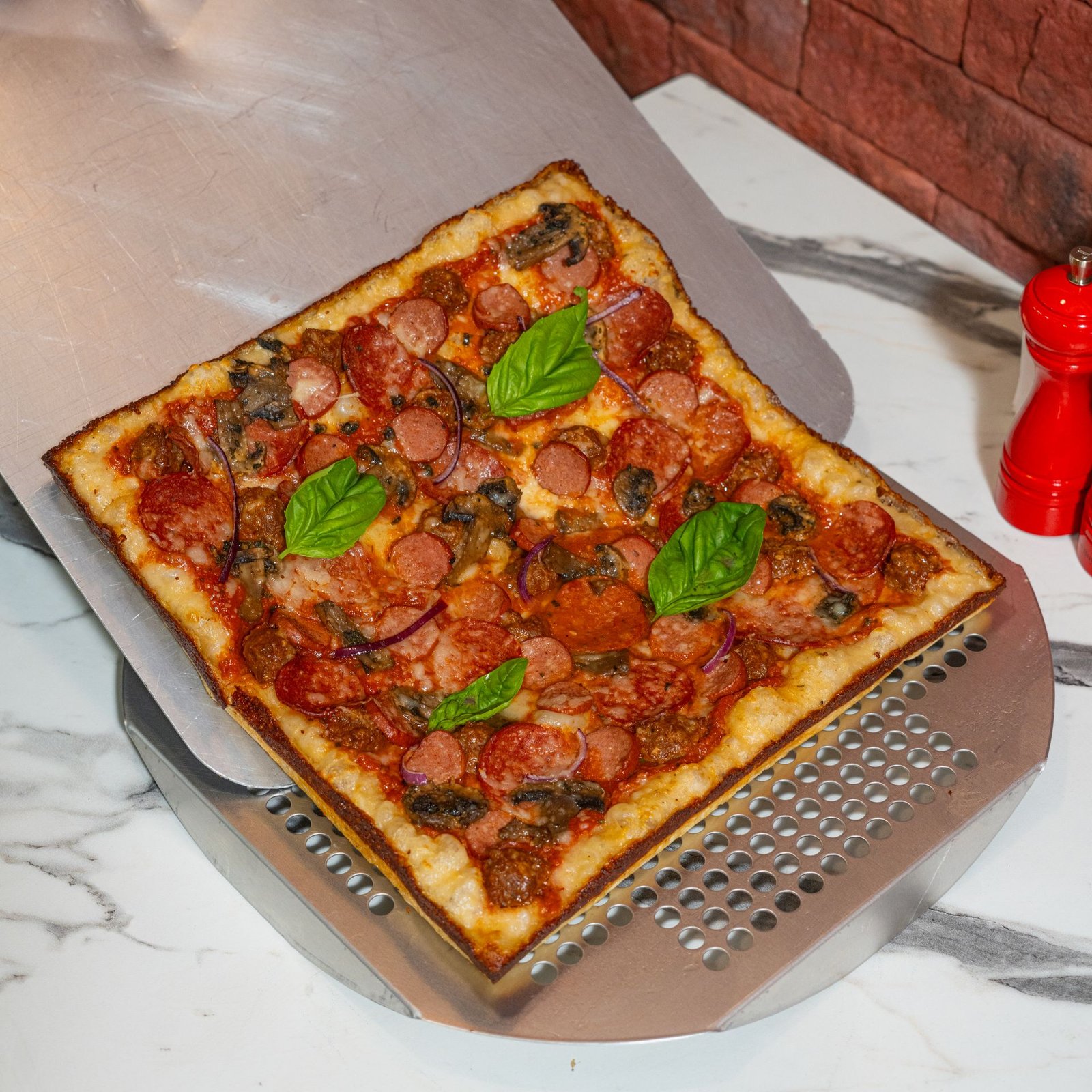
Sicilian pizza is the original thick square pie — a slab of airy, olive-oil-rich dough with a golden fried bottom, a thin layer of cheese tucked underneath a bright, oregano-heavy tomato sauce. Its ancestor, sfincione, has been sold as street food in Palermo since long before pizza became a global obsession. When Sicilian immigrants brought it to America in the early 1900s, it evolved into the thick, square, sauce-on-top pie found in pizzerias across the Northeast — and it became the template that later styles like Detroit and grandma pizza would riff on.
If you’ve ever wondered why some square pizzas put the sauce on top of the cheese, the answer starts here in Sicily. Sicilian pizza is softer and breadier than its American descendants, more generous with olive oil, and deeply savory in a way that comes from slow fermentation and a blistered, well-oiled pan — the kind of pie that improves as it sits and may taste even better the next day. This guide covers the history from Palermo’s street corners to New York pizzerias, the defining characteristics, an authentic home recipe, and exactly how Sicilian pizza differs from the square styles it inspired.
🍕 Key Takeaways
- Sicilian pizza descends from sfincione (“thick sponge”), a Palermitan street food topped with tomato, onion, anchovy, and breadcrumbs.
- The classic build is dough, a modest layer of cheese, then tomato sauce on top — the sauce-on-top order predates Chicago deep dish by generations.
- Authentic sfincione uses caciocavallo cheese, oregano, and toasted breadcrumbs (muddica); the American version uses mozzarella and a brighter tomato sauce.
- A high-hydration dough (65–70%) with a long rise gives the open, airy crumb; generous olive oil in the pan fries the bottom golden.
- Bake at 450°F (232°C) for 20–25 minutes in a well-oiled sheet pan or Sicilian pizza pan until deeply golden.
- Sicilian differs from Detroit style in its softer edges (no caramelized frico), lighter pan, and sauce baked on rather than ladled after.
- Day-old Sicilian pizza reheats beautifully and the thick crumb makes excellent sandwiches — a Palermo tradition.
From Palermo Street Corners: The History of Sfincione
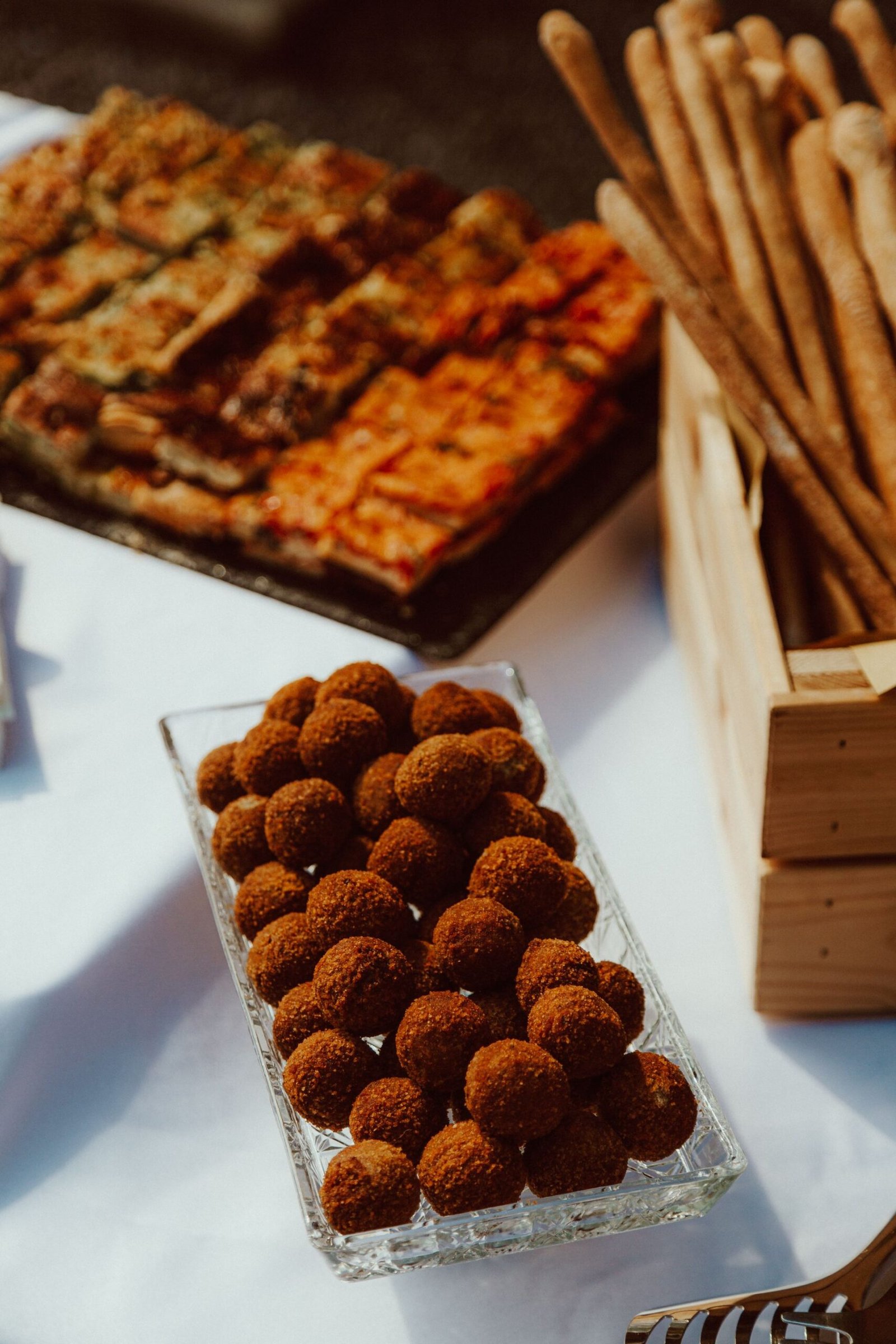
Sfincione — pronounced sfin-CHO-neh, from the Latin spongia for “sponge” — is one of Sicily’s oldest street foods. In Palermo, vendors have sold thick slabs of it from carts for well over a century, traditionally eaten during holidays and celebrations: Christmas Eve, New Year’s, and the Feast of the Immaculate Conception all have their sfincione traditions. The classic Palermitan version is unmistakable: a thick, spongy focaccia-like base, tomato sauce, sautéed onions, anchovies, oregano, local caciocavallo cheese, and a shower of toasted breadcrumbs called muddica — literally “poor man’s Parmesan,” a legacy of times when cheese was a luxury.
When Sicilian immigrants arrived in the United States in the late 1800s and early 1900s, they brought sfincione with them, and it adapted to American ingredients and tastes. Caciocavallo gave way to mozzarella, which was cheaper and more available. The anchovies and breadcrumbs faded in many shops (though the best old-school pizzerias kept them). The pie got a little thicker, a little cheesier, and settled into the form most Americans know: a square, inch-thick slab with mozzarella under a bright tomato sauce, sold by the slice in Italian-American bakeries and pizzerias across New York, New Jersey, and beyond.
It’s worth noting that in Sicily itself, what Americans call “Sicilian pizza” barely exists under that name — Sicilians would point you to sfincione, and they’d note that pizza as the world knows it is Neapolitan. The American Sicilian slice is a genuine immigrant creation: Sicilian roots, American evolution. The great Italian-American bakeries of Brooklyn, the Bronx, and New Jersey — many run by the same families for three or four generations — turned the holiday street food of Palermo into an everyday pizzeria staple, and in doing so created one of America’s most beloved pizza styles.
And it became a foundation — Detroit style pizza, invented in 1946, is essentially a Sicilian-descended dough pushed through an auto-parts pan with caramelized cheese edges, and grandma pizza is its thinner, sheet-pan cousin.
The Perfect Sicilian Dough: Technique Details
Great Sicilian pizza is 80% dough technique, so here’s what separates an airy, open crumb from a dense brick.
Hydration is everything. Target 65–70% water relative to flour weight (about 2 cups water to 4 1/2 cups bread flour). The dough will feel wet and slack — beginners always want to add flour, and that’s the single most common mistake. A wetter dough produces steam in the oven, and steam is what blows those big, irregular holes through the crumb. If you’re new to baker’s percentages, our pizza dough hydration guide walks through the math.
Cold ferment for flavor and structure. After kneading, refrigerate the dough 12–24 hours (up to 48 is fine). The slow, cold fermentation does three things: it develops complex, slightly tangy flavor that a same-day dough can’t match; it relaxes the gluten so the dough presses into the pan without springing back; and it improves the crumb structure. Our cold ferment pizza dough guide covers the science in depth.
The double press. Cold dough resists stretching. Press it into the oiled pan as far as it will go, cover, wait 20 minutes, and press again. The rest lets the gluten relax. Two or three rounds gets you edge to edge without tearing. Never force it — torn dough bakes up with thin spots that burn.
The pan proof is non-negotiable. Once the dough fills the pan, it needs 1 1/2–2 hours at room temperature until visibly puffy — nearly doubled, jiggly when you shake the pan. This final proof is what creates the airy interior. Under-proofed Sicilian is dense and doughy; properly proofed Sicilian is a sponge. If your kitchen is cold, proof in the oven with just the light on.
Dimple before topping. Press oiled fingertips into the proofed dough, focaccia-style. The dimples create little wells that hold the sauce and keep the topping layer from sliding, and they add to the rustic, uneven crumb.
The Defining Characteristics of Sicilian Pizza
The crumb: thick, airy, olive-oil rich
A proper Sicilian has a crumb like a good sponge — open, airy holes surrounded by tender, olive-oil-enriched bread. This comes from a high-hydration dough (65–70%), a long fermentation (overnight in the fridge is ideal), and a generous final proof right in the oiled pan. The dough should roughly double in the pan before it ever sees the oven; skip this proof and you’ll get a dense, bready slab instead of an airy one.
Olive oil is everywhere in this style: in the dough, pooled in the pan, and often brushed over the top before baking. It’s what gives Sicilian pizza its distinctive richness and the fried, golden bottom crust. Use a decent extra-virgin olive oil — you’ll taste it. The dough science here overlaps heavily with focaccia, and our pizza dough hydration guide explains why wetter doughs produce those dramatic open holes.
Sauce on top of cheese
The sauce-on-top construction is Sicilian pizza’s most recognizable feature, and it predates Chicago’s reverse layering by generations. In the traditional sfincione, the order is: dough, a modest scattering of caciocavallo (or in America, mozzarella), then tomato sauce spread over the top and baked. The reasons are practical — the sauce protects the cheese from the longer bake, and the exposed sauce reduces and concentrates — but the flavor result is distinctive: you taste bright tomato first, then the rich cheese and bread underneath.
The sauce itself is bold: crushed tomatoes, plenty of oregano (Sicilian oregano is famously pungent), garlic, and olive oil. It should be assertive enough to stand up to the thick bread base — a timid sauce disappears into a Sicilian. Our homemade pizza sauce recipe makes an excellent no-cook base; just bump up the oregano for the Sicilian version.
The traditional toppings: anchovy, onion, muddica
If you want the authentic Palermitan experience, the toppings matter as much as the dough. Sautéed onions cooked until sweet, a few anchovy fillets melted into the sauce for deep umami (they dissolve — even anchovy skeptics are usually converted), oregano, and muddica — breadcrumbs toasted in olive oil with garlic until golden — scattered over the top after baking. The breadcrumbs add a crunch that contrasts beautifully with the soft crumb, and they’re the detail that separates real sfincione from generic square pizza.
The American pizzeria version simplifies this to mozzarella and sauce, sometimes with pepperoni or mushrooms. Both are legitimate; they’re just different generations of the same idea. Try the traditional version at least once — the anchovy-onion-muddica combination is one of the great flavor trios in all of pizza.
The bake: moderate heat, oiled pan
Sicilian pizza bakes at 450°F (232°C) for 20–25 minutes — hotter and faster than deep dish, cooler and longer than Detroit style. The pan is typically a light-colored aluminum Sicilian pizza pan or a heavy rimmed sheet pan, well coated with olive oil. Unlike Detroit style’s dark steel, the lighter pan gives a golden rather than deeply caramelized bottom — softer, breadier, less fried. The pizza is done when the bottom is golden brown (lift a corner with a spatula to check), the sauce is bubbling, and the exposed rim is deep gold.
Authentic Sicilian Pizza Recipe (Home Oven)
This makes one half-sheet-pan (13×18-inch) Sicilian pizza — about 12 generous squares. Start the dough the day before.
The dough
- 4 1/2 cups (540g) bread flour
- 2 cups (475ml) lukewarm water (about 68% hydration)
- 2 1/4 teaspoons (1 packet) instant yeast
- 2 teaspoons fine sea salt
- 1/4 cup (60ml) extra-virgin olive oil, plus 1/4 cup for the pan
Mix flour, water, and yeast until shaggy. Rest 20 minutes, then add salt and olive oil and knead 6–8 minutes until smooth and elastic. The dough will be soft and slack — that’s correct. Cover and refrigerate 12–24 hours for the best flavor and open crumb. (In a hurry? Our same-day pizza dough recipe can be adapted, though the overnight version is noticeably airier.)
The traditional topping set
- 1 large yellow onion, thinly sliced and sautéed in olive oil until soft and sweet
- 6–8 anchovy fillets in oil
- 2 cups crushed tomatoes seasoned with 2 minced garlic cloves, 1 1/2 teaspoons dried oregano, salt, and 2 tablespoons olive oil
- 8 oz (225g) caciocavallo or low-moisture mozzarella, torn or shredded
- 1/2 cup coarse breadcrumbs toasted in olive oil with a minced garlic clove until golden (muddica)
Assembly and bake
- Pour 1/4 cup olive oil into a 13×18-inch rimmed sheet pan, tilting to coat. Turn the cold dough into the pan and press gently toward the edges. Cover, rest 20 minutes, and press again. Repeat until the dough fills the pan, then let it proof at room temperature 1 1/2–2 hours until puffy and nearly doubled.
- Preheat the oven to 450°F (232°C) with a rack in the lower third.
- Dimple the dough with oiled fingertips, like focaccia. Scatter the sautéed onions over the dough, then the torn cheese in an even, modest layer — Sicilian pizza is not a cheese-heavy style.
- Melt the anchovies into the seasoned crushed tomatoes over low heat, stirring until they dissolve. Spread the sauce evenly over the cheese, edge to edge.
- Bake 20–25 minutes until the bottom is golden brown, the sauce is bubbling at the edges, and the rim is deep gold.
- Shower with the toasted muddica immediately, rest 5–10 minutes, and cut into squares. In Palermo, leftovers become sandwiches the next day — split a cold square and fill it with whatever’s in the fridge.
Troubleshooting
- Dense, bready crumb: Under-proofed. The in-pan proof is everything — the dough should look visibly puffy and jiggly before topping. Give it the full 2 hours.
- Soggy middle: Sauce too watery or too much cheese. Drain crushed tomatoes briefly, and keep the cheese layer modest — this style is about bread and sauce, not cheese weight.
- Pale bottom: Oven not hot enough or pan too light/thin. Use the lower-third rack, preheat fully, and check the bottom by lifting a corner — it should be genuinely golden.
- Tough crust: Over-kneaded or under-oiled. The olive oil tenderizes the crumb; don’t cut it, and knead just until smooth.
Sicilian vs Detroit Style vs Grandma Pizza vs Pizza al Taglio
The square-pizza family tree starts with sfincione, so here’s how the descendants compare.
Sicilian is the soft, airy original: inch-thick olive-oil crumb, lighter pan, cheese tucked under sauce, golden (not caramelized) edges, muddica and anchovy in the traditional version. The eating experience is bready and comforting.
Detroit style took the Sicilian template and industrialized it: darker steel pan, cheese pushed to the edges to form a caramelized frico crown, fried bottom, sauce ladled on in stripes after baking. Thicker, crunchier, richer. Our Detroit style pizza guide has the full breakdown.
Grandma pizza went the other direction — thinner: a sheet-pan pie with a thin, crisp-chewy crust, garlicky sauce, and modest cheese. Same pan-baked DNA, half the height. See our grandma pizza guide.
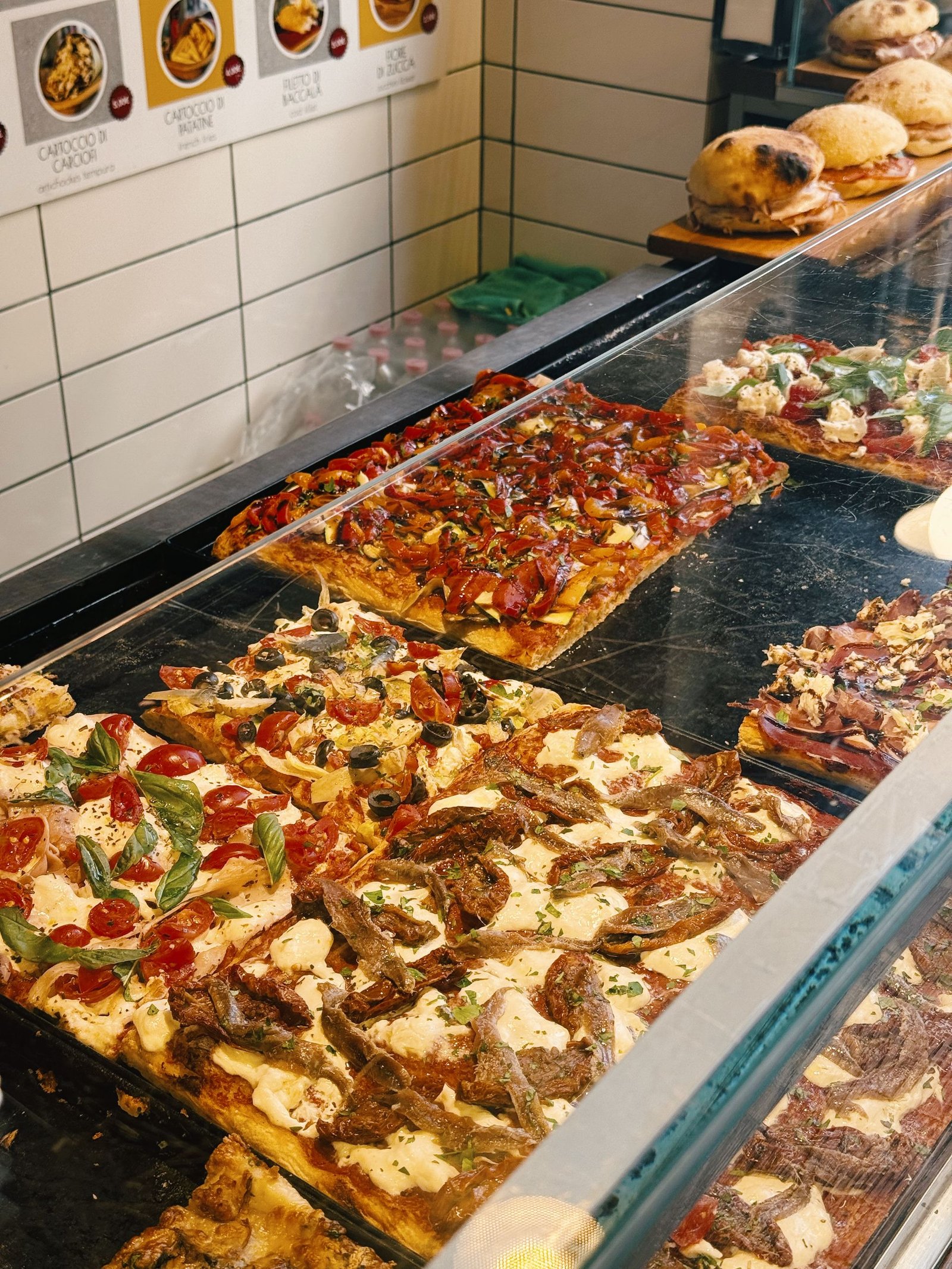
Pizza al taglio, Rome’s rectangular street pizza, is the Italian cousin that stayed in Italy: long rectangular slabs, lighter airy crumb, toppings added in creative combinations, sold by weight and reheated to order. Our pizza al taglio guide covers the Roman original.
The quick test: thick, soft, and bready with sauce baked on top is Sicilian. Crispy caramelized cheese walls mean Detroit. Thin and sheet-pan crisp is grandma. Sold by the slice-weight in Rome, it’s al taglio.
Serving Sicilian Pizza Like Palermo
In Palermo, sfincione isn’t precious — it’s street food, party food, and next-day food. Serve squares at room temperature or warm; unlike thin-crust styles, Sicilian pizza is excellent at room temp, which makes it ideal for gatherings. For a party spread, bake two sheet pans — one traditional with onion, anchovy, and muddica, one American-style with mozzarella and pepperoni — and let guests compare. Our pizza party hosting guide has quantities and timing advice for feeding a crowd.
Pairing-wise, the rich olive-oil crumb and bright tomato sauce love acidity: a simple green salad with lemon vinaigrette, marinated olives, and something to drink with bubbles or bite. For wine pairings by style, see our pizza and wine pairing guide — Sicilian reds like Nero d’Avola are the thematic choice, but anything with fresh acidity works.
And don’t sleep on the next-day tradition: cold Sicilian squares split and filled with mortadella, fresh mozzarella, or even just a smear of ricotta make one of the great leftover sandwiches. The thick crumb holds fillings without falling apart, which is exactly why Palermo bakeries have been doing it for generations.
Frequently Asked Questions
What is sfincione?
Sfincione is the Palermitan ancestor of Sicilian pizza — a thick, spongy, focaccia-like flatbread topped with tomato sauce, sautéed onions, anchovies, oregano, caciocavallo cheese, and toasted breadcrumbs (muddica). It’s been sold as street food in Palermo for well over a century and is traditionally eaten at holidays.
Why is the sauce on top of the cheese in Sicilian pizza?
It’s the traditional construction: the sauce protects the cheese during the longer bake, reduces and concentrates in the oven’s direct heat, and gives you bright tomato flavor first when you bite in. Chicago deep dish uses a similar reverse layering, but Sicily was doing it generations earlier.
What’s the difference between Sicilian pizza and focaccia?
They share dough DNA, but Sicilian pizza is topped and baked as a pizza — sauce, cheese, and toppings — while focaccia is a bread, usually topped simply with olive oil, salt, and herbs. Sicilian dough also tends to be slightly leaner and baked with pizza toppings in mind.
Can I make Sicilian pizza without anchovies?
Yes — use the American pizzeria version: mozzarella under a bright oregano-heavy tomato sauce, optionally with pepperoni or mushrooms. But try the anchovies once; they melt into the sauce and add a deep savory background note without tasting fishy.
What pan do I need for Sicilian pizza?
A heavy rimmed half-sheet pan (13×18 inches) works perfectly — no specialty pan required. Traditional Sicilian pizza pans are light aluminum and square, but a standard sheet pan with generous olive oil gives an excellent result.
How do I store and reheat Sicilian pizza?
Refrigerate squares up to 4 days (cool within 2 hours of baking). Reheat at 375°F (190°C) for 8–10 minutes to re-crisp the bottom. Cold Sicilian squares also make outstanding sandwiches — a genuine Palermo tradition.
What flour is best for Sicilian pizza dough?
Bread flour is the standard choice — its higher protein builds the strong gluten network needed to trap gas in a thick, airy crumb. All-purpose flour works and gives a slightly more tender result, but the rise won’t be quite as dramatic. Avoid 00 flour here; it’s milled for quick, hot Neapolitan bakes, not long pan proofs. Our pizza flour guide compares all three in detail.
Conclusion
Sicilian pizza is where the thick square pie begins — Palermitan sfincione, with its spongy olive-oil crumb, sauce-over-cheese construction, and the holy trio of onion, anchovy, and toasted muddica. The American evolution kept the shape and the sauce-on-top order while swapping in mozzarella, and both versions deserve a place in your rotation. Master the high-hydration dough, give it the full pan proof, oil the pan generously, and bake until the bottom is truly golden — then finish with muddica while it’s hot so the crumbs stick to the sauce. Whether you go full traditional with anchovies and breadcrumbs or keep it simple with mozzarella and oregano-heavy sauce, you’re making the pie that started the whole square-pizza family — thick, airy, saucy, and deeply satisfying.
[…] Sicilian: Bump the oregano to 1 1/2 teaspoons and add a minced anchovy fillet or two for the traditional Palermitan depth. See our Sicilian pizza guide. […]
[…] Sicilian or grandma-style square slices? Sicilian wines, naturally — a Nero d’Avola’s dark cherry fruit and earthy edge loves the thick, saucy square. For more on the style, see our Sicilian pizza guide. […]
[…] inch or more of airy, focaccia-like crumb with sauce on top of the cheese, baked in a deep pan. Our Sicilian pizza guide covers that style’s pillowy heights. Detroit-style is also thick, baked in a deep steel pan […]