

Detroit style pizza is the square pie with the caramelized cheese crown. Baked in a deep rectangular steel pan, it has a thick, airy, focaccia-like crust with a fried, golden bottom, a wall of cheese baked right against the pan so the edges turn into a lacy, crispy, deeply browned frico, and bright tomato sauce ladled over the top in racing stripes after the bake. It’s chewy, crunchy, rich, and utterly distinct — and it was born, improbably, in an automotive parts tray.
If Chicago deep dish is a pie and New York is a foldable slice, Detroit style pizza is the best of both impulses pushed to an extreme: the tall, pan-baked comfort of a deep pan combined with the crispy, caramelized cheese that only happens when dairy meets screaming-hot steel. For decades it was a Detroit secret, eaten in square slices at Buddy’s and Cloverleaf and Jet’s. Then, in the 2010s, it went national — and home bakers discovered that a rectangular steel pan and a hot oven could reproduce the magic anywhere. This guide covers the history, the defining characteristics, the exact build order, and a home recipe that nails the crispy cheese edges.
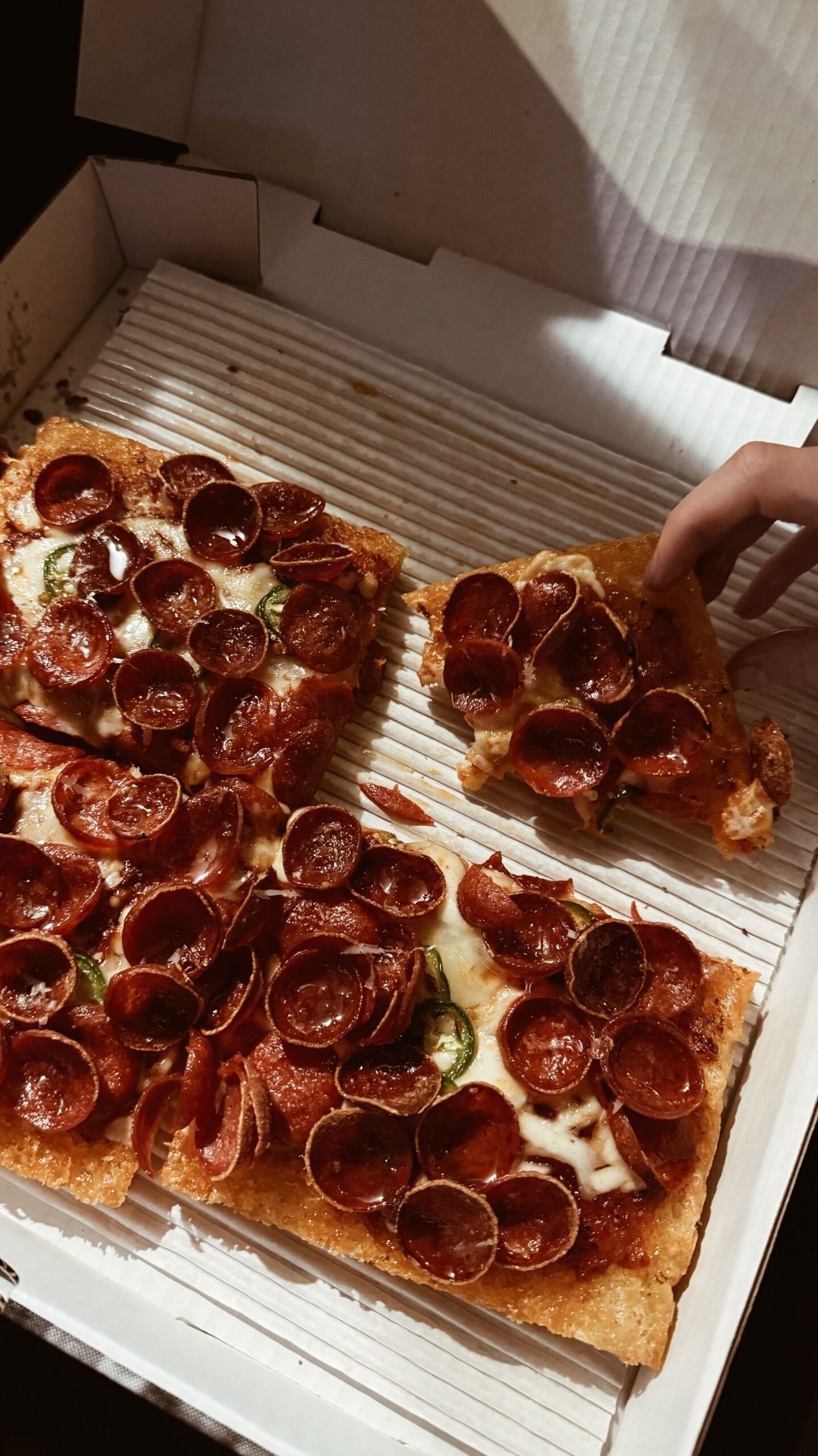
🍕 Key Takeaways
- Detroit style pizza was invented in 1946 at Buddy’s Rendezvous in Detroit, baked in repurposed blue steel automotive parts trays.
- The signature move: Wisconsin brick cheese (or a mozzarella-Jack blend) spread edge to edge so it fries against the hot pan into caramelized, crispy frico edges.
- Build order is dough, pepperoni (under the cheese, traditionally), cheese to the very edges, then sauce ladled in “racing stripes” on top after baking.
- Bake hot and fast: 500–550°F (260–288°C) for 12–15 minutes in a dark steel rectangular pan for a fried, golden bottom crust.
- The crust is thick, airy, and focaccia-like — a high-hydration dough with a long rise is what gives it that open, chewy crumb.
- A 10×14-inch Detroit-style pan (LloydPans makes the standard) is the single best equipment upgrade for this style.
- Detroit style differs from Sicilian in the cheese-to-edge caramelization and the post-bake sauce stripes; from grandma pizza in its thickness and pan.
The History of Detroit Style Pizza
The story starts in 1946 at a blind pig — a Prohibition-era term for a speakeasy — called Buddy’s Rendezvous on Six Mile Road in Detroit. The owner, Gus Guerra, wanted to add pizza to the menu, and his wife Anna borrowed a recipe from her mother. But the real innovation wasn’t the recipe; it was the pan. Detroit in the 1940s was the arsenal of the auto industry, and small blue steel trays used to hold automotive parts were cheap, abundant, and — crucially — perfect for baking. They were deep, rectangular, dark, and conducted heat ferociously.
Gus pressed a focaccia-like dough into one of those trays, spread cheese all the way to the edges, and baked it hot. The cheese that touched the pan caramelized into a crispy, lacy, deeply browned crust — the frico edge that would become the style’s signature. The sauce went on top after the bake, in stripes. The pizza was an instant local legend, and Buddy’s Rendezvous became Buddy’s Pizza, still operating today and still widely considered the benchmark.
For decades, Detroit style stayed local. Cloverleaf (founded by a former Buddy’s employee in 1953), Shield’s, and later Jet’s Pizza — which franchised the style across the Midwest starting in the 1980s — kept it a regional treasure. The rest of the country barely knew it existed. That changed in the 2010s, when Detroit-style pizzerias opened in New York, Los Angeles, and Austin to rave reviews, and food media declared it America’s most exciting regional pizza. Home bakers followed: the style turned out to be remarkably reproducible with a rectangular steel pan and a very hot home oven.
What makes the history charming is how industrial it is. Neapolitan pizza has centuries of peasant tradition; New York has the coal oven; Detroit has the auto plant. The pan is literally a piece of Detroit’s manufacturing heritage, and the pizza tastes like it — sturdy, generous, engineered for maximum flavor.
The Defining Characteristics of Detroit Style
The pan
Everything starts with the pan. An authentic Detroit-style pan is dark blue steel, roughly 10×14 inches and about 2.5 inches deep, with straight sides. The dark steel absorbs and radiates heat aggressively, which is what fries the bottom of the crust and caramelizes the cheese edges. LloydPans sells the industry-standard home version, and it’s the single purchase that will improve your Detroit style the most. In a pinch, a dark 9×13-inch cake pan or a cast iron skillet works — but light-colored aluminum pans produce a noticeably paler, softer result. Season a new steel pan the way you would cast iron: a thin coat of oil baked on at high heat a few times builds a nonstick patina that improves with every pizza. Never soak a blue steel pan or run it through the dishwasher — a quick wipe and a light re-oiling after each use keeps it in prime condition for years. If you’re serious about pan pizza generally, our pizza steel vs pizza stone guide explains why dark, conductive surfaces matter so much.
The crust: thick, airy, fried
Detroit style dough is a high-hydration dough — around 70% — made with bread flour, water, yeast, salt, and a touch of olive oil. It’s closer to focaccia dough than to a lean Neapolitan dough. After mixing, it gets a long, slow rise (often overnight in the fridge), then it’s pressed into a well-oiled pan and left to proof a second time right in the pan until puffy.
The result is a crust with a real dichotomy: the interior is open, airy, and chewy, full of irregular holes like good focaccia, while the bottom is fried in the pan’s oil to a deep golden, shattering crispness. That fried bottom is non-negotiable — it’s what separates Detroit style from a merely thick pizza. Generous oil in the pan (2–3 tablespoons) is what makes it happen. For more on building airy, flavorful doughs, see how to make pizza dough from scratch and our cold ferment pizza dough guide.
The cheese: edge to edge, caramelized
Traditional Detroit style uses Wisconsin brick cheese — a mild, buttery, high-fat cheese that melts beautifully and browns aggressively. Brick cheese can be hard to find outside the Midwest, so the standard home substitute is a 50/50 blend of low-moisture whole-milk mozzarella and Monterey Jack (or mild white cheddar), cubed or shredded. What matters is the fat content and the melt: you want cheese that flows and fries, not cheese that just softens.
The cheese goes on in a thick layer — a full pound or more — spread deliberately all the way to the edges of the pan, touching the steel. This is the defining technique. Where the cheese meets the hot pan, it doesn’t just melt; it fries and caramelizes into a lacy, crispy, mahogany-brown frico. That caramelized cheese wall is the whole point of the style, and it’s the bite everyone fights over. Our best cheese for pizza guide covers why fat content and moisture level determine whether cheese crisps or steams.
The sauce: racing stripes on top
Detroit style sauce is simple — crushed tomatoes, garlic, oregano, salt, a pinch of sugar, warmed through — and it’s applied after the bake in two or three long stripes down the length of the pizza. The “racing stripes” (a nod to Detroit’s auto heritage) aren’t just decorative: ladling hot sauce over the finished pie keeps the cheese crisp underneath instead of steaming it, and the bright, fresh tomato flavor contrasts with the rich, caramelized cheese. Some shops bake the sauce on; traditionalists insist on the post-bake ladle. Try it the traditional way first — you’ll taste why.
The pepperoni (under the cheese)
In classic Detroit style, pepperoni goes under the cheese, directly on the dough. During the bake, the fat renders out of the pepperoni and into the crust, flavoring it from below, while the cheese protects the pepperoni from burning. The result is pepperoni that’s cooked through and savory rather than crisped — a completely different experience from pepperoni baked on top. If you want those crispy cupped pepperoni, our homemade pepperoni pizza recipe covers that technique for other styles.
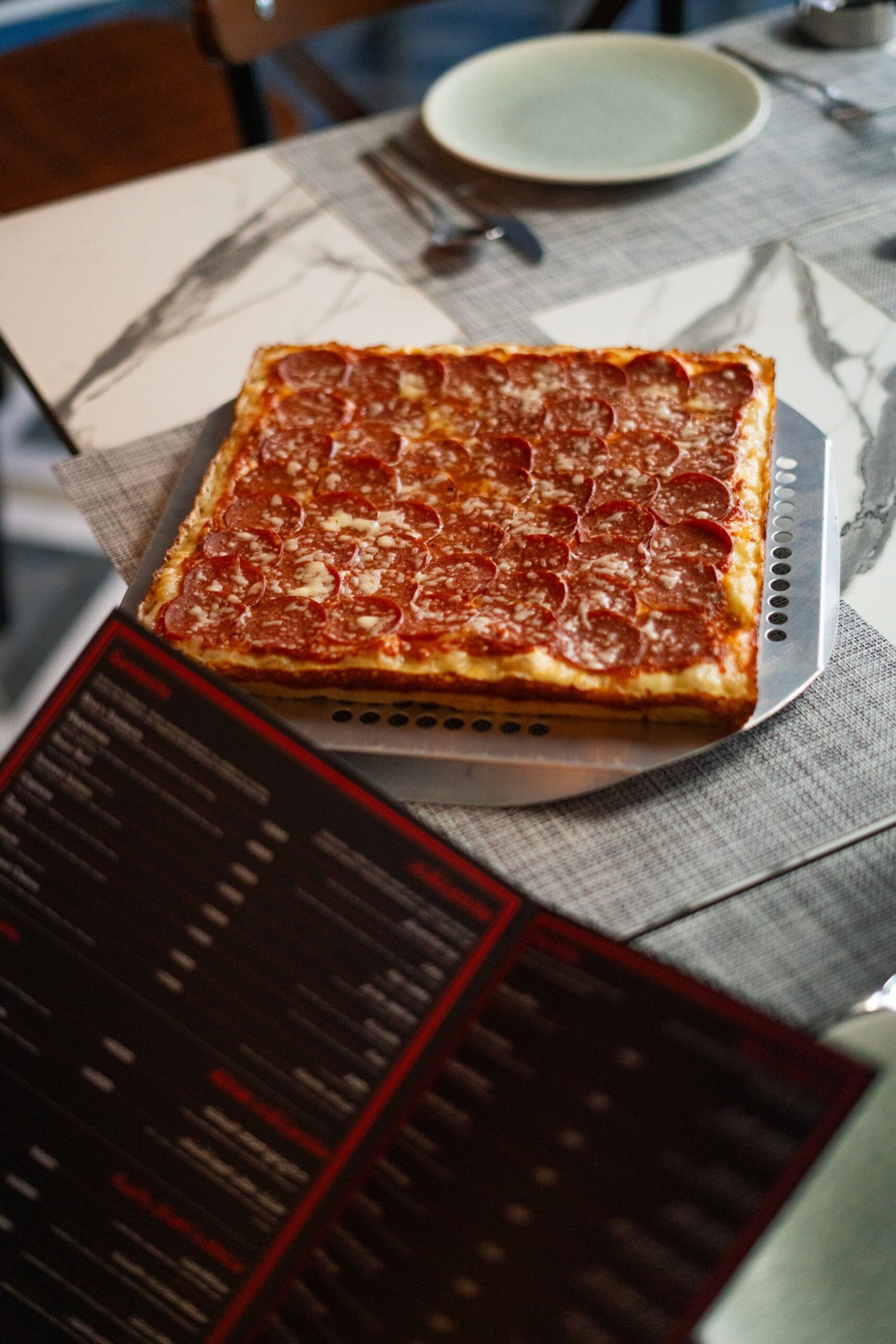
Detroit Style Pizza Recipe for Home Ovens
This makes one 10×14-inch pizza — about 8 square slices. Start the dough the day before for the best flavor and texture.
The dough
- 3 1/2 cups (420g) bread flour
- 1 1/2 cups (355ml) lukewarm water (about 70% hydration)
- 2 teaspoons instant yeast
- 2 teaspoons fine sea salt
- 2 tablespoons olive oil, plus 3 tablespoons for the pan
Mix flour, water, and yeast until no dry spots remain. Rest 20 minutes (autolyse), then add salt and olive oil and knead 5–7 minutes until smooth and elastic. The dough will be soft and slightly sticky — resist adding flour. Cover and refrigerate 12–24 hours. This slow, cold fermentation develops the complex flavor and open crumb that make the style special; our same-day pizza dough recipe works in a pinch, but the overnight version is noticeably better.
Assembly and bake
- Coat your Detroit-style pan (or dark 9×13-inch pan) with 3 tablespoons of olive oil, getting the corners and sides. Turn the cold dough into the pan and press it gently toward the edges. It won’t reach at first — cover and rest 20 minutes, then press again. Repeat until it fills the pan, then let it proof in the pan 1–2 hours until visibly puffy.
- Preheat your oven to its maximum — 500–550°F (260–288°C) — with a rack in the lower third. A pizza steel on the rack below the pan adds thermal punch for an extra-crisp bottom.
- Lay pepperoni slices (about 20) directly on the proofed dough in an even layer.
- Spread 1 pound (450g) of cubed or shredded brick cheese — or your 50/50 mozzarella and Monterey Jack blend — edge to edge, deliberately pushing cheese against the pan walls. This contact is what creates the frico.
- Bake 12–15 minutes until the cheese edges are deeply browned and lacy, the top is golden, and the crust has pulled slightly away from the pan sides. The edges should look almost burnt — that’s caramelization, not a mistake.
- While it bakes, warm 1 1/2 cups of crushed tomatoes with minced garlic, oregano, salt, and a pinch of sugar (see our homemade pizza sauce recipe for the no-cook base).
- Remove the pizza and let it rest in the pan 5 minutes, then run a spatula around the edges and lift it out. Ladle the warm sauce in 2–3 racing stripes down the length of the pie. Slice into squares and serve immediately.
Troubleshooting
- Pale, soft edges: Your cheese didn’t touch the pan, or the pan wasn’t hot enough. Push cheese firmly against the walls next time, and make sure the oven is fully preheated — a full 45–60 minutes.
- Gummy center: The dough was under-proofed in the pan, or the bake was too short. The in-pan proof is essential; don’t rush it. The center should look set and the bottom should be golden when you lift a corner.
- Stuck to the pan: Not enough oil, or you tried to remove it too soon. Be generous with oil, and let the pie rest 5 minutes — it releases as the cheese firms slightly.
- Soggy bottom: Too much sauce, or sauce ladled too early. Remember: sauce goes on after the bake, and keep it to stripes, not a flood.
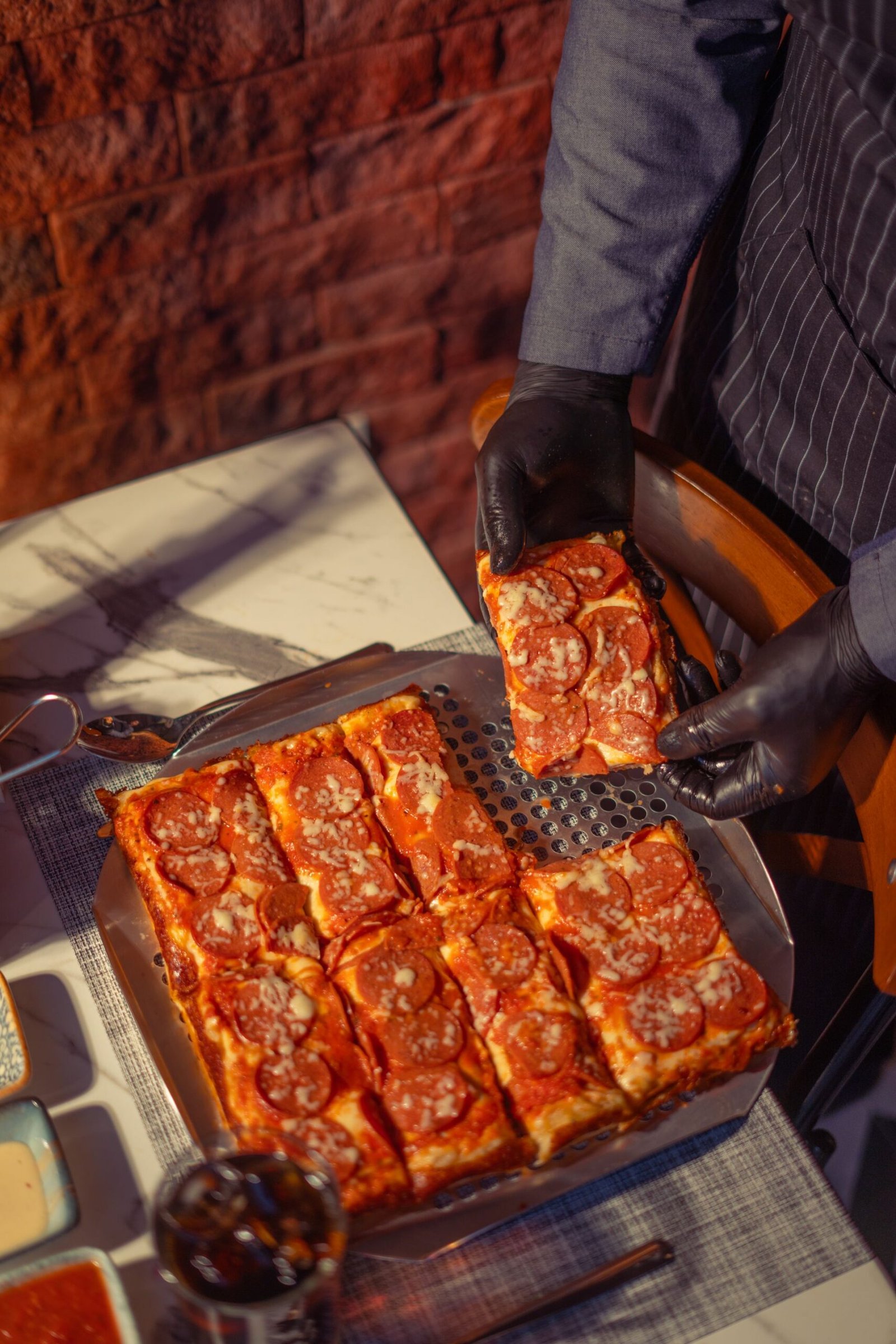
Make-Ahead Tips, Leftovers, and Freezing
Detroit style pizza is one of the most make-ahead-friendly styles, which makes it perfect for parties. The dough actually improves with time: after the overnight cold ferment, it can hold in the refrigerator for up to 3 days, developing deeper flavor each day. You can also press the dough into the oiled pan, cover it tightly, and refrigerate the whole pan — then let it do its final proof at room temperature for 2–3 hours before topping and baking. If you need a refresher on the technique, our guide to freezing pizza dough covers longer-term storage, though the fridge method is better for this high-hydration dough.
For serving a crowd, bake the pizza fully, hold it in the warm pan for up to 20 minutes, and ladle the sauce stripes on just before serving — the sauce is what makes it look and taste fresh. Leftovers are excellent: the thick crust reheats better than almost any other style. Store squares in the refrigerator for up to 4 days (cool them to room temperature within 2 hours of baking, per standard food-safety practice). To reheat, use a 375°F (190°C) oven for 8–10 minutes, which re-crisps the bottom and re-melts the cheese. A covered skillet over medium-low heat works too. The microwave will soften the frico edges, so save it as a last resort — our leftover pizza ideas guide has more ways to use extra squares.
You can also freeze baked Detroit style squares: cool completely, wrap tightly, and freeze up to 2 months. Reheat from frozen at 375°F for 15–18 minutes. The fried bottom crust survives freezing remarkably well, which is more than you can say for most pizza styles.
Detroit Style vs Sicilian vs Grandma Pizza: Know the Difference
Square pan pizzas get confused constantly, so here’s the field guide.
Detroit style is thick (about 1.5 inches of airy crumb), baked in dark steel, with cheese caramelized edge-to-edge into frico and sauce striped on top after baking. The defining features are the fried bottom and the crispy cheese walls.
Sicilian pizza (and its ancestor sfincione) is also thick and square, but it’s baked in a lighter pan, the cheese stays inside the borders (no frico), and the sauce typically goes on top of the cheese before baking. The crumb is similarly airy, but the eating experience is softer and less caramelized. Our Sicilian pizza guide covers the Italian original in full.
Grandma pizza is the thin one: a square pie baked in an oiled sheet pan, with a thin, crisp-chewy crust, sauce over cheese (or cheese over sauce — it varies), and a garlicky, homestyle character. It’s Detroit’s opposite in texture despite the similar shape. See our grandma pizza guide for the full breakdown.
The quick test: if the cheese forms a crispy brown crown around the edges, it’s Detroit style. If it’s thick and soft-edged with sauce on top, it’s Sicilian. If it’s thin and sheet-pan crisp, it’s grandma.
Frequently Asked Questions
What is brick cheese, and what can I substitute?
Wisconsin brick cheese is a mild, buttery, high-fat semi-soft cheese — the traditional Detroit style cheese. Outside the Midwest it’s hard to find, so substitute a 50/50 blend of low-moisture whole-milk mozzarella and Monterey Jack (or mild white cheddar). Cube it rather than shredding for the best melt and browning.
Do I need a special pan for Detroit style pizza?
A dark steel Detroit-style pan (10×14 inches) is strongly recommended — the dark steel is what fries the bottom and caramelizes the edges. A dark 9×13-inch cake pan works as a substitute; avoid light aluminum, which won’t brown properly. LloydPans makes the pan most home bakers use.
Why does the sauce go on after baking?
Ladling warm sauce over the finished pie keeps the cheese underneath crisp instead of steaming it under a wet layer, and it preserves the sauce’s bright, fresh tomato flavor against the rich, caramelized cheese. It’s traditional, and it genuinely tastes better this way.
How is Detroit style different from deep dish?
They’re both pan-baked and thick, but that’s where the similarity ends. Deep dish has a buttery biscuit-like crust, reverse layering with sauce baked on top, and a 40-minute bake. Detroit style has a focaccia-like airy crust, cheese caramelized against the pan edges, post-bake sauce stripes, and a 12–15 minute hot bake. Our Chicago deep dish guide covers the Windy City classic.
Can I make Detroit style in a regular home oven?
Absolutely — this style was made for home ovens. You need maximum heat (500–550°F), a dark steel pan, and a full preheat. A pizza steel under the pan helps the bottom fry properly. No special oven required.
How do I get the cheese edges crispy?
Push the cheese all the way to the pan walls so it touches bare steel, use a high-fat cheese blend, bake hot, and don’t pull the pie early — the edges should look deeply browned, almost burnt. That mahogany frico is the signature, not a flaw.
What’s the difference between Detroit style and a pan pizza from a chain?
Chain pan pizzas are typically made with lower-hydration dough, baked in lighter pans, and topped edge-to-edge with sauce and cheese in the conventional order — so you get a thick, soft pizza but none of the caramelized frico edges or fried bottom that define Detroit style. The cheese-to-steel contact and the post-bake sauce stripes are what set the real thing apart. Once you’ve had the crispy cheese crown, the chain version tastes like a different food entirely.
Conclusion
Detroit style pizza is proof that the best innovations come from constraints — in this case, an auto-parts tray and a hot oven. The formula is simple but exact: high-hydration dough proofed in an oiled steel pan, pepperoni under a full pound of edge-to-edge cheese, a blazing bake that fries the bottom and caramelizes the walls, and bright tomato sauce striped on after. Get the pan hot, push the cheese to the steel, and don’t fear the deep brown edges. That crispy, lacy, caramelized crown is why Detroit style went from a Six Mile Road secret to a national obsession — and why one square slice is never enough.
[…] definitive pizza. For the full tour of America’s regional styles, from Sicilian to Detroit-style to pizza al taglio, those guides trace each […]