

Every parent knows the dinnertime standoff: you made something nutritious, they’re pushing it around the plate, negotiating every bite like tiny lawyers, and everyone’s evening is deteriorating. Pizza for kids is the rare truce both sides can live with. Kids love it — the cheese, the shapes, the hands-on fun of building something with their own two hands — and parents love it because it’s one of the few meals where children will happily eat vegetables they chose themselves, where cooking together counts as genuine quality time, and where “what’s for dinner?” doesn’t have to be a nightly negotiation ever again.
But “pizza for kids” can mean so much more than ordering a plain cheese pie and calling it a day. With a little creativity, pizza becomes a vehicle for fun shapes, silly faces, hidden veggies, cooking lessons, and party activities that kids genuinely get excited about — the kind of dinner they ask for by name. This guide has fifteen kid-tested ideas — from DIY mini pizzas to pizza-themed party games — plus practical tips on portions, safety, age-appropriate cooking skills, and winning over picky eaters without a single battle.
🍕 Key Takeaways
- Kids who build their own pizza are dramatically more likely to eat it — including the vegetables they picked themselves.
- Mini bases (naan, pita, English muffins) give little chefs full control with zero waste and fast baking.
- Fun shapes, silly faces, and themes turn dinner into play — and playful kids are adventurous eaters.
- Always keep one plain cheese option available; it’s the safe harbor that makes experimentation possible.
- Adults handle the oven, always — kids do the assembling, decorating, and (supervised) tasting.
- Plan 2–3 slices per child for parties, and serve pizza after activities, not before.
Why Pizza Is the Ultimate Kid Food
Before the ideas, it’s worth understanding why pizza works so well for children — because the reasons point to how to make it work even better.
First, autonomy. Few kid meals offer real choice, and children — like adults — eat more happily when they have agency. A DIY pizza setup lets a four-year-old make genuine decisions (sauce or no sauce? mushrooms or peppers?) with zero risk. That sense of ownership is the single biggest reason kids devour pizzas they built themselves while rejecting identical pizzas served to them.
Second, sensory friendliness. Pizza hits the flavors kids naturally prefer — savory, mildly sweet tomato, melted cheese — in textures that are easy to chew. There’s nothing challenging about it: no bones, no strong spices (unless you add them), no unfamiliar textures. It’s a safe base from which to explore.
Third, it’s genuinely fun to make. Spreading sauce, sprinkling cheese, arranging toppings — these are play activities that happen to produce dinner. The fine motor practice is real (toddler occupational therapists approve of pizza-making), the mess is manageable, and the pride kids feel pulling “their” pizza from the oven is enormous.
Fourth, it’s forgiving. A lopsided pizza tastes the same as a round one. Burnt edges can be trimmed. Weird topping combinations are a story, not a failure. For kids learning to cook, pizza is the rare dish where mistakes don’t matter — which makes it the perfect first recipe. Our family pizza night ideas guide builds a whole tradition around exactly this dynamic.
Setting Up for Success: Bases, Safety, and Picky Eaters
A few practical foundations make everything below work smoothly.
Pick the right base for the age. Toddlers and preschoolers do best with small, pre-baked bases — naan rounds, pita halves, or English muffins. They’re sturdy, they bake in under ten minutes, and little hands can manage them. School-age kids can handle stretched dough balls (with help), and tweens can make full-size pizzas with supervision.
Safety rules are non-negotiable. Adults always handle the oven — no exceptions, no matter how responsible the child seems. Keep little ones back from the oven door when it opens (that blast of heat surprises them). Let pizzas cool for a few minutes before serving; molten cheese is the #1 pizza burn culprit. And keep raw flour handling minimal for very young kids (it’s a raw agricultural product) — let them work with pre-made dough rather than mixing from scratch.
The picky-eater playbook. Never pressure, always offer. Keep a plain cheese pizza or base available so cautious eaters never go hungry — hunger plus pressure equals meltdowns. Offer new toppings as tiny, no-commitment tastes (“just try one mushroom on the corner”). Celebrate any adventurous bite enthusiastically. And remember the golden rule: kids who build it, eat it. The DIY format does more for picky eating than any strategy ever will.
Portion guidance. Young kids (2–4) typically eat the equivalent of 1–2 small slices; school-age kids (5–12) eat 2–3 slices; teenagers eat like adults. For parties, our how much pizza per person guide has the full calculator — but the short version is: always include extra plain cheese, because it’s what disappears first.
15 Pizza for Kids Ideas They’ll Actually Eat
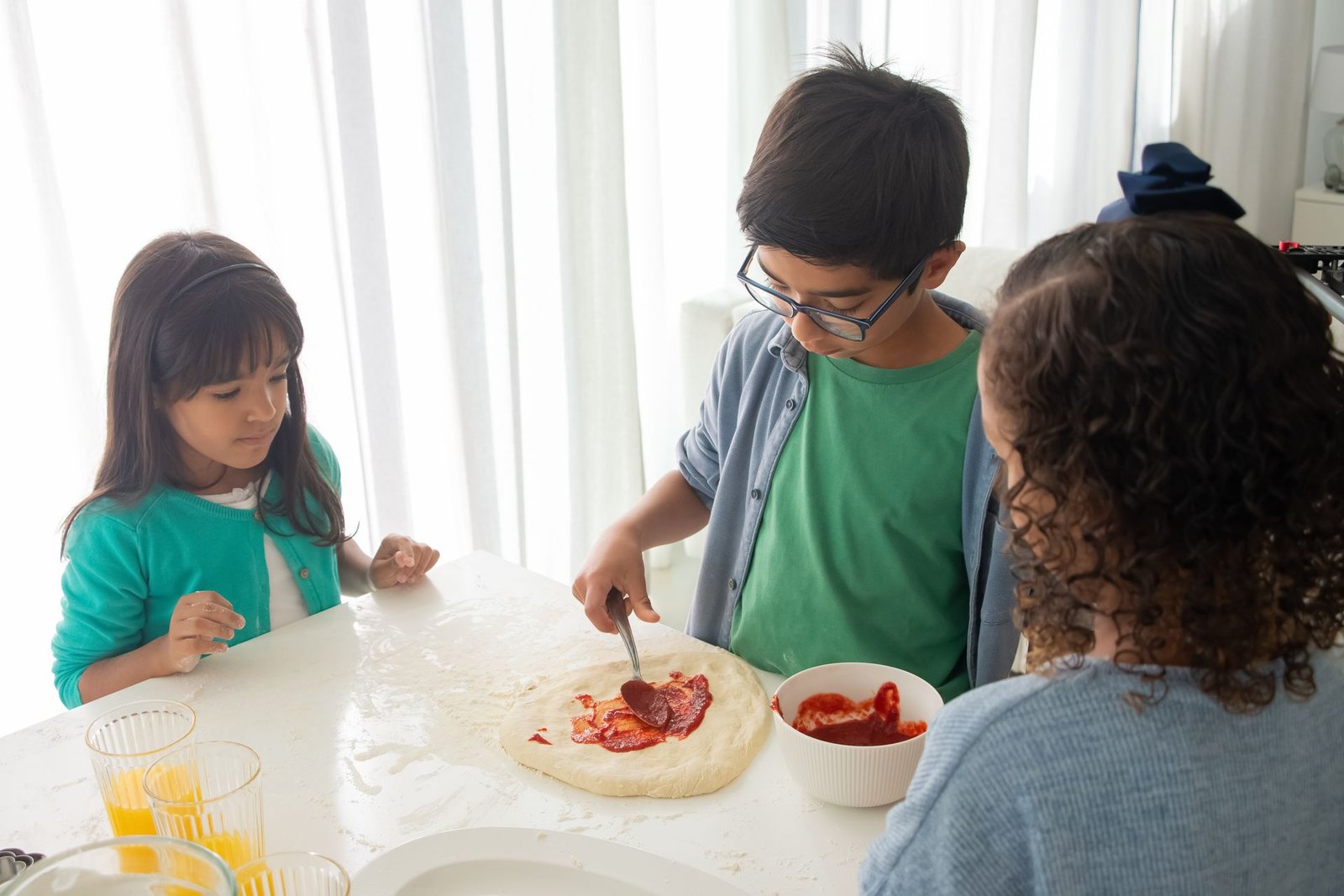
1. DIY mini pizza bar. The foundation of everything. Set out naan rounds or pita halves, small bowls of sauce, shredded mozzarella, and toppings. Let each child build their own. Works from age two (with help) to teenager, and it’s as much activity as meal.
2. Silly face pizzas. Give each kid a cheese pizza base and a “face kit”: olive slices for eyes, a pepperoni nose, bell pepper strip smiles, mushroom ears. Photograph before baking — the faces survive the oven surprisingly well, and kids are so proud.
3. Alphabet pizzas. Everyone’s toppings must start with the same letter (draw from a hat). “P” night: pepperoni, peppers, pineapple, parmesan. “M” night: mushrooms, mozzarella, marinara. It’s dinner and a spelling game in one.
4. Pizza muffins. Press biscuit or pizza dough into a muffin tin, fill with sauce, cheese, and mini toppings, and bake. Two-bite pizzas that kids can eat with their hands — perfect for lunchboxes and parties.
5. Rainbow veggie pizza. Challenge kids to make their pizza as colorful as possible: red peppers, orange cheddar, yellow corn, green basil, purple onion. The game naturally loads the pizza with vegetables, and kids eat the rainbow because they built it.
6. Breakfast pizza. Crack eggs onto the pizza for the last few minutes of baking, add bacon or sausage, and serve with a side of maple syrup for crust-dipping. Kids consider breakfast-for-dinner the height of luxury, and the protein keeps them full.
7. Dessert pizza. Reserve some dough for a sweet finale: Nutella or cinnamon-sugar base with strawberries and mini marshmallows. It’s the reward that makes the whole night feel like an event. Our dessert pizza recipe has the method.
8. Pizza rolls (the homemade kind). Spread dough with sauce and toppings, roll it up like a cinnamon roll, slice into pinwheels, and bake. Kids love the spiral shape, they’re perfect for dipping, and they pack beautifully for school lunches.
9. Shape challenge night. Hearts, stars, dinosaurs, letters of their name — rolled dough plus cookie cutters (or freehand with a butter knife for older kids) turns pizza into art class. Take photos; the shapes melt, the memories don’t.
10. “Around the world” pizzas. Each week, build a pizza inspired by a country: Greek (feta, olives), Mexican (bean base, corn, jalapeño), Hawaiian (ham, pineapple). It’s geography you can eat — and kids remember the countries because they tasted them.
11. Pizza kebab skewers. Thread folded mini pizza squares, cherry tomatoes, mozzarella balls, and basil onto (blunt) skewers. Deconstructed pizza on a stick — the novelty alone gets cautious eaters trying things.
12. Personal pan pizzas. Give each child their own small cake pan or cast-iron skillet to build in. The thick, crispy-edged personal pan is deeply satisfying, and “my own pan” ownership makes kids eat with extra gusto. (Our cast iron skillet pizza recipe scales down beautifully.)
13. Pizza picnic. Bake, slice, pack in a basket with drinks and a blanket, and eat at the park or in the backyard. Pizza is the ultimate picnic food — no cutlery, no reheating — and eating outside makes everything taste better to kids.
14. Copycat challenge. Try to recreate the family’s favorite takeout pizza at home. Kids become fierce critics (“needs more cheese!”, “the crust isn’t crispy enough!”), which secretly teaches them to taste thoughtfully. Order the real thing for a side-by-side taste test.
15. Pizza party sleepover. For the full event: DIY pizza bar for dinner, a movie, then dessert pizza for a midnight snack. It’s the sleepover format kids request by name — and our how to host a pizza party guide covers the logistics for bigger groups.
Pizza Cooking Skills Kids Learn by Age
Pizza-making grows with your child — here’s what each age can genuinely handle, so you’re teaching, not just occupying.
Ages 2–3: sensory play. Spreading sauce with the back of a spoon, sprinkling pre-shredded cheese, placing pepperoni slices. It’s mostly about textures and participation, and that’s plenty. Expect mess; embrace it.
Ages 4–5: real assembly. Pouring sauce from a small cup, distributing toppings evenly (“can you put three mushrooms on each quarter?”), and grating soft cheese with a child-safe grater. They can also tear basil leaves and brush oil with a pastry brush. Counting toppings sneaks in early math.
Ages 6–8: dough handling. Kneading, shaping dough balls, and rolling with a small rolling pin. They can read a simple recipe with help, measure flour, and learn the patience of waiting for dough to rise — a genuine lesson in delayed gratification.
Ages 9–12: independence (with oven supervision). Reading and following a full recipe, managing topping prep with a kid-safe knife, timing bakes, and judging doneness by color and smell. Many kids this age can run a pizza night with an adult on oven duty.
Teens: full ownership. From dough to table, including inventing their own topping combinations and hosting friends. A teenager who can make pizza from scratch has a life skill — and a legendary party trick.
The progression matters because it keeps pizza night challenging enough to stay interesting as kids grow. The toddler sprinkling cheese becomes the ten-year-old stretching dough becomes the teenager hosting pizza night for friends. Same tradition, new skills every year.
Rainy-Day Pizza Activities (Beyond Eating)
When the weather traps everyone inside, pizza becomes the day’s entertainment, not just its dinner:
Pizza dough playdough. A simple flour-salt-water dough (no yeast needed) works as playdough for sculpting practice pizzas. Kids “top” their creations with buttons, pom-poms, and felt pieces. Zero baking, endless entertainment.
Design-your-dream-pizzeria. Paper, crayons, and one prompt: design your own pizzeria — name, logo, menu, and signature pizza. Kids produce astonishingly detailed restaurants, and the best menu items can become next week’s actual pizza night.
Pizza box marble run. Clean pizza boxes plus cardboard tubes become a marble run or a dollhouse. The boxes’ shallow depth is perfect for small hands, and you’re recycling at the same time.
Pizza-themed movie afternoon. Queue up a family film, make pizza muffins (idea #4) for snacking, and call it a film festival. Low effort, high coziness — the rainy-day trifecta.
Topping taste-test challenge. Blindfold willing participants and have them identify toppings by taste: olive vs. mushroom, mozzarella vs. parmesan. It’s hilarious, it’s sensory education, and it ends with everyone eating the test subjects.
The Sneaky Nutrition Win (Don’t Tell the Kids)
Here’s the part parents care about most: pizza is one of the easiest vehicles for getting vegetables into children — not by hiding them (though that works too), but by letting kids choose them. A child who would stage a protest over a side of broccoli will happily scatter peppers and mushrooms across their own pizza, because they decided to. Autonomy transforms vegetables from imposition to creation.
A few gentle nudges that work: put the vegetable bowls first in the topping line (kids load up before reaching the pepperoni), cut vegetables small so they distribute well, and pre-cook watery veggies so they taste sweet and caramelized rather than soggy. Blend a little extra vegetable into the sauce — finely grated carrot or zucchini disappears into tomato sauce completely. Use whole-wheat dough sometimes; kids rarely notice when it’s loaded with their favorite toppings (our whole wheat pizza dough guide keeps it light, not heavy).
And keep perspective: pizza night isn’t the meal to optimize. It’s the meal the whole family enjoys together, which has its own value. Our honest look at pizza and health covers the balanced picture — but the short version is that homemade pizza with vegetables, eaten joyfully with family, is nothing to worry about.
Kids’ Pizza Birthday Party Playbook
Pizza and kids’ birthdays are a natural pairing. Here’s how to run it:
Timing: Two hours is the sweet spot. Schedule pizza after the main activity — kids barely eat during play chaos but descend on food afterward. A 2pm party with pizza at 2:45 and cake at 3:30 is the classic rhythm.
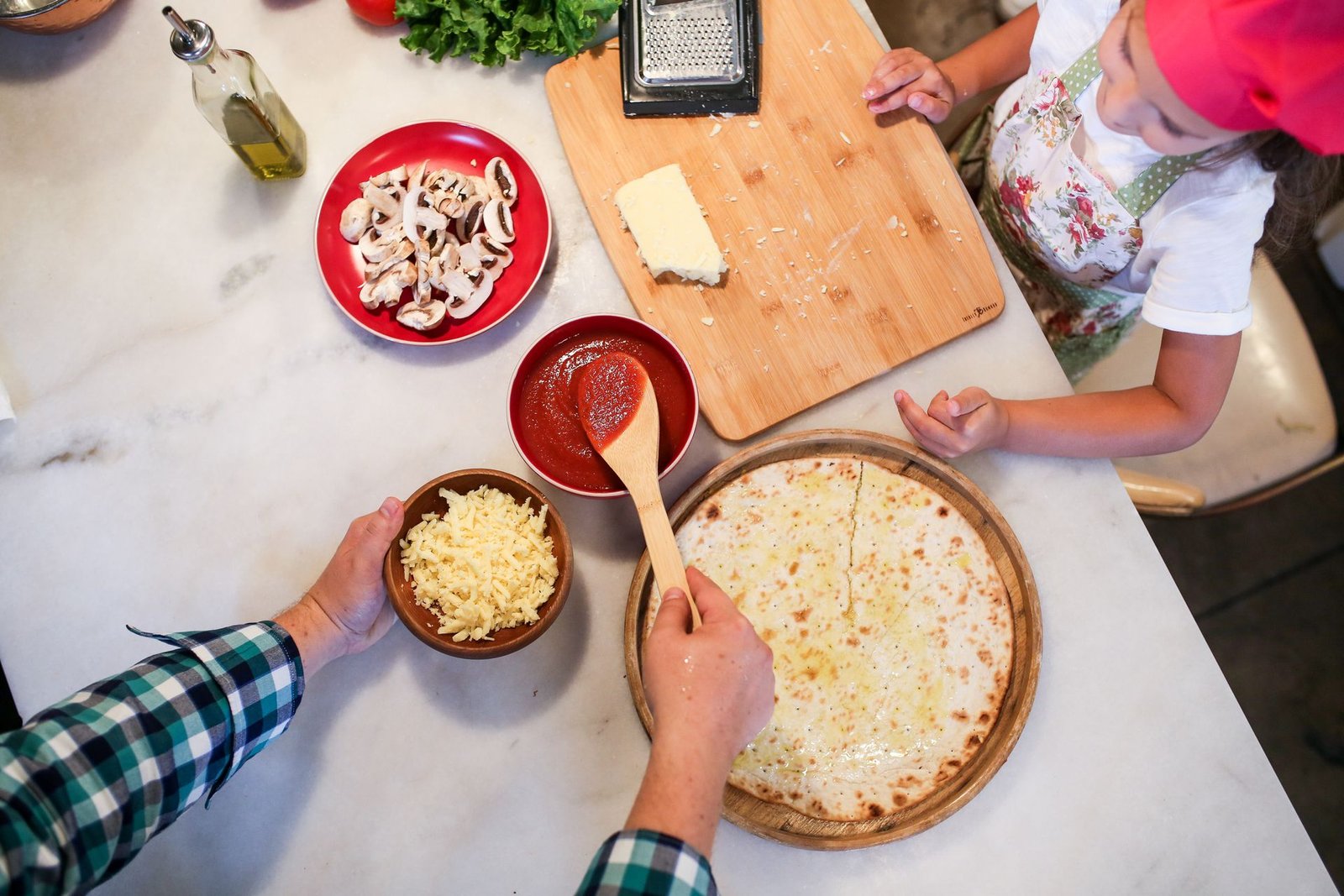
The activity is the food. A DIY mini-pizza station doubles as entertainment: kids build their own on naan rounds or English muffins while you bake in batches. Add a “decorate your pizza box” craft table for early arrivals — they take home their creation as the party favor.
Quantities: Plan 2–3 slices per child (they eat less than you fear during parties, then more than you expect after). Always include at least one plain cheese pizza — adventurous varieties go largely untouched by the under-ten crowd. Our party quantity calculator has the full math, and how to host a pizza party covers the broader logistics.
Cake timing: Serve cake 20–30 minutes after pizza, not immediately. Kids need a beat between courses, and the pause lets you reset the table while they play.
Goodie bags: A mini rolling pin, a pizza-shaped cookie cutter, or a small container of pizza seasoning is cheap, on-theme, and far better than another plastic trinket.
Leftover Pizza: The Next-Day Win
Kids’ pizza nights produce leftovers, and that’s a feature — tomorrow’s lunch is already made. Store slices in an airtight container in the fridge (within two hours of baking) and use within a few days. Reheat in the oven or toaster oven at 375°F for the crispiest results — the microwave makes crusts chewy, and kids notice. Our how to reheat pizza guide ranks all five methods.
For lunchboxes, pizza muffins and pizza rolls (ideas #4 and #8 above) reheat better than slices and are easier for little hands. Cold pizza in a lunchbox is also a legitimate and beloved choice — many kids prefer it. And for the truly creative, our leftover pizza ideas has fifteen transformations, from breakfast hash to pizza croutons for soup.
Frequently Asked Questions
What age can kids start making their own pizza?
Toddlers around age two can spread sauce with the back of a spoon and sprinkle cheese with help. By four or five, most kids can assemble a whole mini pizza independently. Adults always handle the oven — assembly is kid-safe, baking is not.
How do I get my picky eater to try pizza toppings?
Use the DIY format: kids who build their own pizza try more toppings with zero pressure — the autonomy changes everything. Offer new toppings as tiny tastes on the corner of their pizza, keep a plain cheese option always available so there’s never a hunger-driven meltdown, and celebrate adventurous bites enthusiastically. Never force it — curiosity usually wins within a few weeks when there’s no battle, and today’s refused mushroom is next month’s favorite topping.
What are the best pizza toppings for kids?
Start with the classics: mozzarella, pepperoni, ham, mushrooms, bell peppers, olives, pineapple, and sweet corn. Let kids graduate to new toppings at their own pace. Mild flavors first; save the jalapeños and anchovies for the adults’ pizza.
How much pizza should I make for a kids’ party?
Plan 2–3 slices per child aged 5–12, and 1–2 for under-fives. For 12 kids, that’s roughly three large pizzas — and make at least one of them plain cheese. See our pizza quantity guide for the full calculator.
Is pizza okay for toddlers?
In age-appropriate portions, yes — soft mini pizzas with simple toppings are easy for toddlers to chew. Cut into small pieces, let it cool properly (molten cheese burns are the main risk), and skip very salty toppings like pepperoni for the youngest ones in favor of mild cheese and soft vegetables.
How do I handle a child with allergies at pizza night?
Ask about allergies before the event. Keep allergen-free pizzas on a separate tray to avoid cross-contact, label everything clearly, and prepare the allergy-friendly pizza first, before other pizzas touch the surfaces. When in doubt, the child’s parents are the experts on their needs — ask them.
Let Them Build It
The secret to pizza for kids was never really about the pizza — it’s about the building. Give children real ingredients, real choices, and a hot oven handled by a grown-up, and they’ll produce dinners they devour, memories they keep, and cooking confidence that lasts a lifetime. The picky eater who builds their own rainbow veggie pizza today is the teenager hosting pizza night for friends tomorrow — and that’s a transformation worth every flour-dusted countertop. Start with one idea from this list — the mini pizza bar is the can’t-miss first move — and watch what happens when dinner becomes something they helped create. Then make it a tradition: our family pizza night ideas will help you turn one fun dinner into the weekly ritual your kids will remember forever. Because years from now, they won’t remember what toppings they chose. They’ll remember that they chose — and that Friday meant pizza, Saturday meant the sleepover pizza party, and the kitchen was the happiest room in the entire house, always.