

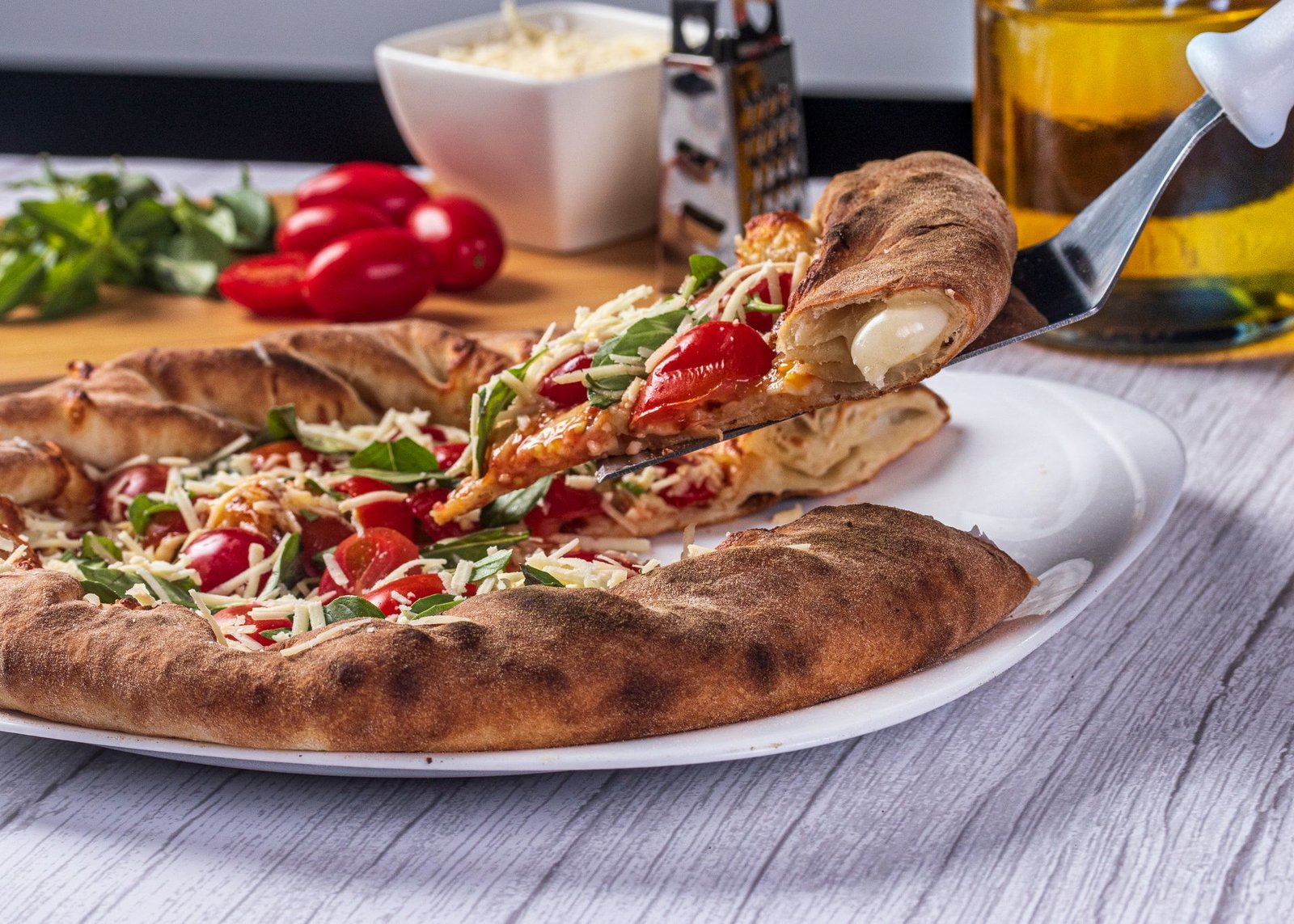
A good stuffed crust pizza recipe turns the part of the slice most people leave behind into the best bite of the whole pie. Instead of a plain puffy rim, you get a golden, buttery edge with a molten core of mozzarella that pulls into long, satisfying strings. It tastes like a restaurant indulgence, yet it’s one of the easiest upgrades you can make to homemade pizza night — the technique is simply a rope of cheese tucked and sealed into a wider-than-usual outer rim before baking.
What surprises most home cooks is how little else changes. You use the same dough, the same sauce, and the same toppings you’d put on any homemade pizza. The only real skills to learn are rolling the dough a couple of inches larger than your pan, laying the cheese in a neat ring near the edge, and pinching the dough over it with a confident seal. Get that seal right and the cheese stays exactly where it belongs; rush it and you’ll get a delicious but dramatic cheese eruption on your oven floor.
This guide gives you the complete stuffed crust pizza recipe from scratch: a dependable dough scaled for stuffed edges, the cheeses that melt beautifully (and the ones that turn greasy or rubbery), a foolproof sealing method, and baking tips for a crisp bottom with a gooey rim. You’ll also find variations, make-ahead and storage guidance, and the food-safety notes that matter when cheese and meat share a pizza. By the end, cheese-filled edges won’t be a special occasion — they’ll be a regular request at your table.
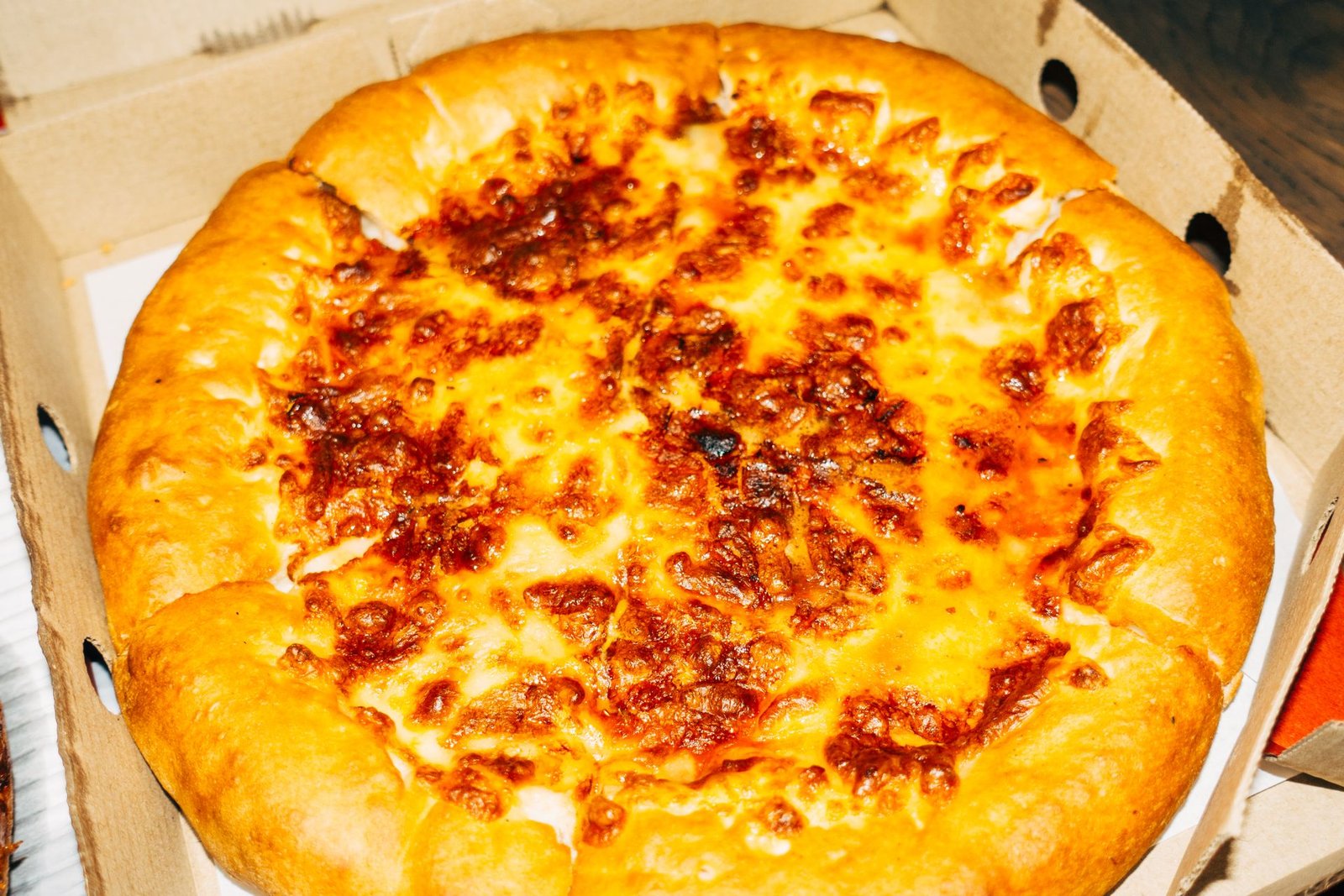
🍕 Key Takeaways
- Roll your dough 2–3 inches wider than the pan so the rim has enough dough to fold over the cheese.
- Low-moisture mozzarella string cheese is the easiest filling — it melts evenly and seals without leaking water.
- Pinch the folded edge firmly and press it flat against the pan; a weak seal is the number one cause of cheese blowouts.
- Bake on a preheated surface at 475–500°F so the bottom crisps before the cheese overcooks.
- Brush the sealed rim with garlic butter right after baking for that classic pizzeria finish.
- Refrigerate leftovers within 2 hours and reheat to steaming hot; meat toppings must reach 165°F (74°C) inside.
Ingredients for This Stuffed Crust Pizza Recipe
Everything here makes two 12-inch pizzas, which is the sweet spot for a family dinner with a few slices left over. If you only want one, halve the dough and filling amounts, or freeze the second dough ball for another night — pizza dough freezes beautifully and thaws into a weeknight shortcut.
For the dough
- 500 g (about 4 cups) bread flour, plus extra for dusting
- 325 ml (1⅓ cups) lukewarm water, roughly 100–110°F
- 2¼ teaspoons (1 packet) instant dry yeast
- 2 tablespoons olive oil, plus a little more for the bowl
- 2 teaspoons fine sea salt
- 1 teaspoon sugar or honey (feeds the yeast and helps browning)
Bread flour earns its place here because its higher protein builds the gluten strength you need to stretch a wide rim and fold it without tearing. All-purpose flour works in a pinch, but the dough will be a touch less elastic when you fold the edge. If you want to understand flour choices more deeply, our flour comparison walks through 00, bread, and all-purpose flour for pizza so you can pick what fits your style.
For the filling and rim
- 8–10 sticks of low-moisture mozzarella string cheese (about 8 oz total), or 8 oz low-moisture mozzarella cut into ½-inch ropes
- 3 tablespoons unsalted butter, melted
- 1 clove garlic, finely minced (or ½ teaspoon garlic powder)
- 1 tablespoon grated Parmesan
- 1 teaspoon dried oregano or Italian seasoning
- Flaky sea salt, for finishing
For topping
- ¾ cup pizza sauce (homemade or a good jarred sauce)
- 8 oz low-moisture mozzarella, shredded
- Your favorite toppings — pepperoni, mushrooms, peppers, or whatever your household loves
String cheese sounds like a shortcut, and it is — but it’s a smart one. It’s already portioned, it’s low-moisture so it won’t weep water into the crust, and its shape makes a perfect continuous rope. Block mozzarella cut into ropes works just as well. Avoid fresh mozzarella for the filling: its high water content leaks during baking and weakens the seal, which is exactly how cheese escapes.
How to Make Stuffed Crust Pizza: Step by Step
Step 1 — Mix and knead the dough
Stir the yeast and sugar into the lukewarm water and let it sit for 5 minutes until foamy — that foam is your proof the yeast is alive. Add the flour, olive oil, and salt, and mix until a shaggy dough forms. Knead for 8–10 minutes by hand (or 6–7 minutes with a dough hook) until the dough is smooth, elastic, and slightly tacky but not sticky. A well-kneaded dough passes the “windowpane test”: stretch a small piece thin enough to see light through without it tearing. If you’ve never made dough from scratch, the full walkthrough in our step-by-step pizza dough guide covers kneading, rising, and shaping in detail.
Step 2 — Let it rise
Oil a large bowl, place the dough inside, turn it once to coat, and cover with a damp towel or plastic wrap. Let it rise in a warm spot for 1 to 1½ hours, until roughly doubled. Then punch it down gently and divide it into two equal balls. Let the balls rest, covered, for 15–20 minutes — this relaxes the gluten so the dough stretches instead of springing back.
Step 3 — Roll wide and lay the cheese rope
Heat your oven as hot as it goes with a pizza stone or steel inside — 475–500°F is the target for most home ovens, and a full 45–60 minute preheat matters. On a floured surface, roll one dough ball into a 14–15 inch circle for a 12-inch pan. That extra 2–3 inches is the whole secret: it’s the flap you’ll fold over the cheese. Transfer the dough to a lightly oiled 12-inch round pan (a dark pan browns the bottom best). Arrange the string cheese sticks in a continuous ring about 1 inch from the outer edge, breaking or trimming the last stick so the ring closes neatly with no gaps or overlaps.
Step 4 — Fold and seal (the most important step)
Working around the circle, lift the overhanging dough edge up and over the cheese rope, then press it down firmly onto the dough inside the ring. Pinch along the entire seam with your fingertips, then go around a second time pressing the sealed flap flat with the heel of your hand. You want a tight, flat seam with no air pockets — air expands in the oven and can pop a weak seal. If any spot looks thin, dab it with a drop of water and pinch again; moisture helps dough bond to dough. A small fork pressed along the seam makes a decorative crimp and adds insurance.
Step 5 — Sauce, top, and bake
Spread the sauce over the center, leaving the sealed rim bare. Add the shredded mozzarella and toppings — but don’t overload. A stuffed crust already carries extra richness, so a moderate hand with toppings keeps the center from turning soggy. Slide the pan onto your preheated stone or steel and bake 12–15 minutes, until the rim is deep golden and the cheese on top is bubbling with a few browned spots. If the rim browns much faster than the center cooks, tent it loosely with foil for the last few minutes.
Step 6 — Finish with garlic butter
While the pizza bakes, stir the minced garlic into the melted butter with the Parmesan and oregano. The moment the pizza comes out, brush this mixture generously over the sealed rim and sprinkle with flaky salt. This step is what makes it taste like the pizzeria version — don’t skip it. Let the pizza rest 3–4 minutes before slicing so the molten cheese in the rim sets just enough to slice cleanly.
Pro Tips for Cheese-Filled Edges That Don’t Leak
Seal twice, bake once
The single biggest difference between a perfect stuffed crust and a leaky one is the seal. After your first pass pinching the fold, run your fingers around the ring again and press the flap flat against the inner dough. Think of it like sealing a dumpling: you want continuous contact with no air trapped inside. If you’re nervous, a light brush of water along the seam before folding acts like glue. Once you’ve done it twice, you’ll do it by feel forever.
Keep the cheese ring inside the rim, not under the toppings
Place the cheese rope about an inch in from the outer edge of the dough, not right at the edge and not near the sauce. If cheese sits under the sauce line, steam from the sauce can push it outward during baking. A clean ring of plain dough between the filling and the toppings gives the seal a dry surface to grip.
Choose low-moisture cheese, always
Fresh mozzarella, burrata, and other high-moisture cheeses release water as they melt. In a normal pizza that water just steams off; inside a sealed rim it turns to steam with nowhere to go, softening the dough from within and blowing out the seam. Low-moisture mozzarella — string cheese or block — is engineered for exactly this job. For more on how moisture changes everything, see our breakdown of fresh vs low-moisture mozzarella.
Preheat hard for a crisp bottom
A stuffed crust pizza is heavier than a standard one, so the bottom needs extra heat to crisp before the rim over-browns. A pizza stone or steel preheated for a full hour at your oven’s maximum gives you that blast of bottom heat. Bake on the lowest rack position, and if the rim is getting dark while the center still looks pale, slide a sheet of foil loosely over just the rim. For the full temperature playbook across styles and equipment, our pizza oven temperature guide is worth bookmarking.
Don’t overfill the center
It is tempting to pile on toppings when the crust is this exciting, but restraint pays off. A stuffed crust pizza with a mountain of wet toppings steams instead of bakes, and you’ll blame the crust for a soggy middle that was really a topping problem. Two to three toppings, spread in a single-ish layer, is the sweet spot.
Par-bake the base when your oven runs cool
If your oven struggles to hold 475°F, or your stone is on the thin side, give the shaped dough (cheese sealed, no toppings yet) a 5-minute head start before adding sauce and cheese. This sets the bottom and begins melting the filling without any topping weight pressing down. Then top it and return it to the oven for the remaining 10–12 minutes. It’s a small insurance policy that costs almost no extra effort and noticeably improves the bottom crust on weaker ovens.
Stuffed Crust Variations Worth Trying
Three-cheese stuffed rim
Swap half the mozzarella sticks for a mix: keep the mozzarella for stretch, add thin ropes of smoked provolone for depth, and tuck a teaspoon of ricotta blended with Parmesan every few inches for creamy pockets. The ricotta must be the thick, whole-milk kind — drain it in a sieve for 30 minutes first so it doesn’t waterlog the seam.
Garlic-Parmesan crust with a spicy kick
Add a teaspoon of red pepper flakes and an extra clove of garlic to the finishing butter, and mix a tablespoon of grated pecorino into the Parmesan. The heat blooms in the warm butter and gives the rim a gentle kick that contrasts beautifully with a classic pepperoni center. If you’re building that pie, our our homemade pepperoni pizza recipe shows how to get those crispy cupped pepperoni edges that pair so well with a rich crust.
Dessert stuffed crust
This sounds wild until you try it. Fill the rim with a sweetened cream cheese mixture (8 oz cream cheese, 3 tablespoons sugar, 1 teaspoon vanilla) instead of mozzarella, skip the sauce, and top the center with cinnamon sugar and sliced apples or Nutella and strawberries after baking. Bake at 425°F rather than 500°F so the sweet filling doesn’t scorch. It turns pizza night into a party trick.
Whole-wheat and gluten-free options
A 50/50 blend of whole-wheat and bread flour gives a nuttier rim with enough gluten to fold cleanly — go 100% whole wheat only if you add a touch more water and accept a slightly denser fold. For gluten-free dough, choose a blend formulated for yeast breads (it needs xanthan gum or psyllium for structure) and roll the rim a little thicker, since gluten-free dough tears more easily at thin spots. Our gluten-free pizza dough guide covers the blends and handling tricks that actually hold together.
Meat-topping food safety
Pepperoni, pre-cooked sausage, and cured meats are fine straight onto the pizza since they’re already cooked. But if you’re adding raw sausage, ground beef, or chicken pieces to the center, they must reach 165°F (74°C) internally — use a food thermometer in the thickest piece, not just a glance at the color. Because a stuffed crust pizza bakes at high heat for 12–15 minutes, small pieces usually get there, but thick chunks of raw chicken are a gamble. When in doubt, pre-cook raw meats before they go on the pizza.
Storing and Reheating Stuffed Crust Pizza
Leftover stuffed crust keeps well, but the cheese-filled rim needs a little more care than a plain slice. Refrigerate leftovers within 2 hours of baking — that 2-hour rule applies to all perishable food, and a cheese-stuffed rim is no exception. Stack slices with parchment between them in an airtight container, or wrap the whole leftover pizza tightly in foil. It keeps 3–4 days in the refrigerator.
For longer storage, freeze individual slices on a baking sheet until firm, then wrap each slice tightly in plastic wrap and foil and bag them. Frozen slices keep about 2 months. Thaw overnight in the refrigerator before reheating so the thick rim heats evenly instead of scorching outside while staying cold inside.
To reheat, the oven or a covered skillet beats the microwave. A microwave turns the stuffed rim rubbery; 8–10 minutes in a 375°F oven (or a few minutes in a covered skillet over medium-low heat) re-melts the filling and re-crisps the bottom. Reheat until the slice is steaming hot throughout. For the complete rundown of every method ranked by crispiness, see our guide to how to reheat pizza, and for the full storage-safety picture, our leftover pizza storage guide covers timelines and warning signs.
Frequently Asked Questions
Why did my cheese leak out of the crust?
Almost always a sealing problem. The fold needs to be pinched firmly along its entire length with no air pockets, and the seam pressed flat against the inner dough. Low-moisture cheese also matters — watery cheese turns to steam and forces the seam open. Seal twice, use string cheese or block mozzarella, and keep the cheese ring a full inch inside the dough’s edge.
Can I make stuffed crust with store-bought dough?
Absolutely. A 1-pound ball of store-bought pizza dough makes one 12-inch stuffed crust pizza. Let it come to room temperature for 30–45 minutes before rolling so it stretches easily, and you may need to roll it slightly thinner in the center to get enough width for the fold. Everything else in this stuffed crust pizza recipe stays the same.
What cheese is best for the filling?
Low-moisture mozzarella string cheese is the easiest and most reliable — pre-portioned, low water content, perfect melt. Block low-moisture mozzarella cut into ropes is equally good. Smoked provolone or a firm scamorza add flavor if you want to get fancy. Avoid fresh mozzarella, burrata, and pre-shredded cheese tossed in anti-caking starch for the filling; they leak, steam, or melt unevenly inside a sealed rim.
How do I keep the bottom from getting soggy?
Preheat a pizza stone or steel for a full 45–60 minutes at 475–500°F, bake on the lowest oven rack, and don’t overload the toppings. A dark metal pan also browns better than a shiny one. If your oven runs cool, an extra 2–3 minutes of bake time with the rim tented in foil lets the bottom catch up without burning the edge.
Can I prepare stuffed crust pizza ahead of time?
Yes. Assemble the pizza completely — sealed rim, sauce, toppings — then cover and refrigerate for up to 24 hours before baking. Bake straight from the fridge, adding 2–3 minutes to the time. You can also freeze the assembled unbaked pizza on its pan, then wrap it well; bake from frozen at 450°F for 20–25 minutes. The garlic butter finish goes on after baking either way.
Can I cook stuffed crust pizza in a dedicated pizza oven or on the grill?
Yes, with one adjustment: lower the heat slightly compared to a Neapolitan-style bake. A ripping-hot 800°F+ deck will incinerate the sealed rim before the thick cheese core melts. Aim for around 550–650°F and a slightly longer bake, rotating the pizza once for even browning. On a grill, use indirect heat with the lid closed and a pizza stone if you have one — direct flames will char the folded edge fast. An An infrared thermometer takes the guesswork out of deck temperature.
Is stuffed crust pizza harder than regular homemade pizza?
Only marginally. The dough, sauce, and toppings are identical to a standard homemade pizza — the only new skill is the fold-and-seal, and most people nail it on the second try. If you can make a regular pizza, you can make this stuffed crust pizza recipe. The payoff per unit of extra effort is enormous, which is why it becomes a repeat request.