

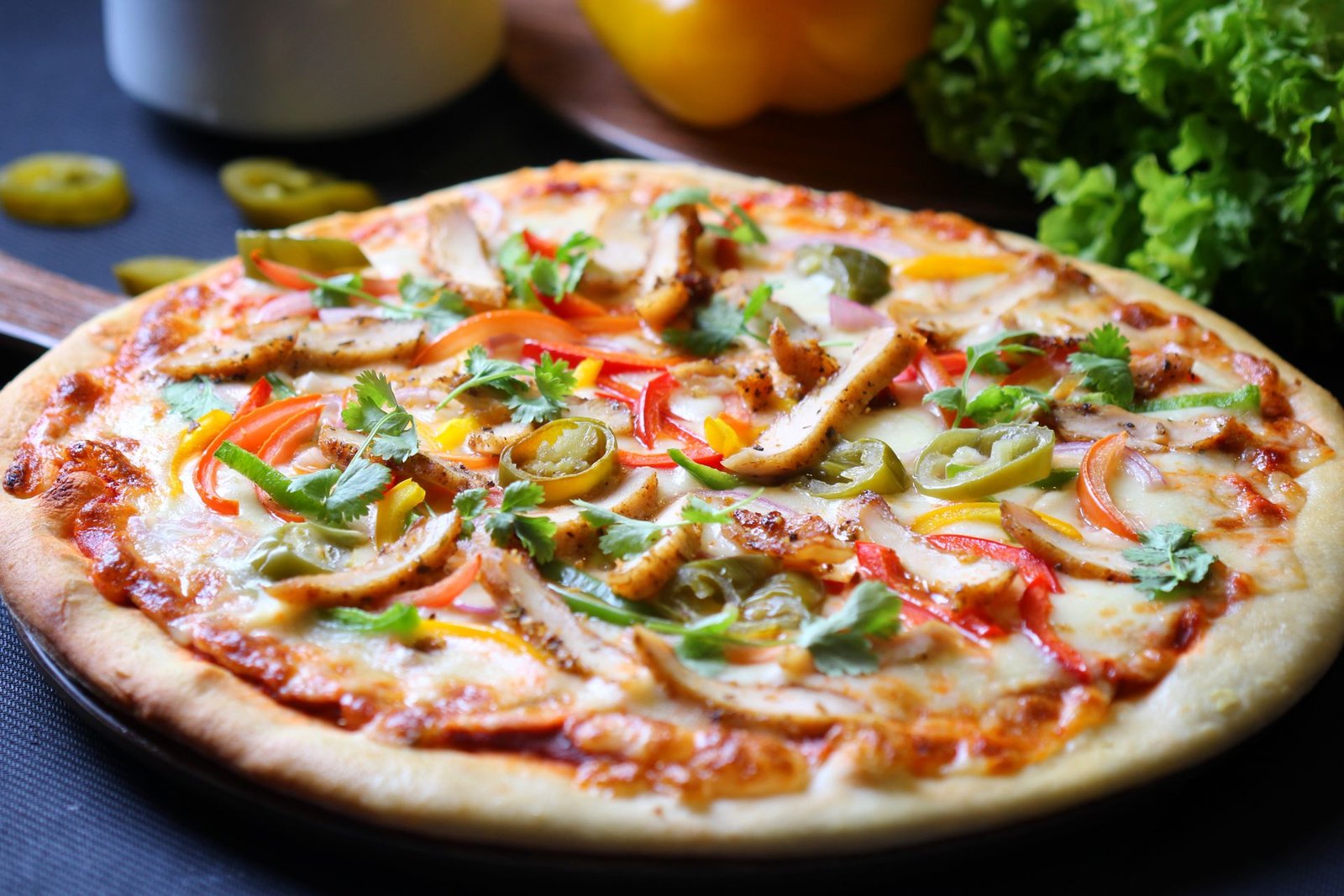
Buffalo wings are perfect bar food — but they are messy, bony, and gone in minutes. Buffalo chicken pizza takes everything people love about wings — the tangy heat of cayenne-vinegar sauce, the cooling richness of blue cheese, the tender chicken — and puts it on a blistered crust where it belongs. A great buffalo chicken pizza recipe balances three forces: real buffalo heat, enough richness to tame it, and a sturdy pizza architecture that keeps the saucy toppings from turning the center to mush.
The flavor blueprint comes straight from Buffalo, New York, where the Anchor Bar invented buffalo wings in 1964: chicken tossed in a simple sauce of melted butter and cayenne-based hot sauce, served with blue cheese dressing and celery sticks. The pizza version follows the same logic — buffalo-sauced chicken over mozzarella, finished with a zigzag of blue cheese dressing (or ranch, if that is your allegiance) and sometimes a scattering of celery for crunch. The debates about blue cheese vs ranch are as heated as the pizza; this recipe shows you both paths and lets you choose.
The technical challenge is moisture. Buffalo sauce is thin and vinegary, and a heavy hand turns the pizza soupy. This recipe solves it with a two-sauce strategy: a restrained layer of buffalo sauce as the base, chicken that is cooked through to a safe 165°F (74°C) and then tossed in sauce, and the creamy dressing applied after baking rather than before. The result is a pizza with genuine wing flavor, a crisp crust, and none of the sogginess that plagues careless versions.
🍕 Key Takeaways
- Real buffalo sauce is just melted butter + cayenne hot sauce (like Frank’s) — make it fresh for the best flavor.
- Cook chicken to 165°F (74°C) internal with a food thermometer before it goes on the pizza — never use raw chicken as a topping.
- Use buffalo sauce sparingly as the base (about ¼ cup); the chicken carries additional sauce on its own.
- Apply blue cheese dressing or ranch AFTER baking, not before, to keep it creamy and prevent a soggy bake.
- Mozzarella is the melting base; crumbled blue cheese (optional) adds authentic funk — use a light hand.
- Bake at maximum heat (500–550°F / 260–290°C) on a preheated steel or stone for 6–9 minutes.
- Cool leftovers within 2 hours, refrigerate 3–4 days, and reheat until steaming hot throughout.
The Anatomy of Buffalo Flavor
To build this pizza well, it helps to understand what “buffalo” actually means. Authentic buffalo sauce has exactly two ingredients: melted butter and cayenne pepper hot sauce (traditionally Frank’s RedHot), usually in roughly a 1:2 or 1:3 butter-to-sauce ratio. The butter does three jobs: it rounds the vinegar’s sharp edge, adds richness that carries the heat, and helps the sauce cling to the chicken instead of running off. Anything with a long ingredient list — garlic powder and Worcestershire are acceptable traditional additions; ranch seasoning packets and honey are not — is a different sauce wearing buffalo’s name.
Heat level is adjustable at the sauce stage, which is the right place to do it. More butter relative to hot sauce gives you mild; more hot sauce gives you hot; a minced habanero or a spoonful of cayenne steeped in the butter gives you extra-hot. What you should not do is try to adjust heat on the finished pizza with raw hot sauce drizzled over the top — unbuttered hot sauce is harsh and vinegary where the buttered version is rounded and rich.
The second pillar is the cooling element. In wing tradition, that is blue cheese dressing, and it belongs on this pizza too — but timing matters enormously. Dressing baked into the pizza separates, turns greasy, and loses its fresh tang. Dressing zigzagged over the hot pizza the moment it comes out stays creamy, cools each bite, and looks like a pizzeria pie. Ranch dressing is the popular alternative; it is milder and more universally liked, especially by kids. There is no wrong answer, only your answer — though if you want the full Buffalo experience, blue cheese is the traditionalist’s choice. A light scattering of actual crumbled blue cheese baked into the pie, plus dressing after, gives you both textures.
The third pillar is the chicken itself. Like the BBQ chicken pizza, this recipe fully cooks the chicken first — seasoned, seared, and sauced — for both safety and flavor. Raw chicken on a 7-minute pizza bake is a food-safety risk you should never take, and pre-cooked chicken tastes dramatically better anyway: browned, seasoned, and already coated in buffalo sauce before it meets the oven.
Ingredients for Buffalo Chicken Pizza
Makes two 12-inch pizzas. The dough is a sturdy same-day dough; a cold-fermented dough adds chew that stands up nicely to the bold toppings.
For the dough (makes 2 balls, ~260g each)
- 500g bread flour (about 4 cups spooned and leveled)
- 320g lukewarm water (about 1⅓ cups)
- 10g fine sea salt (about 2 teaspoons)
- 7g instant dry yeast (one standard packet)
- 15g extra-virgin olive oil (about 1 tablespoon), plus more for the bowl
For the buffalo chicken (enough for 2 pizzas)
- 1 lb (450g) boneless, skinless chicken breasts or thighs, cut into ½-inch cubes
- 1 tablespoon olive oil or butter
- 1 teaspoon garlic powder
- 1 teaspoon fine sea salt
- ½ teaspoon black pepper
- ½ teaspoon smoked paprika (optional)
For the buffalo sauce
- 6 tablespoons (85g) unsalted butter, melted
- ½ cup cayenne hot sauce (such as Frank’s RedHot), plus more to taste
- 1 teaspoon white vinegar (optional, for extra tang)
- ¼ teaspoon garlic powder (optional, traditional)
For topping each 12-inch pizza
- ¼ cup buffalo sauce for the base (about 60ml)
- 4–5 oz (115–140g) low-moisture whole-milk mozzarella, shredded by hand
- 1 oz (30g) blue cheese, crumbled (optional, for baking in)
- Half of the buffalo chicken (about 5–6 oz / 150g)
- 2–3 tablespoons blue cheese dressing or ranch, for finishing after baking
- 2 tablespoons thinly sliced celery (optional, for crunch)
- 1 tablespoon sliced scallions (optional, for color)
A note on hot sauce: use a cayenne-based, vinegar-forward Louisiana-style hot sauce — Frank’s RedHot is the canonical choice and the flavor this recipe is calibrated around. Thicker, sweeter, or extract-based hot sauces behave differently and can throw off the balance. If all you have is a different style, taste and adjust the butter ratio until the sauce tastes rounded rather than harsh.
Step-by-Step Method
Step 1: Mix, knead, and ferment the dough
Whisk flour and yeast, add water and oil, mix to a shaggy mass, rest 15 minutes, add salt, and knead 8–10 minutes until smooth and elastic. Bulk ferment covered in an oiled bowl for 1.5–2 hours until doubled. Full walkthrough: how to make pizza dough.
Step 2: Cook the chicken to 165°F
Toss the cubed chicken with oil (or butter), garlic powder, salt, pepper, and smoked paprika. Sear in a hot skillet over medium-high heat, 5–7 minutes in a single layer (two batches if crowded), until golden at the edges and cooked through. Verify with a food thermometer: the thickest piece must read 165°F (74°C) internal. Color is not a reliable indicator — only the thermometer tells the truth. Set the cooked chicken aside.
Step 3: Make the buffalo sauce and sauce the chicken
Whisk the melted butter with the hot sauce (plus vinegar and garlic powder if using) until emulsified. Taste and adjust: more hot sauce for heat, a touch more butter to tame it. Pour about half the sauce over the hot chicken and toss to coat every piece generously. Reserve the rest — ¼ cup per pizza becomes the base sauce.
Step 4: Ball the dough and prep toppings
Divide the risen dough into two ~260g balls, shape tight, and proof covered on a floured tray for 30–60 minutes. Shred the mozzarella, crumble the blue cheese if using, slice the celery paper-thin, and slice the scallions. Have your finishing dressing ready — it goes on the moment the pizza leaves the oven.
Step 5: Preheat the oven
Steel or stone on an upper-middle rack, oven at maximum (500–550°F / 260–290°C), preheated for a full hour. Buffalo sauce’s butter content means it browns readily; the hot, fast bake sets everything before the sauce can over-reduce. See our pizza oven temperature guide.
Step 6: Stretch the base
Press and stretch a dough ball to 12 inches with a 1-inch rim, transfer to a lightly floured pizza peel, and shake to confirm it slides. Refresher: how to stretch pizza dough without tearing.
Step 7: Sauce thinly, then cheese
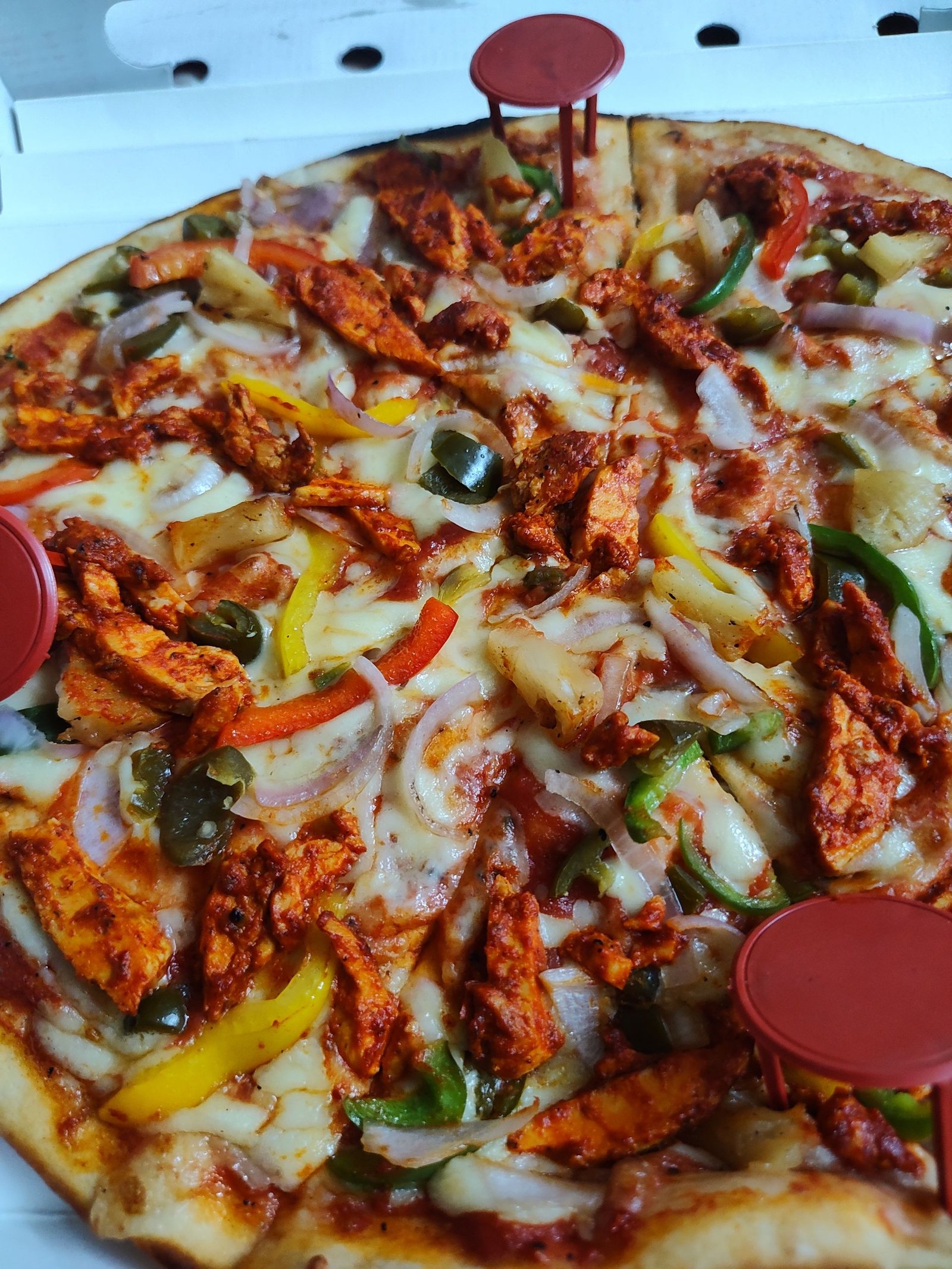
Spread ¼ cup of buffalo sauce in a thin, even layer — noticeably less than you would use of tomato sauce, because this sauce is thinner and the chicken brings more. Scatter the mozzarella evenly, then dot with the crumbled blue cheese if using.
Step 8: Add the buffalo chicken
Distribute half the sauced chicken pieces in a single, uncrowded layer. Every piece is already coated in buffalo sauce, so the pizza gets its flavor from the chicken itself — the base sauce is a background note, not the main event.
Step 9: Bake 6–9 minutes
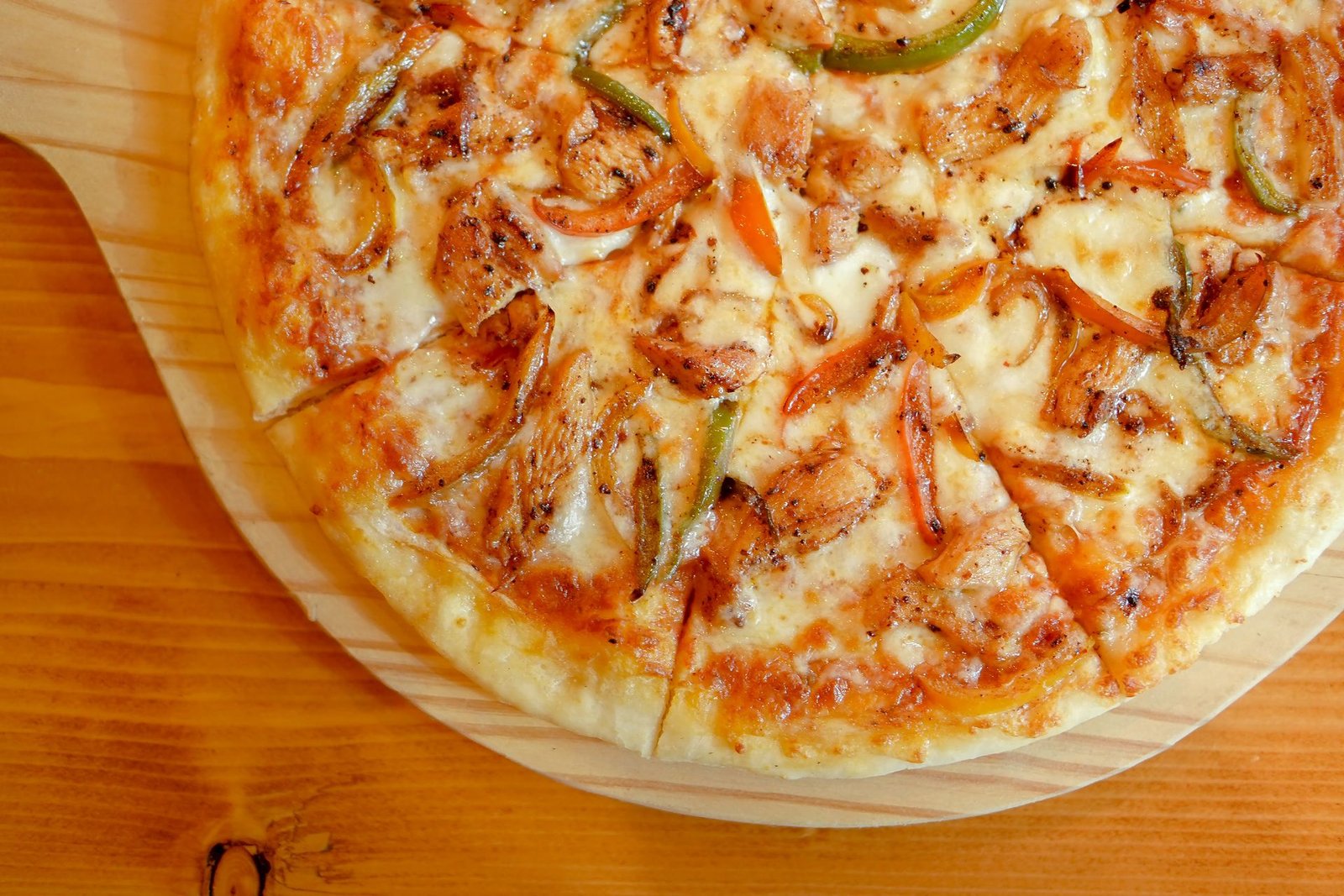
Launch onto the hot steel and bake until the crust is deep golden with charred spots and the cheese is melted with amber patches — 6–9 minutes at max heat. The butter in the sauce accelerates browning, so start checking at 5 minutes and pull the pizza when the cheese spots are amber.
Step 10: Finish with dressing, celery, and scallions
Slide onto a wire rack or board. Immediately zigzag the blue cheese dressing or ranch over the hot pizza — it will soften slightly from the heat without separating. Scatter the thin celery slices and scallions over the top. Rest 1–2 minutes, slice, and serve. Repeat with the second pizza.
Pro Tips for the Best Buffalo Chicken Pizza
Make the sauce fresh; don’t use bottled “buffalo sauce.” Bottled versions are fine in a pinch, but fresh butter-and-hot-sauce takes 2 minutes and tastes dramatically better — brighter, richer, and adjustable. The emulsion of butter and vinegar-hot sauce is the soul of the flavor; a shelf-stable bottle cannot replicate it.
The thermometer is mandatory, not optional. Chicken must reach 165°F (74°C) internal temperature, full stop. This is the single most important food-safety rule in any chicken pizza recipe — ours, anyone’s. An instant-read thermometer costs little, takes seconds to use, and eliminates all guesswork. Build the habit with this recipe and carry it to our BBQ chicken and pesto chicken pizzas too.
Less base sauce than you think. Buffalo sauce is thin. A quarter cup spread thin is the right base layer; the sauced chicken delivers the rest of the flavor. Over-saucing is the fastest route to a soupy center — the sauce never sets, the cheese floats, and the crust steams. Restraint here is what keeps the pizza crisp.
Dressing goes on after, always. This is the rule that separates good buffalo pizza from great: blue cheese or ranch dressing applied to the hot finished pizza stays creamy, cool, and tangy. Baked-on dressing separates into grease and sadness. Keep the bottle handy and zigzag it on the moment the pizza hits the board.
Slice the celery thin. Celery is traditional — wings come with celery sticks, so the pizza gets celery too — but thick chunks stay raw and watery. Paper-thin slices on the mandoline or with a sharp knife give you the fresh crunch and vegetal note without the water. It is optional, but it is the detail that makes people say “oh, that’s clever” — and it adds a cooling freshness that the rich pizza welcomes.
Control the heat at the sauce stage. Want it milder for kids? Increase the butter ratio. Want it fiery? Add cayenne to the butter or use an extra-hot cayenne sauce. Do not try to fix heat on the finished pizza — get the sauce right in the bowl, taste it, and adjust before it ever touches dough.
Variations Worth Trying
Extra-hot buffalo
Add ½ teaspoon cayenne pepper (or a minced habanero steeped in the melted butter for 5 minutes, then strained) to the buffalo sauce. Serve with extra blue cheese dressing — the cooling element becomes essential, not optional, at this heat level.
Buffalo chicken with bacon
Add 3–4 slices of cooked, crumbled bacon per pizza with the chicken. The smoky, salty crunch is a natural partner for buffalo sauce — think of it as the pizza equivalent of bacon-wrapped wings. Keep the bacon crisp but not brittle.
Buffalo cauliflower pizza (vegetarian)
Swap the chicken for cauliflower florets: toss in seasoned flour, roast at 450°F (230°C) for 20–25 minutes until tender and browned, then toss in buffalo sauce and use exactly as the chicken. It is not chicken, but it is genuinely delicious and the method transfers perfectly.
Buffalo chicken calzone
Use the same fillings — sauced chicken, mozzarella, blue cheese crumbles — folded into pizza dough and baked at 450°F (230°C) for 15–18 minutes until deep golden. Serve with blue cheese dressing for dipping. Same flavors, handheld format.
Nashville hot chicken pizza
Swap the buffalo sauce base for a Nashville-hot-style sauce (cayenne, brown sugar, and paprika bloomed in hot oil), keep the chicken method identical, and finish with pickles and a drizzle of honey instead of dressing. A different Southern heat tradition on the same architecture.
Storage, Reheating & Food Safety
Storing leftovers: With chicken on board, the 2-hour rule is critical — refrigerate within 2 hours of baking, no exceptions. Store airtight for 3–4 days. Do not leave the box on the counter overnight; chicken is a higher-risk food and bacteria multiply fastest at room temperature. Complete guide: how long leftover pizza lasts.
Reheating: Reheat until steaming hot throughout — “warm” is not sufficient for chicken-topped leftovers. Skillet method (medium heat, 2–3 minutes, lid on at the end) or a 375°F (190°C) oven for 8–10 minutes both work well. Add a fresh zigzag of cold dressing after reheating rather than reheating the original drizzle. Never reheat pizza more than once. All methods ranked: how to reheat pizza.
Freezing: Cool completely, wrap slices individually, freeze up to 2 months. Reheat from frozen at 400°F (200°C) for 12–14 minutes until steaming throughout, then add fresh dressing.
Food safety notes: The critical control point is the chicken: cook to 165°F (74°C) internal as measured with a food thermometer in the thickest piece — never rely on color or “looks done.” Wash hands, cutting boards, knives, and the thermometer probe after handling raw chicken and before touching ready-to-eat items like celery, scallions, or dressing. Keep raw chicken refrigerated until cooking; do not thaw it on the counter (thaw in the fridge overnight). Refrigerate the cooked, sauced chicken within 2 hours if not using immediately, and use within 3–4 days. When in doubt about any leftover, throw it out — it is never worth the risk.
Frequently Asked Questions
Can I use bottled buffalo sauce?
Yes, in a pinch — but fresh takes 2 minutes (melted butter + cayenne hot sauce) and tastes significantly better. If you use bottled, taste it first: many are saltier or more vinegary than the fresh version, so you may want a thinner base layer.
Blue cheese or ranch — which is correct?
Blue cheese is the traditional Buffalo pairing (wings are served with blue cheese dressing), and its funk harmonizes with the tangy sauce. Ranch is milder, more popular with kids, and completely delicious. This recipe works with either — or serve both and let people choose. There is no wrong answer, only strong opinions.
Why is my buffalo pizza soggy?
Too much base sauce is the usual cause — ¼ cup spread thin is the target, since buffalo sauce is thinner than tomato sauce. Also check: an under-preheated baking surface, or dressing applied before baking (it should go on after). Our soggy pizza prevention guide covers every cause.
Can I use rotisserie chicken?
Yes — shred about 2 cups, toss with the seasoning and warm buffalo sauce in a skillet for 2–3 minutes. It is already cooked to a safe temperature, so you are just heating and flavoring it. Still ensure the finished pizza is steaming hot throughout.
How spicy is this pizza?
With the classic ratio (6 tablespoons butter to ½ cup Frank’s-style sauce), it lands at a medium heat — warming and tangy, not punishing. Most people who enjoy mild buffalo wings will find it comfortable. Adjust at the sauce stage: more butter tames it for kids or heat-sensitive guests, more hot sauce or added cayenne fires it up for chili heads. Taste the sauce before it goes on the pizza — the time to calibrate heat is in the bowl, when a spoonful tells you everything, not on the finished pie.
Can I make buffalo chicken pizza ahead?
Partially. The dough can cold-ferment 24–72 hours (cold ferment guide), the chicken can be cooked and sauced up to 3 days ahead (refrigerated within 2 hours), and the buffalo sauce keeps a week refrigerated (re-warm gently to re-emulsify). Assemble and bake fresh — a par-baked buffalo pizza does not hold well.
The Bottom Line
A great buffalo chicken pizza recipe honors its wing heritage: real two-ingredient buffalo sauce, chicken cooked safely to 165°F and tossed while hot, a restrained base layer, and the cooling dressing applied after the bake — never before. It is spicy, tangy, rich, and cooling all at once, on a crust that stays crisp under the boldest toppings. Master this architecture and you have the template for every saucy specialty pizza — keep exploring our pizza recipes to put it to work, one bold pie at a time.