

Swap the tomato sauce for vibrant green basil pesto and pizza becomes something entirely different: herbaceous, garlicky, nutty, and rich, with none of tomato’s acidity. A great pesto chicken pizza recipe pairs that aromatic base with tender, well-seasoned chicken, melted mozzarella, and sweet pops of tomato — a combination that tastes like an Italian summer garden on a blistered crust.
Pesto pizza has two classic pitfalls. The first is the pesto itself: jarred pesto is convenient but often dull, made with fillers and aged in a way that mutes basil’s brightness — and pesto of any kind can turn dark and bitter if mishandled in the oven’s heat. The second is balance: pesto is intensely flavored and oily, so it needs a thinner application than tomato sauce and toppings chosen to complement rather than compete. This recipe solves both with a fresh, 5-minute homemade pesto (brighter than anything from a jar), a restrained hand with the base layer, and chicken cooked safely to 165°F (74°C) and seasoned to stand up to the bold sauce.
You will learn how to make pesto that stays green, how much to use on a pizza (less than you think), the chicken technique shared with our other specialty pies, and the finishing touches — fresh mozzarella, pine nuts, a squeeze of lemon — that keep this rich pizza tasting fresh rather than heavy.
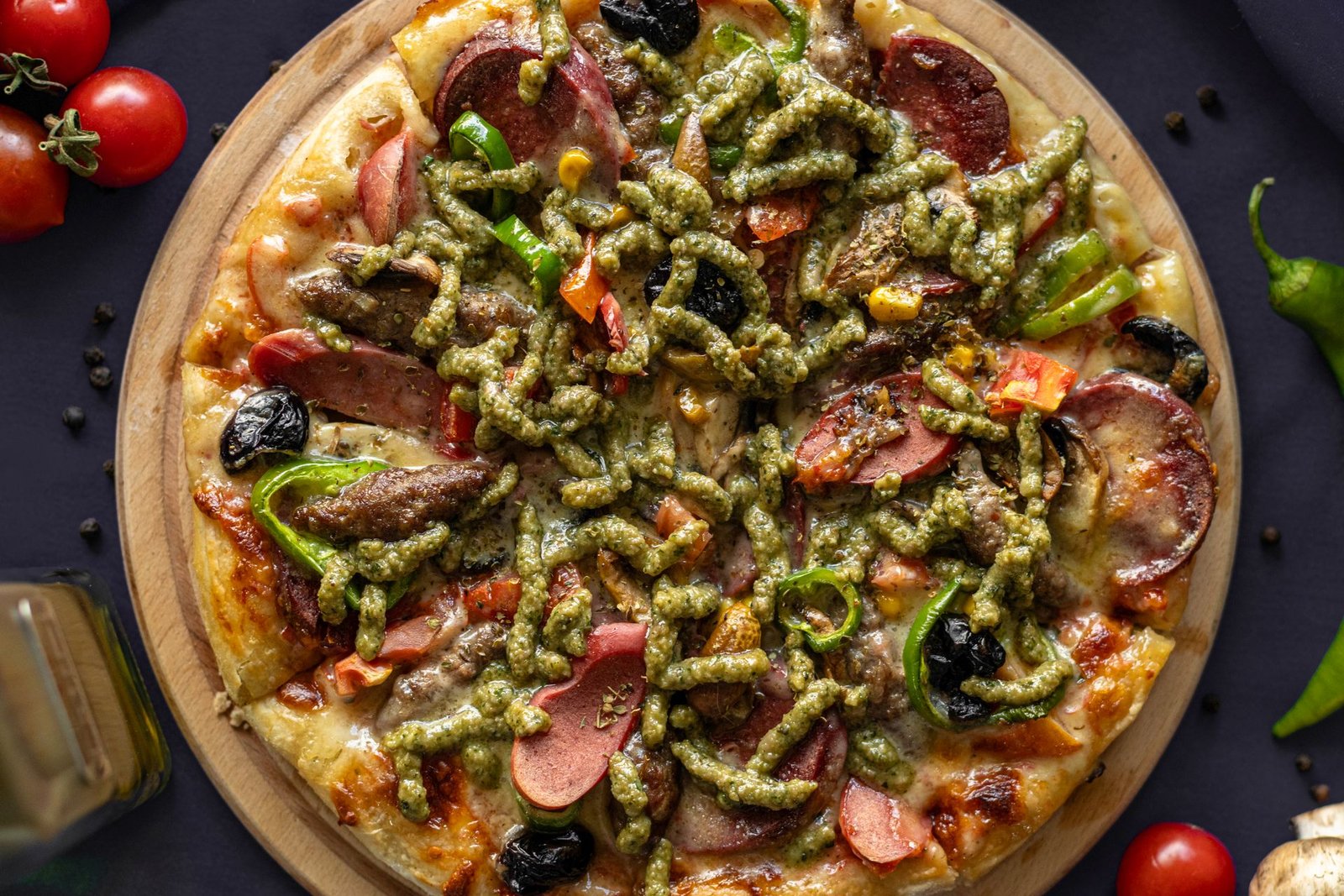
🍕 Key Takeaways
- Fresh homemade pesto (5 minutes in a food processor) beats jarred pesto dramatically in brightness and flavor.
- Use only 3–4 tablespoons of pesto per 12-inch pizza — it is intense, and over-saucing makes the pie oily.
- Cook chicken to 165°F (74°C) internal with a food thermometer; season and sear it before topping.
- Blanching basil for 15 seconds keeps pesto vividly green, even after baking.
- Cherry tomatoes and red onion add the sweet-sharp contrast the rich pesto base needs.
- Bake at maximum heat (500–550°F / 260–290°C) on a preheated steel or stone for 6–9 minutes.
- Cool leftovers within 2 hours, refrigerate 3–4 days, and reheat until steaming hot throughout.
Why Fresh Pesto Changes Everything
Pesto seems simple — basil, pine nuts, Parmesan, garlic, olive oil — but its quality range is enormous, and pizza exposes every flaw. Jarred pesto is typically made with a high proportion of oil and often includes fillers or preservatives; more importantly, it has usually oxidized, which dulls basil’s fresh, peppery brightness into something flat and vaguely green-tasting. On pasta, where pesto is one component among many, jarred can pass. On pizza, where pesto is the sauce — the dominant flavor of every bite — the difference between fresh and jarred is the difference between a memorable pizza and a forgettable one.
Fresh pesto takes five minutes and five ingredients, and it tastes like a different substance: vividly green, aromatic, with basil’s peppery bite intact, garlic’s warmth present but not harsh, and the Parmesan adding savory depth. The food processor does the work; your only job is not to over-process (which bruises the basil and turns the pesto bitter) and to use good olive oil (its fruitiness is front and center here).
The second pesto challenge is heat behavior. Basil darkens when exposed to prolonged high heat — the same reason basil goes on a margherita after baking. Pesto spread thin on a pizza and blasted at 550°F will darken somewhat no matter what; the goal is to minimize it. Three techniques help: blanching the basil for 15 seconds before processing (which sets the chlorophyll and keeps the pesto dramatically greener), keeping the pesto layer thin so it heats quickly rather than stewing, and adding a final spoonful of fresh pesto drizzled over the hot pizza after baking — the fresh drizzle restores the bright green color and raw-basil aroma that the bake mellows. That post-bake drizzle is the professional touch that makes pesto pizza look as good as it tastes.
Ingredients for Pesto Chicken Pizza
Makes two 12-inch pizzas. The dough is a standard same-day dough; a cold-fermented dough adds a pleasant tang that plays well with the rich pesto.
For the dough (makes 2 balls, ~260g each)
- 500g bread flour (about 4 cups spooned and leveled)
- 320g lukewarm water (about 1⅓ cups)
- 10g fine sea salt (about 2 teaspoons)
- 7g instant dry yeast (one standard packet)
- 15g extra-virgin olive oil (about 1 tablespoon), plus more for the bowl
For the fresh basil pesto (makes about ¾ cup; enough for 2 pizzas plus extra)
- 2 cups packed fresh basil leaves (about 2 oz / 60g)
- ¼ cup pine nuts, lightly toasted
- ⅓ cup finely grated Parmigiano-Reggiano
- 1 small clove garlic
- ½ teaspoon fine sea salt
- ⅓ cup extra-virgin olive oil, plus more as needed
- 1 teaspoon lemon juice (helps keep the color bright)
For the chicken (enough for 2 pizzas)
- 1 lb (450g) boneless, skinless chicken breasts or thighs, cut into ½-inch cubes
- 1 tablespoon olive oil
- 1 teaspoon Italian seasoning
- 1 teaspoon garlic powder
- 1 teaspoon fine sea salt
- ½ teaspoon black pepper
For topping each 12-inch pizza
- 3–4 tablespoons fresh pesto for the base
- 4–5 oz (115–140g) low-moisture whole-milk mozzarella, shredded by hand
- Half of the cooked chicken (about 5–6 oz / 150g)
- 8–10 cherry tomatoes, halved
- ¼ small red onion, sliced thin (optional)
- 1 tablespoon pine nuts, for sprinkling (optional)
To finish
- 1 tablespoon fresh pesto, for drizzling after baking
- Fresh basil leaves
- Extra-virgin olive oil
A note on pine nuts: they are traditional and their buttery richness is part of pesto’s character, but they are expensive and prices fluctuate. Toasted walnuts or almonds make a very respectable pesto at a fraction of the price — slightly different, slightly less buttery, still delicious. Whatever nut you use, toast it lightly first; raw nuts taste flat and their oils have not developed. And if nut allergies are a concern, sunflower seeds or even extra Parmesan make a fine nut-free pesto — the basil remains unmistakably the star either way.
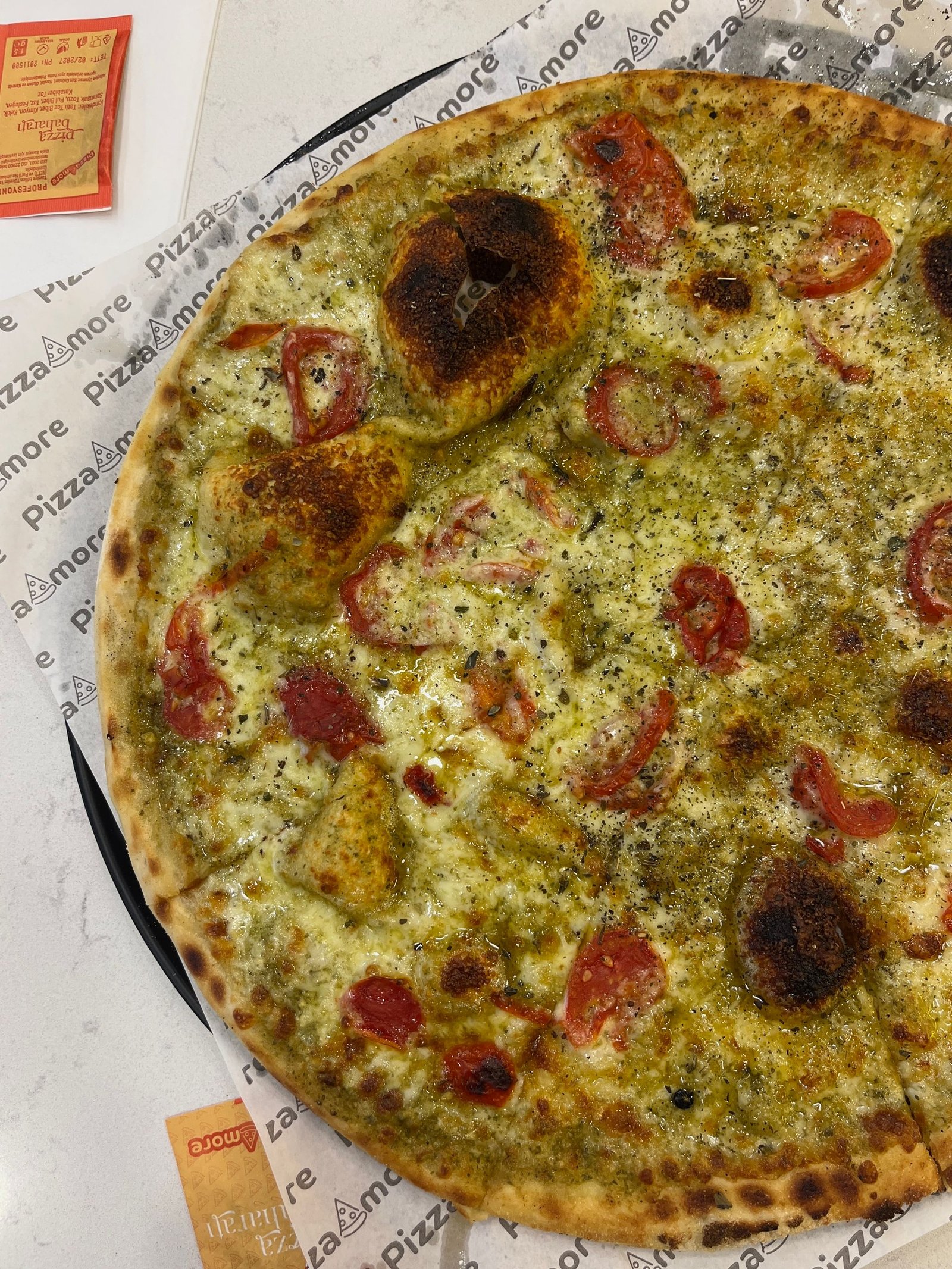
Step-by-Step Method
Step 1: Mix, knead, and ferment the dough
Whisk flour and yeast, add water and oil, mix to a shaggy mass, rest 15 minutes, add salt, and knead 8–10 minutes until smooth and elastic. Bulk ferment covered in an oiled bowl for 1.5–2 hours until doubled. Full method: how to make pizza dough.
Step 2: Make the fresh pesto
Bring a small pot of salted water to a boil. Blanch the basil leaves for 15 seconds, then plunge immediately into ice water — this sets the chlorophyll so the pesto stays vividly green. Squeeze the basil very dry in a clean kitchen towel (excess water dilutes flavor). Add to a food processor with the toasted pine nuts, Parmigiano, garlic, and salt; pulse to a coarse paste. With the processor running, stream in the olive oil until you have a thick, spoonable pesto. Stir in the lemon juice. Taste: it should be bright, garlicky, salty, and intensely basil. Adjust salt and lemon. Set aside — you need about 3–4 tablespoons per pizza plus a drizzle for finishing.
Step 3: Cook the chicken to 165°F
Toss the cubed chicken with olive oil, Italian seasoning, garlic powder, salt, and pepper. Sear in a hot skillet over medium-high heat, 5–7 minutes in a single layer (two batches if crowded), until golden at the edges and cooked through. Verify with a food thermometer: the thickest piece must read 165°F (74°C) internal. Toss the hot chicken with 1 tablespoon of pesto per pizza’s worth — a light coating that seasons every piece. Set aside.
Step 4: Ball the dough and prep toppings
Divide the risen dough into two ~260g balls, shape tight, and proof covered on a floured tray for 30–60 minutes. Halve the cherry tomatoes, slice the red onion thin if using, shred the mozzarella, and toast the extra pine nuts if using (2 minutes in a dry skillet until fragrant).
Step 5: Preheat the oven
Steel or stone on an upper-middle rack, oven at maximum (500–550°F / 260–290°C), preheated for a full hour. Pesto’s oil content means it heats fast; the hot, quick bake sets the pizza before the pesto can darken excessively. See the pizza oven temperature guide.
Step 6: Stretch the base
Press and stretch a dough ball to 12 inches with a 1-inch rim, transfer to a lightly floured pizza peel, and shake to confirm it slides. Refresher: how to stretch pizza dough without tearing.
Step 7: Spread the pesto thin
Spread 3–4 tablespoons of pesto in a thin, even layer, leaving the rim bare. This will look like far too little — it is correct. Pesto is concentrated; a thin layer flavors the whole pizza, while a thick layer turns oily and overwhelms everything. Think of it as painting, not saucing.
Step 8: Add cheese, chicken, and tomatoes
Scatter the shredded mozzarella evenly over the pesto. Distribute the pesto-coated chicken pieces in a single layer, then nestle the halved cherry tomatoes cut-side up among them. Scatter the red onion and pine nuts if using. The tomatoes are doing important work: their juicy sweetness and acidity cut through the pesto’s richness.
Step 9: Bake 6–9 minutes
Launch onto the hot steel and bake until the crust is deep golden with charred spots and the cheese is melted with amber patches — 6–9 minutes at max heat. The pesto will darken somewhat around the edges; that is normal. Start checking at 5 minutes.
Step 10: Finish fresh
Slide onto a wire rack or board. Immediately drizzle about a tablespoon of fresh, unbaked pesto over the hot pizza in thin ribbons — this restores the vivid green color and fresh basil aroma. Scatter fresh basil leaves, drizzle with olive oil, rest 1–2 minutes, slice, and serve. Repeat with the second pizza.
Pro Tips for the Best Pesto Chicken Pizza
Blanch the basil — it is worth the 15 seconds. Unblanched pesto darkens to army-green in the oven; blanched pesto stays vividly green. The ice-water plunge stops the cooking instantly so the basil keeps its fresh flavor. Squeeze it very dry afterward — water is the enemy of both flavor concentration and the emulsion.
Thin pesto layer, always. The most common pesto pizza mistake is treating it like tomato sauce. Three to four tablespoons per 12-inch pizza is the target — a translucent green painting, not a thick spread. Excess pesto pools oil on the surface, makes the pizza greasy, and buries the chicken and cheese. When in doubt, use less.
The post-bake pesto drizzle is the pro move. No matter how carefully you handle it, baked pesto darkens and mellows. A ribbon of fresh, unbaked pesto over the hot finished pizza brings back the bright color and raw basil perfume — it is the difference between a pizza that looks tired and one that looks alive. Reserve pesto specifically for this; do not skip it.
Season the chicken to stand up to pesto. Pesto is bold, and bland chicken disappears against it. The Italian seasoning, garlic powder, and proper salt in this recipe are calibrated to hold their own — and the light pesto toss after cooking ensures every piece carries the flavor theme. This is the same principle as our BBQ chicken pizza, where the chicken is sauced before topping.
Don’t skip the tomatoes. Pesto pizza without an acidic counterpoint can taste monotonous — rich, herbal, and one-note. Cherry tomatoes’ juicy acidity is the structural contrast the pizza needs, the way tomato sauce’s acidity works on a red pie. Red onion adds a second sharp note. These are not optional garnishes; they are load-bearing flavors.
Use your best olive oil in the pesto. The oil is not cooked off or hidden — its fruitiness and pepperiness are front and center in fresh pesto. This is the place for the good bottle, not the cooking oil. The difference between a neutral oil and a characterful extra-virgin is clearly tasteable in the finished pesto.
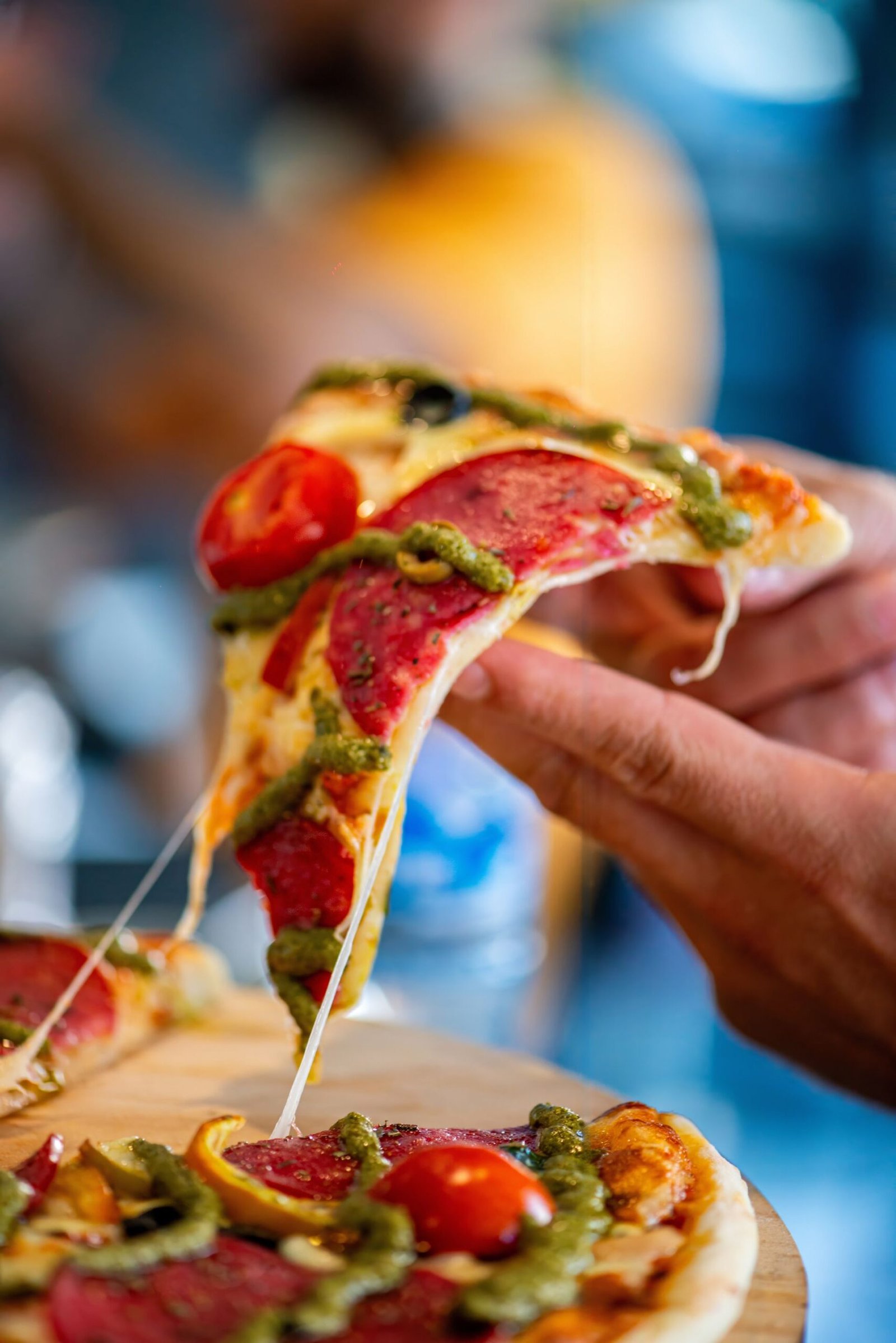
Variations Worth Trying
Pesto chicken with sun-dried tomatoes
Swap the cherry tomatoes for ¼ cup of oil-packed sun-dried tomatoes, drained and slivered. Their concentrated sweetness and chew are a more intense counterpoint to the pesto — a deeper, more savory version of the tomato role.
Shrimp pesto pizza
Replace the chicken with shrimp: toss peeled shrimp in olive oil, salt, and garlic, sear 1–2 minutes per side until just opaque (they finish in the oven), and use as the topping. The sweet shrimp against the herbal pesto is a coastal Italian classic.
Pesto veggie pizza
Skip the chicken; top the pesto base with mozzarella, halved cherry tomatoes, thin zucchini ribbons (sliced with a peeler), and red onion. The vegetables’ freshness against the rich pesto is lovely — just keep the layer single and uncrowded per our soggy pizza prevention guide.
Creamy pesto chicken (with ricotta)
Add dollops of seasoned ricotta (the mixture from our white pizza) among the chicken. The creamy pockets against the herbal pesto create a white-pizza-meets-pesto hybrid that is indulgent in the best way.
Grilled pesto chicken pizza
Grill the chicken pieces instead of searing them for smoky char, and grill the stretched dough 60–90 seconds per side before topping per our grilled pizza guide. The smoke adds a dimension that plays beautifully with basil.
Storage, Reheating & Food Safety
Storing leftovers: Cool within 2 hours of baking, then refrigerate airtight for 3–4 days. The 2-hour rule is especially important with chicken toppings. Store any leftover fresh pesto separately in the fridge with a thin layer of olive oil on top (it keeps about a week and stays greener). Full guide: how long leftover pizza lasts.
Reheating: Reheat until steaming hot throughout. Skillet method (medium heat, 2–3 minutes, lid on at the end) or a 375°F (190°C) oven for 8–10 minutes. Add a fresh drizzle of pesto and basil after reheating to revive the flavors. Never reheat more than once. All methods: how to reheat pizza.
Freezing: Cool completely, wrap slices individually, freeze up to 2 months. Reheat from frozen at 400°F (200°C) for 12–14 minutes until steaming throughout. The pesto darkens somewhat after freezing; a fresh post-reheat drizzle fixes the appearance.
Food safety notes: Cook chicken to 165°F (74°C) internal, verified with a food thermometer in the thickest piece — never judge by color. Wash hands, boards, knives, and the thermometer probe after handling raw chicken and before touching ready-to-eat items like basil, tomatoes, or pesto. Keep raw chicken refrigerated until cooking. Fresh pesto with raw garlic is a low-acid, anaerobic environment — refrigerate it promptly, keep it no more than a week, and discard if it smells off or shows mold. As always, cool the finished pizza within 2 hours and refrigerate promptly.
Frequently Asked Questions
Can I use store-bought pesto?
You can, but fresh is dramatically better — 5 minutes in a food processor versus a jar that has oxidized on a shelf. If you must use jarred, taste it first and brighten it: stir in fresh lemon juice, extra grated Parmesan, and a handful of fresh basil pulsed in. Use a thinner layer than you would with fresh, since jarred pesto is often oilier.
How do you keep pesto from turning brown on pizza?
Blanch the basil for 15 seconds before processing (this sets the chlorophyll and is the single most effective step), keep the pesto layer thin so it heats quickly rather than stewing, bake hot and fast, and drizzle fresh unbaked pesto over the pizza after baking to restore vivid color. Some browning around the edges is normal and harmless — it is the overall vivid green you are protecting, not every square millimeter. A squeeze of lemon in the pesto also helps, since acidity slows the enzymatic browning.
How much pesto goes on a pizza?
Three to four tablespoons per 12-inch pizza — far less than tomato sauce. Pesto is concentrated and oily; a thin painted layer flavors the whole pie, while a thick layer turns greasy and overwhelming.
What cheese goes with pesto?
Low-moisture mozzarella for the melt — it stays in the background and lets the pesto star. Fresh mozzarella works here too if well drained (pesto is less watery than tomato sauce, so the moisture equation is kinder). Parmigiano-Reggiano is already in the pesto; a little extra grated on top is welcome. See fresh vs low-moisture mozzarella for the trade-offs.
Can I make pesto without pine nuts?
Yes — toasted walnuts, almonds, or sunflower seeds (for nut-free) all make excellent pesto. The character shifts slightly — walnuts are a touch more tannic, almonds milder — but the basil remains the star. Toast whatever you use; raw nuts taste flat.
Can I freeze fresh pesto?
Yes, beautifully — freeze in ice cube trays, then transfer the cubes to a freezer bag for up to 3 months. Thaw in the fridge and stir before using. Interestingly, frozen pesto often stays greener than refrigerated pesto, since freezing halts oxidation. It is a great way to preserve a basil glut.
The Bottom Line
A great pesto chicken pizza recipe is built on freshness: pesto made five minutes ago rather than five months ago, basil blanched green, chicken cooked safely to 165°F and tossed while hot, and a thin hand with the intensely flavored base. It is the pizza that tastes like summer — herbaceous, garlicky, rich, and bright all at once — and once you have made fresh pesto from scratch, the jarred kind will never tempt you again. Keep exploring our pizza recipes; the green sauce is just the beginning of what your home oven can do for you every single week at home.