

Let’s be honest: frozen pizza has a reputation problem. It sits in the freezer aisle promising convenience, then delivers a pale crust, rubbery cheese, and toppings that taste like they gave up somewhere between the factory and your oven. But here’s what the frozen pizza aisle doesn’t want you to know: with a few smart upgrades, a $6 freezer pie can taste genuinely, surprisingly good — closer to your local pizzeria than to the sad cardboard-flavored disc you remember from college.
Learning how to make frozen pizza better isn’t about hiding what it is. It’s about understanding where frozen pizza falls short — usually the crust texture, the cheese quality, and the lack of fresh flavors — and fixing exactly those things. Some upgrades take thirty seconds (a drizzle of good olive oil), some take five minutes (fresh mozzarella and basil), and a couple involve rethinking how you cook it entirely. This guide covers eleven upgrades ranked from easiest to most involved, plus the cooking tweaks that matter more than any topping, and how to pick a better frozen pizza in the first place.
🍕 Key Takeaways
- Thaw the pizza for 15–20 minutes before baking and always preheat your oven fully — these two steps fix most frozen pizza problems.
- Bake directly on the oven rack or a preheated pizza stone or steel for a dramatically crispier crust.
- Fresh toppings added before or after baking (fresh mozzarella, basil, arugula, good olive oil) do the heaviest lifting.
- Season the pizza: garlic powder, oregano, red pepper flakes, and parmesan transform bland factory flavors.
- Finish with fresh elements after baking — a handful of arugula, a squeeze of lemon, or fresh herbs brighten everything.
- Brush the crust with garlic butter while it’s hot for pizzeria-style flavor on the edges.
Start With a Better Frozen Pizza
Upgrades can only do so much — the single biggest factor in how good your frozen pizza tastes is which pizza you buy. Not all freezer pies are created equal, and the price gap between mediocre and genuinely good has narrowed a lot in recent years.
What to look for: check the ingredient list like you would for anything else. Shorter is generally better: flour, water, yeast, salt, tomatoes, cheese, olive oil. Pizzas that use real mozzarella (not “mozzarella-style cheese product”) and actual tomato sauce (not “tomato-flavored sauce”) taste noticeably better. Rising-crust and self-rising varieties tend to have better texture than thin, cracker-style frozen pizzas, which dry out easily. Wood-fired-style frozen pizzas — par-baked at high heat — often have better crust character than standard ones.
What to avoid: pizzas where the cheese looks pale and plasticky through the box window (it’ll bake up the same way), anything with a long list of unpronounceable additives in the first five ingredients, and the absolute cheapest tier unless you’re specifically upgrading it heavily — the ultra-budget pies can work, but they need more help.
The freezer factor: frozen pizza degrades with time and temperature swings. Buy from a store with high turnover, get it home fast (use an insulated bag in summer), and don’t let it partially thaw and refreeze — that ruins the texture. Once home, use it within a month or two for best results; that pizza that’s been in the freezer since last year is a lost cause no upgrade can save.
The Cooking Tweaks That Matter Most
Before we get to toppings, let’s fix the bake itself — because most frozen pizza disappointment is actually a cooking problem, not a pizza problem.
Thaw it first. This is the upgrade nobody does and everybody should. Let the pizza sit at room temperature for 15–20 minutes while the oven preheats. A partially thawed pizza cooks more evenly: the center actually gets hot instead of staying lukewarm while the edges burn. Don’t thaw it completely to floppy — just take the deep-freeze edge off.
Preheat properly — then wait longer. Your oven needs to be fully, truly hot, not just “the beep went off.” Give it an extra 10–15 minutes past the preheat signal, especially if you’re using a stone or steel. Most frozen pizzas bake best at 425–450°F; check the box, but don’t be afraid to go to the top of its range for better browning.
Ditch the pan. Baking the pizza directly on the oven rack (or better, on a preheated pizza stone or steel) is the single biggest texture upgrade available. The pan that “conveniently” comes with some frozen pizzas traps steam underneath and guarantees a soggy bottom. If you’re nervous about cheese dripping, put a sheet pan on the rack below the pizza to catch drips — the pizza itself still gets direct heat. Our pizza steel vs stone guide explains why a steel is the ultimate upgrade if you eat a lot of frozen pizza.
Rotate halfway. Home ovens have hot spots. A 180-degree rotation halfway through baking evens out browning and prevents the dreaded burnt-on-one-side, pale-on-the-other result.
Use the broiler finish. For the last 1–2 minutes, switch to the broiler to get real browning and leopard-spotting on the cheese and crust. Watch it like a hawk — broilers go from perfect to burnt in under a minute.
How to Make Frozen Pizza Better: 11 Upgrades That Transform It
Now the fun part. These are ranked roughly from quickest to most involved, but all of them are weeknight-feasible.
1. Season it like you mean it. Factory pizza is chronically under-seasoned. Before baking, dust the pizza with garlic powder, dried oregano, and red pepper flakes, and grate fresh parmesan over the top. This thirty-second step alone fixes the “bland” complaint that plagues most frozen pies. Keep a dedicated “pizza shaker” of mixed seasonings by the oven and you’ll do it every time.
2. Add extra cheese — the right cheese. A handful of low-moisture mozzarella (shredded from a block, not the pre-shredded bag) scattered over the pizza before baking melts into those gorgeous browned pools that frozen cheese never achieves. For a fancier touch, add dollops of fresh mozzarella in the last few minutes of baking, or finish with shaved parmesan right out of the oven.
3. Drizzle with good olive oil. A thread of decent extra-virgin olive oil over the pizza before baking — and another light drizzle after — adds richness and a peppery finish that reads as “pizzeria,” not “freezer.” Garlic-infused or chili-infused olive oils are even better; a few drops go a long way.
4. Upgrade the sauce situation. If the pizza’s sauce is thin or sparse (common in budget pies), add spoonfuls of your own before baking — a simple crushed-tomato sauce with salt and oregano takes two minutes. Or go the other direction: serve warm marinara on the side for dipping the crust, which instantly makes the whole experience feel more generous. Our homemade pizza sauce recipe makes a perfect upgrade sauce with five ingredients and no cooking.
5. Add fresh vegetables. Sliced mushrooms, bell peppers, red onions, cherry tomatoes, or jalapeños scattered on before baking add freshness, texture, and color that frozen toppings can’t match. Slice them thin so they cook through in the pizza’s bake time, and don’t overload — a moderate hand keeps the crust crisp. (Watery vegetables like fresh mushrooms benefit from a quick pre-sauté; see our guide on keeping vegetable toppings from making pizza soggy.)
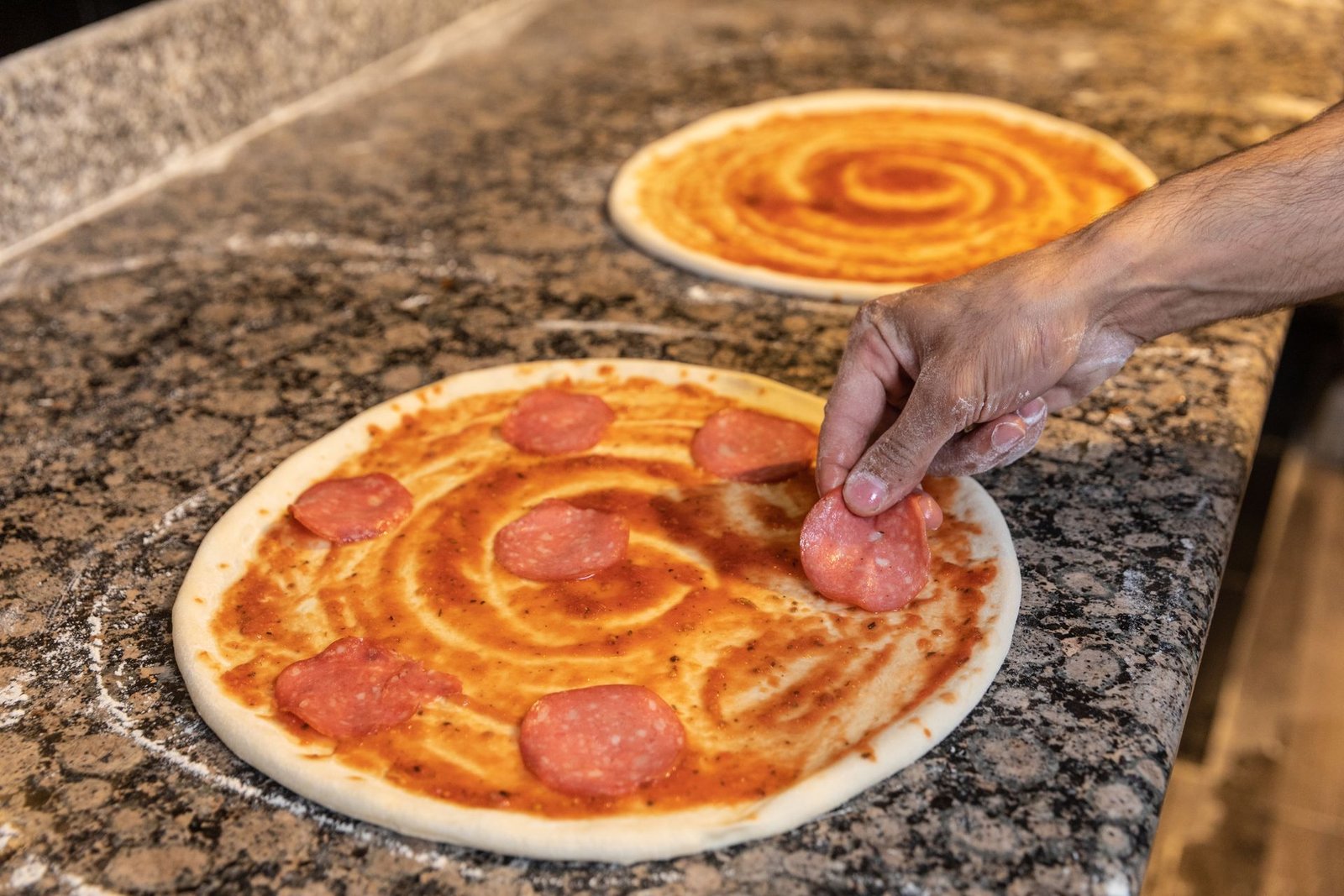
6. Add cured meats. Pepperoni, prosciutto, soppressata, or cooked sausage crumbles layered on before baking (prosciutto goes on after baking) add the savory depth that frozen pizzas lack. A pepperoni upgrade is the highest ROI move in this entire list: a $4 bag of good pepperoni transforms a $5 cheese pizza into something that tastes like delivery.
7. The garlic butter crust. While the pizza bakes, melt butter with minced garlic (or garlic powder in a pinch) and a pinch of salt. The moment the pizza comes out, brush it generously over the crust edge. This is the pizzeria breadstick trick, and it makes the crust — usually the most boring part of a frozen pizza — something people fight over.
8. Finish with fresh greens and herbs. The contrast of hot pizza and cool, fresh toppings is a restaurant move that works beautifully at home. Out of the oven, top with a handful of arugula (tossed in lemon juice and olive oil), fresh basil leaves, or chopped parsley. The freshness cuts the richness and makes the whole pizza taste brighter and more deliberate.
9. Add a post-bake drizzle. Hot honey over pepperoni pizza is a revelation — the sweet heat plays off the salty spice perfectly. Balsamic glaze over veggie or margherita-style pizzas, pesto drizzled over white-ish pies, or ranch over buffalo-style pizzas all work. Keep squeeze bottles of your favorites in the fridge and this becomes a ten-second upgrade.
10. Double-bake for deep-dish vibes. For thick-crust frozen pizzas, try this: bake as directed, then let it rest 5 minutes, then return to a hot oven for 3–4 more minutes. The rest lets the interior set and the second blast re-crisps the exterior. It won’t turn a frozen pie into Chicago deep dish, but it noticeably improves thick frozen pizzas that tend toward doughy centers. (Deep-dish lovers should also check our Chicago deep dish guide for the real thing.)
11. The full “doctor it” treatment. Combine everything: thaw, season, add fresh mozzarella and pepperoni, bake on a steel, garlic-butter the crust, finish with basil and hot honey. At this point you’ve spent maybe ten extra minutes and turned a freezer pizza into a genuinely impressive meal — the kind you’d serve to guests without apology. This is the move for Friday nights when you want pizzeria results with freezer-aisle effort.
Three Go-To Upgrade Combos
If eleven options feel like a lot, memorize these three combinations. Each starts with a plain cheese or pepperoni frozen pizza and takes under five minutes of extra effort.
The “Pizzeria” combo: Thaw 20 minutes, bake directly on the rack at 450°F, season with garlic powder and oregano before baking, add fresh mozzarella for the last 3 minutes, garlic-butter the crust out of the oven, finish with fresh basil and a drizzle of olive oil. Total extra effort: about 5 minutes. Result: tastes like a $18 margherita.
The “Spicy meat lover” combo: Start with a pepperoni frozen pizza, add extra pepperoni plus sliced jalapeños before baking, bake hot and finish under the broiler for charred cupped pepperoni (see our pepperoni pizza recipe for why cupping matters), then drizzle with hot honey out of the oven. Sweet, spicy, salty, crispy — this one converts skeptics.
The “Fresh veggie” combo: Start with a cheese pizza, add thin-sliced mushrooms, bell peppers, and red onions before baking, then finish with lemon-dressed arugula and shaved parmesan. The hot-cold contrast and the fresh greens make it taste like something from a wood-fired restaurant, not a cardboard box.
Tailoring Upgrades to the Pizza Style
Not every upgrade suits every frozen pizza. Matching your additions to the base style gets better results with less effort.
Thin-crust frozen pizzas are the most fragile — they go from crisp to burnt quickly and can’t support heavy toppings. Keep additions light: a sprinkle of parmesan, a few basil leaves, a drizzle of olive oil. Bake them hot and fast, and pull them the moment the edges brown. Thin frozen pizzas also make excellent “crackers” for dipping: cut into strips and serve with warm marinara.
Rising-crust / self-rising pizzas have the most to gain from upgrades because their thick, bready crust is a blank canvas. They’re sturdy enough for serious toppings — extra cheese, sausage, peppers — and they love the garlic-butter crust treatment, which fixes their usually bland edges. Give them the full thaw and a hot bake so the thick center cooks through.
Cauliflower and alternative-crust pizzas need gentle handling: they dry out and crack if overbaked. Upgrade with moisture-friendly additions — extra sauce, fresh mozzarella, a post-bake olive oil drizzle — and pull them a minute or two earlier than the box says. Our cauliflower crust pizza recipe explains the homemade version if you want to go deeper.
French bread and personal-size pizzas are really about the toppings-to-crust ratio, which is already generous. Focus on quality over quantity: good pepperoni, fresh mozzarella, real parmesan. They’re also the best candidates for the broiler finish, since their small size means even browning.
Stuffed-crust frozen pizzas are already a treat — don’t overthink them. Season the top, add one great topping, garlic-butter the outer edge, and let the stuffed crust be the star. Check our stuffed crust pizza recipe if the frozen version leaves you wanting the real thing.
Mistakes That Ruin Upgraded Frozen Pizza
Upgrades help, but a few common errors can undo all your good work:
Overloading the pizza. Every extra topping adds moisture and weight. A frozen pizza buried under a pound of extras steams instead of bakes, and you get a soggy center. Add with a moderate hand — you can always serve extra toppings on the side.
Skipping the preheat. Putting pizza into a not-fully-hot oven is the #1 cause of pale, flabby frozen pizza. The oven must be screaming hot before the pizza goes in. Use an infrared thermometer on your stone or steel if you want to be precise — 500°F+ on the steel surface is the target.
Using the microwave. Never microwave a frozen pizza to “speed things up,” and never reheat upgraded pizza in the microwave either — it turns crust to rubber and cheese to plastic. The oven, a skillet, or even an air fryer all beat the microwave. Our how to reheat pizza guide ranks the methods.
Forgetting food safety basics. Thawing on the counter for 20 minutes is fine; thawing for 3 hours is not. Don’t leave the pizza (or its upgraded leftovers) at room temperature for more than two hours total. Refrigerate leftovers promptly — our leftover pizza safety guide has the full details.
Expecting miracles from the worst pizzas. Upgrades elevate a decent frozen pizza to very good. They cannot fix a truly terrible one — if the base tastes like cardboard and the cheese like plastic, no amount of basil will save it. Spend the extra two dollars on a better base pizza; it’s the highest-leverage money in this entire guide.
What to Do With Upgraded Leftovers
Upgraded frozen pizza makes even better leftovers than regular frozen pizza, because the fresh components reheat well. Store slices in an airtight container in the fridge and eat within 3–4 days. To reheat: oven or toaster oven at 375°F for 8–10 minutes, or a covered skillet over medium heat for 5–6 minutes (the skillet method re-crisps the bottom beautifully). Add fresh basil or arugula after reheating, not before — fresh greens don’t survive a second bake. And if you’re tired of plain reheated slices, our leftover pizza ideas has fifteen creative transformations.
Frequently Asked Questions
Should I thaw frozen pizza before baking?
Yes — 15–20 minutes at room temperature while the oven preheats. It cooks more evenly, with a hot center instead of a lukewarm one. Don’t thaw it completely limp; just take the deep-freeze edge off. The box says bake from frozen because it’s foolproof, not because it’s optimal.
What’s the best temperature for frozen pizza?
Follow the box as a starting point (usually 425–450°F), but lean toward the top of the range for better browning. Make sure the oven is fully preheated — wait 10–15 minutes past the preheat beep. A pizza stone or steel preheated at 500°F+ gives the crispiest results.
Can I cook frozen pizza directly on the oven rack?
Yes, and you should — it’s one of the biggest upgrades. The pizza won’t fall through (it’s frozen solid when it goes in). Put a sheet pan on the rack below to catch any drips. Skip the included cardboard circle or pan, which traps steam and sogs the bottom.
How do I make frozen pizza crispy?
Four things: thaw 15–20 minutes, bake directly on the rack or a preheated stone/steel at high heat, don’t overload with toppings, and finish under the broiler for 1–2 minutes. Vent the oven door briefly after baking to release steam before cutting.
Is it worth adding fresh toppings to frozen pizza?
Absolutely — it’s the highest-impact upgrade. Fresh mozzarella, basil, arugula, good pepperoni, and a drizzle of olive oil or hot honey transform the flavor far more than their cost or effort suggests. Even just seasoning with garlic powder and oregano makes a noticeable difference. Think of the frozen pizza as a base, not a finished product — the factory got you 70% of the way there, and your additions supply the fresh 30% that makes it taste alive.
Can upgraded frozen pizza be as good as delivery?
A well-upgraded good-quality frozen pizza can absolutely rival mid-tier delivery — crispier crust (thanks to your hot oven), fresher toppings (thanks to your additions), at a third of the price. It won’t beat a great Neapolitan pizzeria, but for a weeknight, it’s genuinely competitive.
The Freezer Aisle Deserves More Respect
Learning how to make frozen pizza better is really about refusing to accept mediocrity from convenience food. A twenty-minute thaw, a screaming-hot oven, a handful of fresh toppings, and a brush of garlic butter — that’s the whole secret, and it turns the humblest freezer pizza into something genuinely worth looking forward to on any night of the week. Keep a good frozen pizza in the freezer, keep mozzarella and basil in the fridge, keep a pizza steel in the oven, and you’ll never be more than twenty-five minutes from a genuinely great pizza night — no delivery app required. For more ways to level up your pizza game, explore our pizza culture and ordering guides — from perfect reheating to hosting a pizza party your guests will remember.