

New Haven apizza is not quite like any other pizza in America. Say it “ah-BEETZ,” the way it’s said on Wooster Street in New Haven, Connecticut, and you are naming a style that has been drawing pilgrims — and long lines — for a century: thin, oblong, blistered and charred from coal-fired brick ovens, topped with restraint, and headlined by two famous pies, the tomato pie and the white clam pie. If you grew up on New York slices or deep-dish wedges, your first bite of New Haven apizza can be startling — in the best way.
What makes this style worth a dedicated guide is how specific and non-negotiable its identity is. New Haven apizza isn’t a vague regional preference; it’s a defined set of techniques and traditions handed down through a handful of legendary pizzerias, most famously Frank Pepe’s (1925), Sally’s (1938), and Modern (1934). The coal ovens, the char, the tomato-only pies, the littleneck clams — none of it is accidental. Every element has a story, and understanding the story makes the eating better.
This guide covers all of it: what defines New Haven apizza, the history of the Wooster Street greats, the famous pies and how to order them, what to expect on a pizza crawl through New Haven, and — for those of us who don’t live in Connecticut — how to approximate the style in a home oven with a pizza steel and a very hot broiler. Pronunciation included. Let’s get into it.
🍕 Key Takeaways
- New Haven apizza (“ah-BEETZ”) is Connecticut’s coal-fired pizza style: thin, oblong, and deliberately charred, with a chewy-crisp crust.
- The style was built by three Wooster Street legends — Frank Pepe’s (1925), Modern (1934), and Sally’s (1938) — all still operating.
- The two signature pies are the tomato pie (no mozzarella by default) and the white clam pie with littleneck clams.
- Coal-fired brick ovens running extremely hot create the signature leopard-spotted char you can’t get from a standard oven.
- You can approximate apizza at home with a pizza steel, maximum oven heat, a thin hand-stretched dough, and restrained toppings.
- Order like a local: pies are the unit, lines are real on weekends, and “mootz” (mozzarella) is an add-on, not a given.
What Is New Haven Apizza?
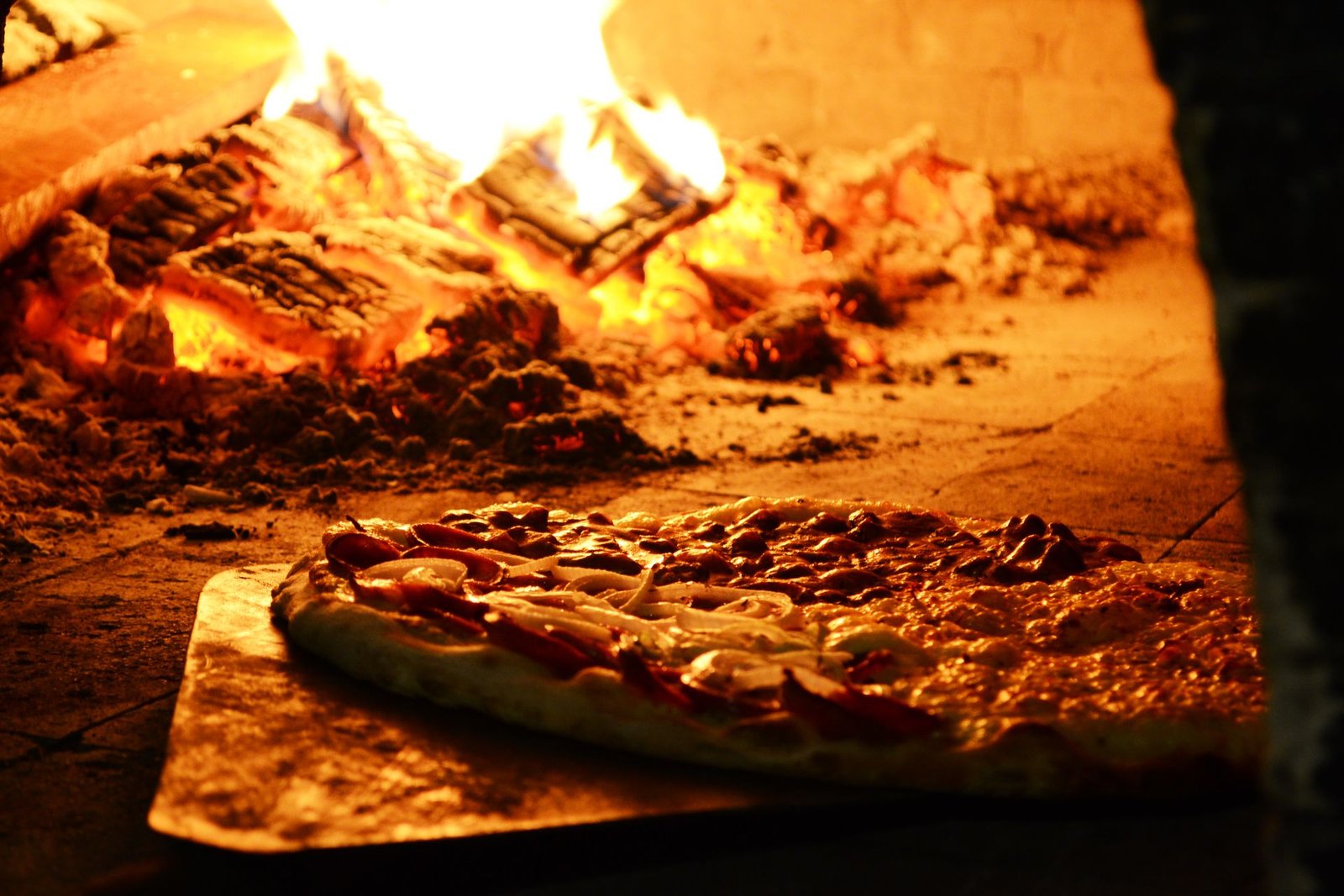
Strip away the romance and New Haven apizza is defined by a short list of physical traits. The crust is thin — thinner than a New York slice, but not cracker-thin — with an irregular, often oblong shape that comes from hand-stretching. It is baked in a coal-fired brick oven at temperatures far beyond what a home oven reaches, which produces a leopard-spotted char across the bottom and rim that is bitter, smoky, and completely intentional. The crumb inside stays chewy; the exterior crackles.
Toppings are applied with restraint. A classic apizza wears a thin smear of crushed tomato, a scattering of garlic and oregano, a drizzle of olive oil — and no mozzarella unless you ask for it. The guiding philosophy is the opposite of maximalism: every topping must justify its weight on a crust this thin, because a soggy center is the style’s mortal enemy.
And then there’s the name. “Apizza” is Neapolitan dialect — the immigrants who brought the style to New Haven in the early 1900s dropped the final vowel the way Neapolitan speech does. Saying “ah-BEETZ” correctly is your first credential as someone who takes the style seriously.
The Story: How Apizza Started in New Haven
The story begins, as so many American pizza stories do, with an Italian immigrant. Frank Pepe arrived from Italy and opened a bakery on Wooster Street in 1925; like many bread bakers of the era, he began baking flat tomato-topped breads for workers, and the “tomato pie” was born. Pepe’s tomato pies were cheap, filling, and cooked in a coal-fired bread oven — the same kind of oven that would define the style’s texture forever. During the Depression, the tomato pie’s genius was economic: tomatoes, garlic, and oregano cost almost nothing, and mozzarella was an upcharge. The default pie had no cheese, and in many New Haven shops, that is still the default today.
The family drama that created the style’s holy trinity is the stuff of local legend. Sal Consiglio — Frank Pepe’s nephew — worked at Pepe’s and, after a falling-out, opened Sally’s Apizza across the street in 1938. Meanwhile, Bill Pustari, who had also worked at Pepe’s, opened Modern Apizza in 1934 a few blocks away on State Street. Three coal-fired ovens, three founding families, three fiercely loyal followings — the rivalry between Pepe’s and Sally’s partisans has fueled decades of delicious debate.
What kept the style distinct while pizza evolved elsewhere was stubbornness. When gas and electric deck ovens took over American pizzerias in the mid-20th century, the Wooster Street shops kept their coal ovens — grandfathered in, maintained with devotion, and central to the marketing as much as the flavor. When pizza chains standardized the round, cheese-heavy pie, New Haven kept the oblong, charred, restrained one. The result is a style that tastes like a time capsule in the best sense: this is what pizza tasted like before it was optimized.
What Makes New Haven Apizza Different
The coal-fired brick oven
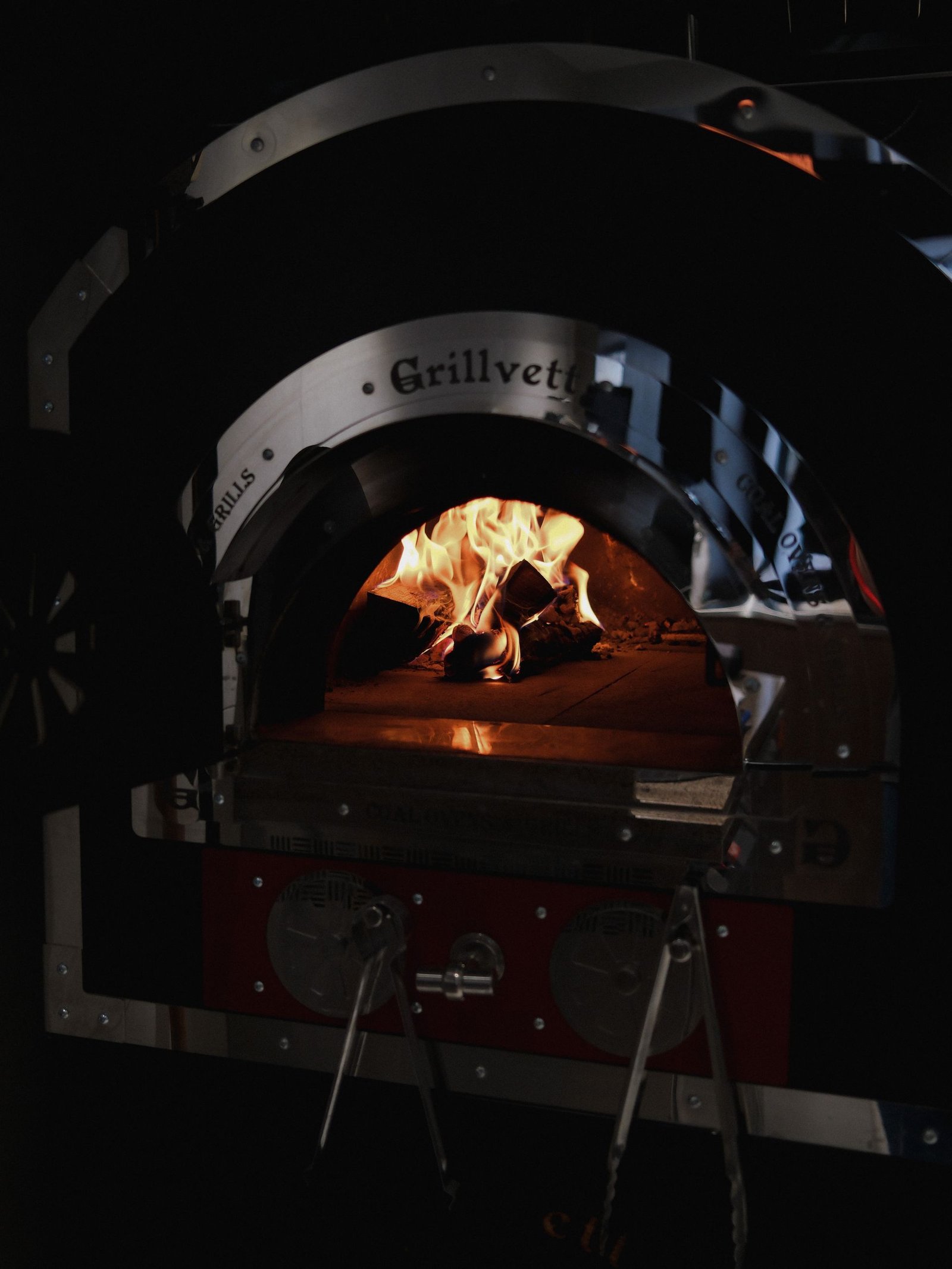
Everything flows from the oven. A coal-fired brick oven runs dramatically hotter than a conventional pizza oven — well past 600°F at the deck — and the heat is dry and fierce. A pie bakes in just a few minutes, and in that short window the bottom chars in spots (the famous leoparding) while the interior stays tender. Coal also contributes a faint smokiness you can’t quite replicate with gas or wood alone. If you’ve read our Neapolitan pizza guide, you’ll recognize the logic — extreme heat, short bake — but the New Haven result is crisper and more charred than Naples’ soft, soupy-centered pies.
Home cooks can’t burn coal (and shouldn’t try), but you can borrow the principle: maximum stored heat, transferred fast. A thick pizza steel preheated for a full hour in your oven’s hottest setting, finished under the broiler, is the closest most of us will get. Our steel-vs-stone comparison walks through why steel wins for this kind of high-heat baking.
The crust: thin, oblong, charred
New Haven dough is a lean, low-hydration dough — flour, water, salt, yeast, a touch of oil — fermented long enough to develop flavor. The rim puffs in the coal heat but stays thin relative to a Neapolitan cornicione. And the char: in New Haven, blackened spots are not a mistake. They are the point. The bitterness of the char balances the sweetness of the tomato and the richness of the cheese, and regulars consider a pale, unspotted pie a disappointment.
The tomato pie: cheese is optional
The original apizza — and still the purist’s order — is the tomato pie: crushed tomatoes (often uncooked, just crushed with salt), minced garlic, dried oregano, olive oil, and nothing else. No mozzarella. The result is bright, acidic, and intensely tomato-forward, closer to a great bruschetta than to the cheese-laden pies most Americans know. Ordering “mootz” on top makes it the familiar tomato-and-mozzarella pie, but try the plain tomato pie first. It is the style’s thesis statement. If you want to practice the sauce at home, our homemade pizza sauce recipe and San Marzano tomato guide cover the no-cook crushed-tomato approach that works best here.
Restraint as a rule
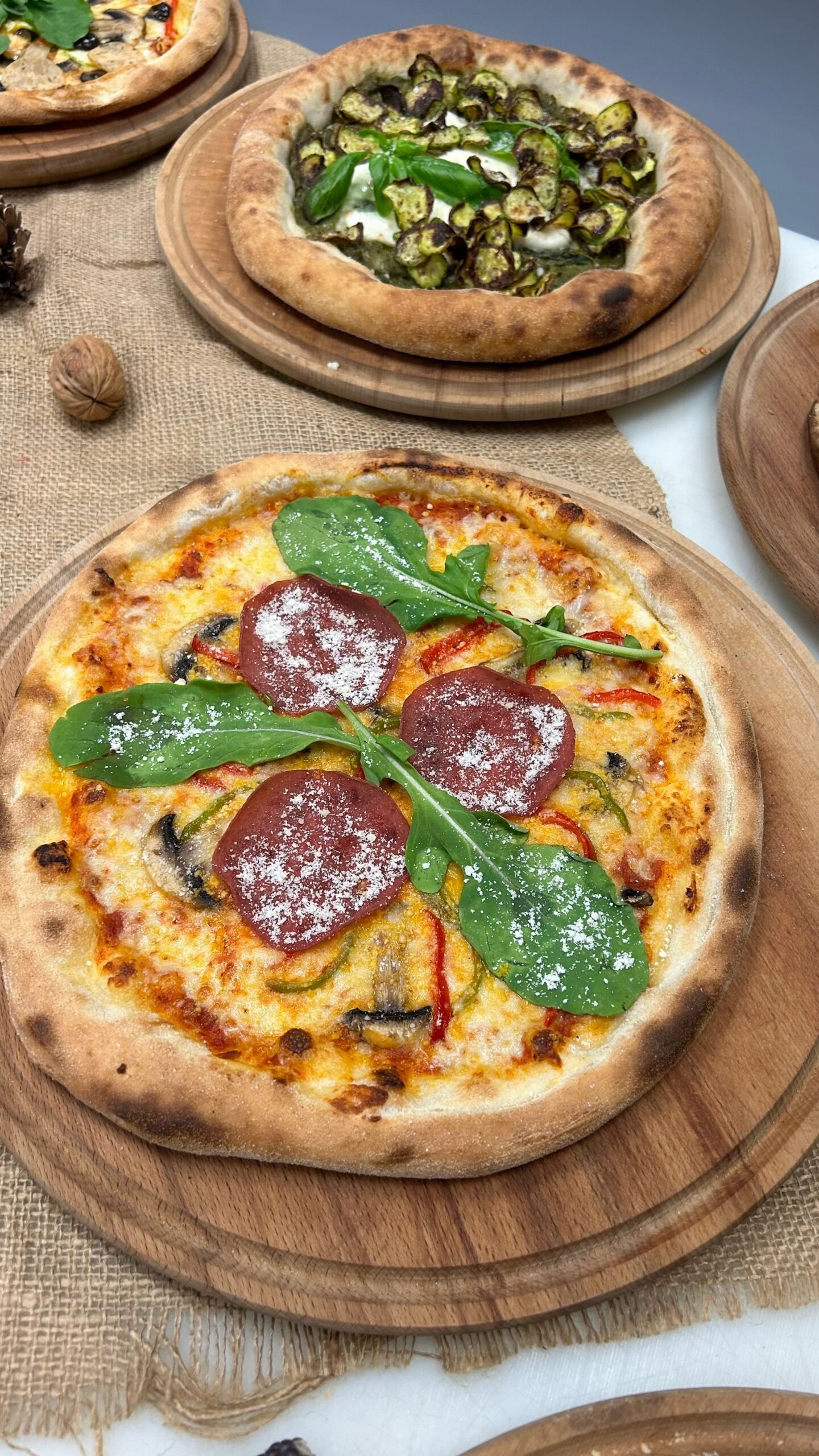
Because the crust is thin and the oven is ferocious, New Haven pizzerias top lightly. A little sausage goes a long way; a handful of peppers is plenty. This isn’t stinginess — it’s engineering. Heavy toppings steam the thin center and defeat the crisp-chewy texture the whole style is built around. When you make apizza at home, this is the hardest rule to follow and the most important one: use less of everything than your instincts suggest.
The Famous Pies: What to Order
The original tomato pie
Start here. The tomato pie at Pepe’s or Sally’s or Modern is the baseline: hand-crushed tomatoes, garlic, oregano, olive oil, charred thin crust. Add mozzarella (“mootz”) if you want the cheese pull, but try the plain version first — it is the style’s thesis statement. The pie arrives oblong, blistered, and smelling of coal smoke and oregano. Fold it — the thin crust demands the fold — and the char crackles.
The white clam pie
The most famous single pizza in New Haven, and one of the most famous in America, is Pepe’s white clam pie: freshly shucked littleneck clams, garlic, oregano, olive oil, a dusting of grated pecorino, and no tomato sauce at all. It was born from the neighborhood — Wooster Street was an Italian immigrant community near the water, clams were cheap and abundant, and someone had the genius to put them on a pie. The clams bake in the coal heat until just opened and tender, their briny liquor mingling with garlic oil on the charred crust. Order it with bacon if you want the classic variation — the smoky pork fat with clam brine is one of pizza’s great flavor combinations. If clams aren’t your thing, the white pie with garlic and mozzarella is the gentler entry point to the no-sauce tradition.
Other icons worth your time
Beyond the two legends, the New Haven canon includes the mashed potato pie (yes — dollops of mashed potato, bacon, and mozzarella, far better than it sounds, at Sally’s and others), the sausage and pepper apizza, and the plain mozzarella (“mootz”) pie for benchmarking a shop’s crust and sauce. Seasonal specials appear — keep an eye out for anything with local corn in late summer. And whatever you order, remember the unit of measurement is the pie, not the slice; apizza is ordered whole, sized for sharing, and priced accordingly.
Where to Eat Apizza in New Haven
Frank Pepe Pizzeria Napoletana
The original, at 157 Wooster Street, has been coal-firing since 1925. The line on a Friday night can stretch down the block, and it moves slowly because the dining room is small and nobody is in a hurry. Order the white clam pie (this is its birthplace) and an original tomato pie, one with mootz and one without, so you understand the range. Pepe’s now has multiple locations, but the Wooster Street original is the pilgrimage site — the coal oven there is the one that started it all.
Sally’s Apizza
Across the street at 237 Wooster Street, Sally’s has been Pepe’s great rival since 1938. The room is a preserved-in-amber time capsule — don’t expect renovation, do expect character. Sally’s loyalists argue the crust is thinner, the char more aggressive, the tomato pie brighter. Order the tomato pie and the mashed potato pie, and form your own opinion in the century’s most delicious debate. Like Pepe’s, Sally’s has expanded beyond Wooster Street in recent years, but the original is the experience.
Modern Apizza
A few blocks away at 874 State Street, Modern has been firing since 1934 and is many locals’ actual favorite — the connoisseur’s pick that avoids the worst of the Wooster Street crush. The “Italian Bomb” (sausage, pepperoni, peppers, mushrooms, onions, garlic) is the signature loaded pie, and the plain cheese pie is the benchmark order. Modern’s oven and technique are every bit the equal of its rivals; the debate over which of the three is best has no correct answer, which is exactly why you should try all three.
Planning the visit
Go on a weekday if you can — weekend lines at Pepe’s and Sally’s are genuinely long, and while the wait is part of the ritual, two hours is two hours. Pies are large; two pies comfortably feed three to four people. Order at the counter or from your server depending on the shop, and don’t be shy about asking what’s best that day. If you’re making a day of it, pair your crawl with our beer-and-pizza pairing guide — a crisp lager with a charred clam pie is one of the great casual-food pairings in American eating. And wear something you don’t mind smelling faintly of coal smoke; it’s a souvenir.
How to Make New Haven-Style Apizza at Home
You will not replicate a coal oven. Accept that up front, and what you can do is still remarkably good: a thin, blistered, lightly charred pie with restrained toppings that captures the spirit of Wooster Street. Here’s the method.
The dough
New Haven dough is lean and extensible. Use bread flour or a 50/50 blend of bread flour and all-purpose; hydrate around 60–62% (a bit lower than Neapolitan dough); add 2% salt, a small amount of instant yeast, and a teaspoon of olive oil per 500g of flour. Cold-ferment for 24–72 hours — the long, slow ferment is where the flavor comes from — then bring to room temperature for 2 hours before baking. Our cold-ferment dough guide covers the technique in full detail. Stretch to 10–12 inches, thin in the middle, leaving only a modest rim; don’t obsess over roundness. Oblong is authentic.
The sauce (or no sauce)
For a tomato pie, crush good canned tomatoes by hand with a pinch of salt — no cooking, no simmering. San Marzano-style tomatoes are the classic choice; check for DOP labeling and whole peeled tomatoes packed in juice. Spread thinly — about ⅓ cup for a 12-inch pie. For a white pie, skip sauce entirely: brush the stretched dough with olive oil, scatter thinly sliced garlic, and top as desired.
The oven setup
Place a pizza steel on the top rack, 4–6 inches below the broiler, and preheat at your oven’s maximum temperature for a full hour. The steel stores far more heat than a stone, and that stored heat is what blisters the bottom in a home setting. Launch the pie onto the steel with a pizza peel dusted with flour or semolina. Bake 4–6 minutes, then finish 1–2 minutes under the broiler to char the top — watch it constantly, because the line between charred and burnt is about thirty seconds.
Assembly and bake
Less of everything: ⅓ cup sauce, a sparse handful of low-moisture mozzarella if using, pinches of garlic and oregano, a drizzle of oil. For a clam pie at home, use small canned or frozen clams (drained well — moisture is the enemy) with garlic, oregano, oil, and pecorino; fresh littlenecks are wonderful if you can get them, scrubbed and placed on the pie to open in the heat. Bake until the rim is puffed and spotted with char and the bottom is crisp and leopard-spotted when you lift an edge. Cool 2 minutes on a wire rack (not a cutting board — trapped steam softens the bottom), slice, and fold.
Ordering Like a Local
A few final notes for the Wooster Street experience. First: apizza is ordered as whole pies, and the sizes run large — when in doubt, order fewer pies than you think; you can always add one. Second: mozzarella is abbreviated “mootz” and treated as a topping, so “tomato pie with mootz” is a complete and respectable order. Third: the char is not a flaw — don’t send a pie back for spotting; that’s what you came for. Fourth: the white clam pie is best eaten immediately, while the clam liquor is still glistening — this is not a leftovers pie.
Frequently Asked Questions
How do you pronounce “apizza”?
“Ah-BEETZ.” It’s Neapolitan dialect — the final vowel of “a pizza” drops off the way it does in Neapolitan speech. Saying it right on Wooster Street earns you a small nod of respect; saying “a-pizza” marks you as a tourist.
What is the difference between New Haven apizza and New York-style pizza?
Both are thin, but apizza is thinner, oblong rather than round, baked in coal-fired ovens rather than gas deck ovens, and defined by its char — New York slices may have light spotting, but New Haven’s leopard-char is far more aggressive and intentional. The default tomato pie with no mozzarella is also distinctively New Haven; New York’s default is the cheese slice.
Why is there no cheese on a traditional tomato pie?
History and economics. Frank Pepe’s tomato pies were Depression-era food — tomatoes, garlic, and oregano were cheap, and mozzarella was an extra cost. The cheese-free pie became the style’s signature rather than a compromise, and many regulars still consider it the purest expression of the crust and sauce. Mozzarella remains an add-on (“mootz”) at the classic shops.
Can I make real apizza in a regular home oven?
You can make a very good approximation. The keys are a pizza steel preheated for a full hour at maximum temperature, a lean thin-stretched dough, restrained toppings, and a broiler finish for char. You won’t match coal-oven heat or smokiness, but you’ll get the thin, blistered, char-spotted character that defines the style.
What should I order on my first visit to New Haven?
The canonical first-timer’s order: a white clam pie and an original tomato pie (one with mootz, one without), split across two or three people. That covers the style’s two signatures and the cheese question in one sitting.
Is the char on apizza burnt? Is it safe to eat?
The char is intentional — it’s caramelization and light carbonization from the intense coal heat, central to the style’s flavor, adding a pleasant bitterness that balances the toppings. A properly made apizza has spotted char, not an incinerated crust; if a pie tastes genuinely burnt, that’s an error, not tradition. The char on a well-made apizza is a feature, not a flaw.
Conclusion: Why the Wooster Street Pilgrimage Is Worth It
New Haven apizza endures because it refuses to compromise. In a century that standardized pizza into a round, cheese-heavy, gas-oven product, a few coal-fired rooms on and around Wooster Street kept making the thin, oblong, charred, restrained pie their founders invented — and the world eventually came to them. Whether you make the pilgrimage for a white clam pie eaten minutes from the oven, or you approximate the style at home with a screaming-hot steel and a light hand on the toppings, you’re tasting one of American food’s great living traditions. Say “ah-BEETZ,” order the tomato pie, and don’t fear the char.