

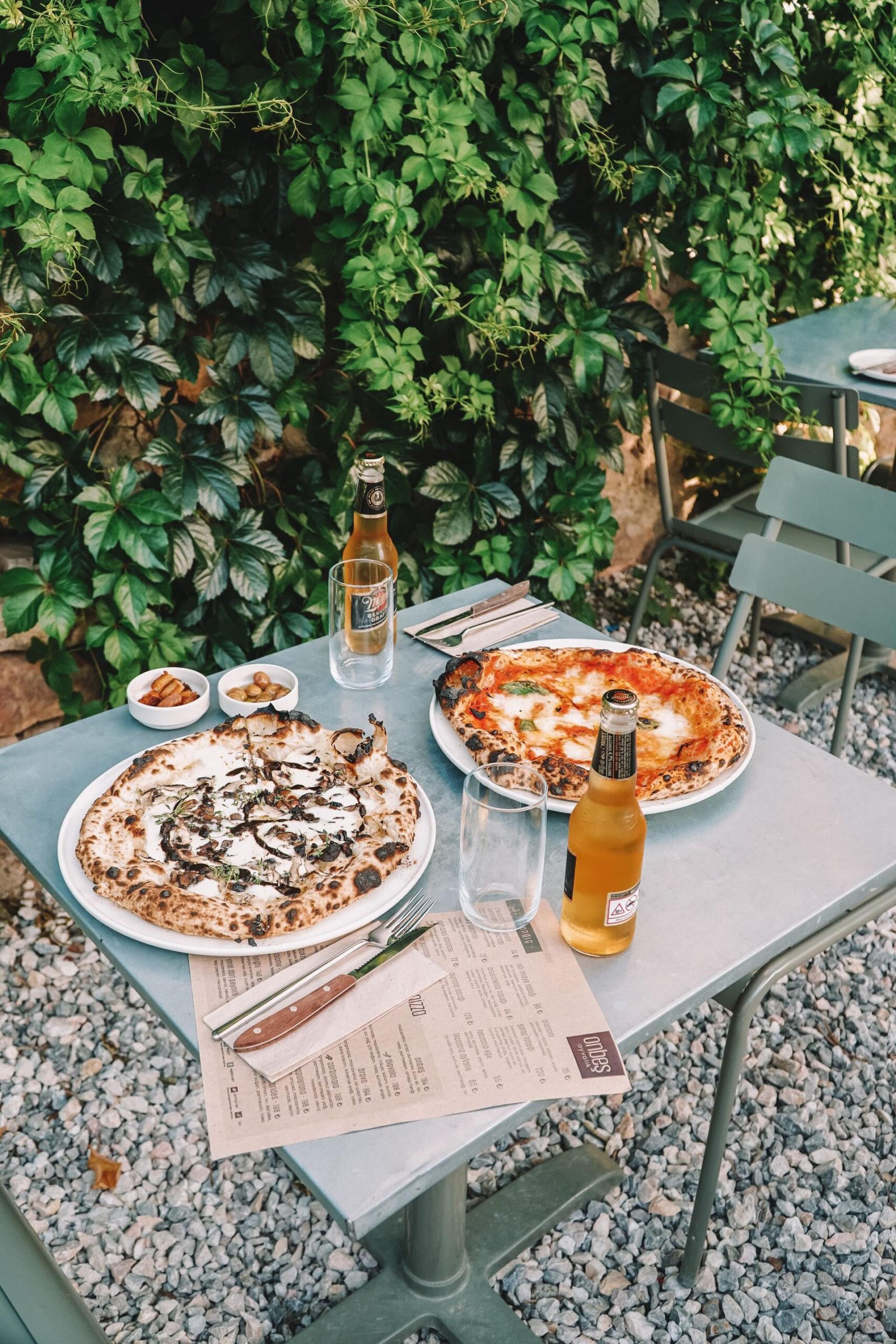
Few combinations feel as inevitable as pizza and beer. The cold glass, the hot slice, the way carbonation scrubs your palate clean between bites — it’s a pairing so natural that most of us never think about it twice. But here’s the thing: the difference between a beer that merely accompanies your pizza and a beer that elevates it is real, and once you know what to look for, you’ll never go back to grabbing whatever’s coldest in the fridge.
This pizza and beer pairing guide covers the combinations that actually work — lager with margherita, IPA with pepperoni, stout with barbecue chicken — plus the science of why certain beers flatter certain slices. You’ll learn when to match intensity, when to create contrast, and which common pairings to avoid. And if you’re curious about the grape-based alternative, our pizza and wine pairing guide covers that side of the table — this one is all about beer.
Before the pour-by-pour breakdown, one honest caveat: pairing is personal. The “rules” here are about tendencies, not laws. If you love a stout with your pepperoni, that’s a valid pairing no matter what anyone writes on the internet. Use this guide as a starting map, then wander.
🍕 Key Takeaways
- Carbonation is beer’s superpower with pizza — the bubbles cut through cheese fat and reset your palate between bites.
- Match intensity to intensity: light beers with delicate pizzas, bold beers with heavy, meaty toppings.
- Lager and pilsner are the universal crowd-pleasers — crisp, clean, and they flatter almost every slice.
- IPAs shine with spicy and fatty toppings like pepperoni, where bitterness balances richness.
- Wheat beers love veggie pizzas; stouts and porters belong with barbecue and roasted-meat slices.
- Serve beer cold but not ice-cold (40–50°F for most styles) so the flavors actually come through.
- If the pizza has meat, leftovers still follow the 2-hour rule and need 165°F (74°C) when reheated — pairing notes keep, food safety keeps.
Why Beer and Pizza Are a Natural Match
Pizza is rich: melted cheese, fatty meats, oily crust. Beer is carbonated, bitter, and cold. That contrast is the whole story. Every sip does three jobs at once — the carbonation scrubs fat off your tongue, the bitterness provides a counterpoint to salt and richness, and the cold temperature refreshes a palate that just handled a 400°F slice. It’s the same reason soda works with pizza, except beer brings actual flavor complexity to the exchange.
There’s also an intensity conversation happening. A delicate margherita pizza with fresh basil and San Marzano tomato has subtle flavors that a boozy imperial stout would bulldoze. A loaded meat-lover’s slice, on the other hand, needs a beer with enough backbone to stand next to it. The golden rule of this entire guide is simple: match the beer’s intensity to the pizza’s intensity. Everything else is refinement.
The three pairing moves
Every successful pairing uses one of three strategies. Complement means finding shared flavors — the toastiness of a brown ale echoing a well-charred crust. Contrast means setting opposites against each other — a crisp pilsner cutting through a greasy pepperoni slice. Reset is the simplest: a clean, highly carbonated beer that wipes the slate between bites so each slice tastes like the first. Most great pairings do at least two of the three.
Lager and Pilsner: The Universal Pairings
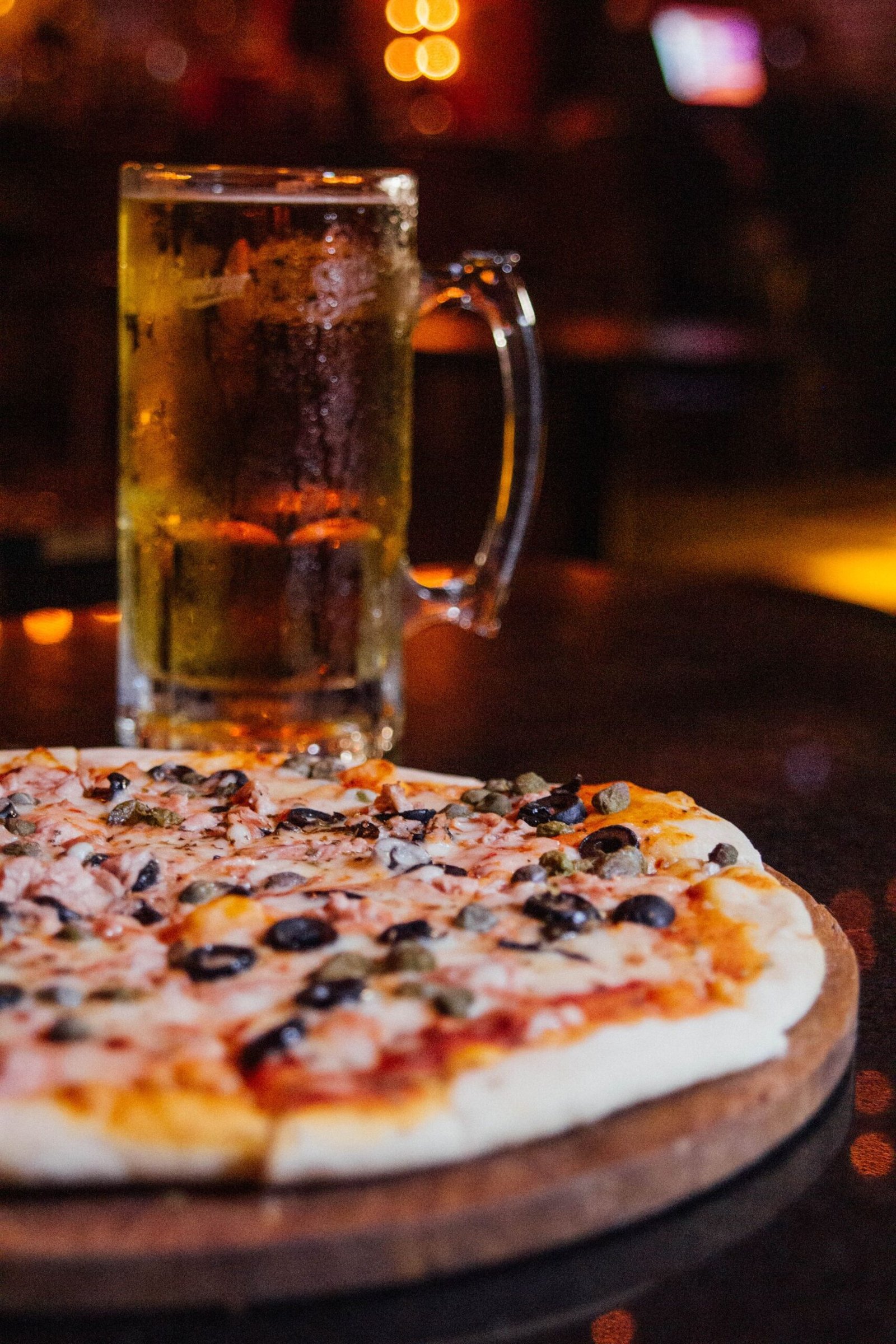
If you only remember one section of this guide, make it this one. Pale lagers and pilsners are the Switzerland of the pizza and beer pairing world — neutral enough to offend no one, refreshing enough to help everyone. Their clean malt profile and lively carbonation lift cheese without competing with toppings, which is why they show up at pizzerias everywhere.
What they pair with: Margherita, four-cheese, plain cheese slices, and most veggie pizzas. A pilsner’s gentle hop bitterness is the perfect foil for the creamy sweetness of fresh mozzarella, and it never overwhelms delicate toppings like basil or roasted garlic. If you’re ordering a mixed spread for a group and can only buy one style of beer, buy a good lager — it’s the one choice nobody will regret.
What to look for: Crispness and freshness matter more than brand. A skunked lager is worse than no beer at all. Look for freshness dates when you can, and serve lagers cold — around 38–42°F — since their subtle flavors go flabby at warm temperatures.
German and Czech styles worth knowing
Not all lagers are identical. A German helles is soft and malty — lovely with a four-cheese pizza where the malt echoes the browned cheese. A Czech pilsner has a touch more hop character, which gives it an edge with anything greasy. Italian pilsners (a newer craft style) are dry-hopped and snappy — fantastic with wood-fired pies. You don’t need to memorize this taxonomy; just know that when a menu lists a few lagers, the crisper one suits richer pizza and the maltier one suits milder pizza.
IPA: The Bold Slice’s Best Friend
India pale ales are the loudest beers in the room, and loud beers need loud pizzas. The hop bitterness that defines an IPA does beautiful work against fatty, spicy, salty toppings — it cuts richness the way acidity does in wine, and the citrus and pine notes in many IPAs play surprisingly well with pepperoni’s fennel spice and tomato sauce’s acidity.
What they pair with: Pepperoni pizza is the headline pairing — spicy cured meat and bitter hops are a classic contrast. Buffalo chicken pizza works too, since the beer’s bitterness cools the perception of heat while its carbonation handles the blue cheese. Sausage and mushroom, meat lovers, and anything with hot honey or chili oil also welcome an IPA’s intensity.
The intensity ladder: Session IPAs (under 5% ABV) suit moderately topped pizzas. Standard American IPAs handle pepperoni and sausage. Double IPAs are for the heaviest slices — deep dish, meat lovers, barbecue chicken — where anything lighter would disappear. Go too big with a delicate pizza, though, and the beer steamrolls the food. A double IPA with a margherita is a mismatch; the hops will be the only thing you taste.
A note on hazy IPAs
Hazy or New England IPAs trade bitterness for juicy, tropical hop flavor with a softer mouthfeel. They’re more forgiving than bitter West Coast IPAs and pair nicely with Hawaiian pizza (the tropical notes rhyme with pineapple) and barbecue chicken (juicy hops + sweet sauce = harmony). If someone at the table doesn’t like bitter beer but wants something with presence, a hazy IPA is the compromise pour.
Wheat Beers: The Veggie Pizza Specialists
Wheat beers — hefeweizens, witbiers, American wheat ales — are soft, gently fruity, and low in bitterness, with a creamy body from the wheat malt. That profile makes them ideal for pizzas where you want the toppings to stay in the spotlight: garden-fresh vegetables, light cheeses, herb-forward pies.
What they pair with: Veggie supreme pizza, mushroom pizza, pesto chicken, white pizzas with ricotta and garlic. The banana-and-clove notes of a German hefeweizen sound strange next to pizza until you try it with a mushroom slice — the earthy flavors lock together. A Belgian witbier’s orange-peel and coriander spice is delightful with a pesto pie.
Why they work: Low bitterness is the key. Bitter beers can clash with the sulfur compounds in broccoli, peppers, and onions, creating harsh metallic notes. Wheat beers sidestep the problem entirely while their gentle fruitiness brightens the vegetables. They’re also excellent gateway beers for guests who “don’t like beer” — approachable, refreshing, and food-friendly.
Stout and Porter: For Barbecue and Bold Meat Pies
Dark beers and pizza might sound like a stretch, but this is one of the great underrated pairings. A stout’s roasted malt brings coffee, chocolate, and caramel notes that dovetail with caramelized crust, sweet barbecue sauce, and charred meats. The beer’s full body stands up to the heaviest slices without breaking a sweat.
What they pair with: Barbecue chicken pizza is the star — sweet-smoky sauce and roasted malt are a natural complement, like barbecue and a dark beer at a cookout. Meat lovers pizza, bacon-topped pies, and anything with caramelized onions also work. Even dessert pizza (Nutella, s’mores styles) finds a friend in a milk stout’s chocolatey sweetness.
Choosing the right dark beer: Stick to moderate examples. A dry Irish stout or a smooth American porter has enough roast character for the pairing without the boozy weight of an imperial stout. Save the 10% barrel-aged monsters for sipping after dinner — with pizza, they’d dominate. And serve stouts a touch warmer than lagers, around 45–50°F, so the malt complexity opens up.
Amber Ales, Brown Ales, and the Middle Path
Not every pizza night needs extremes. Amber and brown ales live in the comfortable middle: malt-forward, lightly hoppy, medium-bodied, and agreeable with a wide range of toppings. They’re the “second six-pack” beers — what you grab when the group orders a little of everything and you want one beer that handles it all.
What they pair with: Supreme pizzas, sausage and peppers, meat lovers pizza, and Hawaiian. The caramel malt in these styles echoes browned cheese and sweet sauce, while the modest hops keep things from feeling heavy. A brown ale with a sausage pizza is one of those quiet, perfect pairings nobody talks about.
Sours, Goses, and Adventurous Options
Sour beers — goses, Berliner weisses, fruited sours — bring acidity to the table, and acidity is a classic partner for rich food. A tart gose with its hint of salt cuts through a greasy slice like a squeeze of lemon cuts through fried food. Fruited sours can work with dessert pizzas or Hawaiian, where the fruit flavors have something to rhyme with.
Approach with curiosity, not commitment. Sours are the least predictable category here. A lightly tart Berliner weisse with a cheese slice is refreshing; an aggressively sour fruited bomb with a pepperoni pizza can clash. If you’re experimenting, pour small tastes alongside the main beer rather than committing the whole meal.
Common Pairing Mistakes to Avoid
Too much beer for the pizza. The most frequent error is bringing a 9% triple IPA to a delicate white pizza. When the beer is the only thing you taste, the pairing failed. Scale the beer’s intensity to the slice.
Ice-cold everything. Serving all beer at near-freezing mutes flavor, especially in malt-forward styles like browns, porters, and stouts. Cold is good; numb is not. Let darker beers warm a few degrees in the glass.
Ignoring the sauce. Tomato sauce is acidic, and acidity in food makes beer taste more bitter — which is why very bitter IPAs can turn harsh with extra-saucy pies. If the pizza is sauce-heavy, lean toward malt-balanced beers. White pizzas and olive-oil bases, with no acidity to manage, welcome hoppier pours.
Forgetting the non-drinkers. A pairing guide that only works for drinkers leaves people out. Keep sparkling water, good root beer, or a crisp lemonade on hand — carbonation is the key mechanism, and non-alcoholic options with bubbles do the same palate-resetting work. Everyone at a pizza and beer pairing night — or any pizza night — deserves a good sip.
Building a Tasting Night
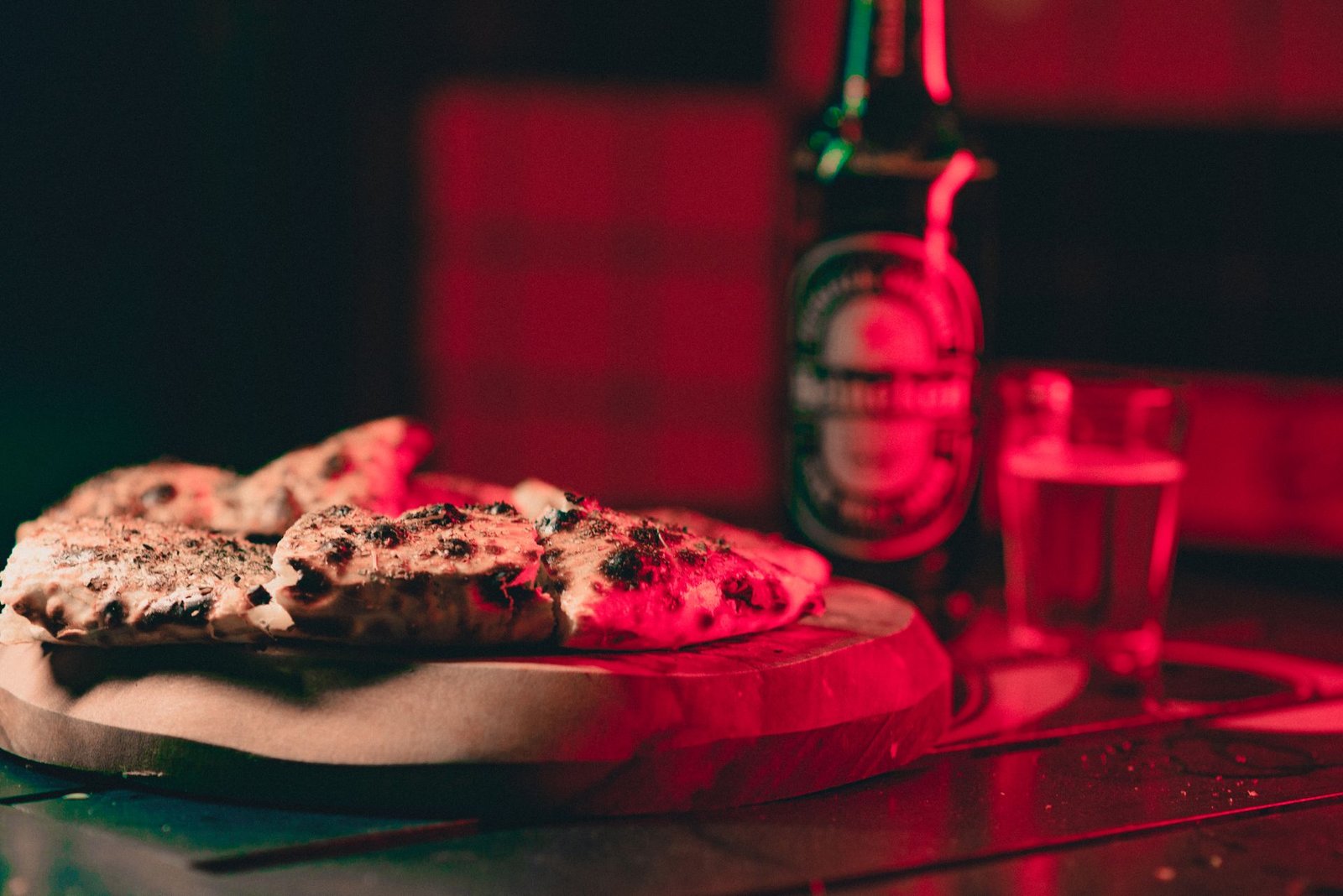
Want to turn this guide into an event? A pizza-and-beer tasting is one of the easiest themed nights to host: buy four pizzas in different styles, buy four beers in different styles, and let everyone mix and match. Set it up as a casual experiment rather than a formal tasting — the fun is in the discoveries, like the guest who insists the stout works with everything.
A sample lineup: Margherita + pilsner, pepperoni + IPA, veggie supreme + hefeweizen, barbecue chicken + porter. That covers the four anchor pairings and gives everyone a clear before-and-after as they move down the table. Put out scorecards if your group is competitive, or just let conversation do the work.
Logistics: Order the pizzas to arrive in two waves so nothing sits getting cold — food safety still applies at parties, with the 2-hour rule for anything sitting out. Buy more beer than you think you need in the lighter styles; heavy stouts go slower. And have our pizza party hosting guide open for the broader logistics — quantities, timing, and flow.
Temperature, Glassware, and Serving
You don’t need a beer cellar to do this well, but two small upgrades make a real difference. First, mind serving temperature: lagers and pilsners at 38–45°F, wheat beers and IPAs at 40–50°F, ambers and browns at 45–50°F, stouts and porters at 45–55°F. Pull darker beers from the fridge ten minutes before pouring. Second, use real glasses. A simple tulip or pint glass releases aroma that a bottle neck traps, and aroma is half of flavor.
If you’re buying for a crowd, cans are the practical choice — they protect beer from light, chill fast, and there’s no opener hunt. Just pour into glasses rather than drinking from the can when you can; the pairing deserves the aroma. And keep a few non-alcoholic options in the mix — the best pairing nights are the ones where everyone at the table has something good in their glass.
Quick-Reference Pairing Chart
For the fridge-door version of this guide:
- Cheese / Margherita → Pilsner, lager, helles
- Pepperoni / spicy salami → IPA (West Coast or hazy), amber ale
- Veggie supreme / mushroom → Hefeweizen, witbier, American wheat
- Barbecue chicken → Porter, brown ale, hazy IPA
- Meat lovers / sausage → Amber ale, brown ale, double IPA
- Hawaiian → Hazy IPA, fruited wheat, light lager
- White pizza / pesto → Witbier, pilsner, Belgian blonde
- Buffalo chicken → IPA, pale ale
- Dessert pizza → Milk stout, fruited sour
Tape it inside a cabinet door. Future you, mid-order, will be grateful.
Stocking Your Fridge for Delivery Nights
Most pizza and beer pairing happens spontaneously — the doorbell rings, the box opens, and you grab whatever’s cold. A little foresight turns those nights from fine to great. Keep a mixed six-pack strategy: two lagers or pilsners (the universal base), two IPAs or pale ales (for meaty and spicy orders), and two wild cards that rotate — a wheat beer in summer, a porter or brown ale in winter. That spread covers virtually any order without turning your fridge into a bottle shop.
One more delivery-night tip: have the beer cold and poured before the pizza arrives. Pizza is at its best in the first fifteen minutes out of the box, and you don’t want to spend those minutes digging through the fridge. Set out glasses, open the box, pour the beer, and sit down to both at their peak. Small ritual, big payoff.
The Last Slice on Pizza and Beer Pairing
The best pizza and beer pairing is the one that makes you pause mid-bite and notice how good both taste — that little moment where the sip makes the slice better and the slice makes the sip better. Start with the anchors (lager with margherita, IPA with pepperoni), then experiment outward. Keep the intensity rule in mind, mind your temperatures, and remember that the whole point is pleasure, not correctness. Your palate is the final judge. A pizza night with thoughtfully chosen beer is a small luxury that costs almost nothing extra — just a little attention at the beer aisle. Cheers to that.
Frequently Asked Questions
What’s the single best beer to serve with pizza if I can only pick one?
A quality pilsner or pale lager. It’s crisp, refreshing, highly carbonated, and neutral enough to flatter everything from margherita to pepperoni. When you’re feeding a group with varied tastes and varied pizzas, the universal pairing beats the perfect pairing.
Does expensive craft beer pair better with pizza than cheap lager?
Not necessarily. Pizza is casual food, and some of the best pairings are humble — a straightforward lager with a cheese slice is genuinely excellent. Where craft beer earns its keep is variety: a well-chosen IPA or porter can elevate specific pizzas in ways a light lager can’t. Match the beer to the slice, not the price tag to your ego.
What beer goes with pepperoni pizza specifically?
An IPA is the classic answer — the hop bitterness cuts the pepperoni’s fat and stands up to its spice. A West Coast IPA gives you the bitter contrast; a hazy IPA gives you juicy fruit notes that play with the tomato sauce. If you don’t like IPAs, an amber ale is the easy-drinking alternative.
What about non-alcoholic beer with pizza?
Non-alcoholic beers have gotten genuinely good, and the pairing logic still applies — an NA lager or NA IPA brings the same carbonation and flavor structure. They’re a great option for mixed groups. The same intensity-matching rules apply; just shop the NA shelf with the pizza style in mind.
What’s the best beer pairing for a pizza party with lots of different pizzas?
Buy in layers: a case of lager or pilsner as the base (it goes with everything), a 12-pack of IPA or pale ale for the meat and spice lovers, and a six-pack of something maltier like an amber ale for variety. That covers the whole table. Our pizza party hosting guide has the full logistics — quantities per guest, timing, and flow — so the beer math is one less thing to guess at.
Should beer be served in a glass or straight from the bottle with pizza?
A glass, when it’s practical. Pouring releases aroma and lets the head form, both of which improve flavor perception — and flavor is the whole point of pairing. For big casual parties, cans poured into cups are a fine compromise. Nobody’s pairing suffers meaningfully from a red plastic cup.