

Pizza feels like the most casual food on earth — and in most places, it is. But cross a border with a slice in your hand and the rules change fast. In Naples, eating pizza with a knife and fork isn’t snobbery, it’s tradition. In parts of Brazil, green peas on pizza are normal and reaching for ranch dressing would raise eyebrows. And in New York, folding your slice isn’t just accepted — it’s practically a civic duty. Understanding pizza etiquette around the world won’t just save you from embarrassment; it’ll make you appreciate how deeply this simple food is woven into different cultures.
This guide covers the unwritten rules of eating pizza across Italy, the United States, and the rest of the world — how to hold it, when to use utensils, what toppings will get you judged (and where), and the universal manners that apply everywhere. Whether you’re traveling, hosting international guests, or just want to settle the great fold-versus-fork debate, here’s everything you need to know.

🍕 Key Takeaways
- In Italy, pizza is personal: one pizza per person, eaten with a knife and fork, and never ask for pineapple or ranch.
- In New York, folding a large slice is standard practice; in Chicago, deep dish demands a knife and fork.
- Utensil rules follow the pizza’s structure: floppy Neapolitan-style needs a fork; sturdy slices are finger food.
- Topping taboos are cultural: what’s normal in one country (peas in Brazil, corn in Japan) is bizarre in another.
- When in doubt, watch the locals for 30 seconds before you eat — it’s the fastest etiquette lesson there is.
- At home, the only real rules are food safety and consideration: don’t double-dip, and label shared pizzas.
Italy: Where Pizza Etiquette Was Born
To understand pizza etiquette, start where pizza became pizza: Naples. Italian pizza culture treats the pie as a personal meal, not a shared one. When Italians sit down at a pizzeria, each person orders their own whole pizza — typically a 10–12 inch Neapolitan-style pie — and eats it themselves. The idea of ordering “two larges for the table” is an American concept that genuinely puzzles many Italians. If you’re dining in Italy, follow suit: order your own, and don’t be surprised when everyone else does too.
Knife and fork are standard. A true Neapolitan pizza has a soft, pliable center — it’s not structurally designed to be picked up like a New York slice. Italians cut it with a knife and fork and eat it piece by piece. This isn’t formality; it’s practicality. Picking up a soupy-centered margherita with your hands is a recipe for wearing it. That said, the crust edge (the cornicione) is often picked up by hand at the end — and nobody will judge you for folding a slice once it’s cut if that’s easier.
The topping rules are real. In Italy, pizza toppings follow tradition, not whim. A margherita is tomato, mozzarella, and basil — full stop. Asking for pepperoni in Italy will get you bell peppers (peperoni, with one p), which surprises many Americans. Pineapple on pizza is widely considered an aberration, ranch dressing doesn’t exist as a pizza accompaniment, and drowning a pizza in extra cheese or a dozen toppings marks you instantly as a tourist. It’s not that Italians are snobs — it’s that Neapolitan pizza is a centuries-old craft with rules, much like sushi in Japan. Our Neapolitan pizza guide explains the traditions behind the rules.
Pizzeria customs: In Naples, the classic pizzerias often serve only a handful of pizza varieties — sometimes just marinara and margherita, plus a few others. Don’t ask for a menu the size of a phone book. Pizza is also traditionally an evening food in Italy; many authentic pizzerias don’t even open for lunch. And the famous “pizza a portafoglio” (wallet pizza) — a small folded pizza sold by street vendors — is eaten by hand, folded in quarters. Context is everything.
United States: Regional Rules and the Great Debates
America took pizza and ran with it, creating distinct regional etiquettes that can differ as much as the pizzas themselves.
New York: fold it. The New York slice — large, thin, foldable — is engineered for eating on the move. The correct technique: fold the slice lengthwise (the “New York fold”), which creates structural rigidity and keeps toppings from sliding off. Eating a New York slice with a knife and fork at a slice joint will get you looks; eating it unfolded, letting the tip droop and drip grease down your shirt, will get you sympathy. The fold is functional, not ceremonial. For the full story on the style, see our New York style pizza guide.
Chicago: fork required. Chicago deep dish is essentially a pizza casserole served in a pan — eating it by hand is physically impractical and socially unwise. Knife and fork, always. The same goes for stuffed pizza. Nobody in Chicago will think twice about utensils; they’d think twice about you if you tried to pick it up. Our Chicago deep dish guide covers the style’s delicious particulars.
The crust question. Is it okay to leave the crust? Among friends, nobody cares. At a pizzeria, leaving a pristine cornicione is normal — though in Naples, where the puffy charred crust is considered a delicacy, leaving it uneaten is a quiet waste. Stuffed-crust pizzas solved this debate commercially, but traditionally, the crust is the handle, and what you do with the handle is your business.
Shared pizza manners. When sharing pies American-style, a few rules keep the peace: don’t take the last slice without offering it around (“anyone want this last piece?” is the sacred ritual phrase). Don’t pick toppings off a shared pizza. Use the serving spatula or clean hands — not the hand you’ve been eating with — when taking slices from a communal pie. And if someone ordered a specific pizza for dietary reasons, don’t graze from it without asking.
The ranch debate. Ranch dressing as a pizza dip is beloved in much of America and baffling elsewhere. There’s no actual etiquette violation in dipping your crust — but know your audience. At a business dinner with international colleagues, maybe skip the ranch river. Among friends, dip freely.
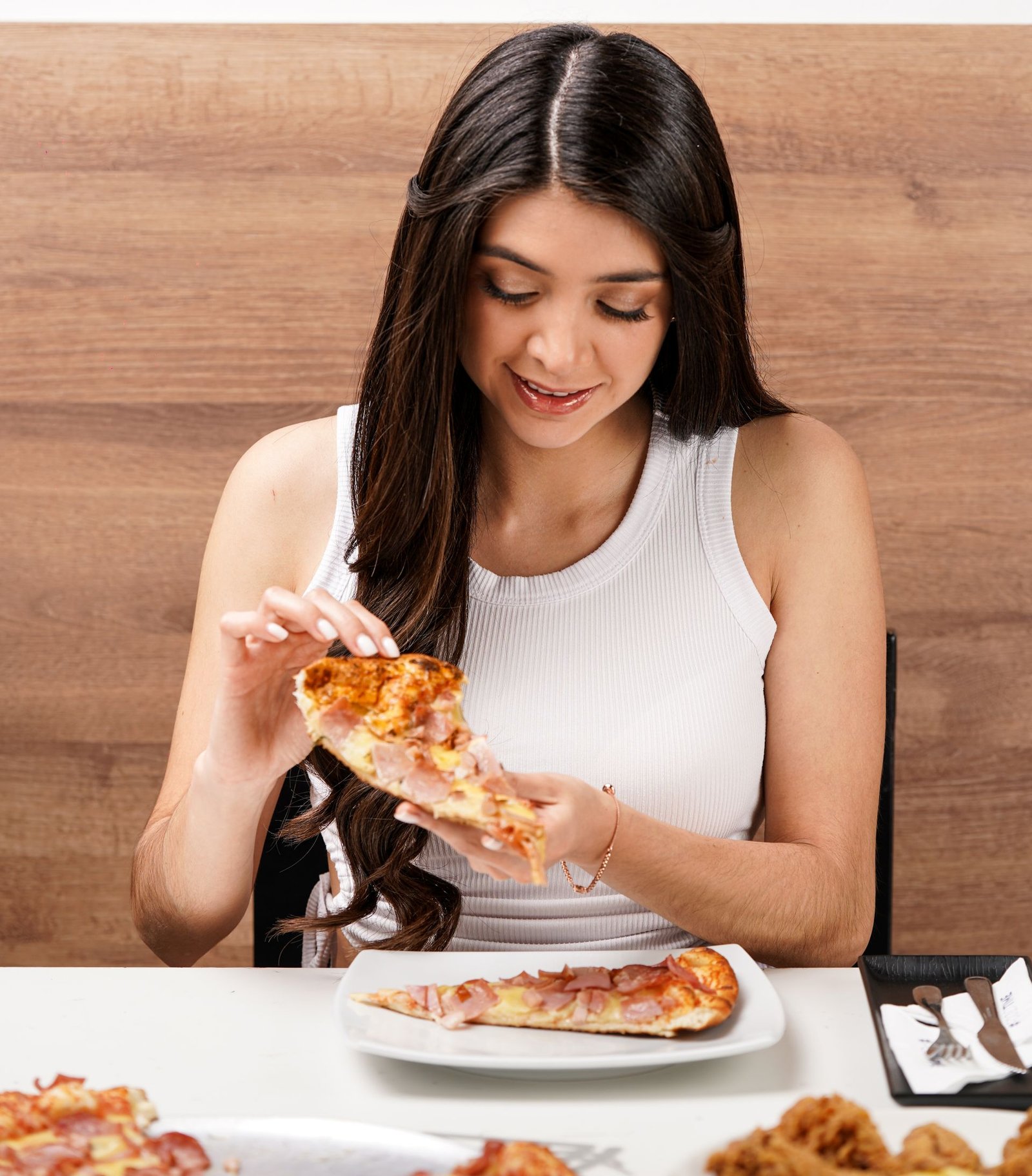
Pizza Etiquette Around the World
Beyond Italy and America, pizza has been enthusiastically adopted — and adapted — by cultures worldwide, each adding their own rules.
Brazil: São Paulo has one of the world’s great pizza cultures, with paulistanos taking their pizza as seriously as Neapolitans. Brazilian pizzas often feature toppings Americans find surprising — green peas, corn, hearts of palm, and Catupiry (a creamy Brazilian cheese). Eating with a knife and fork is common in sit-down pizzerias. One firm Brazilian rule: ketchup on pizza is widely frowned upon by purists, though plenty of people do it anyway.
Japan: Japan’s pizza scene is meticulous and creative — toppings like corn, mayonnaise drizzle, squid, and teriyaki chicken are mainstream, not novelty. Japanese pizza etiquette mirrors general Japanese dining manners: it’s polite to say “itadakimasu” before eating, and in formal settings, utensils or the provided serving tools are used rather than grabbing. Tabasco and parmesan are standard table condiments. The precision Japanese pizzerias bring to the craft is worth experiencing if you visit.
Germany: Germany has a strong pizza culture (it’s consistently among Europe’s top pizza-consuming countries), and the döner pizza — topped with döner kebab meat — is a beloved local fusion. German pizzerias generally follow Italian-style etiquette: individual pizzas, knife and fork for the floppy center. Hollandaise sauce as a pizza dip is a German quirk that surprises visitors.
France: The French take an interesting approach — “pizza” from a French pizzeria often comes with crème fraîche bases, and the etiquette is thoroughly French: knife and fork, no rushing, wine with the meal. Eating pizza while walking is less common than in New York; the French tend to sit down for it.
Australia: Australians love pizza with characteristically Aussie toppings — the “Aussie” pizza typically features egg, bacon, and barbecue sauce base. Pizza etiquette is relaxed: hands are fine, sharing is normal, and the great local debate is whether beetroot belongs on burgers, not pizza.
United Kingdom: British pizza culture blends Italian influence with pub informality. Knife and fork in restaurants, hands at home or from the takeaway box. One distinctly British phenomenon: the garlic-and-herb dip that comes with chain pizzas has achieved near-sacred status — forgetting to use it is the real faux pas.
South Korea: Korean pizza chains are famous for elaborate creations — sweet potato mousse crusts, corn-and-mayo toppings, bulgogi pizza. Sharing is the norm, and pickles (the vinegary Korean kind) served alongside pizza are there to cut the richness — use them. Chopsticks occasionally make an appearance for toppings, to everyone’s amusement.
Universal Pizza Manners (Wherever You Are)
Strip away the regional quirks and a core set of manners applies everywhere:
Don’t double-dip. This is universal. If dips are shared, dip once — or use the “flip” method (bite the other end) if you must go back. Better yet, put some dip on your own plate.
Respect dietary pizzas. If someone at the table has a gluten-free, vegan, or allergen-sensitive pizza, treat it as theirs. Don’t “just try a bite” without asking — cross-contact matters to people with real allergies, and the pizza was probably expensive.
Mind the communal pie. Take slices from the outside in, don’t saw through the middle of a pizza to get the piece you want, and keep your hands clean when reaching into shared boxes. If you’re sick, serve yourself first and let others take from the box — or better, sit this pizza night out.
Tip appropriately. In the US, tip your delivery driver well — they’re doing the most dangerous, least appreciated job in the pizza economy. In Italy, a small tip or just rounding up is fine (service is typically included). When traveling, learn the local tipping custom before you order.
Match the setting. The ultimate etiquette rule is situational awareness: business dinner, use utensils and pace yourself; slice joint with friends, fold and enjoy; Naples pizzeria, order your own and savor it slowly. Pizza is adaptable — be adaptable with it.
Manners for Delivery and Takeout
Etiquette doesn’t end at the restaurant door — how you handle delivery and takeout has its own code.
Tipping delivery drivers is the big one. In the US, tip in cash when possible (drivers prefer it), and tip on the pre-discount total, not the discounted price — the driver did the same work regardless of your coupon. Bad weather, long distances, and large orders all merit more. A good rule: $5 minimum or 15–20%, whichever is higher. In countries without a tipping culture, a small rounding-up is appreciated but not expected — know the local norm before you order.
Be ready. Track your order and be at the door when the driver arrives. Making a driver wait — or worse, missing the delivery entirely — is the takeout equivalent of being late to a reservation. Have payment ready, keep your phone nearby, and turn on the porch light at night.
Takeout box manners. At home, transfer pizza to plates (or at least open the box fully) rather than everyone clawing into a half-closed box. If you’re eating straight from the box with friends, that’s fine — just keep it open and flat so everyone has equal access, and don’t be the person who takes three slices before anyone else has one.
Office and shared-space pizza. Label boxes if multiple orders arrived, don’t take from a box that isn’t yours, and clean up promptly — the smell of day-old pizza boxes in a shared office kitchen is a genuine workplace grievance. Our ordering guide has more on getting group orders right.
Hosting International Guests: Pizza Night Diplomacy
If you’re hosting visitors from another country for pizza, a little cultural awareness goes a long way — and it’s a chance to make the evening genuinely interesting rather than accidentally awkward.
Ask, don’t assume. “How do you usually eat pizza back home?” is a great conversation starter and gives you real information. Your Italian guest will appreciate being offered a knife and fork without having to ask; your Brazilian guest might light up if you have hot sauce options; your Japanese guest will feel at home if the pizza is served with care rather than tossed in boxes on the table.
Offer variety with labels. When hosting a mixed group, order or make several styles and label them clearly — including noting anything unusual by someone’s standards. A simple “this one’s a Chicago-style deep dish, eaten with a fork” heads off confusion and becomes a talking point. Our guide on how to host a pizza party covers labeling and setup for diverse crowds.
Don’t force the local way. If your guest eats pizza with a knife and fork while everyone else folds, that’s fine — it’s their comfort, not a judgment. The fastest way to ruin international pizza diplomacy is teasing someone about their method. Curiosity (“oh interesting, is that how it’s done in Naples?”) builds bridges; mockery burns them.
Toppings diplomacy. Avoid ordering anything likely to be controversial for your guests’ culture as the only option — a Hawaiian pizza as the sole pie for Italian guests is a diplomatic incident in dough form. Order a safe classic alongside anything adventurous, and let people choose.
Pizza Myths Worth Retiring
A few “rules” get repeated so often they’re treated as gospel. Let’s clear them up:
Myth: “Real pizza is only eaten with a fork.” Reality: it depends entirely on the pizza. A structural New York slice is finger food by design; a soupy Neapolitan center needs utensils. Neither is more “correct” — they’re different foods with different physics.
Myth: “Folding pizza is an American corruption.” Reality: Naples invented the folded pizza — pizza a portafoglio has been street food for generations. The fold is Neapolitan; New York just scaled it up.
Myth: “You must eat the crust.” Reality: nobody is tracking your crust consumption. In Naples the cornicione is prized, in New York it’s a handle, and everywhere else it’s personal preference. Eat it, dip it, or leave it — just don’t lecture others about theirs.
Myth: “Pineapple on pizza is objectively wrong.” Reality: it’s a cultural preference, not a moral failing. Invented in Canada in 1962 by Sam Panopoulos, loved across much of the world, scorned in Italy. Both positions are coherent. (Our Hawaiian pizza recipe does it properly for the believers.)
Myth: “Cold pizza for breakfast is shameful.” Reality: cold pizza for breakfast is a time-honored tradition enjoyed by millions, and anyone who judges you for it is simply wrong. (Reheat it properly with our how to reheat pizza guide if you want the full experience, but no judgment either way.)
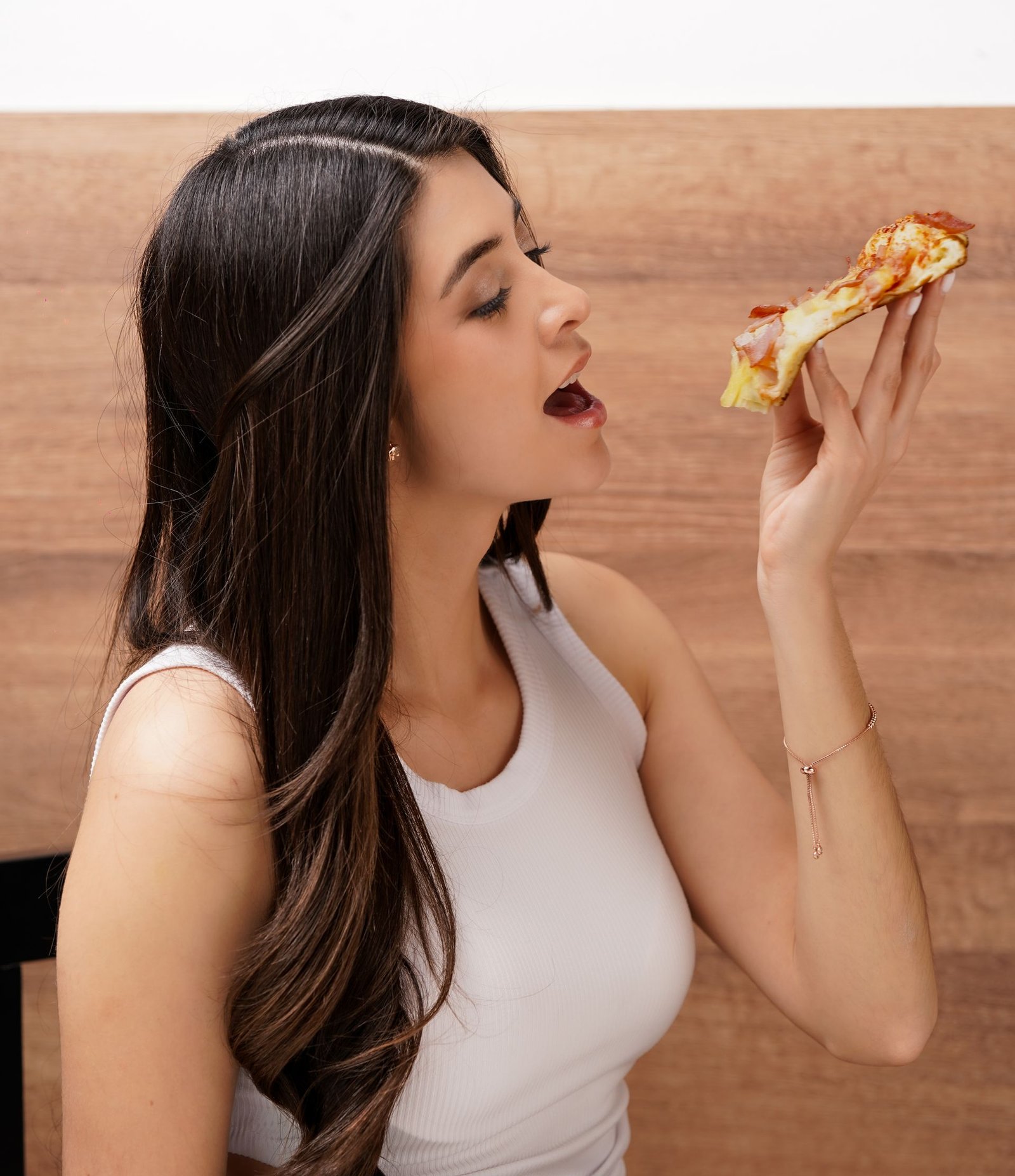
The Fold vs. Fork Decision Tree
Still unsure in the moment? Run through this quick mental checklist:
- Is the center soupy or floppy? → Fork (or fold after cutting).
- Is it a large, thin, structured slice? → Fold lengthwise.
- Is it deep-dish, stuffed, or served in a pan? → Fork, no debate.
- Are you at a formal or business meal? → Default to utensils; you can always relax later.
- Are you at a slice joint with friends? → Hands, fold, enjoy.
- In Italy at a pizzeria? → Order your own, knife and fork, savor it.
When all else fails, the golden rule: watch the locals for thirty seconds. Humans are excellent at mimicry, and matching the room is never the wrong choice.
Frequently Asked Questions
Is it rude to eat pizza with your hands in Italy?
Not rude, exactly — but impractical for a classic Neapolitan pizza, whose soft center will collapse. Italians use a knife and fork because the pizza’s structure demands it, not out of snobbery. Street-style folded pizza (pizza a portafoglio) is absolutely eaten by hand. Match your method to the pizza in front of you.
Should you fold pizza or eat it flat?
Fold a New York-style slice lengthwise — the fold gives it structural rigidity and keeps toppings in place. Eat smaller, sturdier slices flat. There’s no moral dimension; it’s engineering. A slice that holds its shape flat doesn’t need folding.
Is it okay to put ketchup on pizza?
In most of the world, it’s unusual but harmless — your pizza, your condiments. In Brazil and parts of Europe, purists will judge you. At home, do whatever makes you happy. At a traditional pizzeria in Naples, maybe read the room first.
What’s the polite way to take the last slice?
Offer it around first: “Does anyone want the last slice?” If no one claims it within a reasonable pause, it’s yours with a clear conscience. Splitting it is the diplomatic masterstroke. This ritual is observed across cultures — the last slice has universal sacred status.
Is pineapple on pizza actually Italian?
No — Hawaiian pizza was invented in Ontario, Canada, in 1962 by Greek-born restaurateur Sam Panopoulos. It’s rare in Italy and widely disliked by Italian pizza traditionalists, but it’s genuinely beloved in many other countries. Food evolves; that’s normal.
How do you eat deep-dish pizza?
With a knife and fork, always. Chicago deep dish is served in a pan and has the structural profile of a casserole — attempting to pick it up is a mistake you’ll only make once. Even in the most casual Chicago settings, utensils are the norm.
Eat Like a Local, Wherever the Slice Takes You
Pizza etiquette around the world boils down to one principle: respect the pizza in front of you and the people sharing it. Learn the local way, match the room, keep your hands clean and your condiment opinions light, and you’ll never embarrass yourself — in Naples, New York, São Paulo, or Tokyo. And when you’re back home hosting your own crew, remember that the best etiquette of all is making everyone comfortable: label the pizzas, accommodate the dietary needs, and let the fold-versus-fork debate rage on as the friendly argument it was always meant to be. For more pizza culture deep-dives, explore our pizza culture and ordering guides — from the history of pizza to hosting your own pizza party done right.