

Few moments in the kitchen are as deflating as checking on your pizza dough and finding it exactly where you left it — a dense, sullen lump instead of the puffy, airy ball you were promised. If you’re facing pizza dough not rising, the frustration is real, but the situation is almost always fixable, and the cause is almost always one of a short list of usual suspects. Rising is just yeast doing its job: eating sugars, releasing carbon dioxide, and inflating the gluten network like a balloon. When that does not happen, something in the chain broke — and once you identify which link, the fix is usually simple.
Before you panic, give the dough a fair trial. A common beginner mistake is judging the rise too early. At cool room temperature (around 65°F / 18°C), a standard pizza dough needs a full two hours to double, and some doughs need three. If you checked at the one-hour mark and declared it dead, the dough may have been perfectly fine and merely slow. Time is an ingredient in dough-making, and impatience is the most common “cause” of pizza dough not rising. That said, if hours have passed with zero change, something is genuinely wrong — and this guide will help you find it.
Below are the seven real reasons pizza dough refuses to rise, in rough order of likelihood, each with a concrete fix. You will also learn how to test whether your yeast is alive before you waste flour and how to rescue a sluggish dough. Most rising failures trace back to temperature or yeast health, two things entirely within your control once you know what to look for.
🍕 Key Takeaways
- The top two causes of flat dough are dead yeast and water that was too hot (above 130°F / 54°C kills yeast outright).
- Yeast is happiest at 75–85°F (24–29°C); cold kitchens below 65°F (18°C) slow rising dramatically without killing anything.
- Test yeast first: dissolve 1 tsp yeast + 1 tsp sugar in 120 ml (½ cup) warm water — foam within 10 minutes means it is alive.
- Salt in direct contact with yeast can dehydrate and weaken it; always mix salt into the flour first.
- A dough that rose and then collapsed was over-proofed, not under-risen — it needs less time, not more yeast.
- Most sluggish doughs can be rescued with warmth and patience; only truly dead yeast requires starting over.
- Store yeast airtight in the fridge or freezer and check the expiration date — old yeast is the silent killer of rise.
Cause 1: The Yeast Was Dead Before You Started
The single most common reason for pizza dough not rising is also the simplest: the yeast was already dead. Yeast is a living organism, and it dies. Packets expire, jars sit open in warm cupboards for a year, and bulk yeast from the back of the pantry quietly loses viability. Instant dry yeast and active dry yeast both degrade over time, especially once opened and exposed to air and moisture. If your yeast is past its expiration date — or has no date because you cannot remember buying it — treat it as the prime suspect.
The fix is a quick habit that eliminates this cause forever: proof the yeast before you commit flour to it. Dissolve 1 teaspoon of yeast and 1 teaspoon of sugar in 120 ml (½ cup) of warm water at about 100–110°F (38–43°C). Wait ten minutes. If the surface is foamy and the mixture smells bready, the yeast is alive and you can proceed, adding this liquid as part of your recipe’s water. If nothing happens — no foam, no bubbles — the yeast is dead. Throw it out and buy fresh. This test works for active dry yeast and for instant yeast (which technically does not need proofing, but proofing it harms nothing and confirms viability).
For storage going forward: keep yeast in an airtight container in the refrigerator, where it stays potent for months, or in the freezer, where it lasts even longer. Do not store it in the cupboard next to the oven. If you bake rarely, buy small packets rather than big jars; a jar opened once a year is a jar of mostly dead yeast.
Cause 2: The Water Was Too Hot (You Killed the Yeast)
The second most common cause is water temperature. Yeast thrives in warmth but dies in heat: water above 130°F (54°C) kills yeast outright, and water in the 120–130°F (49–54°C) range injures it badly enough that rising slows to a crawl or stops. Many recipes say “warm water” without specifying, and beginners reasonably interpret that as hot tap water — which can run 130°F or hotter. If you mixed your dough with water that felt hot to your wrist, you may have pasteurized your yeast before the dough ever came together.
The target is 100–110°F (38–43°C) for active dry yeast — comfortably warm, like a warm bath, never hot. For instant yeast mixed directly into flour, the water can be slightly warmer, up to about 120°F (49°C), because the flour buffers the heat. An instant-read thermometer takes the guesswork out entirely. Without one, use the wrist test — dribble water on the inside of your wrist. It should feel warm and pleasant, not hot.
If you suspect you killed the yeast with hot water, there is no reviving it — but the flour and other ingredients are fine. Cool the dough down, then knead in fresh yeast proofed in warm water: dissolve 1 teaspoon of instant yeast in 60 ml (¼ cup) of 100°F water, knead it thoroughly into the dough, and proceed with a normal rise, adding about 30 extra minutes since the yeast got a late start.
Cause 3: The Kitchen Is Too Cold
Cold does not kill yeast the way heat does, but it puts it to sleep. Below about 65°F (18°C), yeast activity slows dramatically; in a 60°F (15°C) kitchen, a dough that would double in two hours at 75°F might need four or five. Winter kitchens, drafty counters, and air-conditioned rooms in summer are all classic culprits. The dough is not broken — it is just on a much slower clock than the recipe assumed, and most recipes are written for a 70–75°F (21–24°C) kitchen.
The fix is to create a warm microclimate. The classic trick is the oven-with-the-light-on: place the covered dough in your (turned-off) oven with just the interior light on, which typically holds 75–85°F (24–29°C) — ideal proofing territory. Verify with a thermometer the first time, since some oven lights run hotter than others; above 95°F (35°C) you start pushing into territory that is fine for yeast but can make dough rise too fast and unevenly. Alternatives include the top of the refrigerator (warm air rises off the back), near (not on) a heating vent, or inside a microwave with a mug of hot water alongside for gentle warmth.
Do not try to rush things with serious heat. Setting the bowl on a hot radiator or in an oven that was recently on can push parts of the dough past 130°F and kill the yeast — trading a slow rise for no rise at all. Gentle, even warmth is the goal. And adjust your expectations with the seasons: the same recipe that rises in two hours in August may need three and a half in January. That is normal, not a failure.
Cause 4: Salt Attacked the Yeast Directly
Salt is essential in pizza dough — it controls fermentation, strengthens gluten, and makes the crust taste like something. But salt in direct, concentrated contact with yeast damages it through osmosis, drawing water out of the yeast cells and weakening or killing them. This happens when salt and yeast are dumped together into water and left to sit, or when a big dose of salt lands directly on proofing yeast. The result is sluggish or partial rising: the dough rises a little, then stalls, because a portion of the yeast population was wiped out at the start.
The fix is about order of operations, not about using less salt. Always mix the salt into the flour first, so it is evenly distributed before the yeast ever meets it. If you proof yeast in water, proof it with a pinch of sugar, never with the recipe’s full salt. And use the right amount: for a standard dough with 500 grams (about 4 cups) of flour, 10 grams of fine sea salt (about 2 teaspoons) is the classic 2% baker’s percentage. Much more than that — 3% and above — noticeably slows fermentation even when perfectly distributed, which some recipes do deliberately for long cold ferments but which will frustrate anyone expecting a two-hour rise.
If you suspect salt damage after the fact, the dough is not necessarily ruined. The surviving yeast will still ferment; it will just be slow. Move the dough somewhere warm (75–80°F / 24–27°C) and give it extra time — sometimes double the expected rise time. But the best fix is prevention through proper mixing order, which costs nothing. When you read a dough recipe, check that it keeps salt and yeast separated until the flour brings them together.
Cause 5: Weak Gluten and Pizza Dough Not Rising
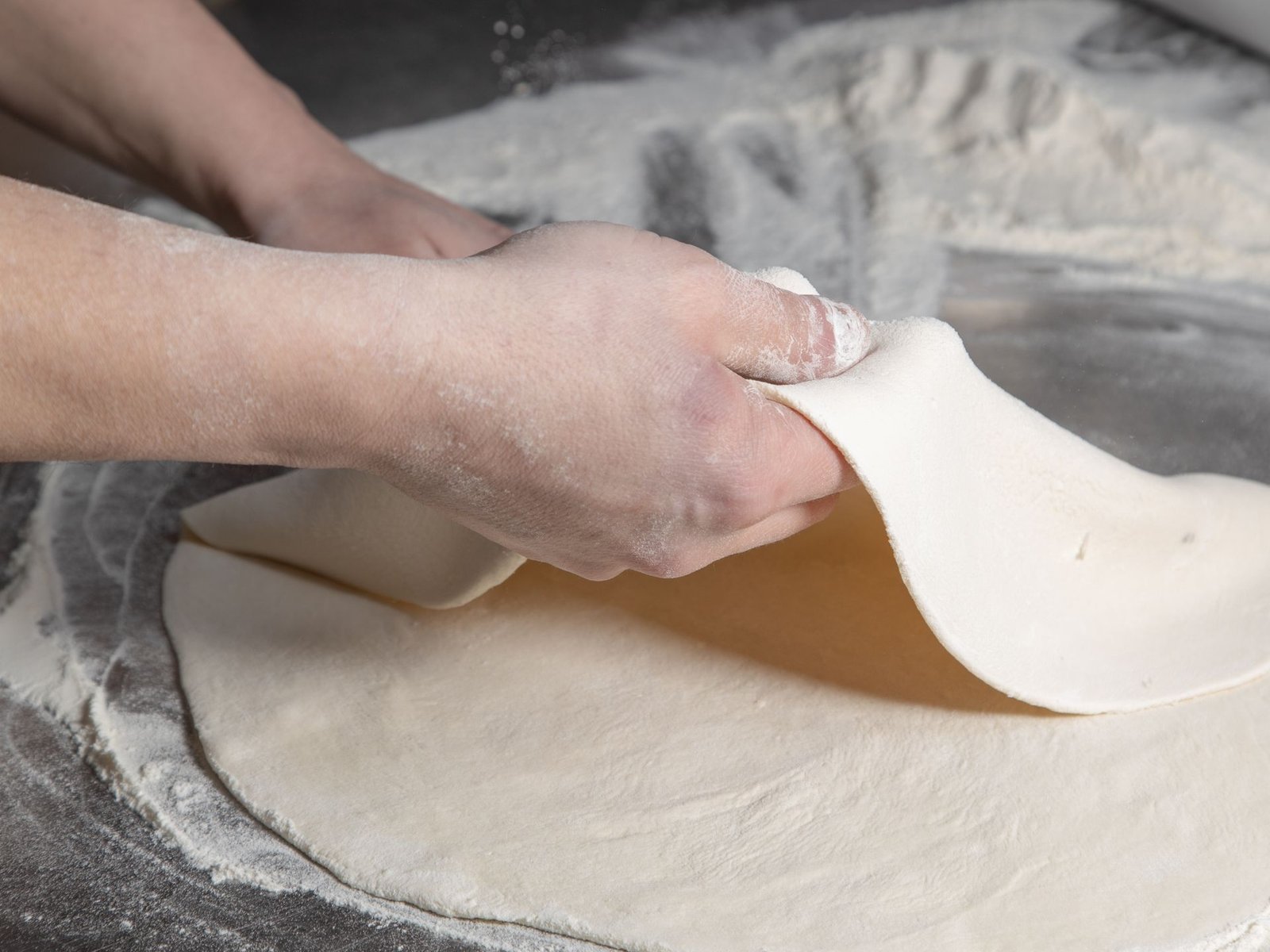
Here is a subtle one: sometimes the yeast is working fine, producing plenty of carbon dioxide, but the dough still does not visibly rise — because the gluten network is too weak to trap the gas. Instead of inflating like a balloon, the dough lets the gas escape, and the result looks exactly like a rising failure. Under-kneaded dough feels shaggy, tears easily, and lacks the smooth, elastic surface of properly developed dough. The windowpane test tells the truth: stretch a small piece thin. If it tears immediately instead of stretching translucent, the gluten needs more work.
The fix is straightforward: knead longer. For a standard 60–65% hydration dough, that means 8–12 minutes by hand or 6–8 minutes in a stand mixer on low-medium speed. The dough should transform from rough and sticky to smooth, supple, and slightly tacky. If you discover the problem after the dough has been resting flat for an hour, you can still rescue it: turn it out, knead 5–8 minutes until smooth, reshape into a ball, and start the rise timer over.
There is a related trap: no-knead recipes that rely on time instead of kneading. These work beautifully — but only if you actually give them the time. A no-knead dough rested for two hours has not developed the gluten it needs; the same dough given 12–18 hours (or a cold ferment) develops it through slow fermentation. Match the method to the timeline: knead if you want pizza tonight, wait if you want the no-knead magic.
Cause 6: Too Little Yeast, or the Wrong Kind for Your Timeline
Yeast quantity and yeast type have to match your schedule. A dough with a tiny amount of yeast — say 1 gram in 500 grams of flour — is designed for a long, slow cold ferment of 24–72 hours; at room temperature it will look dead for hours before it finally starts moving. Conversely, that same dough expected to rise in two hours will disappoint. Many rising “failures” are simply mismatches between the yeast dose and the timeline. Standard same-day pizza dough uses about 7 grams (2¼ teaspoons, one packet) of instant or active dry yeast per 500 grams (4 cups) of flour for a 2-hour room-temperature rise.
Yeast type matters too. Instant yeast is the most vigorous and forgiving — it can be mixed directly into flour and works fast. Active dry yeast needs to be dissolved in warm water first and is slightly slower. Fresh (cake) yeast is potent but perishable. By weight, the conversion is roughly: 1 gram instant ≈ 1.25 grams active dry ≈ 3 grams fresh.
The fix: match the yeast to the plan. For pizza tonight, use the full packet of instant yeast per 500 grams of flour. For tomorrow’s pizza, halve it and refrigerate overnight. For a three-day cold ferment, use a fraction — and do not panic when nothing happens at room temperature in the first hours, because nothing is supposed to happen yet. And if you are converting between yeast types, proof active dry in warm water first, always.
Cause 7: It Rose — Then Collapsed (Over-Proofing in Disguise)
The sneakiest cause on this list: the dough did rise, and then it fell, and you arrived after the collapse to find a flat, possibly wrinkled, sometimes boozy-smelling dough that looks like it never rose at all. Over-proofed dough has exhausted its yeast (the sugars are gone), the gluten network has degraded and can no longer hold gas, and the whole structure deflates. It may smell strongly of alcohol, feel slack and sticky, and tear at the slightest touch. If your dough was beautifully risen at hour three and flat at hour six, this is what happened — and adding more time or warmth will only make it worse.
The fix depends on how far gone it is. Mildly over-proofed dough — risen, then slightly deflated, still smells normal — can often be rescued: gently deflate it, reshape it into a tight ball (which redistributes the remaining sugars and gives the yeast fresh food), and let it rise again for a shorter period, 30–60 minutes, then bake promptly. Severely over-proofed dough — collapsed, sour or strongly alcoholic smell, slack as a wet rag — is not worth saving as pizza dough. Repurpose it: it makes excellent focaccia (dimples hide a multitude of sins), flatbreads, or crackers, where structure matters less.
Prevention is about watching the dough, not the clock. “Doubled in size” is a visual cue, not a timer setting, and warm kitchens can get there in half the recipe’s stated time. Learn the poke test: flour a finger, poke the dough half an inch deep. If the indentation springs back immediately, it needs more time. If it springs back slowly and leaves a slight dent, it is ready. If the dent stays completely, it is over-proofed — bake it now or reshape it.
Rescuing a Sluggish Dough: A Practical Triage
So the dough is flat and you have diagnosed the likely cause. What now? Run this triage in order. First, check the timeline honestly: has it actually had enough time at a warm enough temperature? If not, move it somewhere warm (75–85°F / 24–29°C) and wait another hour before doing anything drastic. Second, proof-test your yeast separately as described above — if the yeast is dead, no amount of waiting helps, and you need the fresh-yeast rescue (knead 1 teaspoon of proofed instant yeast into the dough). Third, consider a gentle re-knead: if the dough feels slack and underdeveloped, 5 minutes of kneading followed by a fresh warm rise fixes both weak gluten and redistributes yeast to fresh sugars.
One rescue trick deserves special mention: the warm water bath. Place your covered bowl of dough in a larger container of warm (about 100°F / 38°C) water. The gentle, even warmth from all sides wakes yeast faster than warm air alone, and many sluggish doughs show visible movement within 30–45 minutes. Refresh the water if it cools. Do not use hot water or microwave the dough — both risk killing the yeast you are trying to save.
Know when to fold. If the yeast proof test shows dead yeast AND the dough has been sitting for many hours developing off flavors, or if the dough is severely over-proofed and smells strongly of alcohol, starting over is faster and yields better pizza than heroic rescues. Flour is cheap; a disappointing pizza night is expensive.
Frequently Asked Questions
How long should pizza dough take to rise?
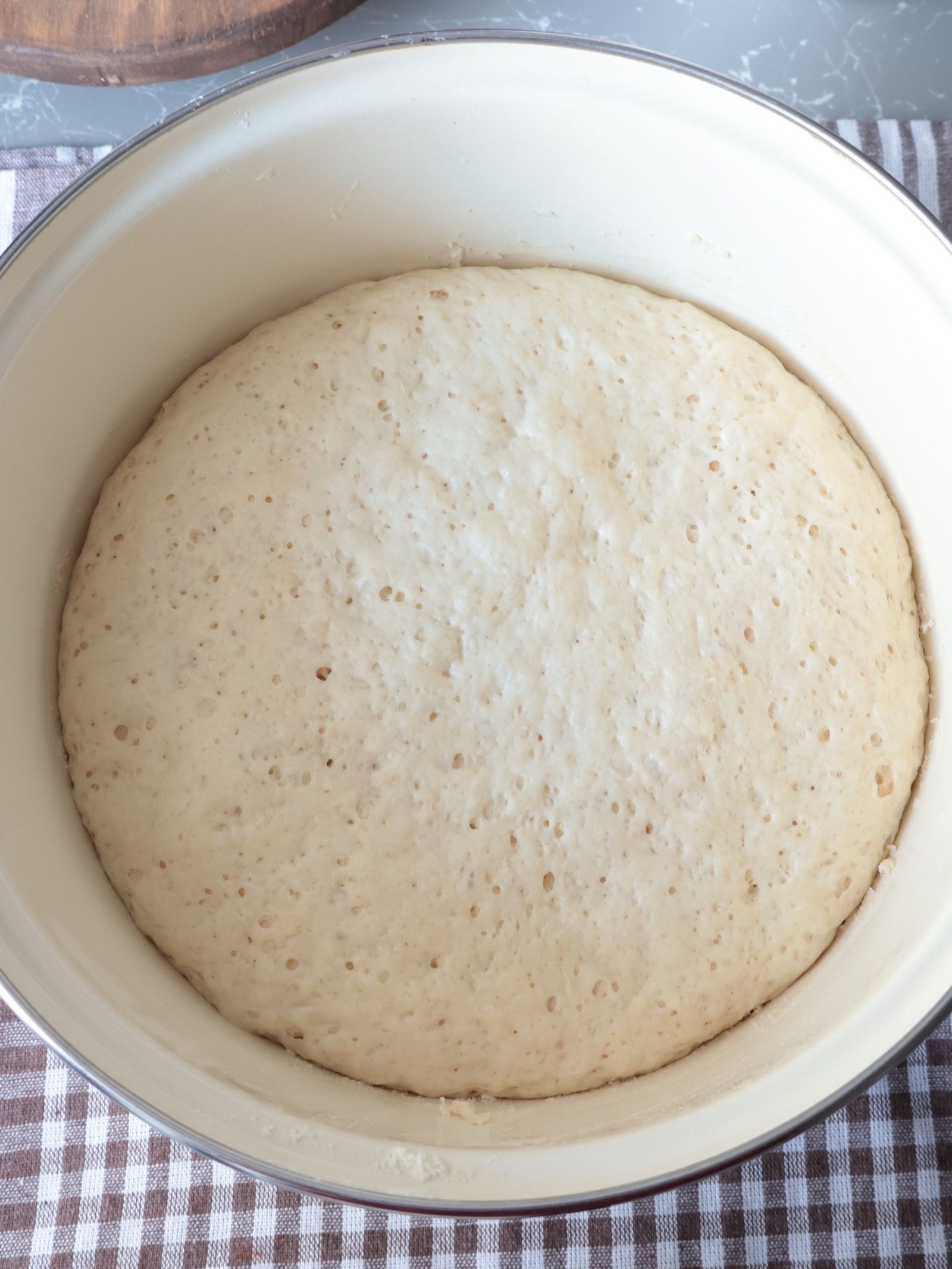
At 70–75°F (21–24°C), a standard same-day dough with a full packet of yeast per 500 grams of flour doubles in about 2 hours. Cooler kitchens (60–65°F / 15–18°C) can need 3–4 hours. Cold-fermented doughs rise barely at all at room temperature by design — they do their rising slowly in the fridge over 24–72 hours. Judge by volume (doubled) and the poke test, not the clock.
Can I still use pizza dough that didn’t rise?
It depends why. If the yeast is alive and the dough is just slow, warm it up and wait — it is perfectly usable. If the yeast is dead, knead in fresh proofed yeast to rescue it. If the dough is severely over-proofed (collapsed, sour smell), repurpose it as focaccia or flatbread instead.
Does pizza dough rise in the fridge?
Very slowly. At refrigerator temperature (38–40°F / 3–4°C), yeast activity drops to a crawl — which is exactly the point of cold fermentation. A dough ball will expand noticeably over 24–72 hours in the fridge, developing flavor all the while. It will not double in a couple of hours like room-temperature dough. Always let cold-fermented dough warm up for 1–2 hours before stretching.
Why did my dough rise once but not the second time?
The second rise (after shaping or punching down) is always faster and smaller than the first — that is normal. If there is no second rise at all, the first rise probably went too long and exhausted the yeast, or the dough got too cold after shaping. Next time, shorten the first rise (bake when the poke test says ready, not later) and keep the shaped dough warm.
Can old flour cause dough not to rise?
Old flour does not stop yeast from working, but very old flour can have weakened gluten, which means the dough cannot trap gas well and rises poorly. Flour stored airtight stays good for many months; flour stored open in a warm place degrades faster. If your flour smells musty or off, replace it — but check yeast and temperature first, since those are far more likely culprits.
Is it safe to eat pizza dough that didn’t rise properly?
Yes — under-risen dough is a texture problem, not a safety problem. It bakes into a dense, cracker-like crust that is perfectly safe to eat. The only exception is dough left at room temperature for a very long time (12+ hours) that smells sour or off; when in doubt about spoilage, discard it. Properly baked pizza, risen or not, reaches temperatures that make it safe.