

St. Louis style pizza is the most polarizing pie in America — and its fiercely loyal hometown fans wouldn’t have it any other way. The crust is a cracker: unleavened, rolled paper-thin, baked until it shatters. The cheese is Provel, a processed blend of cheddar, Swiss, and provolone with a low melting point and a faintly smoky tang that exists almost nowhere outside St. Louis. The sauce leans sweet with oregano, the toppings run edge to edge, and the whole thing is cut into squares, never triangles. Outsiders call it weird. St. Louis calls it home.
If you’ve never had Provel, the first bite is a surprise — gooey, creamy, utterly unlike mozzarella. Combined with a crust that crunches like a flatbread cracker, St. Louis style pizza eats more like a savory pastry than a conventional pizza, and that’s exactly the point — it’s a style with the confidence to be completely itself. This guide covers the history (including the great Provel debate), the defining characteristics, a home recipe with a workable Provel substitute, and how St. Louis style differs from its thin-crust cousins.
🍕 Key Takeaways
- St. Louis style pizza was popularized by Imo’s Pizza, founded in St. Louis in 1964 — though thin, square-cut pizzas predate it in the city.
- The crust is unleavened (no yeast) — flour, water, oil, and baking powder rolled cracker-thin for a crisp, shattering bite with zero chew.
- Provel cheese — a processed blend of cheddar, Swiss, and provolone — melts lower and gooier than mozzarella with a distinctive tangy-smoky flavor.
- Can’t find Provel? Blend equal parts provolone, white cheddar, and a little Swiss, shredded fine — it approximates the melt and flavor.
- The sauce is sweeter and more oregano-forward than most styles; toppings go edge to edge and the pie is always cut into squares.
- Bake hot and fast: 475–500°F (246–260°C) for 8–12 minutes on a pan or pizza screen until the edges brown and the cheese bubbles.
- St. Louis style differs from tavern style in its unleavened crust and Provel cheese; from New York in basically every way.
The History of St. Louis Style Pizza
St. Louis’s pizza story starts earlier than most people think. Italian immigrants were making thin, square-cut pizzas in the city by the 1940s and ’50s — a practical style for taverns, where a thin pie could be baked fast and cut into small squares for sharing over beers. But the style got its identity in 1964, when Ed and Margie Imo opened Imo’s Pizza on Thurman Avenue. The Imos weren’t originally pizza people; they were tile setters. But they hired a chef, developed their recipes, and built what became the defining St. Louis pizzeria — today Imo’s has around 100 locations, nearly all in the St. Louis metro area.
The two signature moves — the unleavened cracker crust and Provel cheese — both have practical roots. An unleavened crust needs no proofing time, so a busy shop can roll, top, and bake a pizza in minutes. Provel, developed for the St. Louis market (originally associated with the Hoffman Dairy Company and later made by Kraft), was a processed cheese designed to melt smoothly and resist the greasy separation that natural cheeses can suffer in hot ovens. It was a commercial solution that became a regional identity. Imo’s leaned into it completely — the chain’s marketing, its frozen pizzas sold in grocery stores across the Midwest, and even its branded Provel blocks all reinforce that this isn’t just a topping choice, it’s a civic emblem.
And what an identity. St. Louis style pizza inspires a devotion that borders on the tribal. Locals who move away have Provel shipped to them. Imo’s sells frozen versions and Provel by the block. Meanwhile, the rest of the country mostly responds with confusion — food writers have called it everything from “an abomination” to “the most underrated pizza in America,” often in the same article. The truth, as with most regional foods, is that it’s engineered for its context: a thin, fast, shareable bar pie that pairs perfectly with cold beer and cut into squares so everyone gets edge pieces.
It’s worth noting the family resemblance to tavern-style pizza, Chicago’s cracker-thin, square-cut bar pie. The two styles share DNA — thin crust, square cut, tavern origins — but diverge on the details that matter: tavern style uses a yeasted crust and mozzarella, while St. Louis goes unleavened with Provel. Think of them as cousins who grew up in neighboring cities and took different paths.
St. Louis Style Pizza: The Defining Characteristics
The crust: a true cracker
This is the most radical thing about St. Louis style pizza: there’s no yeast in the crust. The dough is flour, water, oil (or shortening), salt, and baking powder — essentially a cracker dough — rolled out to about 1/8 inch thick. No rise, no proof, no chew. It bakes up crisp and shattering, more like a flatbread or a giant cheese cracker than any bread-based pizza crust.
Because there’s no fermentation, there’s no yeasty flavor development — the crust is a neutral, crispy delivery vehicle, and that’s intentional. All the flavor comes from the toppings: the tangy Provel, the sweet oregano sauce, the sausage and vegetables. Think of the crust as the crunchy canvas and the toppings as the entire painting. The thinness also means the pizza bakes in minutes and eats light; a whole 12-inch St. Louis pizza has less dough than two slices of a hand-tossed pie. For the opposite end of the spectrum, our thin crust vs thick crust guide breaks down how dough formulas create these extremes.
Provel cheese: the soul of the style
Provel is a processed cheese product blending cheddar, Swiss, and provolone, with a low melting point, a creamy-gooey texture, and a distinctive tangy, faintly smoky flavor. On a pizza, it melts into a smooth, almost sauce-like layer rather than the stretchy pull of mozzarella. Fans describe it as buttery and addictive; detractors find the smokiness odd. There is no neutral opinion on Provel, and that’s fine.
Outside the St. Louis area, real Provel is hard to find — it’s sold online and in some specialty shops, but most home bakers will need a substitute. The best approximation: equal parts shredded provolone, white cheddar, and Swiss, tossed together. The provolone brings the mild base, the cheddar brings sharpness, and the Swiss brings the faint nuttiness. Shred it fine and blend well. It won’t be identical — processed cheese melts differently by design — but it captures the flavor profile convincingly. Our best cheese for pizza guide explains how processed cheeses melt and why they’re chosen for styles like this.
One practical note: Provel (and its substitutes) goes on generously but not thickly. Because the crust is so thin, cheese overload makes the pizza floppy — the opposite of the crisp ideal. A moderate, even layer edge to edge is the target. And shred your substitute blend fine: smaller shreds melt faster and more evenly in the short bake, mimicking Provel’s smooth flow. Coarse shreds can leave unmelted patches while the thin crust overbakes underneath — one of the most common home-baker mistakes with this style.
The sauce: sweet and oregano-forward
St. Louis sauce leans sweeter than the bright, acidic sauces of Naples or New York — a little sugar, plenty of oregano, garlic, and sometimes a pinch of basil. It’s applied thinly; a heavy sauce layer would steam the cracker crust into sogginess. Many recipes call for tomato paste thinned with water rather than crushed tomatoes, which gives a concentrated, almost jammy tomato flavor that suits the style — and the lower water content protects the cracker crust. If you’re scaling up for a crowd, make the sauce a day ahead; like most tomato sauces, it tastes better after the flavors meld overnight. Our homemade pizza sauce recipe can be adapted — just add a teaspoon of sugar and go heavier on the oregano.
Edge-to-edge toppings, square cut
Toppings run all the way to the edge — no puffy cornicione here, just a thin browned rim. Classic St. Louis toppings include Italian sausage, pepperoni, mushrooms, onions, and green peppers, often in combination — and because the crust is so thin, toppings should be sliced thin and used with restraint so every square stays crisp. And the cut is always squares (the “party cut” or “tavern cut”): small, shareable, maximum crispy edge pieces. A round pizza cut into squares feels wrong until you’ve done it at a St. Louis party, and then it feels obvious.
The bake: hot, fast, on a pan
St. Louis pizzas bake on pans or screens at 475–500°F (246–260°C) for just 8–12 minutes. The thin crust needs intense heat to crisp before the cheese overcooks — a balance that a pizza screen handles beautifully, since it lets hot air hit the bottom directly. The pizza is done when the cheese is bubbling and just beginning to brown in spots and the edges are deep golden. Pull it too early and the center stays pale and soft; the whole pie should be crisp enough to hold a square rigid.
St. Louis Style Pizza Recipe for Home Ovens
Makes two 12-inch pizzas. No yeast, no waiting — you can be eating in under an hour.
The cracker crust
- 2 cups (250g) all-purpose flour
- 2 teaspoons baking powder
- 3/4 teaspoon fine sea salt
- 2/3 cup (160ml) water
- 3 tablespoons olive oil or vegetable oil, plus more for the pan
Whisk the flour, baking powder, and salt. Add the water and oil and mix until a dough forms, then knead briefly — just 2–3 minutes until smooth. Unlike yeasted doughs (see how to make pizza dough for the contrast), there’s no gluten development goal here; over-kneading makes crackers tough. Divide in two, cover, and rest 15–20 minutes to relax the gluten — this makes rolling much easier.
The Provel substitute blend
- 4 oz (115g) provolone, shredded fine
- 4 oz (115g) white cheddar, shredded fine
- 2 oz (55g) Swiss, shredded fine
Toss together. If you can get real Provel, use 10–12 oz shredded — but the blend is genuinely good.
The sauce
- 6 oz tomato paste
- 3/4 cup water
- 1 teaspoon sugar
- 1 teaspoon dried oregano
- 1/2 teaspoon garlic powder
- 1/2 teaspoon salt
- 1 tablespoon olive oil
Whisk until smooth. It should be the consistency of a thick pizza sauce — thin enough to spread thinly.
Assembly and bake
- Preheat the oven to 500°F (260°C) with a rack in the middle. Lightly oil two 12-inch pizza pans or screens.
- Roll each dough ball on a floured surface to a 12-inch round, as thin as you can — 1/8 inch or less. Transfer to the pans, pressing gently to fit. Dock the dough all over with a fork (this prevents bubbling).
- Spread a thin layer of sauce edge to edge — about 1/3 cup per pizza. Thin is critical.
- Scatter half the cheese blend evenly over each pizza, edge to edge. Add toppings: crumbled Italian sausage, sliced mushrooms, diced onion — keep them modest and pre-cook raw vegetables slightly so they don’t release water onto the thin crust.
- Bake 8–12 minutes until the cheese bubbles and browns in spots and the edges are deep golden. The bottom should be crisp and browned — lift an edge to check.
- Cool 2 minutes on a rack (not in the pan, which steams the bottom), then cut into squares with a pizza cutter or sharp knife. Serve immediately — cracker crust waits for no one.
Troubleshooting
- Crust too thick/chewy: You didn’t roll thin enough, or you used bread flour. All-purpose flour and a true 1/8-inch roll are essential. If the dough springs back, rest it 10 more minutes.
- Soggy center: Too much sauce, wet toppings, or underbaking. Sauce goes on thin, vegetables get pre-cooked, and the bake goes until the bottom is genuinely browned.
- Cheese separated or greasy: The oven wasn’t hot enough, or the cheese layer was too thick. Provel-style blends need high heat to melt smoothly; a moderate layer melts better than a mountain.
- Bland crust: It needs salt — and don’t skip the oil in the dough. Some St. Louis recipes brush the rolled crust with garlic butter before saucing, which is never a bad idea.
Serving St. Louis Style: The Full Experience
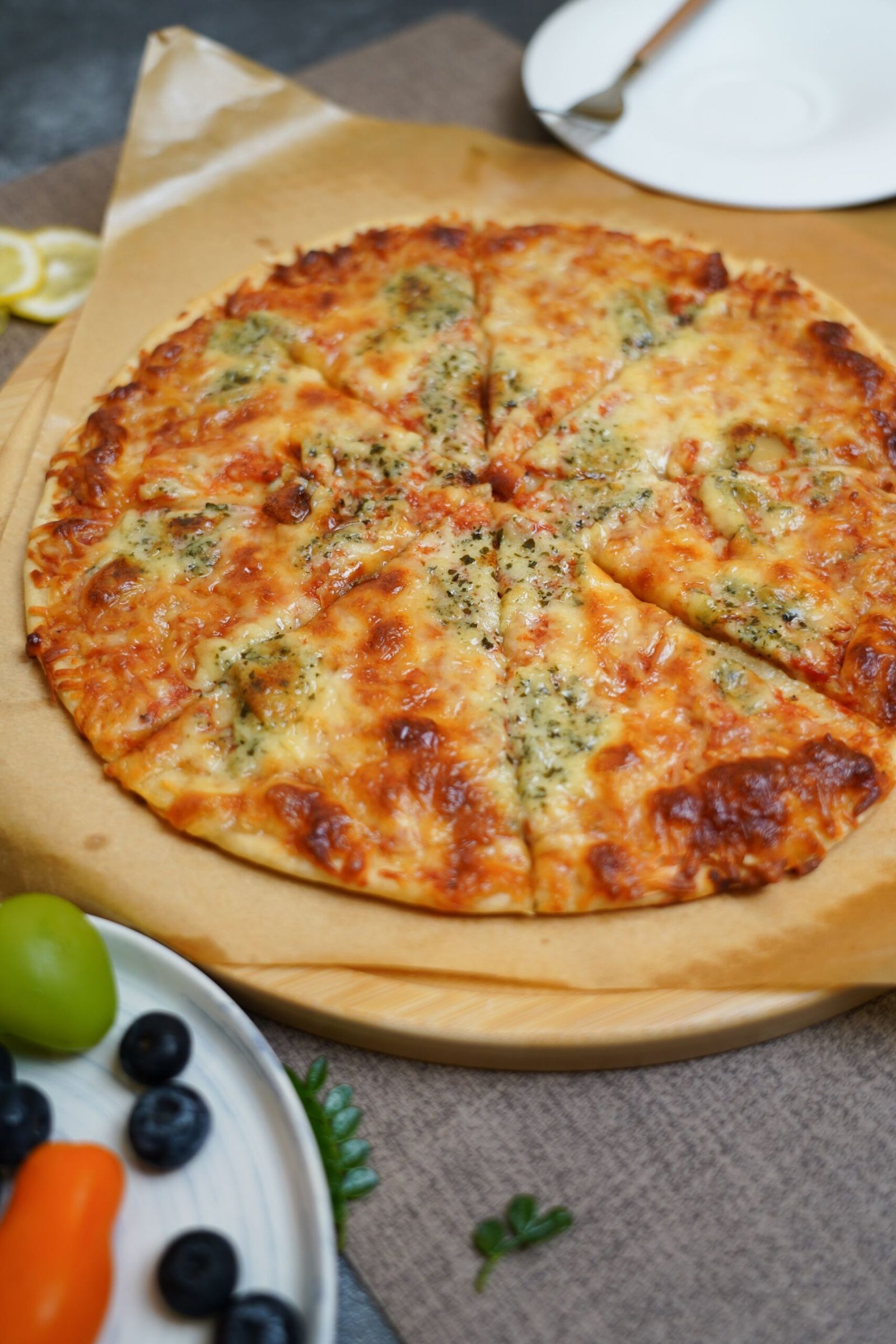
St. Louis style pizza was born in taverns, and it shows in how it’s meant to be eaten: fast, hot, in squares, with something cold to drink. The thin, crisp format makes it the ultimate party pizza — a 12-inch pie yields 12–16 small squares, perfect finger food that doesn’t require plates, forks, or commitment. For a gathering, bake pizzas back-to-back (the dough takes minutes to roll, the bake takes minutes) and keep them coming; our pizza party hosting guide has the quantities math, but the rule of thumb is one 12-inch St. Louis pizza per 2–3 people as a snack, per 1–2 as a meal.
Drink pairing is straightforward: cold lager or pilsner, the tavern classics. The crisp carbonation cuts through the rich Provel beautifully. For wine drinkers, something with acidity — a dry Riesling or an unoaked Italian white — does the same job; our pizza and wine pairing guide has more options by style.
Leftovers keep well for 2–3 days refrigerated, and the cracker crust reheats better than most thin styles: 400°F (204°C) for 5–7 minutes directly on the rack re-crisps the base. The squares also make excellent next-day snacks cold — the Provel firms up into a fudgy layer that’s weirdly good at room temperature, a fact every St. Louisan knows and few will admit to outsiders.
St. Louis Style vs Tavern Style vs New York: Know the Difference
St. Louis style is the outlier: unleavened cracker crust, Provel cheese, sweet oregano sauce, square cut. No chew, no yeast flavor, no mozzarella pull.
Tavern style (Chicago’s bar pizza) looks similar — thin, square-cut — but the crust is yeasted (thin and crispy, but with actual bread character) and the cheese is mozzarella. It’s the more “normal” thin pizza of the two. Our tavern-style pizza guide covers it fully.
New York style is the opposite philosophy: a yeasted, chewy, foldable thin crust with a puffy rim, cut into large triangles. Where St. Louis is a cracker, New York is bread. See our New York style pizza guide.
The quick test: if the crust shatters like a cracker and the cheese tastes faintly smoky and melts like a sauce, it’s St. Louis. If it’s thin and crispy but still bready with mozzarella, it’s tavern style. If it folds, it’s New York.
Frequently Asked Questions
What is Provel cheese?
Provel is a processed cheese blend of cheddar, Swiss, and provolone made for the St. Louis market. It has a low melting point, a creamy-gooey texture, and a distinctive tangy, faintly smoky flavor. It’s the defining ingredient of St. Louis style pizza and is rarely found outside the region.
Where can I buy Provel cheese?
In the St. Louis area, it’s in every grocery store. Elsewhere, it’s available from online retailers and some specialty cheese shops, and Imo’s sells it through their website. If you can’t find it, the provolone-white cheddar-Swiss blend in the recipe above is the standard home substitute.
Why is St. Louis pizza cut into squares?
It’s the tavern tradition: thin bar pizzas were cut into small squares for sharing, so everyone gets a mix of edge and center pieces. The square cut stuck and is now a defining feature — a round St. Louis pizza cut into triangles would look wrong to a local.
Is St. Louis style pizza the same as tavern style?
No, though they’re cousins. Both are thin and square-cut, but tavern style uses a yeasted crust and mozzarella, while St. Louis style uses an unleavened cracker crust and Provel cheese. The eating experience is quite different — bready and cheesy versus crisp and tangy.
Can I make St. Louis style pizza without Provel?
Yes — the provolone, white cheddar, and Swiss blend approximates it well. Some home bakers add a tiny drop of liquid smoke to the blend for the signature smokiness, but use it sparingly; a toothpick-tip’s worth is plenty.
Why is there no yeast in St. Louis pizza crust?
Speed and texture. An unleavened crust needs no proofing, so pizzerias can roll and bake to order in minutes, and it bakes up cracker-crisp rather than chewy. It’s a deliberate choice, not a shortcut — the shattering crust is the point.
Can I use a pizza stone or steel for St. Louis style?
Yes, and it helps — launching the thin crust directly onto a preheated pizza steel or stone gives the crispiest possible bottom. Use a pizza peel dusted with flour or cornmeal, since the unleavened dough is less forgiving than a yeasted one if it sticks. A screen is the easier option and nearly as good.
Conclusion
St. Louis style pizza doesn’t try to be like other pizzas, and that’s why it endures. The cracker-thin unleavened crust, the gooey tang of Provel, the sweet oregano sauce, the edge-to-edge toppings cut into party squares — it’s a complete, self-consistent vision of what pizza can be, engineered for taverns and perfected over 60 years. Make it at home with the Provel-substitute blend, roll the crust genuinely thin, bake it hot until the bottom browns, and cut it into squares. Serve it the tavern way — hot, fast, with cold drinks and no pretension. You may not convert the skeptics, but you’ll understand exactly why St. Louis defends this pizza like family.