

Walk into the cheese section and you’ll find two mozzarellas that look related but behave like different ingredients: the soft white balls floating in water, and the firm blocks in vacuum-sealed plastic. On pizza, fresh vs low-moisture mozzarella is one of the most consequential choices you’ll make — pick wrong and you get a soupy center or a rubbery chew; pick right and the cheese melts into exactly what the style demands, slice after slice.
The confusion is understandable. They’re both called mozzarella. They’re both white. But fresh mozzarella is about 60% water and designed to be eaten soft and milky within days, while low-moisture mozzarella is aged and dried to around 45–50% water specifically so it performs in a hot oven. That 10–15 point moisture gap changes everything: how the cheese melts, how it browns, how long a bake it can survive, which pizza styles each one suits, and even how leftovers reheat the next day. This guide breaks down exactly what each cheese is, compares them head to head, and tells you precisely when to use which — plus the draining and drying techniques that let you use fresh mozzarella successfully.
🍕 Key Takeaways
- Fresh mozzarella is soft, milky, and about 60% water; low-moisture mozzarella is firm, shreddable, and about 45–50% water.
- Use fresh mozzarella for very hot, fast bakes (Neapolitan, 90 seconds) where moisture flashes off before it can sog the crust.
- Use low-moisture mozzarella for everything else — home ovens, longer bakes, loaded pizzas, and meal-prep pizzas.
- Fresh mozzarella must be drained, torn, and patted dry before going on a pizza baked longer than a couple of minutes.
- Low-moisture whole-milk mozzarella gives the best melt and browning; part-skim turns rubbery and pale.
- Never use pre-shredded bagged mozzarella — the anti-caking starch ruins the melt for both types’ applications.
- When in doubt, low-moisture is the safer choice: it works acceptably in every style, while fresh mozzarella fails in long bakes.
What Each Cheese Actually Is
Fresh mozzarella
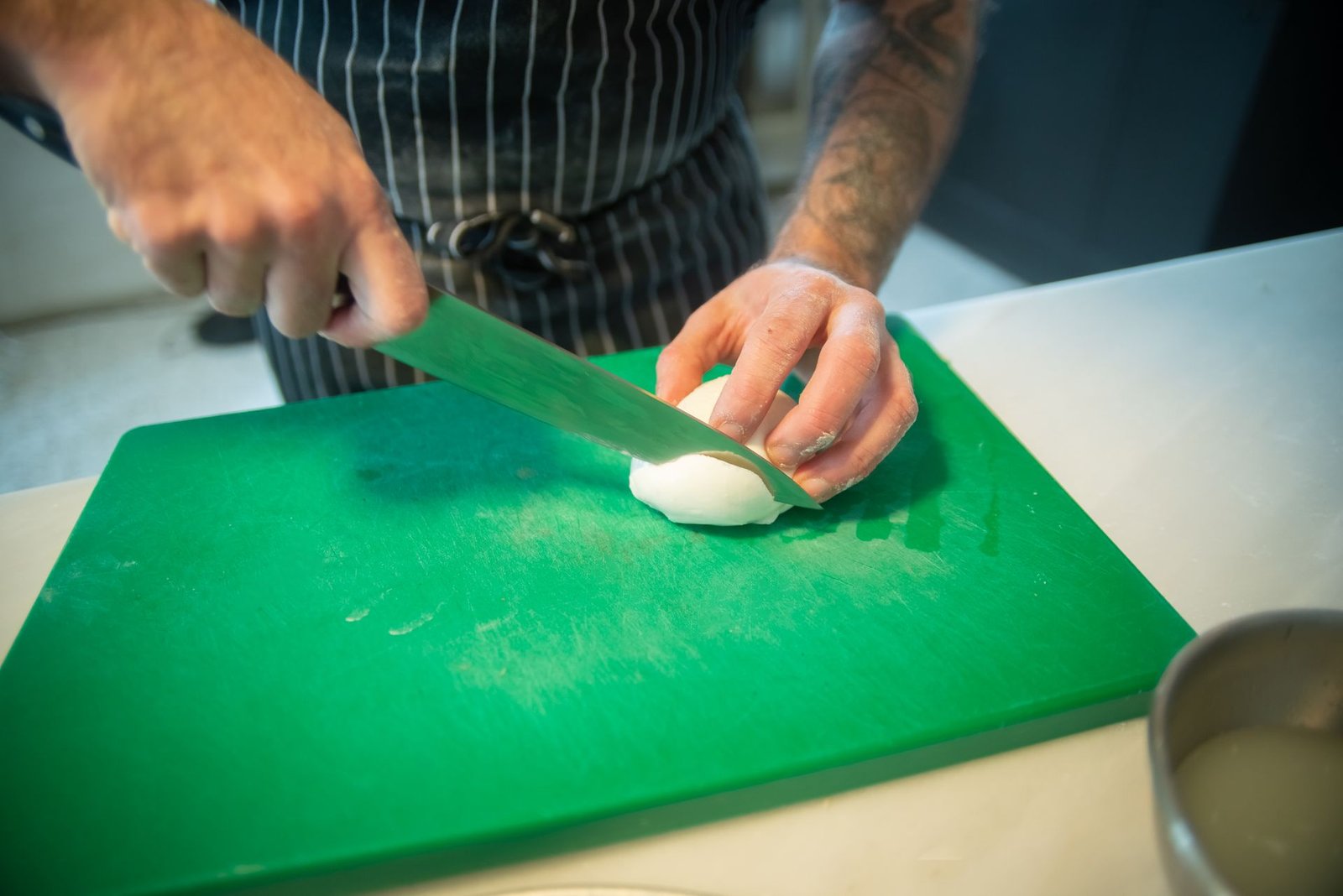
Fresh mozzarella is mozzarella as it was originally made in Campania, Italy: curd stretched in hot water (the pasta filata process), formed into balls, and packed in water or whey to keep it soft. It’s meant to be eaten within days — delicate, milky, with a tender bite and a clean, sweet dairy flavor. The two main types are fior di latte (cow’s milk, the everyday version) and mozzarella di bufala (water buffalo milk, richer and tangier).
Because it’s stored in liquid and never aged, fresh mozzarella is roughly 55–60% water. That water is the whole story: it’s what makes the cheese soft and creamy, and it’s what makes it challenging on pizza. In the cheese case, look for balls in tubs of water or whey, often labeled “fresh mozzarella” or “fior di latte.” It should smell clean and milky; sour or off smells mean it’s past its prime. Check the date — fresh mozzarella is best within a few days of production, and the balls should feel tender and springy, not slimy. For bufala, look for the DOP seal (Mozzarella di Bufala Campana) if you want the real thing.
Low-moisture mozzarella
Low-moisture mozzarella is the same stretched-curd cheese, but after forming it’s aged briefly and dried to drive off water, landing around 45–50% moisture. It’s pressed into firm blocks or logs, vacuum-sealed, and built for one job: performing in a hot oven. The lower water content means it shreds cleanly, melts smoothly without releasing pools of liquid, and browns into those appetizing golden spots.
This is the cheese of American pizzerias — the default “pizza cheese.” When a recipe just says “mozzarella” without specifying, it almost always means low-moisture whole-milk mozzarella in block form. It’s available everywhere, keeps for weeks refrigerated, and costs a fraction of good fresh mozzarella. Our best cheese for pizza guide covers the full landscape beyond these two, including blends and alternatives.
How they’re made differently
Both start as pasta filata — curd heated and stretched until smooth and elastic. The divergence happens after forming: fresh mozzarella goes into brine or water and is sold within days, while low-moisture mozzarella is salted more aggressively, pressed, and aged days to weeks while moisture evaporates. That aging also firms the protein structure, which is why low-moisture mozzarella shreds into clean strands while fresh mozzarella tears into soft lumps. Same origin, different destinies.
Fresh vs Low-Moisture Mozzarella: Head-to-Head Comparison
| Fresh Mozzarella | Low-Moisture Mozzarella | |
|---|---|---|
| Water content | ~55–60% | ~45–50% |
| Texture | Soft, delicate, creamy | Firm, elastic, shreddable |
| Flavor | Milky, sweet, delicate | Mild, clean, slightly salty |
| Melt | Softens into creamy pools; can release water | Flows smoothly into an even layer |
| Browning | Minimal — steams before it browns | Excellent golden leopard-spotting |
| Best bake | 60–90 seconds at 800°F+ | 5–15 minutes at 450–550°F |
| Shelf life | Days (in liquid) | Weeks (vacuum-sealed) |
| Cost | Higher (especially bufala) | Lower |
| Prep needed | Drain, tear, pat dry | Shred from block |
The table tells the story: these cheeses are optimized for opposite ends of the baking spectrum. Fresh mozzarella is a sprinter — brilliant in intense heat for seconds, a liability in a moderate oven for minutes. Low-moisture is the distance runner — steady, reliable, and forgiving across the bakes most home ovens produce.
Melt behavior, explained
When fresh mozzarella hits a 900°F Neapolitan oven, the surface water flashes to steam almost instantly, and the cheese softens into creamy pockets before the crust finishes — about 90 seconds total. The water never gets a chance to pool. But in a 500°F home oven over 7 minutes, that same water releases slowly, pooling on the pizza faster than it can evaporate. Result: the dreaded soupy center.
Low-moisture mozzarella, with less water to release, melts into a cohesive layer in that same 7-minute bake. Its firmer protein structure flows rather than collapsing into puddles, and the lower moisture lets the surface actually brown instead of steaming. This is why pizzerias — which bake at 500–600°F for 5–8 minutes — overwhelmingly choose low-moisture.
Flavor differences
Fresh mozzarella tastes like milk: sweet, delicate, with a clean finish that lingers pleasantly. In a minimalist Margherita, that delicacy is the point — you taste the dairy against the bright tomato and basil. Low-moisture mozzarella tastes milder and slightly saltier, more of a savory background presence. Neither is “better” in absolute terms; they’re different instruments. But on a loaded pepperoni pizza with bold sauce, the subtlety of fresh mozzarella gets buried — while low-moisture’s savory reliability carries the pie. Our pepperoni pizza recipe is built around low-moisture for exactly this reason.
The Science: Why Water Ruins Pizza (and How Heat Fixes It)
To really understand the fresh vs low-moisture decision, it helps to know what happens in the oven. A pizza bake is a race between two processes: the crust setting and browning, and the toppings releasing moisture. If the toppings release water faster than the oven’s heat can evaporate it, the water pools — and pooled water does three bad things at once.
First, it drops the surface temperature. Liquid water can’t exceed 212°F (100°C), so a puddle of mozzarella water literally cools the pizza surface, stalling the browning reactions that need much higher heat. That’s why wet-cheese pizzas look pale as well as soggy. Second, water migrates downward into the crust, where it turns the crumb gummy — the dreaded soggy middle that no amount of extra baking fully fixes, because by the time the water evaporates the cheese is overcooked. Third, pooled water dilutes flavor: the bright tomato sauce and savory cheese all taste washed out.
High heat fixes this by evaporating water faster than it releases. In a 900°F oven, the water flashing off fresh mozzarella becomes steam in seconds — it never pools, never cools the surface, never reaches the crust. The 90-second bake is over before water becomes a problem. In a 500°F home oven, evaporation is slower, so the cheese’s starting water content matters enormously — and that’s exactly why low-moisture mozzarella, with 10–15% less water to begin with, wins in home ovens.
This same physics explains several other pizza rules you’ll see across our guides: why vegetable toppings need pre-cooking (they’re mostly water), why sauce should be thick rather than thin, and why a blazing preheat matters so much. Water management is the hidden master skill of pizza making, and cheese choice is its biggest lever — bigger than the oven, bigger than the flour.
When to Use Fresh Mozzarella
Fresh mozzarella earns its place in specific situations. Use it when:
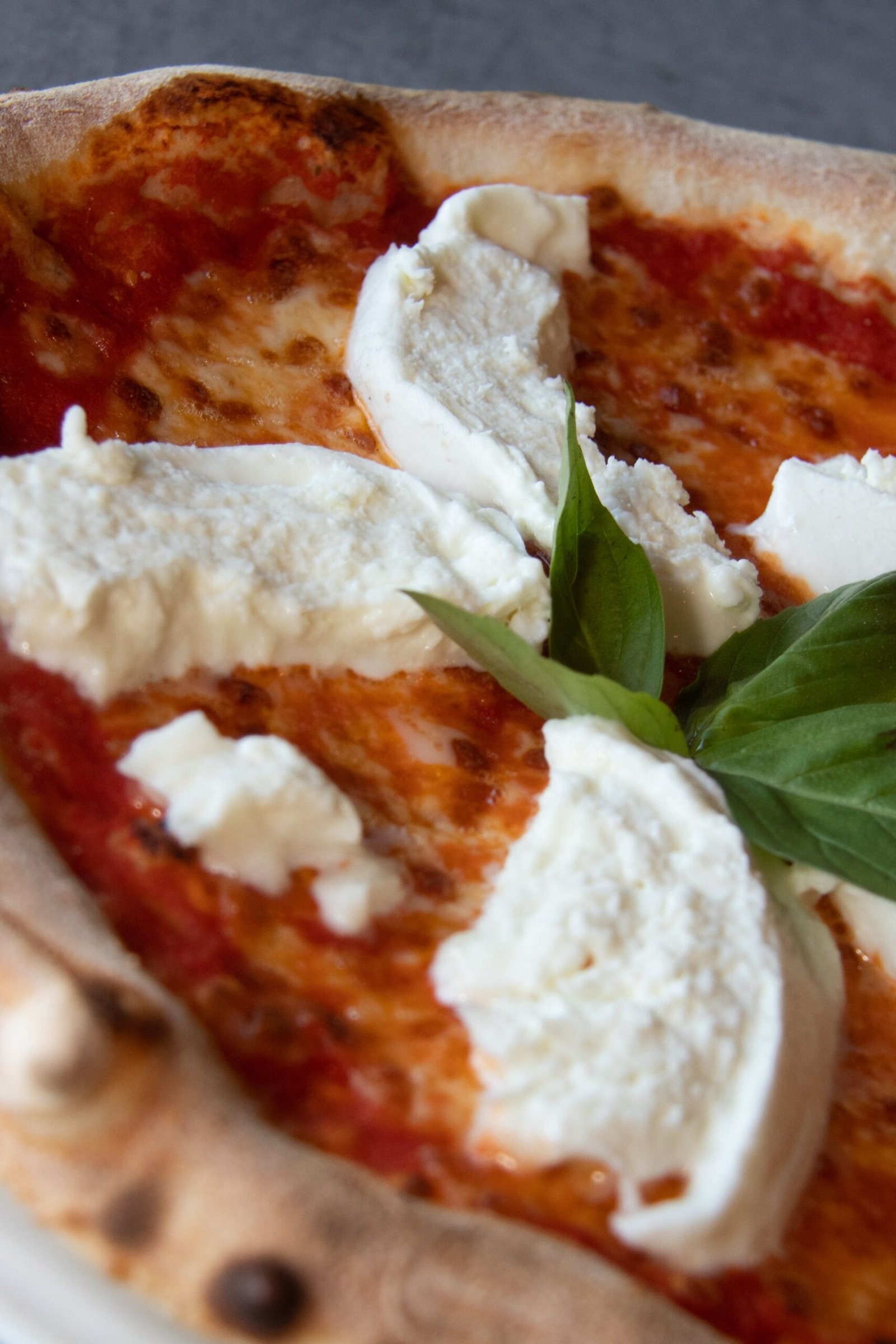
You’re baking Neapolitan-style — very hot, very fast. In a pizza oven at 800°F+ with a 60–90 second bake, fresh mozzarella is traditional and unbeatable. The moisture flashes off, the cheese softens into creamy pools, and the delicate flavor shines. Our Neapolitan pizza guide covers the full method.
You’re making a classic Margherita. Even in a home oven, a Margherita wants fresh mozzarella for authenticity — but you must prep it properly (drained, torn, patted dry, used sparingly) and accept a slightly wetter result than a pizzeria wood oven would give. See our Margherita pizza recipe for the technique.
You’re adding cheese after baking. Torn fresh mozzarella (or burrata) scattered over a just-baked pizza melts gently in the residual heat without ever releasing its water into the crust — the heat is enough to soften it but not enough to break it. This is the safest way to enjoy fresh mozzarella on any style — try it on a simple tomato pie or a white pizza.
The pizza is minimalist. Fresh mozzarella’s delicate flavor gets lost under heavy toppings. It belongs on pizzas with three or four ingredients where the dairy can star: tomato, basil, olive oil, maybe prosciutto added after.
The golden rule: fresh mozzarella works when the bake is short enough or the application gentle enough that its water never becomes a problem. If you’re unsure, default to low-moisture — it’s the forgiving choice, and on most pizzas nobody will miss what isn’t there.
When to Use Low-Moisture Mozzarella
Low-moisture mozzarella is the right answer for the vast majority of home pizza:
Standard home-oven bakes (5–15 minutes at 450–550°F). This is where low-moisture dominates — New York style, pan pizzas, sheet-pan pizzas, stuffed crust, and everything in between. The moisture level is calibrated for exactly these conditions.
Loaded pizzas. Pepperoni, sausage, vegetables, multiple toppings — low-moisture’s lower water content means the cheese layer doesn’t add to the moisture load that toppings already bring. On a veggie supreme, where the toppings release significant water, low-moisture cheese is essential.
Long-baked styles. Chicago deep dish (35–45 minutes) and Detroit style (12–15 minutes of intense heat) both demand low-moisture — fresh mozzarella would be a watery disaster in either.
Meal prep and reheating. Low-moisture mozzarella reheats beautifully — it re-melts smoothly and the crust re-crisps around it. Fresh mozzarella, once baked and cooled, turns rubbery and weeps when reheated. If you’re making pizza for leftovers or a next-day lunch, low-moisture is the clear choice. (See how to reheat pizza for methods.)
When budget matters. Good fresh mozzarella costs two to four times as much as block low-moisture, and the difference is wasted on a loaded weeknight pizza. Save the fresh stuff for occasions where you’ll taste it.
How to Prep Fresh Mozzarella for Pizza (The Right Way)
Most fresh-mozzarella pizza failures are prep failures. Here’s the method that works:
- Drain thoroughly. Remove the mozzarella from its liquid at least 30 minutes before using — an hour is better. Set the balls on a wire rack over a plate so liquid drains away freely.
- Tear, don’t slice. Tear the balls into rough 1-inch chunks by hand. Torn pieces have irregular surfaces that release moisture more readily than clean slices.
- Pat dry. Press the torn pieces gently between clean kitchen towels or paper towels. You’ll be surprised how much liquid comes out. For very wet mozzarella, salt the pieces lightly and rest 15 minutes — salt draws out water — then pat dry again.
- Use less than you think. 4–6 oz of fresh mozzarella is plenty for a 12-inch pizza. More cheese means more water, and fresh mozzarella’s flavor is concentrated enough that a little goes far.
- Consider a two-stage add. For home-oven Margheritas, some pizzaiolos bake the sauced pizza for 3–4 minutes first, then add the fresh mozzarella for the final 2–3 minutes. Less time in the oven means less water released.
Even with perfect prep, fresh mozzarella in a home oven won’t match a wood-fired result — the physics of a 7-minute bake at 500°F can’t replicate 90 seconds at 900°F. But proper draining gets you 80% of the way there, which is a very good pizza.
What the Difference Actually Tastes Like
Descriptions only go so far — here’s the sensory difference, so you know what you’re choosing. A pizza made with well-prepped fresh mozzarella eats creamy: the cheese forms soft, milky pockets that ooze gently when you bite, with a sweet dairy flavor that stands apart from the sauce. The overall impression is fresh and delicate — the pizza tastes bright, light, alive. This is the Margherita experience, and it’s wonderful when everything is balanced.
A pizza made with low-moisture whole-milk mozzarella eats savory: the cheese forms a cohesive, lightly browned layer with a satisfying chew and gentle stretch, its flavor melding with the sauce and toppings into a unified, deeply comforting whole rather than standing apart. The overall impression is rich and comforting — the classic pizzeria slice. Neither is objectively better; they’re different pleasures. But notice how each suits its context: delicacy for minimal pizzas, savory cohesion for loaded ones. Once you’ve tasted both side by side, you’ll never confuse them again — and you’ll reach for each with confidence.
Frequently Asked Questions
Can I use fresh mozzarella on a regular home-oven pizza?
Yes, with proper prep: drain it for at least 30 minutes, tear it into chunks, pat it dry, and use it sparingly (4–6 oz per 12-inch pizza). Expect a slightly wetter, creamier result than low-moisture — delicious, but different. For a foolproof weeknight pizza, low-moisture is the safer pick.
Why is my pizza watery in the middle?
The most common cause is wet cheese — usually fresh mozzarella used without draining, or too much cheese overall. Other culprits include watery sauce and raw vegetables releasing liquid. Fix the cheese first: switch to low-moisture or drain your fresh mozzarella properly, and keep total cheese to 6–8 oz per 12-inch pizza.
Is buffalo mozzarella better than fior di latte for pizza?
Buffalo mozzarella (mozzarella di bufala) is richer and tangier, and it’s traditional on Neapolitan pizza — but it’s also wetter and much more expensive. For most home pizzas, fior di latte (cow’s milk fresh mozzarella) is the smarter choice: similar delicate character, easier to handle, half the price. Save bufala for special-occasion Margheritas and add it after baking.
Can I mix fresh and low-moisture mozzarella?
Absolutely — it’s a great technique. Use shredded low-moisture as the base layer for structure and browning, then add torn, drained fresh mozzarella in the last 2–3 minutes of baking (or after) for creamy pockets. You get the best of both: reliable melt plus fresh-milk flavor.
How do I store fresh mozzarella?
Keep it in its liquid in the refrigerator and use within a few days of opening — 5–7 days max for good quality. If the liquid turns cloudy or the cheese smells sour, discard it. Don’t freeze fresh mozzarella; thawing destroys its delicate texture. Low-moisture blocks, by contrast, keep for weeks refrigerated and freeze well shredded.
What’s the white liquid in fresh mozzarella packaging?
It’s water or light whey brine — it keeps the cheese soft and fresh. It’s normal and harmless; just drain it off before using the cheese. Some producers add a little salt to the brine for flavor and preservation.
Does low-moisture mozzarella taste worse than fresh?
Not worse — different. Low-moisture mozzarella has a milder, saltier, more savory flavor because aging concentrates the solids, while fresh mozzarella tastes sweeter and more delicate. On a loaded pizza with bold toppings, you’d never miss the fresh version; on a minimalist Margherita, the difference is noticeable. Match the cheese to the pizza’s ambition.
Why do pizzerias use low-moisture mozzarella instead of fresh?
Three reasons: consistency, cost, and bake compatibility. Low-moisture melts the same way every time, costs far less, keeps for weeks, and suits the 5–8 minute bakes of commercial deck ovens. Fresh mozzarella’s short shelf life and finicky moisture make it impractical at volume — except in Neapolitan pizzerias with wood ovens hot enough to handle it.
Conclusion
Fresh vs low-moisture mozzarella isn’t a contest with one winner — it’s a choice dictated by your oven and your pizza. Use it when the bake is Neapolitan-hot and Neapolitan-fast, and the fresh mozzarella — torn, drained, barely tamed — is transcendent. Baking in a home oven for 7 minutes, loading up the toppings, or feeding a hungry crowd on a busy weeknight? Low-moisture whole-milk mozzarella, shredded fresh from the block, is the reliable champion that never lets you down. Learn to drain fresh mozzarella properly, keep both in your repertoire, and match the cheese to the bake. Buy the low-moisture in blocks and shred it fresh — never the bagged shreds — and splurge on good fresh mozzarella only when the pizza is simple enough to show it off. Get this one decision right and the rest of the pizza gets easier — because the cheese is doing exactly what that style needs it to do.
[…] it on paper towels for at least 30 minutes — ideally an hour — before baking. Our breakdown of fresh vs low-moisture mozzarella covers the trade-offs in […]