

This Greek pizza recipe brings the bright, briny flavors of the Mediterranean to your pizza night: a crisp, golden crust topped with tangy tomato sauce, a blend of mozzarella and salty feta, Kalamata olives, sweet red onion, bell peppers, and juicy tomatoes — finished after baking with fresh herbs, a drizzle of good olive oil, and an optional cooling swipe of tzatziki. It’s lighter and fresher-tasting than most loaded pizzas, but every bit as satisfying.
Greek pizza occupies a fun middle ground. In American pizzerias, “Greek pizza” usually means a thicker, chewy crust baked in an oiled pan with a blend of mozzarella and cheddar, topped with the classic Mediterranean vegetable lineup. This homemade version borrows the best of that tradition — the pan-baked, golden-bottomed crust — while leaning into genuinely Greek flavors: real feta (not the pre-crumbled dry kind), Kalamata olives, dried oregano, and plenty of olive oil. If you love our veggie supreme pizza, this is its Mediterranean cousin — same vegetable-forward spirit, different passport.
A few things to know before you start: this pizza is vegetarian, endlessly customizable, and comes together in about an hour with store-bought or homemade dough. The key technique is managing the vegetables’ moisture so the crust stays crisp, and adding the freshest toppings after the bake so they taste alive instead of tired. Let’s build it.
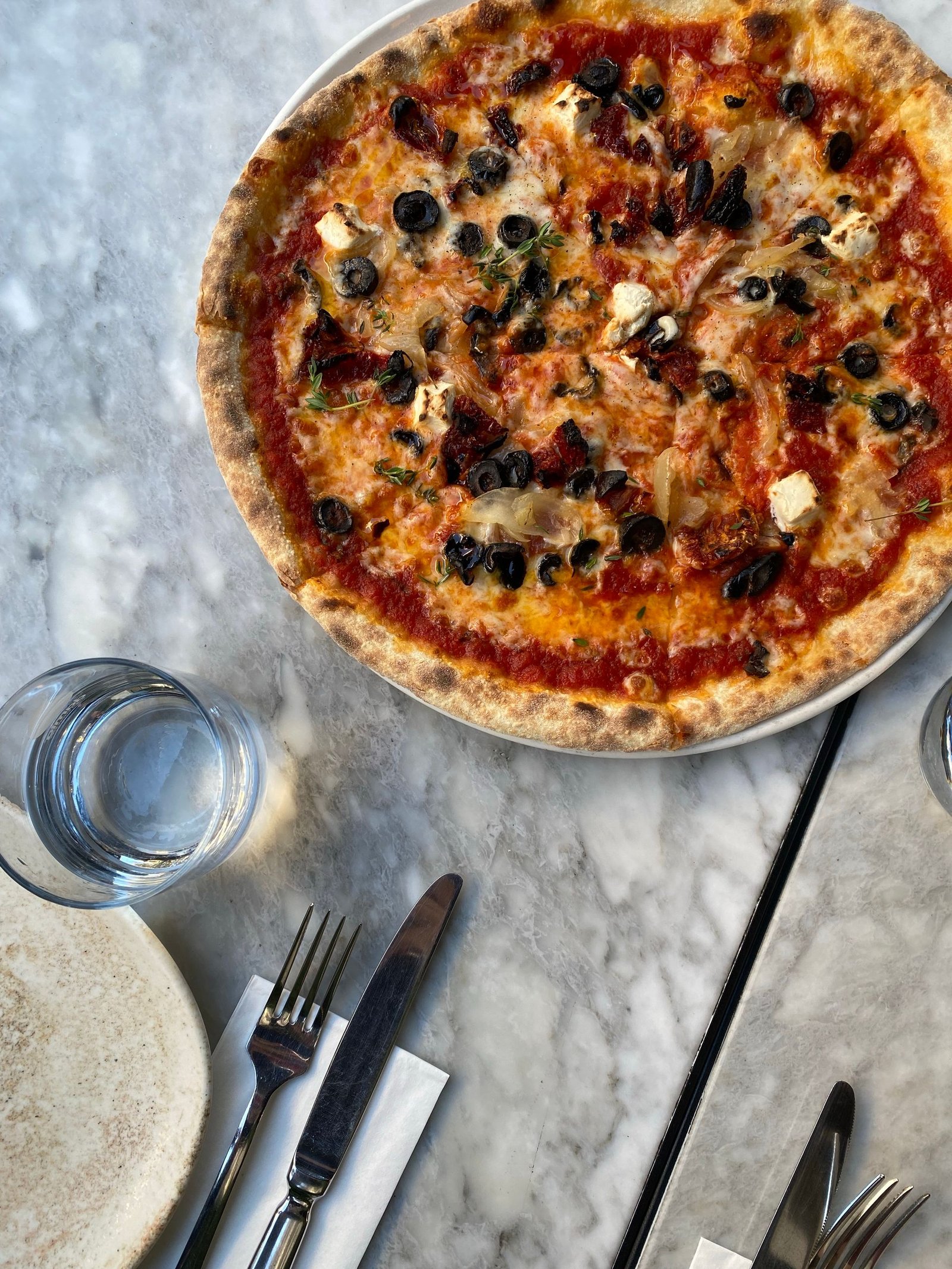
🍕 Key Takeaways
- This Greek pizza recipe layers feta, Kalamata olives, red onion, peppers, and tomatoes over a crisp pan-baked crust.
- Use block feta in brine — it’s creamier and tangier than pre-crumbled feta, and it won’t dry out in the oven.
- Salt watery vegetables (tomatoes, cucumbers) and drain them first to protect the crust from sogginess.
- Add delicate fresh toppings — herbs, cucumber, tzatziki — after baking so they stay bright and fresh.
- Bake at 475°F on a preheated surface or in an oiled cast-iron pan for a golden, fried-bottom crust.
- Leftovers keep 3–4 days refrigerated; reheat in a hot skillet or oven until steaming hot throughout.
- Easy variations: add chicken or gyro meat, go spicy with pepperoncini, or make it fully vegan with plant-based feta.
What Is Greek Pizza, Exactly?
If you order a Greek pizza at an American pizzeria, you’ll typically get a medium-thick crust baked in a well-oiled pan — chewy inside, crisp and almost fried on the bottom — topped with tomato sauce, a mozzarella-cheddar or mozzarella-provolone blend, and the signature lineup: feta, black or Kalamata olives, red onion, green bell pepper, and tomato, often with a heavy hand of dried oregano. It’s a distinct regional American style, not something you’d find in Athens — but it’s delicious, and it has a loyal following.
This recipe honors that tradition while upgrading it. We keep the pan-baked, golden-bottomed crust (it’s genuinely the best vehicle for these toppings), but we use better ingredients: real feta in brine, Kalamata olives instead of canned black olives, fresh oregano alongside the dried, and good olive oil as a finishing move. The result tastes like the Greek pizza you love from the pizzeria, if the pizzeria shopped at a Mediterranean market.
One more distinction worth making: this is different from a flatbread with “Greek salad on top,” though we’ll borrow that idea for the finish. The base pizza bakes with its sturdy toppings (onion, peppers, olives, feta), and the delicate fresh elements — cucumber, fresh tomato, herbs, tzatziki drizzle — go on after. That two-stage approach is what makes this Greek pizza recipe taste vibrant rather than merely cooked.
Ingredients for Greek Pizza
For one 12-inch pan pizza (serves 3–4):
Dough and pan
– 1 ball pizza dough (12–14 oz / 340–400 g) — a classic pizza dough works; the pan method is forgiving of wetter doughs too
– 2 tablespoons olive oil, for the pan (plus more for drizzling)
A slightly wetter dough actually suits the pan method — it spreads easily under your fingertips and the oil keeps it from sticking. If you’re making dough from scratch, aim for the higher end of your recipe’s hydration range. Cold-fermented dough adds wonderful flavor here; our cold ferment guide walks through the overnight method if you want to plan ahead.
Sauce
– 1/2 cup crushed tomatoes or a simple homemade pizza sauce
– 1 clove garlic, grated
– 1/2 teaspoon dried oregano
– Salt and black pepper to taste
Cheese
– 1 1/2 cups low-moisture mozzarella, shredded (6 oz) — see our fresh vs. low-moisture mozzarella guide for why the firm kind wins here
– 4 oz feta cheese in brine, crumbled into chunks (not the dry pre-crumbled kind)
– 2 tablespoons grated Parmesan (optional, for extra savory depth)
Baked toppings
– 1/2 red onion, thinly sliced
– 1 bell pepper (green for classic, or red/yellow for sweetness), sliced into strips
– 1/2 cup Kalamata olives, halved
– 1 cup cherry tomatoes, halved — or 2 Roma tomatoes, sliced and salted/drained (see below)
– 1 teaspoon dried oregano, for sprinkling
Fresh finish (after baking)
– 1/2 English cucumber, diced
– Handful of fresh parsley or dill, chopped (or fresh oregano leaves)
– 2 tablespoons extra-virgin olive oil, for drizzling
– Lemon wedges, for serving
– 1/3 cup tzatziki, for drizzling or dolloping (optional but excellent)
Why Feta in Brine Matters
Feta sold in brine — floating in salty liquid in a tub or vacuum pack — is a different product from the dry, pre-crumbled feta in bags. Brined feta is creamier, tangier, and moister; it softens in the oven into luscious pockets instead of drying into salty pebbles. Crumble it yourself into rough 1/2-inch chunks. Those uneven chunks are the goal: some pieces melt into the cheese, others stay distinct and briny. Our best cheese for pizza guide covers feta’s role in detail, but the short version is: buy the block in brine, crumble it yourself, thank yourself later.
Taming Watery Vegetables
Tomatoes and cucumbers are mostly water, and water is the enemy of a crisp crust. For sliced fresh tomatoes: salt them lightly, let them sit in a colander for 15–20 minutes, then pat dry. You’ll be amazed how much liquid drains off. Cherry tomatoes, halved and placed cut-side up, need less fuss — their small size means less water per piece. Cucumbers go on after baking, so they never threaten the crust at all. This moisture discipline is the same principle behind our guide to preventing soggy pizza — with vegetable-heavy pizzas, prep is everything.
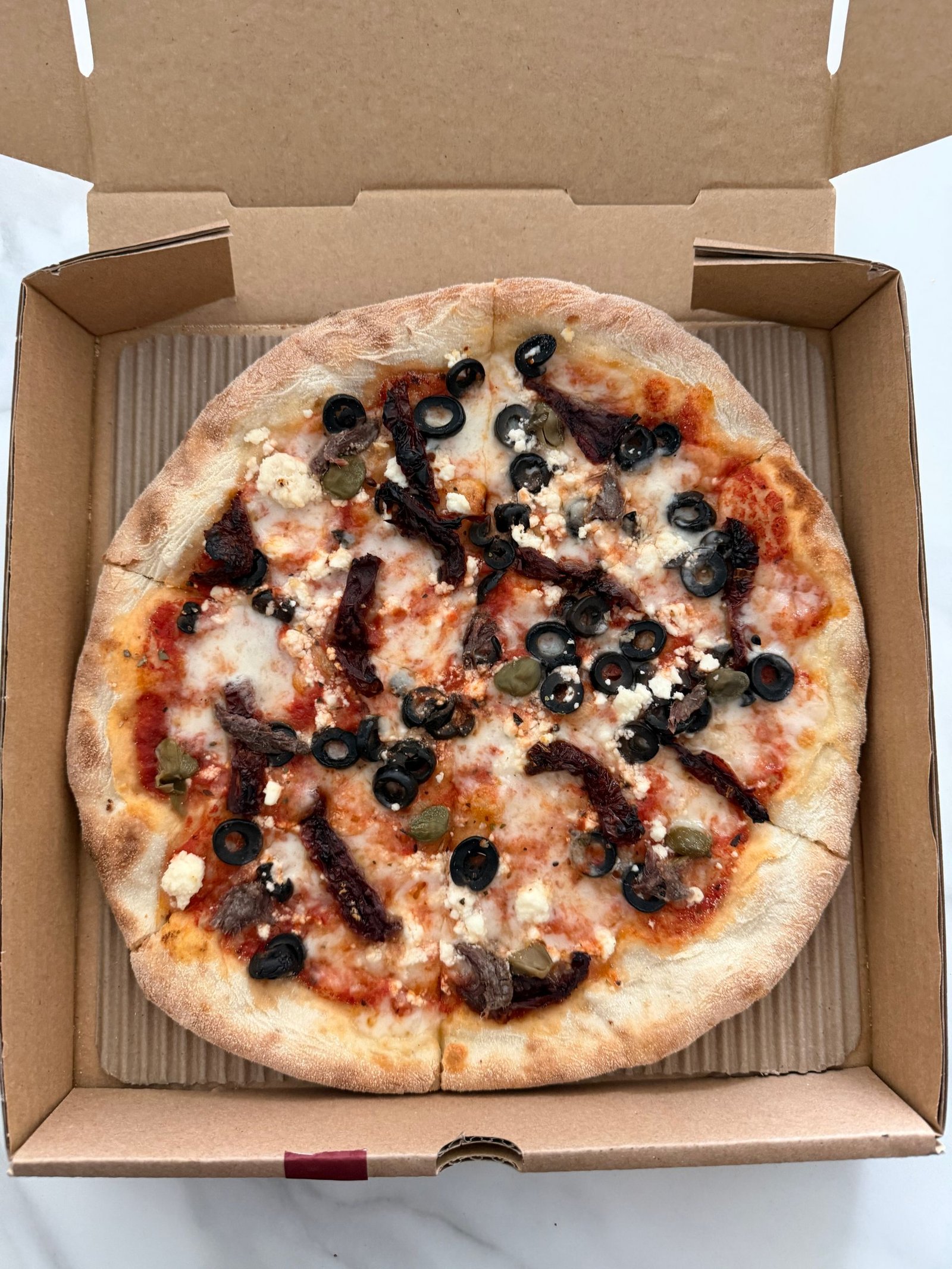
How to Make Greek Pizza: Step by Step
Step 1: Preheat and oil the pan
Place a 12-inch cast-iron skillet or round cake pan in the oven and preheat to 475°F (230°C) for 30 minutes. Alternatively, preheat a pizza steel or stone for 45 minutes and bake the pizza directly on it — you’ll get a crisper bottom on the steel, a chewier fried-bottom crust in the oiled pan. Both are authentic to the style; the pan version is more forgiving for beginners.
Step 2: Prep the toppings
While the oven heats, do all your vegetable prep. Slice the onion and pepper, halve the olives and cherry tomatoes (salting and draining any sliced fresh tomatoes), crumble the feta, shred the mozzarella, and stir together the sauce ingredients. Dice the cucumber and chop the herbs for the finish, and keep them refrigerated until serving. Having everything ready before the dough is stretched keeps assembly fast — and fast assembly means the dough doesn’t over-proof or stick.
Step 3: Shape the dough in the pan
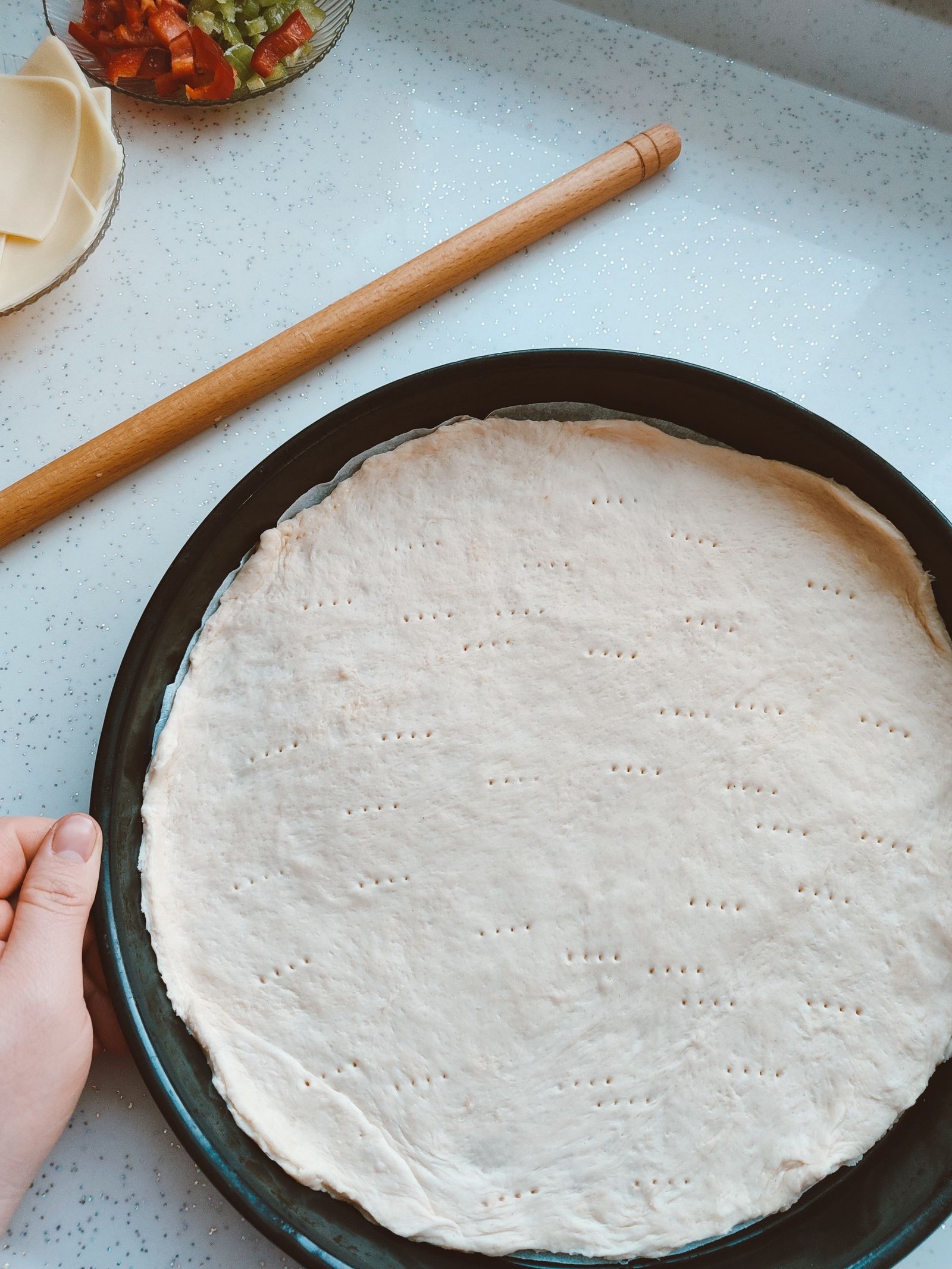
Carefully remove the hot pan (it will be very hot — use oven mitts). Add the 2 tablespoons of olive oil and swirl to coat. Place the room-temperature dough ball in the center and press it outward with your fingertips, dimpling as you go, until it covers the bottom and climbs slightly up the sides. If the dough resists, let it rest 5 minutes and continue. The oil under the dough is what creates that signature golden, almost-fried bottom crust — don’t skimp.
If you’re baking on a steel instead: stretch the dough to a 12-inch round on a floured surface, transfer to a semolina-dusted peel, and do the shake test to confirm it slides. Brush the rim with olive oil.
Step 4: Sauce and cheese
Spread the sauce evenly over the dough, leaving a 3/4-inch border. Scatter the mozzarella over the sauce, then distribute the feta chunks. The mozzarella goes down first because it melts into a cohesive layer; the feta sits on top so its chunks stay distinct and get lightly golden at the edges. Sprinkle with the dried oregano.
Step 5: Add the baked toppings
Distribute the red onion, bell pepper strips, olive halves, and tomatoes evenly. Don’t pile — a single, even layer bakes better than clusters. The vegetables will shrink and concentrate as they roast, so what looks like a lot now will be just right after baking.
Step 6: Bake
Bake for 14–18 minutes in the pan (12–14 on a steel), until the crust is deeply golden, the cheese is bubbly with browned spots, and the vegetables are roasted at the edges. In a cast-iron pan, you can check the bottom by lifting an edge with a spatula — it should be golden-brown and crisp. If the top needs more color, finish under the broiler for 60–90 seconds, watching closely.
Step 7: Finish fresh
This step makes the pizza. Let it rest 2–3 minutes, then scatter the diced cucumber and fresh herbs over the top. Drizzle generously with your best extra-virgin olive oil, add dollops or a zigzag of tzatziki if using, and serve with lemon wedges. The contrast between the hot, roasted base and the cool, fresh finish is the whole point — don’t skip it.
Variations on This Greek Pizza Recipe
Add protein: Diced cooked chicken, sliced gyro meat, or even shrimp (added in the last 5 minutes of baking) all work beautifully. If using raw chicken, it must reach 165°F (74°C) internally — pre-cooked meat avoids the guesswork entirely. Keep additions modest so the vegetables stay the stars.
Spicy Greek: Add sliced pepperoncini or Calabrian chiles with the baked toppings, and a pinch of red pepper flakes in the sauce. The heat plays wonderfully against the cooling feta and tzatziki.
White Greek pizza: Skip the tomato sauce and brush the dough with garlic-infused olive oil instead. Top with mozzarella, feta, spinach (squeezed dry — see our spinach artichoke pizza for the technique), red onion, and olives. It’s a different pizza entirely, and a great one.
Vegan Greek pizza: Use plant-based feta and mozzarella, and skip the tzatziki or use a dairy-free version. The olives, vegetables, herbs, and olive oil carry so much flavor that this version loses surprisingly little.
Greek salad pizza (no-bake topping): Bake a plain cheese pizza, then top it generously with chopped Greek salad — cucumber, tomato, red onion, olives, feta, oregano, olive oil, and a squeeze of lemon. It’s more salad than pizza topping, and on a hot day, it’s perfect.
Tips for the Best Greek Pizza
Don’t overload the vegetables. This is the number-one mistake with Greek pizza. A single even layer of each vegetable gives you roasted, concentrated flavor; a piled-up mountain steams, releases water, and turns the center soggy. When in doubt, use less.
Salt and drain fresh tomatoes. Fifteen minutes in a colander with a pinch of salt pulls out a remarkable amount of water. Pat dry before topping. Cherry tomatoes need less treatment, but sliced Romas or heirlooms need the full routine.
Crumble feta in big chunks. Tiny feta crumbles disappear into the cheese; 1/2-inch chunks stay distinct, get golden edges, and deliver those briny pops that make the pizza taste Greek. Uneven is good here.
Finish with your best olive oil. The post-bake drizzle isn’t cooking oil — it’s a flavor ingredient. Use the fruity, peppery extra-virgin olive oil you’d put on a salad. Two tablespoons is not too much.
Serve with lemon. A squeeze of fresh lemon over the finished pizza brightens everything — the feta, the olives, the herbs. Put the wedges on the table and let people decide; most will use them.
The pan matters. A dark, heavy pan (cast iron is ideal) gives you the best bottom crust. Light-colored thin pans don’t conduct heat as aggressively, and the bottom stays pale. If cast iron is all you have in a skillet shape, it works perfectly — see our cast-iron skillet pizza method.
Rest before the fresh finish. Two to three minutes of resting sets the cheese so the cucumber and herbs sit on top instead of sinking in. It also keeps the fresh toppings from wilting on contact.
Make-Ahead and Storage
Make-ahead: Chop all vegetables up to a day ahead and refrigerate separately. Crumble the feta and shred the mozzarella a day ahead. Stir the sauce together up to 3 days ahead. On pizza night, it’s a 20-minute assembly and bake.
Storing leftovers: Refrigerate within 2 hours in an airtight container, 3–4 days. Note: the fresh finish (cucumber, herbs, tzatziki) doesn’t keep as well as the baked base — if you anticipate leftovers, finish only the slices you’ll eat now and add fresh toppings to reheated slices later.
Reheating: Skillet over medium heat, lid on, 3–4 minutes — the bottom re-crisps while the cheese re-melts. Oven at 375°F for 8–10 minutes for larger batches. Reheat until steaming hot throughout, then add a fresh drizzle of olive oil and any fresh herbs to wake it back up. Our pizza reheating guide ranks every method.
Freezing: Freeze the baked pizza without the fresh finish for up to 2 months. Cool completely, wrap tightly, and freeze. Reheat from frozen at 375°F for 15–20 minutes, then add the fresh cucumber, herbs, and olive oil after — the contrast is even more welcome on a reheated slice.
What to Serve With Greek Pizza
This pizza loves a crisp white wine — Assyrtiko if you want to stay on theme, or a Pinot Grigio or Sauvignon Blanc. Our pizza and wine pairing guide has more ideas. A simple green salad is almost redundant given the vegetables on the pizza, so instead serve something contrasting: warm pita with hummus, or a bowl of marinated olives and good bread.
For a Mediterranean spread, pair this with a margherita (the tomato-cheese baseline) and let the Greek pizza be the adventurous one. It’s a natural fit for family pizza night — the familiar format keeps kids on board while the flavors keep adults interested. Browse the pizza recipes category for the full lineup.
Frequently Asked Questions
Is Greek pizza actually from Greece?
Not really — it’s an American pizzeria style inspired by Greek flavors, much like “Hawaiian pizza” isn’t from Hawaii. You’ll find flatbreads with feta, olives, and olive oil in Greece, but the pan-baked, oregano-heavy, cheddar-blend version is a Greek-American invention. That doesn’t make it less delicious; it just means you’re making a beloved regional American style with Mediterranean ingredients.
What’s the difference between Greek pizza and a regular veggie pizza?
Two things: the crust and the flavor profile. Greek pizza is traditionally pan-baked in oil for a thicker, chewier, golden-bottomed crust, while most veggie pizzas use a standard hand-tossed crust. Flavor-wise, Greek pizza leans on feta, Kalamata olives, oregano, and olive oil — briny and bright — where a veggie supreme typically uses mozzarella, tomato sauce, and a broader garden-vegetable mix.
Can I use black olives instead of Kalamata?
You can, but you’ll lose a lot of character. Kalamata olives are fruitier, meatier, and more complex than canned black olives, which are mild to the point of blandness. If Kalamatas aren’t available, look for any good brine-cured olive — Castelvetrano or Gaeta work nicely. Whatever you use, buy them whole or halved rather than pre-sliced; they hold their texture better.
Should the cucumber go on before or after baking?
After — always. Cucumber is a fresh finish, not a baked topping. Baked cucumber turns soft, watery, and sad. Add it after the pizza rests, along with the fresh herbs and olive oil drizzle. The temperature contrast between the hot pizza and the cool cucumber is one of the best things about this recipe.
Can I make Greek pizza on a pizza steel instead of a pan?
Yes. You’ll get a crisper, thinner bottom crust rather than the classic fried-bottom pan crust — a different but equally good result. Stretch to 12 inches, launch onto a preheated steel at 475°F, and bake 12–14 minutes. Brush the rim with olive oil before baking to encourage browning. Our pizza steel vs. pizza stone guide covers the equipment trade-offs.
How do I keep the vegetables from making the crust soggy?
Three rules: don’t overload (single even layers), salt and drain watery vegetables like fresh tomatoes before topping, and bake hot enough that moisture evaporates rather than pooling. Cherry tomatoes need less fuss than sliced large tomatoes. And keep the real water bombs — cucumber, fresh herbs, tzatziki — for the post-bake finish where they can’t hurt the crust.
Final Thoughts
This Greek pizza recipe is the bright, briny answer to pizza-night routine: a golden pan-baked crust, tangy feta in real chunks, Kalamata olives, sweet roasted peppers and onions, and that fresh finish of cucumber, herbs, and olive oil that makes each slice taste alive. It’s vegetarian without feeling like a compromise, impressive without being difficult, and flexible enough to become a house staple.
Make it once as written to learn the two-stage method — roast the sturdy toppings, finish fresh — then riff freely. Add chicken, go spicy, try the white version. The framework holds. And when you’re craving the creamy white-pizza end of the spectrum instead, our spinach artichoke pizza recipe is waiting with its garlic-Parmesan base.