

Ask ten pizza lovers to name America’s best pizza cities and you’ll get ten different answers — passionately defended. That’s because “best” in pizza isn’t a single thing. New York perfected the foldable slice. Chicago built a casserole and called it pizza. New Haven fires pies in coal ovens older than most states’ pizzerias. Each of America’s great pizza cities didn’t just make good pizza; it invented a style, a culture, and a set of fiercely held opinions — the kind people will happily argue about for hours.
This guide tours ten cities that earned their place in pizza history — what each one does differently, the traditions behind the styles, and what to order when you visit. No rankings based on dubious data, no invented statistics — just the well-established stories and flavors that make each city’s pizza worth traveling for. Consider it a roadmap for the tastiest road trip you’ll ever take.
🍕 Key Takeaways
- New York City perfected the thin, foldable slice; New Haven’s coal-fired “apizza” is its charred, chewy rival.
- Chicago is two pizza cities in one: deep dish for visitors, cracker-thin tavern style for locals.
- Detroit-style’s crispy cheese edges (the “frico”) come from baking in automotive parts pans — a true Motor City origin.
- Philadelphia, Boston, and Trenton each guard century-old tomato pie and neighborhood-slice traditions.
- California (Los Angeles and San Francisco) invented a style defined by unconventional, seasonal toppings.
- St. Louis does pizza its own way entirely: cracker-thin crust, Provel cheese, square cut — love it or leave it.
1. New York City, New York — The Slice Capital
No list of America’s best pizza cities can start anywhere else. New York didn’t invent pizza in America — but it perfected the slice as a way of life. The New York slice is large, thin, and foldable, with a crisp-yet-pliable crust, a bright tomato sauce, and low-moisture mozzarella that browns in spots. It’s engineered for eating on the move: fold it lengthwise, and it becomes structurally rigid enough to eat one-handed while hailing a cab.
The city’s pizza history runs deep. Lombardi’s, opened in 1905 and widely credited as America’s first pizzeria, still operates in Manhattan. The great coal-oven and deck-oven institutions — John’s of Bleecker Street, Totonno’s in Coney Island, Di Fara in Brooklyn — turned pizza-making into a craft with cult followings, where regulars know the pizzaiolo’s schedule and plan visits around it. The water mythology (that NYC tap water makes the dough special) is debated endlessly, but the results aren’t: the city’s best slices have a chew, char, and balance that’s genuinely hard to replicate.
What to order: a plain cheese slice, folded, eaten within minutes of it leaving the oven. If you want to understand New York pizza, start there before branching into the grandma slices, Sicilian squares, and white pies. Our New York style pizza guide breaks down how to recreate the style at home.
2. New Haven, Connecticut — Apizza With Attitude
New Haven’s pizza even has its own pronunciation: “ah-beetz,” from the Neapolitan dialect. And its devotees will tell you — at length — that it surpasses New York’s. New Haven apizza is thin, oblong, and fired in blazing coal ovens, emerging with a charred, leopard-spotted crust that’s chewy, smoky, and slightly bitter in the best way. It’s a more aggressive, more elemental pizza than the New York slice: less polished, more fire.
The holy trinity of New Haven pizzerias — Frank Pepe Pizzeria Napoletana (1925), Sally’s Apizza, and Modern Apizza — anchors Wooster Street, and the lines outside them are a permanent feature of the neighborhood. Pepe’s white clam pizza, topped with littleneck clams, garlic, olive oil, and oregano (no mozzarella), is the city’s signature pie and one of the most distinctive pizzas in America — briny, garlicky, and utterly unlike anything else. The rivalry between Pepe’s and Sally’s partisans is the stuff of local legend.
What to order: the white clam pie at Pepe’s, then a tomato pie (sauce, no cheese — the traditional New Haven order) to understand the style’s range.
3. Chicago, Illinois — Deep Dish (and the Locals’ Secret)
Chicago is famously the deep-dish city — and the deep-dish story is well documented. Pizzeria Uno opened in 1943, credited with creating the style: a buttery, biscuit-like crust pressed up the sides of a deep pan, layered with cheese, toppings, and chunky tomato sauce on top (the reverse order keeps the cheese from burning during the long bake). It’s rich, filling, and eaten with a knife and fork — closer to a savory pie than a flatbread. Our Chicago deep dish guide covers the style in full.
But here’s what visitors often miss: most Chicagoans don’t eat deep dish regularly. The locals’ everyday pizza is tavern-style — cracker-thin, cut into squares, with a crispy crust that shatters. It’s the pizza of neighborhood bars and family gatherings, designed for sharing and beer-drinking. Any honest tour of Chicago pizza must include both: deep dish for the experience, tavern-style for the culture. Our tavern-style pizza guide dives into the locals’ favorite.
What to order: a deep-dish sausage pie at a classic spot for the bucket list, then a square-cut tavern-style sausage and giardiniera pizza at a neighborhood joint for the real Chicago.
4. Detroit, Michigan — The Square That Roared
Detroit-style pizza is one of America’s great food origin stories: in 1946, Buddy’s Rendezvous began baking pizzas in square blue-steel pans originally meant for holding automotive parts — a true Motor City improvisation. The style that emerged is distinctive: a thick, airy, focaccia-like crust with a crispy, fried-cheese edge where the cheese melts against the hot pan, creating a caramelized “frico” crown. Toppings go under the cheese, and the sauce is ladled on top in racing stripes after baking.
For decades, Detroit-style was a local treasure. Then it went national — and then global — as pizza lovers discovered that crispy cheese edge. It’s now one of the most imitated regional styles in America, but the originals in Detroit still set the standard. The style’s genius is textural: light, airy interior, crunchy caramelized perimeter, bright sauce on top cutting through the richness.
What to order: a classic pepperoni Detroit-style square, and eat an edge piece first — the frico crust is the whole point. Our Detroit style pizza guide explains how to get those edges at home.
5. Philadelphia, Pennsylvania — Tomato Pie Town
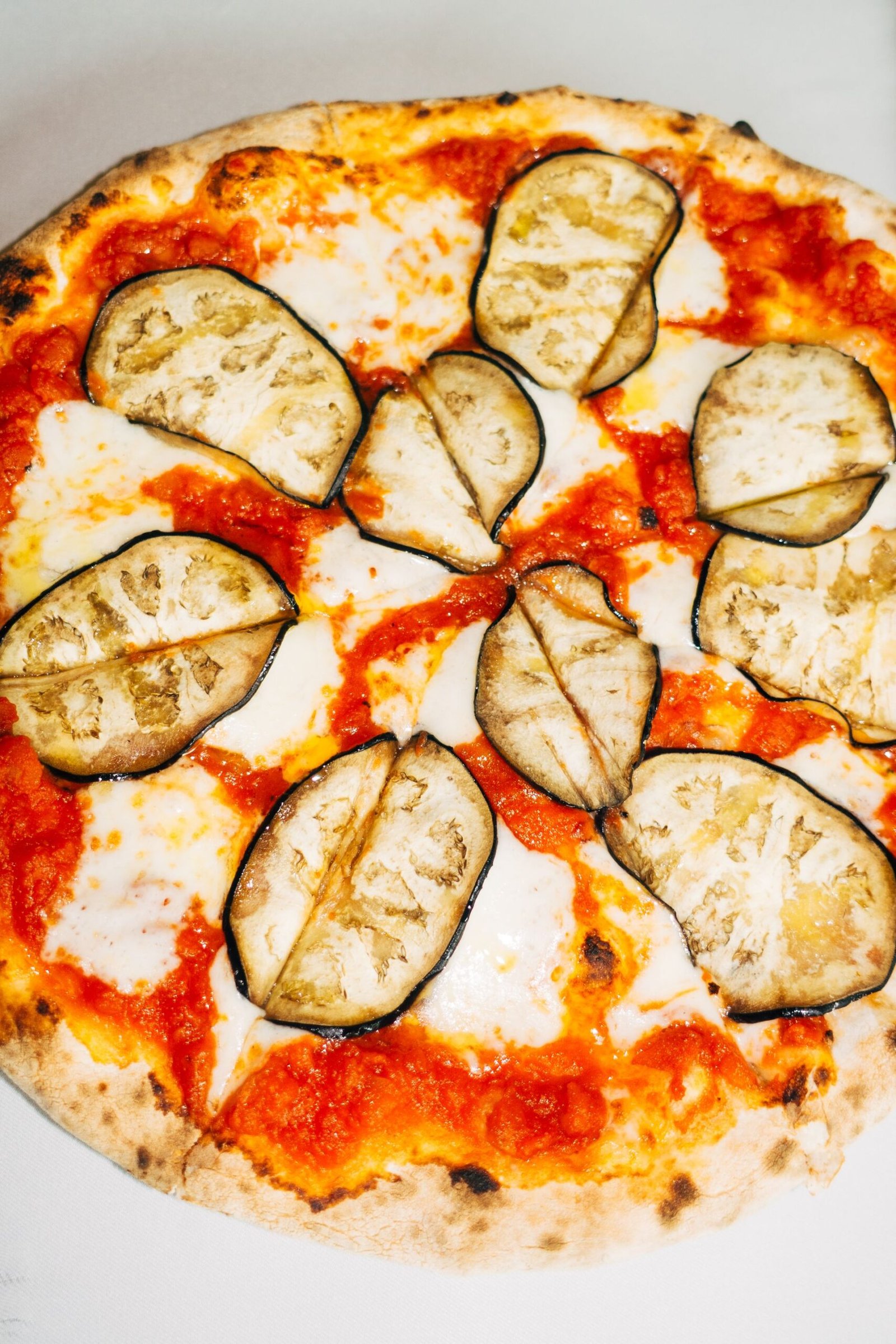
Philadelphia’s pizza identity is built on the tomato pie — a room-temperature square of focaccia-like dough topped with bright tomato sauce and just a dusting of parmesan, no mozzarella. It’s sold in bakeries as much as pizzerias, eaten as a snack rather than a meal, and it’s one of the most distinctive regional pizza traditions in the country. The style traces to Italian immigrants who adapted their baking traditions to American ingredients and ovens.
But Philly is far more than tomato pie. The city’s pizza scene blends old-school neighborhood slice shops, excellent Neapolitan-style newcomers, and a general culture that takes pizza seriously without taking itself seriously. South Philly’s Italian-American roots run deep, and the city’s best pizzerias reflect generations of accumulated knowledge. It’s a city where pizza arguments are a love language.
What to order: a tomato pie from an old-school bakery for the tradition, then a proper slice-shop slice to see how Philly does the everyday pie.
6. Boston, Massachusetts — Old-School Slice Shops
Boston’s pizza culture is defined by its venerable neighborhood institutions. Santarpio’s in East Boston has been serving since 1903, and Regina Pizzeria in the North End since 1926 — these are multi-generational landmarks where the recipes, the ovens, and the no-nonsense attitude have barely changed. Boston-style pies tend toward a slightly thicker, chewier crust than New York’s, with a generous hand on the cheese.
The North End — Boston’s historic Italian neighborhood — remains the spiritual center, where pizzerias sit alongside pastry shops and cafés in a district that feels like a slice of the old country. Beyond the classics, Boston has embraced the full modern pizza renaissance, but the soul of the city’s pizza is those century-old shops where the pizza tastes like it always has — because it does.
What to order: a cheese pizza at one of the North End institutions, eaten the old way — hot, simple, and without overthinking it.
7. Trenton, New Jersey — The Tomato Pie Rival
Trenton stakes a serious claim in the tomato pie tradition — and its partisans argue it does it best. Papa’s Tomato Pies, opened in 1912, is among the oldest continuously operating pizzerias in America, and De Lorenzo’s Tomato Pies is its legendary rival. Trenton tomato pie flips the usual order: cheese and toppings go down first, with crushed tomato sauce spooned on top — a technique that keeps the crust crisp and the tomato flavor bright and fresh.
New Jersey more broadly is a pizza powerhouse — many aficionados argue the state’s overall pizza quality rivals anywhere in America — but Trenton is its historic heart. The tomato pie tradition here is distinct from Philadelphia’s: Trenton’s version is served hot, with mozzarella, as a proper meal rather than a bakery snack. The distinction matters enormously to locals and not at all to anyone else, which is exactly how regional pizza traditions work.
What to order: a tomato pie with sausage at either of the legendary Trenton institutions — and don’t call it “pizza” in front of a regular unless you want a (friendly) lecture.
8. San Francisco, California — Craft and Precision
San Francisco’s pizza scene reflects the city’s broader food culture: ingredient-obsessed, technique-driven, and quietly competitive. The city is home to Tony’s Pizza Napoletana in North Beach, whose owner Tony Gemignani is one of the most decorated pizza-makers in the world — a thirteen-time world pizza champion whose restaurant serves multiple regional American styles alongside Neapolitan pies, all executed with obsessive precision.
Beyond the headline names, San Francisco’s contribution is philosophical: the application of California’s seasonal, ingredient-first cooking ethos to pizza. Toppings follow the farmers’ market calendar, doughs are fermented with care, and the line between pizzeria and fine dining gets blurry in the best way. It’s pizza for people who read menus like literature.
What to order: the full tasting approach — try multiple styles in one visit where possible, and pay attention to the dough. In San Francisco, the crust is never an afterthought.
9. Los Angeles, California — Where California Pizza Was Born
Los Angeles didn’t just adopt pizza — it reinvented it. In 1982, Wolfgang Puck’s Spago introduced California-style pizza: unconventional, chef-driven toppings (smoked salmon with crème fraîche, duck sausage, goat cheese) on thin, wood-fired crusts. It was a radical break from tradition, and it launched a thousand imitations — for better and worse, it changed what Americans thought pizza could be.
Modern LA pizza is gloriously diverse, reflecting the city’s multicultural food scene: excellent Neapolitan pies, New York-style slices from East Coast transplants, and creative wood-fired spots that treat the pizza oven as a canvas. The city’s best pizzerias share a common trait — they take the craft seriously while refusing to be bound by anyone else’s rules. That creative freedom is LA’s real contribution to American pizza.
What to order: something you can’t get anywhere else — the city’s strength is creativity, so reward it. Then find the best New York-style slice in town and appreciate the contrast.
10. St. Louis, Missouri — Proudly, Defiantly Different
St. Louis pizza is the style most likely to start an argument — and its defenders wouldn’t have it any other way. The formula: a cracker-thin, unleavened crust (no yeast), topped with Provel — a processed blend of cheddar, Swiss, and provolone that’s creamy, tangy, and melts into a gooey layer unlike any mozzarella — then cut into squares. Imo’s Pizza, the style’s standard-bearer, has been serving it since the 1960s.
Outsiders are often baffled; locals are fiercely loyal. And that’s the thing about St. Louis pizza: it’s not trying to be Naples or New York. It’s a fully realized regional cuisine with its own logic — the thin crust stays crisp under the creamy cheese, the square cut suits sharing, and the whole thing pairs perfectly with cold beer. Our St. Louis style pizza guide explores the style’s delicious particulars.
What to order: a Provel-topped square-cut pie at Imo’s or a beloved local competitor. Go in open-minded; leave converted or don’t — but you’ll have an opinion, which is the point.
How to Judge America’s Best Pizza Cities Like a Pro
Visiting a great pizza city for the first time? Don’t just chase the famous names — evaluate the scene the way locals do.
Start with the signature style. Every city on this list has a defining pie: the foldable slice in New York, apizza in New Haven, deep dish and tavern-style in Chicago, the square in Detroit, tomato pie in Philly and Trenton, Provel-topped squares in St. Louis. Eat the signature first. If a city’s defining style doesn’t impress you, the rest of its scene probably won’t either — and if it does, you’ve found your people.
Talk to the regulars. The person eating alone at the counter of a century-old pizzeria knows more than any review. Ask what they order and why. Pizza cities run on institutional knowledge — which oven, which pizzaiolo, which day — and locals love sharing it with genuinely curious visitors.
Look beyond the legends. Famous pizzerias are famous for a reason, but every great pizza city has a second tier of neighborhood shops where the pizza is nearly as good and the wait is nonexistent. One legendary meal plus two neighborhood discoveries makes a perfect pizza weekend.
Respect the local order. In New Haven, try the tomato pie (no cheese). In Chicago, don’t ask for deep dish at a tavern-style joint. In St. Louis, don’t ask them to hold the Provel. Ordering the local way isn’t just polite — it’s how you taste what the city actually tastes like.
Judge the crust, not the toppings. Toppings are easy; crust is craft. A great pizza city produces great dough — fermented properly, baked at the right temperature, with texture and flavor that stand alone. If the plain cheese pie is excellent, everything else will be too.
Honorable Mentions
Ten cities can’t contain America’s pizza story. Portland, Oregon has a fiercely creative wood-fired scene where pizzaiolos treat seasonal ingredients like a religion. Providence, Rhode Island guards its own bakery-style pizza strips — room-temperature, sauce-topped rectangles sold in Italian bakeries. Atlantic City keeps the boardwalk slice tradition alive, best eaten with sand still on your shoes. Columbus, Ohio has its own thin, square-cut, edge-to-edge-topping style worth knowing. And New Haven’s neighbors across Connecticut share the coal-fired gospel. The deeper truth: great pizza cities aren’t just the famous ten — they’re anywhere a community has spent generations perfecting its own answer to the question of what pizza should be.
Frequently Asked Questions
What city has the best pizza in the US?
There’s no objective answer — it depends on the style you love. New York owns the slice, New Haven owns coal-fired apizza, Chicago owns deep dish, Detroit owns the square with crispy cheese edges, and St. Louis owns its defiantly unique Provel-topped thin crust. The honest answer: the best pizza city is the one whose style matches your taste. Visit several and decide for yourself — that’s half the fun.
What is the pizza capital of the United States?
New York City is the most common answer, given its history (America’s first pizzeria, 1905), its slice culture, and its sheer density of great pizzerias. But New Haven, Chicago, and Detroit all have passionate claims. “Pizza capital” is a title awarded by affection, not by committee.
Which US city invented deep-dish pizza?
Chicago — Pizzeria Uno, opened in 1943, is credited with creating deep-dish pizza. The style’s exact inventor is debated (founder Ike Sewell and chef Ric Riccardo both get credit in different tellings), but the city of origin isn’t.
What makes New Haven pizza different?
New Haven “apizza” is baked in extremely hot coal-fired ovens, giving it a charred, leopard-spotted crust that’s chewier and smokier than New York’s. It’s traditionally oblong rather than round, and local specialties like the white clam pie exist nowhere else.
Is Detroit-style pizza really baked in car parts pans?
The original pans at Buddy’s Rendezvous in 1946 were blue-steel pans repurposed from automotive parts storage — a genuine Motor City improvisation. Modern Detroit-style pans are made for pizza, but they’re modeled on those originals, and the crispy cheese edge they produce remains the style’s signature.
What’s the best pizza road trip in America?
A classic route: New York City (slices) → New Haven (apizza) → Trenton (tomato pie) → Philadelphia (tomato pie, round two) covers the Northeast corridor’s greatest hits in a long weekend. Add Chicago and Detroit for the full Midwestern chapter. Bring antacids, an open mind, a healthy appetite, and comfortable walking shoes for between slices.
Plan Your Pizza Pilgrimage
America’s best pizza cities earned their reputations the hard way: decades of immigrants, innovators, and obsessives refining their craft block by block, oven by oven, generation by generation. Whether you’re drawn to New York’s foldable slices, New Haven’s coal-fired char, Chicago’s deep-dish indulgence, or Detroit’s crispy-edged squares, each city offers not just a meal but an education in what pizza can be — and a story you’ll retell every time someone asks where to find great pizza. Pick the style that speaks to you, plan the trip, and eat like a local when you arrive — order the signature pie, talk to the regulars, and save room for the neighborhood discovery you didn’t plan. That’s how the best pizza trips work. And when you get home inspired, our pizza style guides will help you recreate the magic — from Neapolitan to Detroit-style — in your own oven.