

Sometimes pizza can’t wait. The craving hits at 4 PM, dinner needs to happen by 6:30, and there is no time for an overnight rest — let alone a 72-hour cold ferment. This same day pizza dough recipe is engineered for exactly that moment: from flour to finished pizza in about two hours, with a crust that is genuinely good — chewy, golden, and blistered — rather than a sad compromise.
The honest truth first: a two-hour dough will never taste like a three-day dough. Time builds flavors that speed cannot fake. But speed has its own virtues, and this recipe squeezes every drop of quality out of a short timeline — warmer fermentation, slightly more yeast, a touch of sugar and oil for browning and tenderness, and a hot, fast bake. The result beats delivery, beats store-bought dough, and beats every “30-minute pizza dough” that skips fermentation entirely (those are really just biscuit dough wearing a pizza costume).
Below: the complete 2-hour formula with gram and cup weights, a minute-by-minute timeline, kneading and shaping tuned for young dough, troubleshooting for the quirks of fast fermentation, and storage notes. Keep this recipe taped inside a cabinet door — it is the one you will reach for most.
🍕 Key Takeaways
- Total time: about 2 hours — 15 minutes active, the rest hands-off rising and baking.
- Use slightly more yeast (10 g per 500 g flour) and ferment warm (78–82°F / 26–28°C) to hit the 2-hour target.
- A teaspoon of sugar and a tablespoon of olive oil compensate for the flavor and browning that long fermentation would provide.
- Knead to a full windowpane — young dough needs well-developed gluten since it gets no enzymatic help from time.
- Handle gently after the rise: fast-fermented dough is gassier and more fragile than cold-fermented dough.
- Bake at your oven’s maximum on a fully preheated stone or steel; check early, since sugared dough browns fast.
The Philosophy of Fast Dough
Every dough recipe is a negotiation between three variables: time, temperature, and yeast quantity. Long-fermentation recipes minimize yeast and temperature, letting time do the work. This same day pizza dough recipe inverts that: time is fixed at two hours, so temperature goes up and yeast goes up to compensate.
Raising the fermentation temperature from 70°F to 80°F roughly doubles yeast activity. Raising yeast from the cold-ferment 0.3% to 2% multiplies the workforce sevenfold. Together, those two changes compress three days of gas production into about 90 minutes. What they cannot compress is enzymatic flavor development — the slow breakdown of starches into complex-tasting compounds — which is why fast dough gets help from sugar (immediate yeast food and browning), olive oil (tenderness and flavor), and a slightly higher salt level (flavor backbone).
There is one more lever: dough handling. Young dough has had no time for enzymes to relax its gluten, so it is springier and more resistant than aged dough. The recipe compensates with a full knead to windowpane (strong gluten from the start, so none needs to develop during the rise) and a proper bench rest before shaping (relaxing what the short ferment could not). Understand these tradeoffs and fast dough stops being a compromise — it becomes a different, legitimate style with its own strengths: a clean wheat flavor, a tender-chewy bite, and pizza on the table tonight.
The 2-Hour Formula
Makes two 12-inch pizzas (about 415 g dough balls). Baker’s percentages included so you can scale.
Ingredients
- 500 g (about 4 cups) bread flour — 100%
- 325 g (325 ml / about 1⅓ cups) warm water, 105–110°F (40–43°C) — 65%
- 10 g (about 1 tablespoon) instant dry yeast — 2%
- 10 g (2 teaspoons) fine sea salt — 2%
- 8 g (2 teaspoons) granulated sugar or honey — 1.6%
- 20 g (about 1½ tablespoons) extra-virgin olive oil — 4%
Why these numbers
Yeast at 2%: Nearly seven times the cold-ferment dose. This is what makes the 2-hour timeline possible. Do not exceed 2.5% — beyond that, the yeast produces off-flavors (harsh, yeasty, almost chemical) faster than the short ferment can mellow them.
Warm water at 105–110°F: Wakes the yeast immediately and keeps the dough in the fast lane from minute one. Warmer than 120°F risks killing yeast; cooler than 100°F wastes precious minutes of the timeline.
Sugar at 1.6%: Gives the large yeast population instant food (so fermentation starts fast instead of waiting for enzymes to free up starches) and ensures good browning in a short-baked crust. Honey works identically and adds a whisper of floral flavor.
Oil at 4%: Higher than the baseline from-scratch dough. In the absence of long fermentation’s tenderizing enzyme activity, extra oil keeps the crumb soft and the crust from baking up tough.
Minute-by-Minute Timeline
0:00–0:15 — Mix and knead
Whisk flour, yeast, salt, and sugar in a large bowl. Add the warm water and olive oil; stir into a shaggy mass. Turn out and knead 8–10 minutes until smooth, elastic, and passing the windowpane test — stretch a small piece until light shines through without tearing. With fast dough, do not under-knead: there is no long ferment coming to finish gluten development for you. If using a stand mixer, 6–7 minutes on speed 2 with the dough hook.
0:15–1:30 — Bulk ferment somewhere warm (75 minutes)
Shape into a smooth ball, place seam-down in a lightly oiled bowl, cover, and ferment in a warm spot: 78–82°F (26–28°C) is the target. Good warm spots: inside an oven with just the light on (usually 78–80°F), on top of the fridge, or near (not on) a heating vent. In a cool kitchen, place the bowl in a larger container of warm water as an insulation bath. The dough should roughly double in 60–75 minutes. Warmer than 85°F risks off-flavors; cooler than 72°F and you will miss the timeline.
1:30–1:50 — Divide, shape balls, bench rest (20 minutes)
Turn out onto a lightly floured counter, divide into two equal pieces (weigh for evenness — about 415 g each), and shape into tight balls. Cover and rest 20 minutes. This rest is non-negotiable for fast dough: young gluten is tense, and shaping without resting means a dough that springs back relentlessly.
1:50–2:00 — Shape and top
Preheat should have started long ago (see below). Stretch each ball to 12 inches, transfer to a floured peel, top sparingly.
2:00 — Bake
Launch onto a stone or steel at maximum oven heat (500–550°F / 260–290°C), preheated 45–60 minutes. Bake 7–10 minutes until puffed, golden, and blistered. Start checking at 6 minutes — the sugar in this dough browns it faster than lean doughs.
Critical scheduling note: Start preheating the oven at 0:45, no later. The stone needs its full 45–60 minutes, and nothing ruins a 2-hour timeline like dough ready at 1:50 with a lukewarm stone.
Kneading and Shaping Young Dough
Fast-fermented dough handles differently from aged dough, and the differences trip up beginners who learned on long ferments.
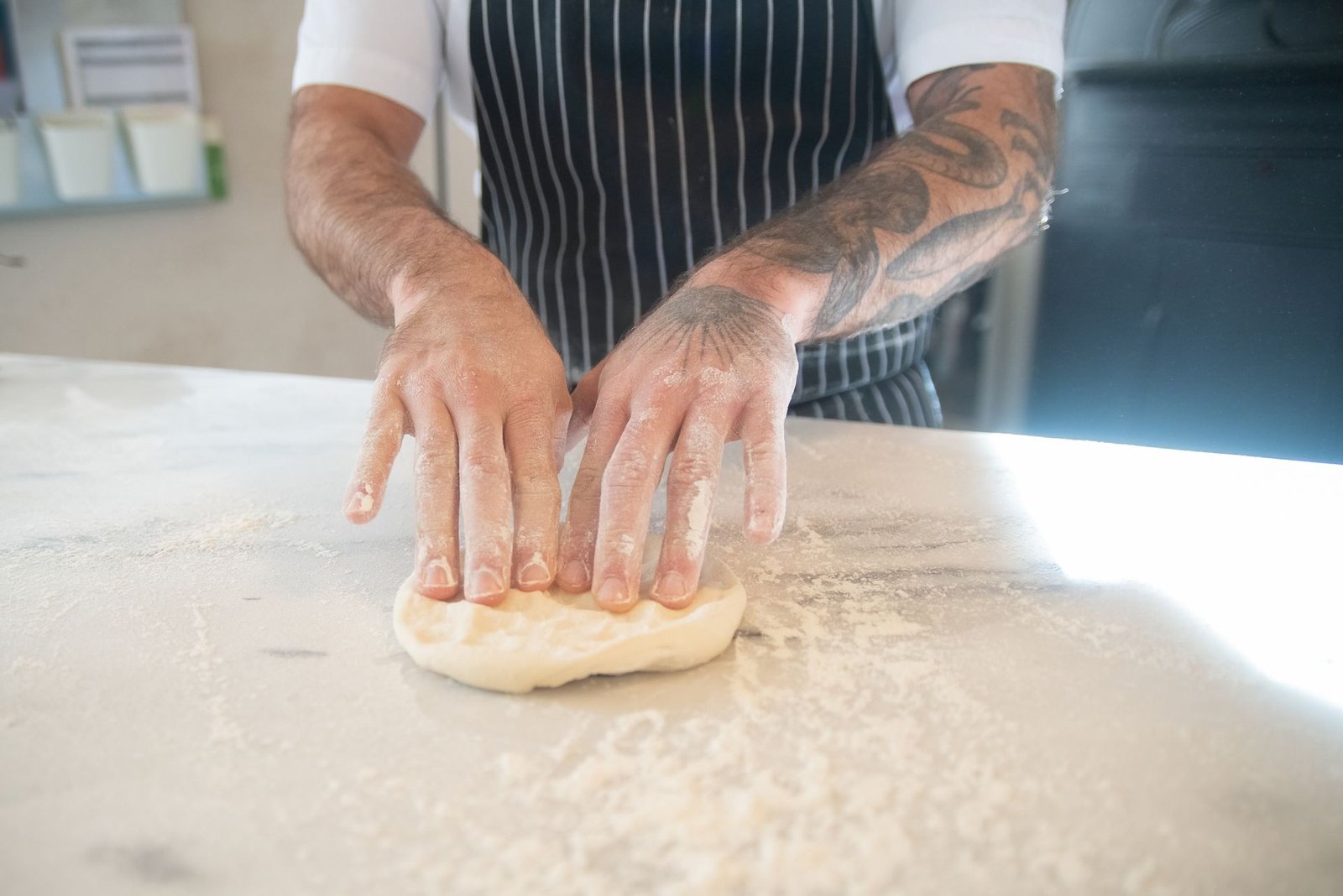
It is springier. With no enzymatic relaxation, the gluten is youthful and tense. The bench rest after dividing is your main tool — but if the dough still fights during stretching, rest it 5 more minutes and try again. Never force it; forced stretching tears the gluten network and produces uneven thickness.
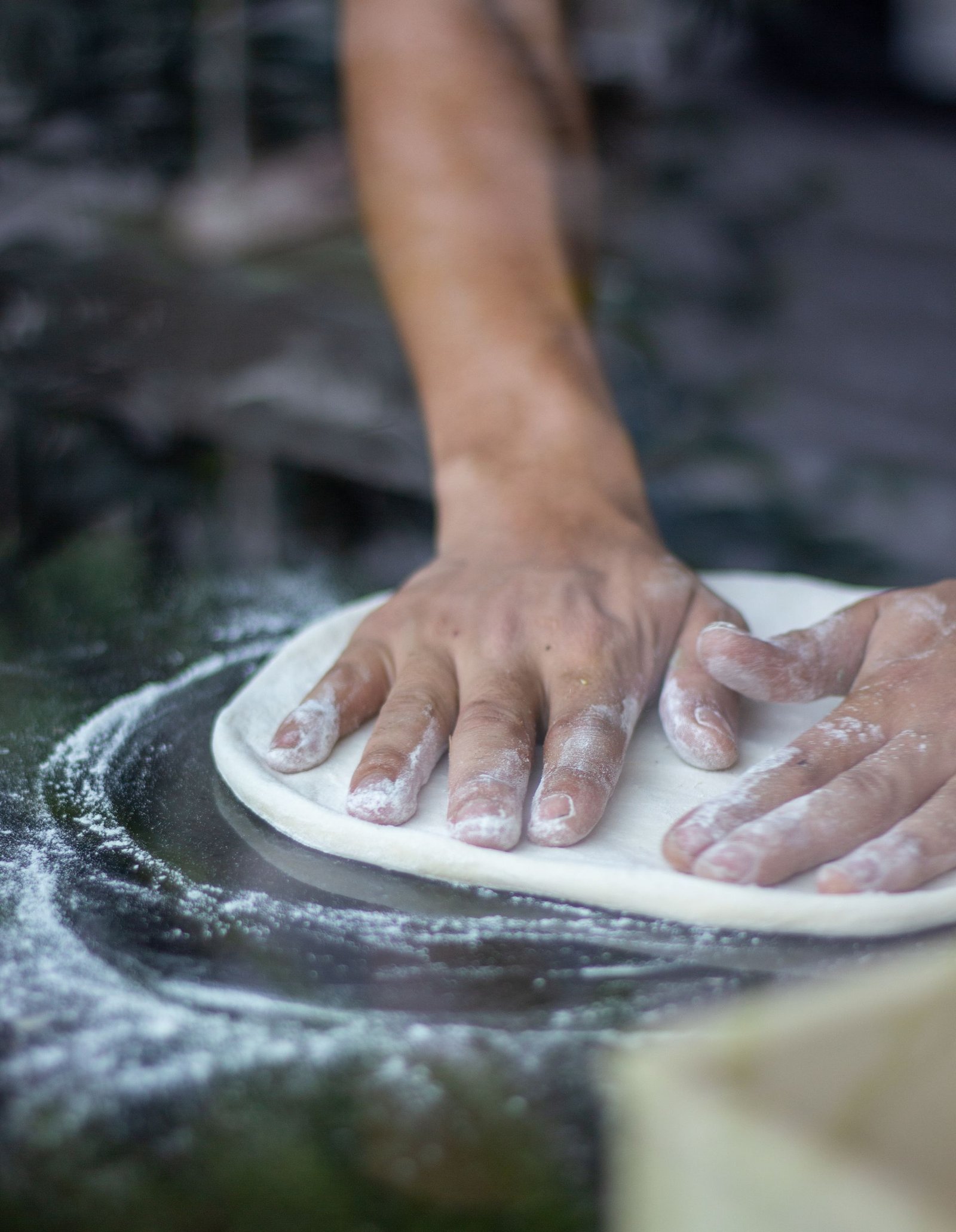
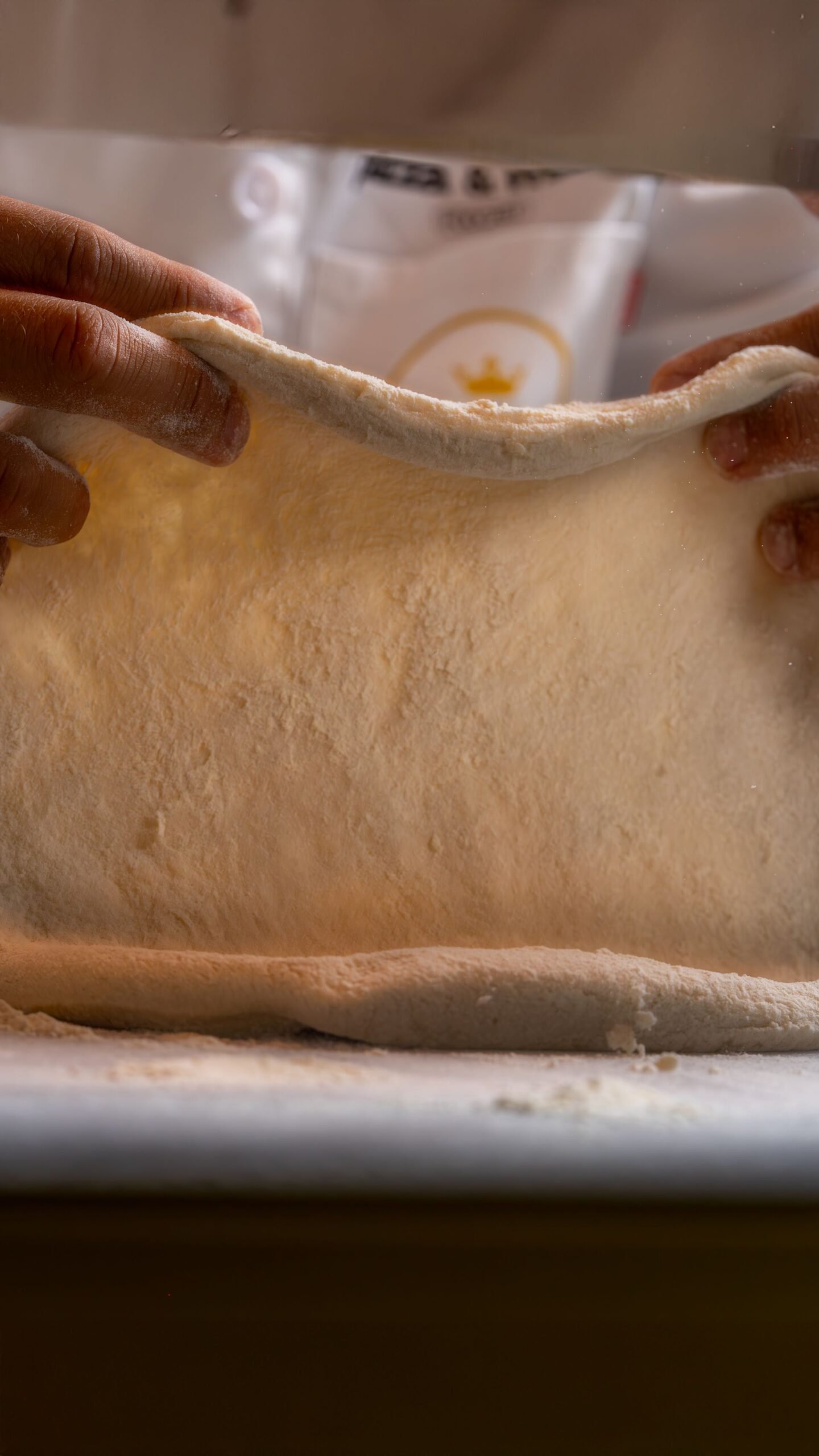
It is gassier and more fragile. Two percent yeast working warm produces a lot of CO2 fast, and the bubbles are larger and less evenly distributed than in slow dough. Handle the risen dough gently — no punching down, no re-kneading. Press from the center outward with fingertips, preserving the rim, and degas only the center where toppings will sit.
It sticks more. Young, high-energy dough is tackier. Flour your hands and the bench adequately (not excessively — too much raw flour tastes pasty), and use a bench scraper to lift. On the peel, semolina flour is worth its weight in gold for fast dough; its coarse grains act like ball bearings under a sticky base.
It proofs faster than you expect. Keep an eye on the bulk ferment after the first 45 minutes. If your warm spot runs hot, the dough may double in 50 minutes — and an over-proofed fast dough collapses quickly because its gluten has no age-strength. When in doubt, check early. Our troubleshooting guide covers rescue techniques.
Finding a Genuinely Warm Fermentation Spot
The 78–82°F (26–28°C) fermentation window is the engine of this recipe, and most kitchens do not naturally sit there — especially in winter. Finding (or creating) a warm spot is a skill worth developing, because it determines whether your two hours produce a doubled, lively dough or a sluggish one.
The oven-with-light-on method is the most reliable: place the covered bowl in your oven with only the interior light switched on. Most oven lights raise the interior to 78–82°F — but verify once with an oven thermometer, because some run hotter (up to 90°F, which is too warm) and some barely warm at all. If yours runs hot, crack the door slightly or skip this method.
The top of the refrigerator is the classic baker’s warm spot — heat rising off the compressor keeps it several degrees above room temperature. It is not precisely controllable, but it is consistently warmer than the counter, which is often enough.
The warm-water bath is the most controllable: set the covered dough bowl inside a larger bowl or roasting pan filled with warm (not hot) water, around 85°F. Refresh the water once midway through the ferment. This surrounds the dough with gentle, even warmth regardless of kitchen temperature. For an even simpler version, place the bowl in your microwave (turned off!) alongside a mug of just-boiled water and close the door — the small enclosed space holds warmth remarkably well for the full 75 minutes, and the steamy air keeps the dough surface from drying out.
What to avoid: the top of a hot stove, radiators, or heating vents blast uneven heat that can cook one side of the dough while the other stays cool — and temperatures above 90°F push yeast into off-flavor production. Warm and steady beats hot and erratic every time. If you bake pizza regularly, a ten-dollar fridge thermometer left in your chosen spot removes all guesswork permanently.
Adapting This Same Day Pizza Dough to Different Styles
This formula is tuned for classic 12-inch round pizzas, but it adapts well:
Thin and crispy: Divide into three balls instead of two (about 275 g each) and stretch to 12–14 inches thin. Reduce the bake to 6–8 minutes and watch closely — thin crusts go from golden to burnt quickly with the sugar in this formula. Our crispy crust tips add more techniques.
Pan / skillet pizza: Use the full recipe for one 12-inch cast iron skillet instead of two rounds. Press the dough into the oiled skillet after the bulk ferment, proof in the pan 30 minutes, top, and bake 15–18 minutes at 475°F. The enriched, fast-fermented dough fries up beautifully.
Garlic knots and sides: After the bulk ferment, divide into 12–16 small pieces, tie each into a knot, proof 20 minutes, and bake at 425°F for 12–15 minutes. Brush with garlic butter straight from the oven.
Flatbread-style: Stretch thin, brush with olive oil and za’atar or rosemary and sea salt, and bake 6–8 minutes without toppings. Fast dough makes an excellent flatbread because its mild flavor lets the toppings lead.
In every adaptation, the principles hold: warm ferment, full knead, gentle handling, hot oven. Learn the base recipe cold and the variations become improvisation rather than new recipes to memorize.
Getting the Most Flavor from Two Hours
You cannot fake three days, but you can coax surprising depth from two hours:
Ferment warm, not hot. The 78–82°F window maximizes yeast activity without pushing into off-flavor territory. Above 85°F, yeast produces excess fusel alcohols that taste harsh and chemical — the classic “too yeasty” flavor of rushed dough.
Don’t skimp on salt. At 2%, salt is doing heavy lifting as the primary flavor agent in the absence of fermentation complexity. Under-salted fast dough tastes like nothing; properly salted fast dough tastes like good bread.
Consider a preferment-style head start. If you have even 30 extra minutes, mix the flour, water, and yeast (no salt) and rest 30 minutes before adding salt and kneading. This mini-autolyse jump-starts enzyme activity and hydration, buying a little of what time would provide. It is the single highest-return 30 minutes in fast dough making.
Brown it boldly. Flavor lives in browning. Bake hot, bake until the crust has real color — pale fast-dough tastes pale. The sugar in the formula is there to help; let it work. A blistered, deeply golden 2-hour crust eats far better than a timidly baked one.
Top with confidence. Fast dough’s clean, mild wheat flavor is a neutral canvas — it pairs beautifully with bold toppings that might fight a tangy long-ferment. This is the dough to use for a punchy pepperoni pizza or a garlicky white pizza.
Troubleshooting Fast Dough
Dough rose too fast and collapsed
Your warm spot was too warm, or the yeast was over-measured. Gently re-shape the deflated dough into balls, rest 15 minutes, and bake immediately — the oven spring will recover some volume. Next time, verify temperature stays under 85°F and measure yeast by weight.
Dough didn’t double in 75 minutes
Warm spot too cool, water too cool, or old yeast. Give it another 30 minutes somewhere warmer — the timeline flexes. Test yeast viability in warm sugared water if this recurs; dead yeast is the top cause of dough that won’t rise.
Crust tastes bland or “yeasty”
Bland = under-salted or under-baked (pale crust, timid browning). Yeasty/harsh = fermented too warm or too long, or yeast over 2.5%. Fix the variable that matches: salt to 2%, bake to real color, keep fermentation at 78–82°F.
Bottom burnt, top pale
Oven heat is bottom-heavy. Move to a higher rack, slip a baking sheet under the stone as a buffer, and consider finishing under the broiler for 60–90 seconds (watched constantly) to brown the top.
Tough, dense crumb
Usually under-kneading (gluten never developed, so gas escaped instead of being trapped) or over-flouring during handling. Knead to a true windowpane, and flour hands rather than drowning the dough. Dense can also mean over-proofed then collapsed — watch the ferment timing.
Storage, Make-Ahead & Food Safety
Can you refrigerate same-day dough?
Yes — and it becomes a hybrid. If plans change after mixing, refrigerate the dough right after kneading; it will ferment slowly and be excellent at 24–48 hours (use it within 3 days). You have accidentally made cold-ferment dough, which is a happy accident. Bring to room temperature 60–90 minutes before shaping.
Freezing
Freeze after the bulk rise: divide into oiled balls, seal in freezer bags, freeze up to 3 months. Thaw overnight in the fridge, then warm 60–90 minutes at room temperature.
The 2-hour rule
Fast dough contains the same raw-flour risks as any dough — do not taste it raw. Once baked, the standard rules apply: cool leftovers to room temperature within 2 hours, refrigerate promptly, and reheat to steaming.
Frequently Asked Questions
Is 2-hour pizza dough actually good, or just fast?
Genuinely good — with the right formula. The failures people associate with fast dough (bland, tough, yeasty) come from recipes that just speed up a long-ferment formula without adjusting yeast, sugar, oil, and temperature. This recipe is engineered for the timeline rather than adapted to it, which is why it works.
Can I make this dough in 1 hour?
You can, but quality drops sharply. At 1 hour you are essentially making leavened flatbread — increase yeast to 2.5%, ferment very warm (82–85°F), and expect a denser, breadier crust. For true 1-hour pizza, a no-yeast dough is actually the better-engineered option.
Why does my fast dough taste so yeasty?
Too much yeast, too warm a ferment, or both. Stay at 2% yeast and 78–82°F. Also make sure you are not using expired yeast at higher doses to compensate — old yeast produces off-flavors; fresh yeast at the correct dose tastes clean.
Can I use all-purpose flour?
Yes — the crust will be a touch more tender and slightly less chewy. Reduce water by about 15 g (one tablespoon) since all-purpose absorbs less. Bread flour remains the better choice for structure, but all-purpose makes perfectly enjoyable fast pizza.
Do I need a pizza stone for same-day dough?
You need strong bottom heat from something with thermal mass — a stone, steel, or preheated heavy baking sheet. Fast dough is less forgiving of weak bottom heat than long-fermented dough because it has less residual sugar for browning. A pizza steel is the best home-oven investment if you make pizza regularly.
How do I double this recipe?
Scale everything by weight using the baker’s percentages — 1000 g flour, 650 g water, 20 g yeast, 20 g salt, 16 g sugar, 40 g oil. Fermentation timing stays the same (dough mass does not change yeast kinetics much at this scale), but dividing and shaping take a few minutes longer. Mix in a very large bowl or divide into two batches for kneading.
This same day pizza dough recipe proves that “quick” and “good” are not opposites — they are just different optimizations. Two percent yeast, warm fermentation, a little sugar and oil, a full knead, and a screaming-hot oven: that is the entire formula, and it puts a genuinely excellent pizza on the table two hours after the craving strikes. Keep the long ferments for the weekends you can plan — the cold ferment and sourdough guides are waiting when you are ready. But for tonight, for the impromptu pizza night, for the “what’s for dinner” emergency — this is your dough. Master the two-hour timeline and you will never be more than a craving away from homemade pizza again.