

Few foods have traveled as far, or been reinvented as thoroughly, as pizza. It began as the cheap street food of Naples’ working poor, sustained through centuries of skepticism from polite society, crossed an ocean in the luggage of immigrants, and emerged on the other side as one of the most recognizable foods on the planet — cooked in wood-fired domes in Tokyo, sold by the slice on New York corners, and delivered to doorsteps in essentially every country with an oven. The history of pizza is really two stories braided together: the story of a specific Neapolitan dish, and the story of how the world adopted it, adapted it, and eventually circled back to honor the original.
What makes pizza’s history so satisfying to trace is how clearly each chapter builds on the last. The flatbreads of the ancient Mediterranean set the template. The tomato — a New World fruit that Europeans initially distrusted — provided the missing ingredient in Naples. A royal visit in 1889 gave the dish its most famous name. Italian immigrants carried it to America, American GIs carried the craving home from Italy, and entrepreneurs carried it to the suburbs and then the world. At every step, pizza bent without breaking: it became deep-dish in Chicago, square and cheese-crowned in Detroit, foldable in New York, and a thousand other local things, while Naples kept the flame of the original burning.
This is the full arc, from ancient flatbread to UNESCO heritage status — the established facts, the beloved legends (clearly labeled as such), and the turning points that explain why the pizza on your table looks the way it does.
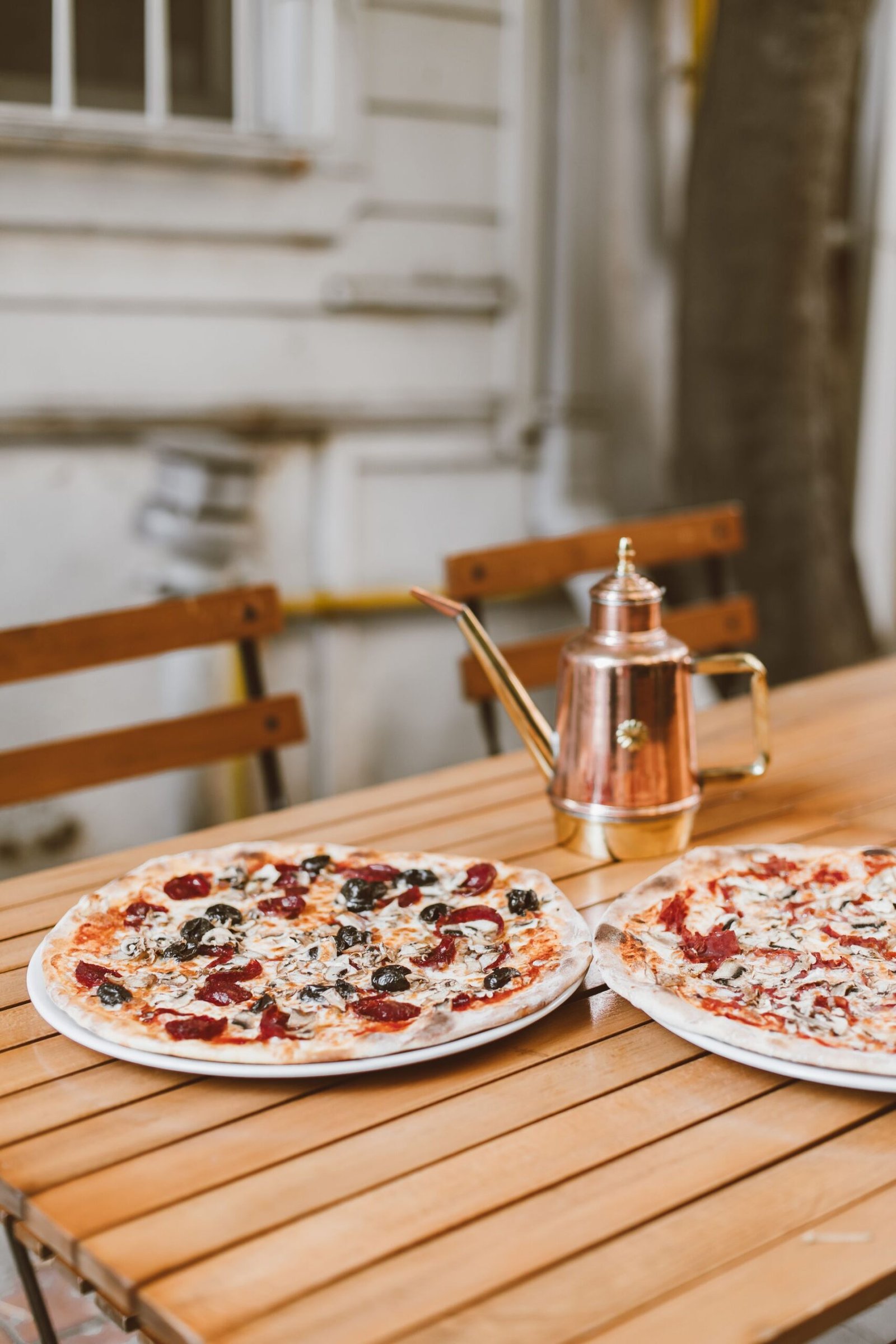
🍕 Key Takeaways
- Modern pizza was born in 18th-century Naples as affordable street food for the city’s working poor.
- The tomato, brought from the Americas, was the transformative ingredient — embraced by Neapolitans long before the rest of Europe trusted it.
- According to tradition, pizzaiolo Raffaele Esposito created the Pizza Margherita in 1889 for Italy’s Queen Margherita.
- Italian immigrants brought pizza to America in the late 1800s; Gennaro Lombardi opened the first licensed U.S. pizzeria in New York in 1905.
- After World War II, returning American GIs fueled a nationwide pizza boom, followed by chains, frozen pizza, and regional American styles.
- In 2017, UNESCO recognized the art of Neapolitan pizza-making as Intangible Cultural Heritage — the street food had become a treasure.
The History of Pizza Before Naples: Ancient Flatbread Roots
Long before anyone said the word “pizza,” the Mediterranean world was baking flatbreads topped with whatever was at hand — and this is the deep root the whole story grows from. Ancient Egyptians baked flat rounds on hot stones. Greeks topped plakous-style breads with herbs, onion, and garlic. Roman soldiers baked a flatbread on their shields, topped with cheese and dates, according to some accounts. None of this was pizza as we’d recognize it — the tomato wouldn’t reach Europe for another thousand-plus years — but the template was set early: flattened dough, intense heat, savory toppings, eaten by hand.
The most direct ancestor is probably focaccia, the olive-oil flatbread of Liguria and the broader Italian tradition, which has been baked in various forms since Roman times. Travelers and traders carried flatbread traditions around the Mediterranean for centuries, and Naples — one of Europe’s great port cities — absorbed all of them. By the early modern period, Neapolitan bakers were selling simple flatbreads topped with garlic, lard, salt, and cheese to workers who needed cheap, filling, portable food. The stage was set. What Naples was waiting for was the ingredient that would turn flatbread into pizza.
That ingredient had to cross an ocean first. Tomatoes are native to the Americas and arrived in Europe in the 1500s with Spanish explorers. For a long time, northern Europeans regarded them with suspicion — the plant is a nightshade relative, and the fruit was widely believed to be poisonous. But in the warm south, and especially among Naples’ poor, attitudes were different: by the late 1700s, Neapolitans were eating tomatoes with evident enthusiasm, on pasta and on flatbread alike. The marriage of tomato and flatbread, born of poverty and practicality, was the true birth of pizza.
18th-Century Naples: Where Pizza Was Born
The pizza we recognize — flattened dough topped with tomato, baked fast and hot, sold cheap — emerged in Naples during the 1700s as the food of the lazzaroni, the city’s vast working-class population. Naples was one of Europe’s largest and poorest cities, crowded with laborers who needed food that was inexpensive, calorie-dense, and ready to eat without a kitchen. Street vendors sold pizza from open-air stalls and carried it through the streets, and it was eaten on the go, folded or rolled — the original fast food, centuries before the term existed.
The earliest pizzas were humble: the marinara, topped with tomato, garlic, oregano, and olive oil (no cheese — its name nods to the seafaring folk who ate it, as the story goes), and simple combinations of what was cheap and in season. Cheese came into the picture gradually; mozzarella, made from water-buffalo milk in the Campanian countryside around Naples, eventually became the defining topping, though early street pizzas often went without. Baking happened in wood-fired ovens at fierce heat — the same basic method, remarkably, that defines Neapolitan baking today.
For a long time, respectable society wanted nothing to do with it. Pizza was poor people’s food, sold on the street, eaten with the hands — the opposite of refined dining. That attitude began to crack in the late 1700s and early 1800s as travelers discovered it. Writers visiting Naples described the pizza vendors with a mixture of fascination and horror, and their accounts carried the dish’s reputation across Europe. But pizza’s leap from street food to celebrated dish needed a royal endorsement — and legend says it got one in 1889.
1889 and the Margherita Legend
According to one of food history’s most beloved stories, the Pizza Margherita was born in June 1889, when Queen Margherita of Savoy visited Naples with her husband, King Umberto I. Tired of elaborate French court cuisine, the story goes, the queen asked to try the local street food. The royal court summoned Raffaele Esposito, the most famous pizzaiolo in Naples, who prepared three pizzas — and the queen’s favorite was the one topped with tomato, mozzarella, and basil, its red, white, and green echoing the colors of the Italian flag. Esposito named it the Margherita in her honor.
Historians treat this tale with affectionate caution. A letter of thanks from the royal household, displayed for years at the pizzeria, supports the visit; the exact details — the three pizzas, the flag symbolism — have the polished feel of a story improved in the retelling. Pizzas topped with tomato, mozzarella, and basil certainly existed before 1889 under various names. But the legend matters regardless of its precision, because it marks the moment pizza crossed the class divide: the food of the lazzaroni had been served to a queen, and no one could call it merely poor people’s food again. Whether or not Esposito invented the combination that day, his name is forever attached to the world’s most famous pizza — and our Neapolitan pizza guide traces how that style’s strict traditions grew from these roots.
The legend also gave pizza something every great food needs: an origin story simple enough to tell in a sentence. Tomato, mozzarella, basil; red, white, green; a queen’s name on the menu. That narrative elegance helped the Margherita become the benchmark against which all pizzas are measured — the plain pie by which pizzerias are judged. Order a Margherita anywhere in the world and you’re tasting the legend, whether the kitchen knows the story or not.
Pizza Crosses the Atlantic
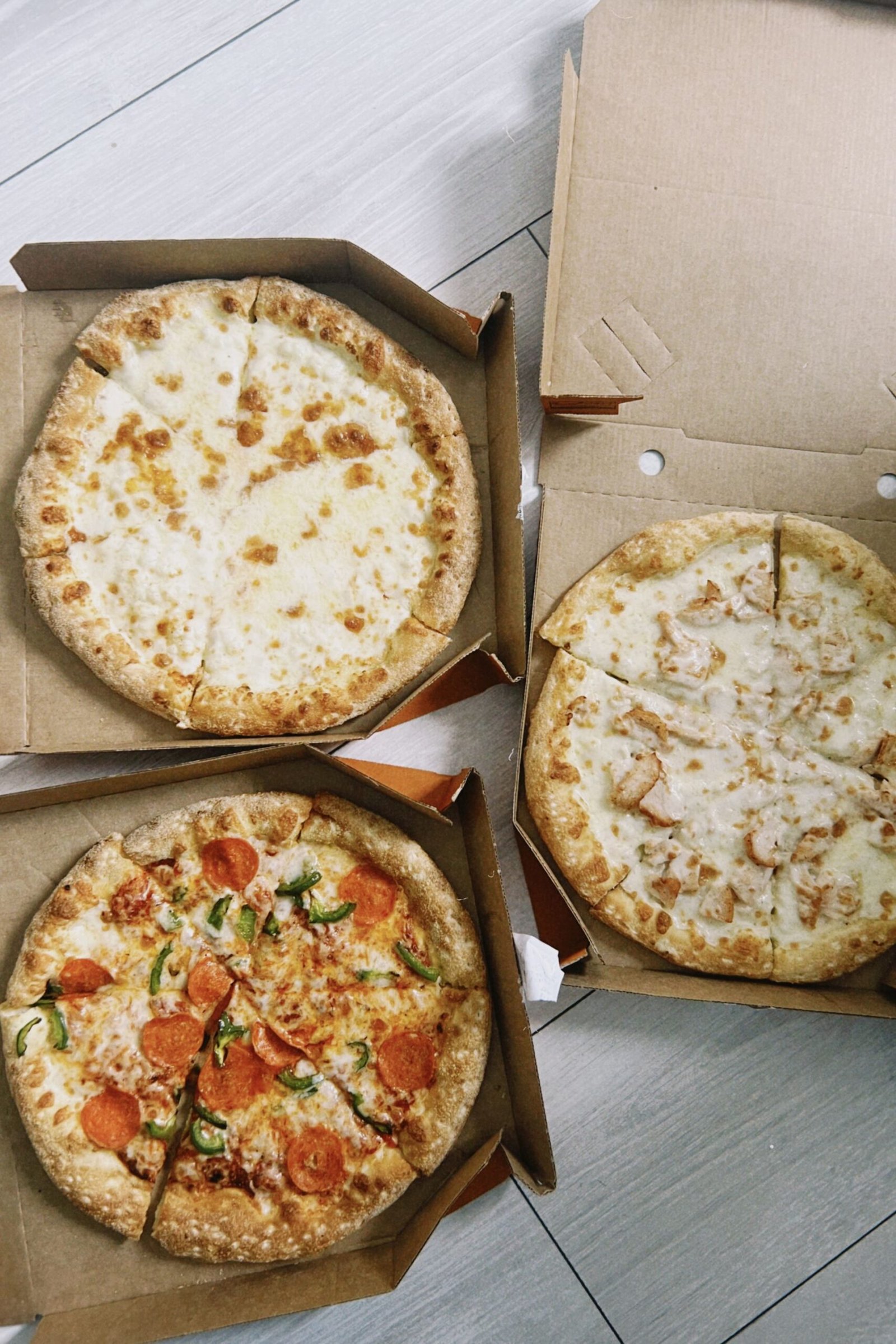
Pizza came to America the way so much of American food did: in the memories and habits of immigrants. In the late 1800s and early 1900s, millions of southern Italians — many of them Neapolitan — arrived in the United States, settling in dense urban neighborhoods in New York, New Haven, Boston, Philadelphia, and Chicago. They brought their foodways with them, and pizza followed: first baked in home kitchens and sold from pushcarts and tiny storefronts to fellow immigrants who craved a taste of home.
The landmark date is 1905, when Gennaro Lombardi — a Neapolitan immigrant — opened what is widely recognized as America’s first licensed pizzeria on Spring Street in Manhattan’s Little Italy. Lombardi’s sold whole pies baked in a coal-fired oven to workers who bought them for nickels, and it became the template and training ground for a generation of pizzaiolos. (The original Lombardi’s closed and later reopened; the lineage is part of pizza lore now.) Around the same time, coal-oven pizzerias were taking root in New Haven, where the intensely hot coal fire produced a charred, thin style all its own.
For its first few decades in America, pizza remained essentially an ethnic food — beloved within Italian-American communities, largely unknown outside them. Most Americans in the 1920s and 1930s had never tasted it. Neighborhood pizzerias served their blocks; recipes passed from parent to child, often unwritten; and the coal-fired ovens of New York and New Haven developed their devoted local followings in near-obscurity. It was a hidden treasure phase — the food was extraordinary, but its audience was small. That was about to change, thanks to a war, a generation of hungry young soldiers, and the most powerful engine of food popularization the world had ever seen: postwar American suburbia. The New York–style pizza guide picks up the story of what those early coal-oven pies became.
Postwar Boom: How America Made Pizza Its Own
World War II was pizza’s great accelerator. American GIs stationed in Italy encountered pizza for the first time and developed a powerful craving for it; when they came home, they wanted the pies they’d eaten in Naples and Rome, and Italian-American pizzerias were suddenly serving curious veterans alongside their old neighborhood customers. The timing was perfect: postwar prosperity, the baby boom, suburbanization, and car culture created an America hungry for convenient, family-friendly, affordable food — and pizza fit the moment flawlessly.
The 1950s and 1960s saw pizza explode from urban ethnic enclaves into mainstream America. Returning veterans opened pizzerias in towns that had never seen one. Celebrities were photographed eating slices. Cookbooks and women’s magazines published pizza recipes for the home oven. And entrepreneurs systematized it: Pizza Hut was founded in Wichita, Kansas, in 1958 by two brothers with a borrowed $600, and its red-roofed restaurants made pizza a sit-down family destination across the country. Domino’s began in 1960 as a single store in Michigan and pioneered the delivery model that would define pizza for generations. Frozen pizza brought it into every supermarket freezer, turning pizza night into a weeknight possibility rather than a restaurant outing.
Just as important as the chains was the regional creativity the boom unleashed. Chicago gave the world deep-dish in the 1940s — Pizzeria Uno’s 1943 debut is the traditional origin point — a buttery, almost pie-like inversion with cheese under the sauce, built for knife-and-fork eating; our Chicago deep-dish guide tells that story in full. Detroit’s square pies with their caramelized cheese edges emerged from blue-steel auto-industry pans in the mid-1940s. Sicilian immigrants’ thick, airy sfincione became a bakery-case staple of the Northeast. Rome’s rectangular al taglio crossed over as a street-food inspiration. Each region bent pizza to local tastes, equipment, and ingredients — and every one of those adaptations is now somebody’s definitive pizza. For the full tour of America’s regional styles, from Sicilian to Detroit-style to pizza al taglio, those guides trace each lineage.
Pizza Goes Global — and Naples Takes It Back
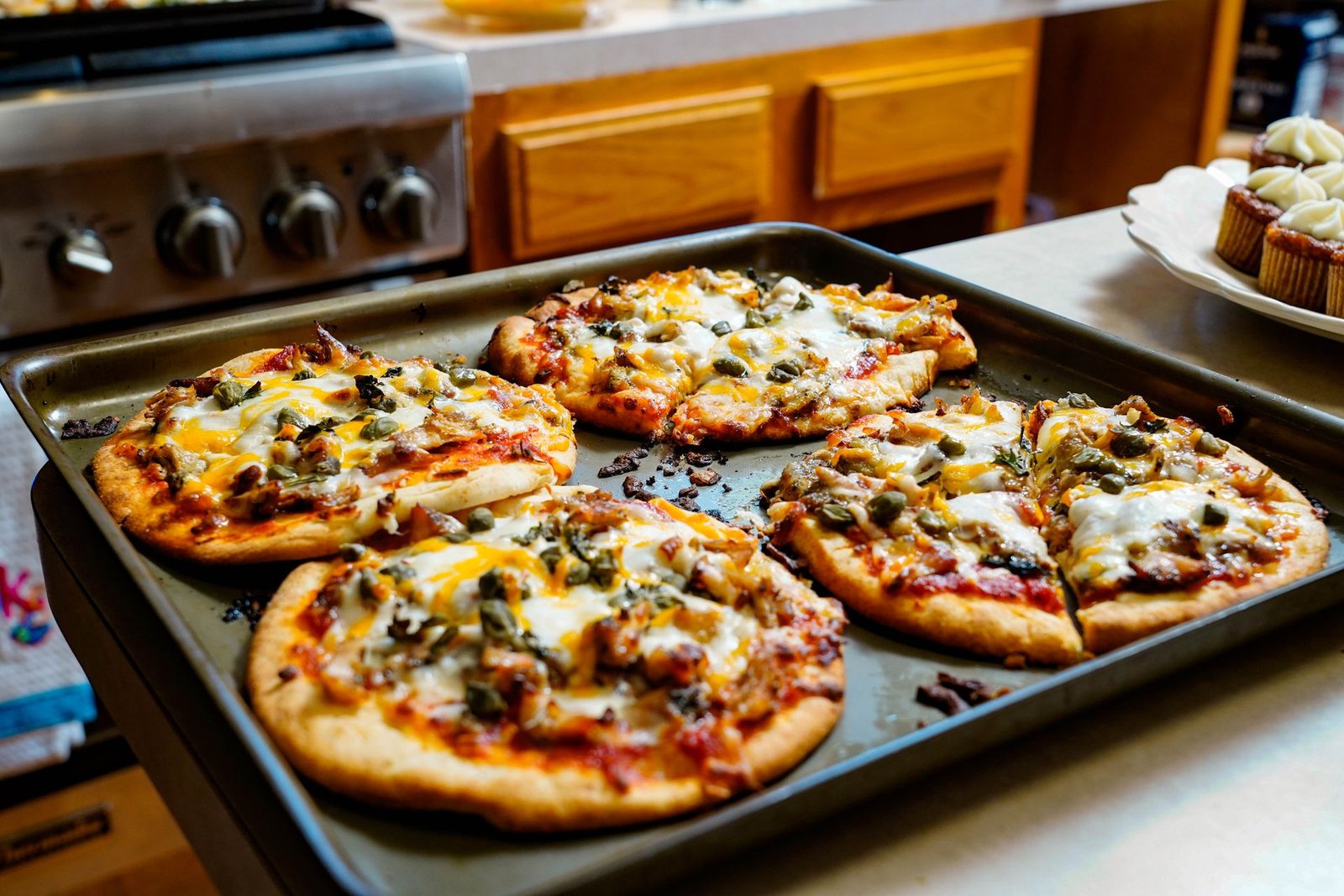
From its American beachhead, pizza went worldwide with astonishing speed. American chains carried it across Europe, Asia, and Latin America in the late 20th century; local entrepreneurs adapted it everywhere it landed — toppings bending to local palates, from corn and seafood in some markets to entirely new creations elsewhere. Today you can find pizza in essentially every country with a commercial oven, and it ranks among the most universally recognized foods on earth. The poor street food of Naples had conquered the world by becoming whatever the world wanted it to be.
And then, beautifully, the story circled back. As pizza globalized into something increasingly industrial, a counter-movement rose to defend the original. In 1984, Neapolitan pizzaiolos founded the Associazione Verace Pizza Napoletana (the True Neapolitan Pizza Association), codifying what counts as authentic: specific flour, San Marzano tomatoes, fresh mozzarella, wood-fired oven temperatures, even the diameter of the pie. What had been unwritten street wisdom became a formal discipline, taught and certified worldwide.
The ultimate vindication came in December 2017, when UNESCO inscribed “the art of Neapolitan pizzaiuoli” on its Representative List of the Intangible Cultural Heritage of Humanity. The street vendors’ craft — the dough-slapping, fire-tending, tomato-spreading artistry of Naples — was now officially recognized as a treasure of human culture, alongside the likes of traditional craftsmanship and performing arts from around the world. From lazzaroni street food to world heritage in roughly 250 years: no other dish has traveled quite that arc. For a lighter look at the journey’s oddest milestones, our collection of fun pizza facts is the perfect dessert to this history.
Pizza’s Second Conquest: From Restaurant to Home Kitchen
There’s a second, quieter revolution inside pizza’s history: the move from restaurant-only food to something people make at home. For most of its American life, pizza was something you went out for — home ovens couldn’t touch pizzeria heat, and home dough was widely considered a lost cause. The 1950s began to change that with the boxed pizza kit: flour mix, canned sauce, and parmesan in one package, marketed to housewives as an exotic-but-easy weeknight adventure. The kits were a pale imitation of the real thing, but they planted an idea — pizza could be made in a home kitchen — that never left.
The following decades layered on the infrastructure of home pizza-making. Cookbooks demystified dough. Grocery stores started stocking 00 flour, San Marzano tomatoes, and fresh mozzarella as home bakers demanded better ingredients. The pizza stone brought pizzeria-style conductive heat to ordinary ovens; the pizza steel later improved on it. Countertop high-heat ovens and affordable outdoor pizza ovens eventually closed the temperature gap entirely, letting home bakers produce 90-second Neapolitan-style pies without leaving the house. Each innovation chipped away at the idea that great pizza required a professional oven.
Delivery apps and the internet finished the transformation in a different direction: pizza became the most ordered, most photographed, most debated food in digital culture. Online communities now argue about hydration percentages and cold-ferment schedules with the intensity once reserved for sports rivalries, and a teenager with a home oven can learn in a weekend what took apprentice pizzaiolos years to absorb. The through-line of the whole history is democratization — from a food for Naples’ poorest, to a restaurant treat, to something anyone with flour, heat, and curiosity can master. The tools have changed beyond recognition; the essential formula — dough, tomato, heat, hunger — hasn’t changed at all.
Frequently Asked Questions
Where was pizza invented?
Modern pizza — flatbread topped with tomato and baked hot and fast — was invented in Naples, Italy, during the 18th century, as affordable street food for the city’s working poor. Flatbreads with toppings existed across the ancient Mediterranean long before, but tomato-topped pizza is specifically Neapolitan.
Who invented the Margherita pizza?
According to tradition, Neapolitan pizzaiolo Raffaele Esposito created it in 1889 for Queen Margherita of Savoy, topping it with tomato, mozzarella, and basil for the colors of the Italian flag. Historians note the story was likely polished in retelling, but the 1889 royal visit is well documented.
When did pizza come to America?
Italian immigrants brought pizza to the United States in the late 1800s, selling it in Italian-American neighborhoods. The first licensed American pizzeria is widely recognized as Gennaro Lombardi’s, opened in New York City in 1905. Pizza remained largely an ethnic food until after World War II.
Why did pizza become so popular after WWII?
American soldiers stationed in Italy developed a taste for pizza during the war and sought it out when they returned home. Combined with postwar prosperity, suburbanization, and car culture, that demand fueled a nationwide boom — soon amplified by chains, delivery, and frozen pizza.
Is pizza Italian or American?
It’s both, honestly. Pizza was born in Naples, Italy, and Neapolitan pizza remains a defined, protected tradition. But many of the world’s most popular styles — New York, Chicago deep-dish, Detroit — are American inventions. Pizza’s history is a dialogue between the two, not a single ownership.
What does UNESCO recognition mean for pizza?
In 2017, UNESCO recognized the art of Neapolitan pizza-making as Intangible Cultural Heritage, honoring the craft, knowledge, and traditions of Naples’ pizzaiuoli. It’s a cultural distinction, not a legal trademark — but it cemented pizza’s status as one of humanity’s great food traditions.
Conclusion
The history of pizza is the story of a dish that refused to stay put: born in the streets of 18th-century Naples, crowned by a queen’s visit in 1889, carried across an ocean by immigrants, supercharged by returning GIs, reinvented in a dozen American regions, industrialized, globalized, defended by purists, honored by UNESCO, and finally brought home — into home kitchens everywhere. Every slice you eat carries that whole journey — the ancient flatbread, the Neapolitan tomato, the New York fold, all of it. Few foods earn that kind of biography. Pizza did it one pie at a time, and the story is still being written every time someone slides a peel into the heat. The next chapter belongs to whoever is stretching dough tonight.