

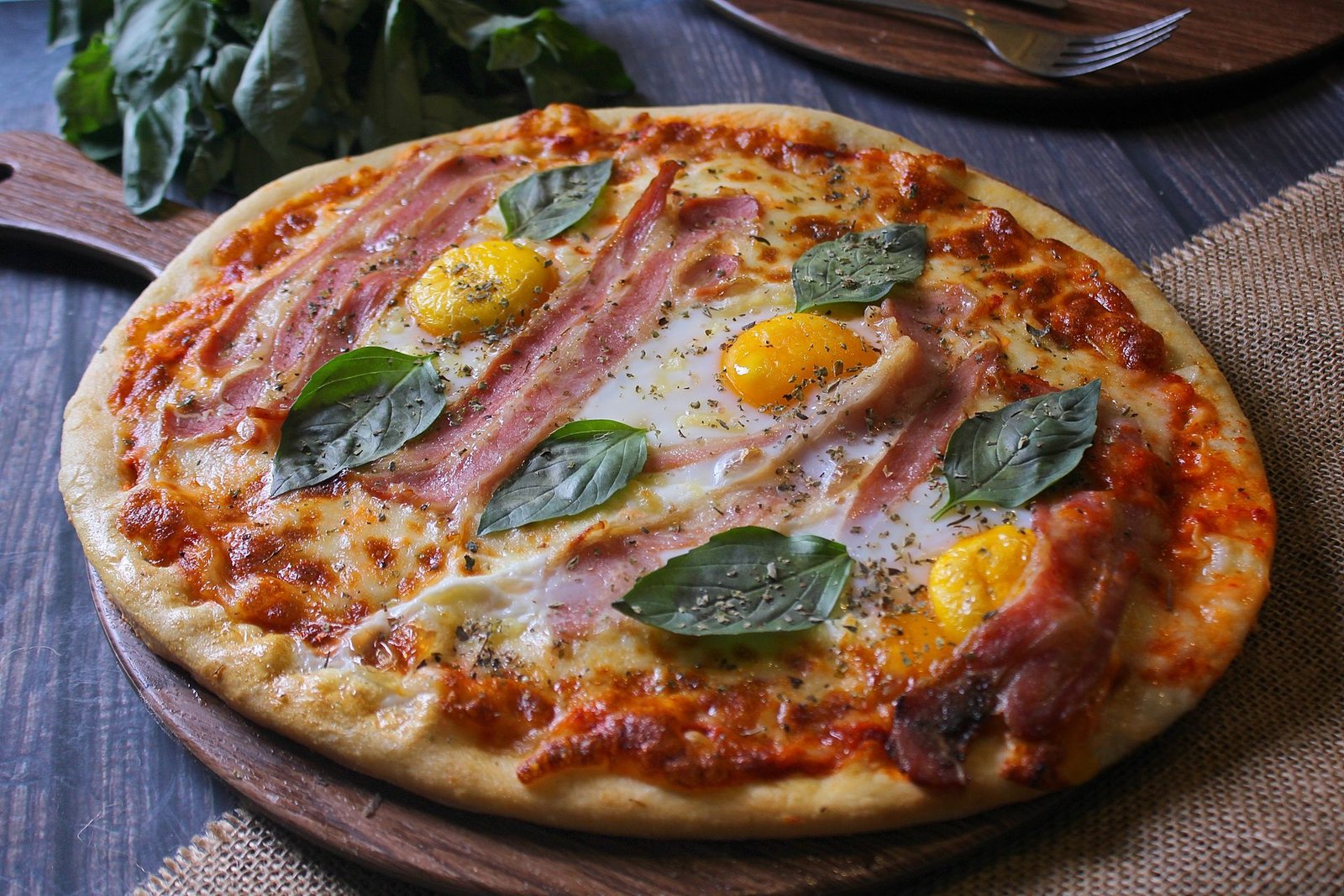
There is a special kind of joy that comes from eating pizza for breakfast, and an even bigger one that comes from making it yourself. This breakfast pizza recipe takes everything you love about a lazy weekend brunch — crispy bacon, golden runny-yolk eggs, and a blanket of melted cheese — and puts it on a chewy, blistered homemade crust that no delivery box can match. It is the rare breakfast that feels indulgent and still comes together in about 40 minutes with mostly pantry staples.
The trick to a great breakfast pizza is timing. Eggs overcook in minutes, bacon needs a head start to render its fat, and cheese has to melt without the crust turning soggy. This breakfast pizza recipe solves all three problems with a two-stage bake: the crust and bacon go in first to get a head start, then the eggs and cheese go on for a short final bake. The result is a pizza where the whites are just set, the yolks stay gloriously runny, the bacon is crisp, and the crust is golden and sturdy enough to pick up by the slice.
Below you will find the full ingredient list, a step-by-step method, the timing chart that makes the eggs come out right every time, plus make-ahead options, storage and reheating instructions, and food-safety notes. Whether this is your first homemade pizza or your fiftieth, this recipe is built to work in a standard home oven.
🍕 Key Takeaways
- Pre-bake the crust and bacon for 8–10 minutes before adding eggs — this is the single most important step for set whites and runny yolks.
- Use low-moisture mozzarella (not fresh) so the cheese melts cleanly without weeping water onto the crust.
- Crack each egg into a small bowl first, then slide it onto the pizza — shells and broken yolks are much easier to avoid this way.
- Cook bacon to 165°F/74°C internal temperature and keep leftovers refrigerated; never leave pizza at room temperature for more than 2 hours.
- Two 12-inch pizzas (or one large 16-inch) serve 4–6 people and take about 40 minutes start to finish.
- Leftovers reheat beautifully in a hot skillet or oven — avoid the microwave if you want to keep the crust crisp.
Why This Breakfast Pizza Recipe Works
Most breakfast pizza recipes fail in one of three ways: the eggs turn rubbery, the bacon stays floppy, or the crust goes soggy under a lake of cheese and egg liquid. This recipe was designed to eliminate all three problems with a simple two-stage baking method borrowed from pizzerias that pre-bake their shells.
The first stage — sometimes called a par-bake — sets the crust’s structure before any wet toppings touch it. Eight to ten minutes in a screaming-hot oven drives off surface moisture and starts the rise, so when the cheese and eggs go on, the base is already firm and beginning to brown. Par-cooking the bacon at the same time means it finishes crisping in the second bake rather than steaming under the cheese.
The second secret is cheese choice. Low-moisture mozzarella, the kind sold in a solid block, melts into an even, creamy layer with minimal water release. Fresh mozzarella packed in water — wonderful on a classic margherita — would flood this pizza, because eggs already contribute their own liquid as they set. Save the fresh mozzarella for another day.
Finally, there is the matter of seasoning. Breakfast pizza lives or dies on contrast: salty bacon, rich yolk, mild cheese, and a little sharpness. A simple olive-oil-and-garlic base (no tomato sauce) keeps the flavors in the breakfast register, while a sprinkle of everything-bagel seasoning or fresh chives over the finished pizza adds the finishing crunch and color. If you are a fan of hearty loaded pies, this belongs in the same rotation as our other pizza recipes.
Ingredients
This recipe makes two 12-inch breakfast pizzas (8 slices each), which comfortably serves 4–6 people. Scale it in half for one pizza — the method does not change.
For the crust
- 500 g (about 4 cups) bread flour, plus extra for dusting
- 325 ml (1⅓ cups) lukewarm water (about 100–110°F / 38–43°C)
- 7 g (2¼ teaspoons) instant dry yeast
- 10 g (2 teaspoons) fine sea salt
- 15 ml (1 tablespoon) extra-virgin olive oil, plus more for the bowls
- 5 g (1 teaspoon) granulated sugar or honey (feeds the yeast and aids browning)
For the toppings (per pizza; double for two)
- 6 slices thick-cut bacon, chopped into ½-inch pieces
- 150 g (about 1½ cups) shredded low-moisture mozzarella
- 50 g (about ½ cup) shredded sharp cheddar (optional, but recommended for tang)
- 3 large eggs, at room temperature
- 2 cloves garlic, minced (about 2 teaspoons)
- 15 ml (1 tablespoon) extra-virgin olive oil
- 2 tablespoons chopped fresh chives or green onion tops
- 1 teaspoon everything-bagel seasoning or flaky sea salt
- ½ teaspoon freshly cracked black pepper
- Optional: a pinch of red pepper flakes, a handful of baby spinach, or sliced avocado for serving
A note on the dough
If you already have a favorite dough, use it — any solid homemade pizza dough works here. The amounts above are a reliable 65%-hydration dough that stretches easily and bakes up chewy with a crisp bottom. In a real hurry, store-bought dough balls work fine; just let them warm up at room temperature for at least 45 minutes so they stretch without snapping back. For a heartier deep-dish version, this topping set also works beautifully in a cast iron skillet pizza — just extend the first bake by 5 minutes.
Step-by-Step Method
Step 1 — Mix and knead the dough (15 minutes + rise)
Whisk the flour, yeast, salt, and sugar together in a large bowl. Add the lukewarm water and olive oil, and stir until a shaggy mass forms. Turn it onto a lightly floured counter and knead 8–10 minutes until smooth and elastic — it should spring back slowly when poked. Place in a lightly oiled bowl, cover, and let rise in a warm spot until doubled, about 1 to 1½ hours. (Short on time? A same-day dough or even store-bought dough works — see the make-ahead section.)
Step 2 — Prepare the oven and the bacon (10 minutes)
At least 45 minutes before baking, place a pizza stone or steel on the middle rack and preheat the oven to its maximum — 500–550°F (260–290°C). A thoroughly heated stone is what gives you a crisp, blistered bottom. While the oven heats, cook the chopped bacon in a skillet over medium heat until about three-quarters done — crisped at the edges but still slightly soft, 6–7 minutes. It finishes in the oven. Drain on paper towels and set aside.
Step 3 — Shape the crusts (5 minutes)
Divide the risen dough into two equal balls (about 420 g each). On a floured surface, press each ball into a round, leaving a puffy 1-inch rim for the crust edge. Stretch to 12 inches by draping the dough over your knuckles and rotating — gravity does most of the work. Transfer each round to a lightly floured pizza peel or an upside-down baking sheet dusted with semolina.
Step 4 — First bake: the par-bake (8–10 minutes)
Brush each crust lightly with the olive oil and sprinkle the minced garlic evenly over the surface. Scatter half the par-cooked bacon over each pizza. Slide onto the hot stone and bake for 8–10 minutes, until the crust is set, lightly puffed, and just starting to color. This is the step that guarantees a crisp base under the eggs. Do not skip it.
Step 5 — Add cheese and eggs, second bake (6–8 minutes)
Pull the par-baked crusts out. Quickly sprinkle the mozzarella and cheddar over each, leaving the center slightly less covered where the eggs will sit. Crack each egg into a small ramekin first — check for shell fragments — then gently slide it onto the pizza, spacing the three eggs in a triangle. Return to the oven and bake 6–8 minutes more, until the cheese is bubbly, the egg whites are fully opaque and set, and the yolks are still jiggly when you nudge the pan. Carryover heat will firm them slightly as the pizza rests.
Step 6 — Finish and serve (2 minutes)
Let the pizzas rest 2 minutes — this lets the cheese set so slices hold together. Shower with chives, everything-bagel seasoning, and cracked black pepper. Slice with a sharp wheel and serve immediately, while the yolks are still runny enough to dip the crust into.
Pro Tips for Perfect Eggs Every Time
Room-temperature eggs set more evenly
Cold eggs straight from the fridge hit a hot pizza and the whites take longer to set while the yolk overheats. Set your eggs on the counter when you start shaping the dough (about 30–40 minutes ahead). The difference in the final texture is noticeable: silkier whites, more evenly warmed yolks.
Create a cheese “nest” for each egg
A raw egg white spreads wherever it wants, which can leave you with thin, overcooked edges. Fix it by building a shallow well: push the shredded cheese into a ring where each egg will go, leaving a bare pocket of crust. The cheese walls contain the white so it cooks in a tidy, even pool, and the yolk sits proud in the center.
Watch the whites, not the clock
Ovens vary wildly at maximum heat, so the 6–8 minute second bake is a guide, not a law. Start checking at 5 minutes: the pizza is done when the whites are fully opaque with no translucent jelly-like patches, but the yolk still wobbles. If the whites are done and the crust needs more color, you can slide the pizza to a higher rack for the last minute. An oven that runs hot may finish in 5 minutes flat; a cooler one may need 9. Trust your eyes.
Season the eggs directly
Cheese and bacon bring salt, but the egg itself needs its own seasoning or it tastes flat. A pinch of flaky salt and cracked pepper directly on each yolk right before the second bake makes an enormous difference. A whisper of smoked paprika or a few red pepper flakes works too if your crowd likes heat.
Shred your own cheese
Pre-shredded mozzarella is coated with starches that keep the shreds from clumping — and those same starches make it melt into a slightly grainy, less creamy layer. A block of low-moisture mozzarella and a box grater take three minutes and melt noticeably silkier, with better browning and that satisfying cheese pull. For a brunch centerpiece like this breakfast pizza recipe, the upgrade is worth the minimal effort. If you must use bagged shreds, give them a quick toss in the bowl to break up clumps so they distribute evenly.
Do not overload the toppings
It is tempting to pile on sausage, peppers, mushrooms, and hash browns all at once. Resist — especially anything watery. Every extra topping adds moisture and weight, which fights the crisp crust you worked for in the par-bake. If you want a loaded breakfast pizza, pre-cook vegetables until their moisture is gone and keep the total topping layer thin.
Variations Worth Trying
Sausage and gravy breakfast pizza
Swap the garlic-oil base for a thin smear of warm sausage gravy (about ⅓ cup per pizza), then top with browned breakfast sausage crumbles, mozzarella, and eggs. Finish with cracked pepper and a drizzle of hot honey. It eats like biscuits and gravy in slice form.
Veggie-packed breakfast pizza
Skip the bacon and load up on sautéed mushrooms, diced bell pepper, wilted spinach (squeezed very dry), and halved cherry tomatoes. A sprinkle of feta alongside the mozzarella adds the salty punch the bacon would have provided. This is a good candidate for a lighter crust, too — the toppings pair beautifully with a cauliflower crust pizza.
Denver omelet pizza
Diced ham, sautéed bell pepper and onion, and sharp cheddar instead of mozzarella, finished with eggs and chives. It is essentially a Denver omelet that happens to have a crust, and it is a crowd-pleaser at brunch gatherings.
Spicy chorizo breakfast pizza
Replace the bacon with cooked Mexican chorizo (drained well), add pickled jalapeños and pepper jack cheese, and finish the baked pizza with diced avocado, cilantro, and a squeeze of lime. Serve with hot sauce on the side.
Make-it-sweet-and-savory
A drizzle of hot honey over the finished bacon-and-egg pizza — applied right at the table — is the kind of move that makes people ask for the recipe. The heat and sweetness against the salty bacon and rich yolk is genuinely addictive. (If the sweet side of brunch is more your speed, a dessert pizza is worth a look for another day.)
Storage, Reheating & Food Safety
Make-ahead options
The dough can be made up to 3 days ahead: after kneading, refrigerate it in an oiled, covered container. Cold dough actually develops better flavor, much like a cold-fermented dough. Let it sit at room temperature for 60–90 minutes before shaping. The bacon can be cooked a day ahead and refrigerated. Cheese can be shredded ahead and kept in a sealed bag. On brunch morning, all that is left is shaping, the two-stage bake, and cracking the eggs — about 25 minutes of active work.
Storing leftovers
Cool leftover slices to room temperature within 2 hours, then refrigerate in an airtight container or wrapped tightly in foil for up to 3 days. Do not leave breakfast pizza — or any pizza with eggs and meat — sitting out on the counter all morning. The 2-hour rule matters more here than with a plain cheese slice because eggs and bacon are highly perishable.
Reheating (ranked best to worst)
- Hot skillet, covered (best): Place slices in a dry nonstick or cast-iron skillet over medium heat, cover with a lid, and heat 4–5 minutes. The bottom re-crisps while the lid’s trapped steam gently warms the egg. The yolk will not be runny anymore, but the texture stays pleasant.
- Oven or toaster oven: 375°F (190°C) on a sheet pan for 8–10 minutes. Nearly as good as the skillet, and better for reheating many slices at once. Our full reheating guide covers the details.
- Air fryer: 350°F (175°C) for 3–4 minutes. Fast and crisp, though the cheese can brown quickly — check early.
- Microwave (last resort): 45–60 seconds per slice. It works, but the crust turns chewy and the egg rubbery. If you must, place a mug of water alongside the slice to add steam.
Freezing
Breakfast pizza freezes surprisingly well if you do it before adding the eggs. Par-bake the crust with bacon and cheese, cool completely, wrap tightly, and freeze for up to 2 months. Bake from frozen at 475°F (245°C) for 10–12 minutes, add the eggs, and finish for 6–8 minutes more.
Food-Safety Notes
Because this pizza carries eggs and pork, a few safety habits are worth building in. Cook the bacon to an internal temperature of 165°F (74°C) — use a food thermometer rather than judging by color alone, since oven lighting and smoke can be misleading. Bake until the egg whites are completely set and opaque; runny yolks are a texture choice, but the whites must not be translucent or jelly-like. If you are serving pregnant guests, young children, older adults, or anyone immunocompromised, consider baking the eggs a minute or two longer until the yolks are firm — it is the safer call.
Cool and refrigerate leftovers within 2 hours of baking, and never leave the pizza at room temperature for longer than that. When reheating, bring slices to steaming hot throughout. Raw flour is also worth a mention: do not taste the raw dough or let kids play with it, since uncooked flour can carry bacteria that only heat destroys.
Frequently Asked Questions
Can I use store-bought pizza dough for this breakfast pizza recipe?
Absolutely. Store-bought dough balls work well — just let them rest at room temperature for 45–60 minutes before stretching so the gluten relaxes. One standard 1-pound (450 g) dough ball makes one 12-inch pizza, so buy two for this recipe. The par-bake step matters even more with store-bought dough, which can be softer and wetter than homemade.
How do I keep the eggs from overcooking?
Two things: the par-bake and vigilance. Because the crust is already mostly baked when the eggs go on, the second bake only needs 6–8 minutes — short enough that the whites set before the yolks firm up. Start checking at 5 minutes and pull the pizza when the whites are opaque but the yolks still jiggle. Carryover heat will finish the job during the 2-minute rest.
Can I make breakfast pizza without bacon?
Yes — try browned breakfast sausage, diced ham, or a vegetarian version with sautéed mushrooms and spinach. If you skip meat entirely, add something salty to compensate: feta, olives, or a sprinkle of parmesan. The method and bake times do not change.
What cheese is best for breakfast pizza?
Low-moisture mozzarella is the workhorse — it melts smoothly without watering out. Mixing in some sharp cheddar adds flavor depth that plain mozzarella lacks. Avoid fresh mozzarella in water, pre-shredded bags with heavy anti-caking starch (they melt grainy), and very aged hard cheeses as the main cheese, though parmesan is great as a finishing sprinkle.
Can I prepare breakfast pizza the night before?
You can prep every component — dough (refrigerated), cooked bacon, shredded cheese, chopped herbs — but assemble and bake fresh in the morning. Eggs should always be cracked onto the pizza just before the second bake; a pizza assembled with raw eggs overnight would be a food-safety problem and the crust would go soggy.
[…] and crack eggs over the top for a final 6–8 minute bake — the same two-stage logic as our breakfast pizza recipe, in deep-dish form. Serve straight from the skillet at the table (on a trivet!) for maximum […]