

A pub crawl hops between bars. A pizza crawl hops between pizzerias — three to five stops, a slice or two at each, and a full evening of comparing crusts, sauces, and styles side by side. It’s the best way to answer the eternal question of which pizza joint in town is actually the best, and it’s one of the most fun group outings you can organize for the price of a few pizzas.
But a great pizza crawl doesn’t happen by accident. Show up hungry with no plan and you’ll be stuffed by stop two, arguing about where to go next while the night dissolves. This guide covers the whole playbook: picking your route, pacing the eating, how much to order per stop, scoring sheets, group logistics, budgeting, and crawl etiquette — everything you need to run a tasting tour your friends will talk about for months and ask you to repeat.
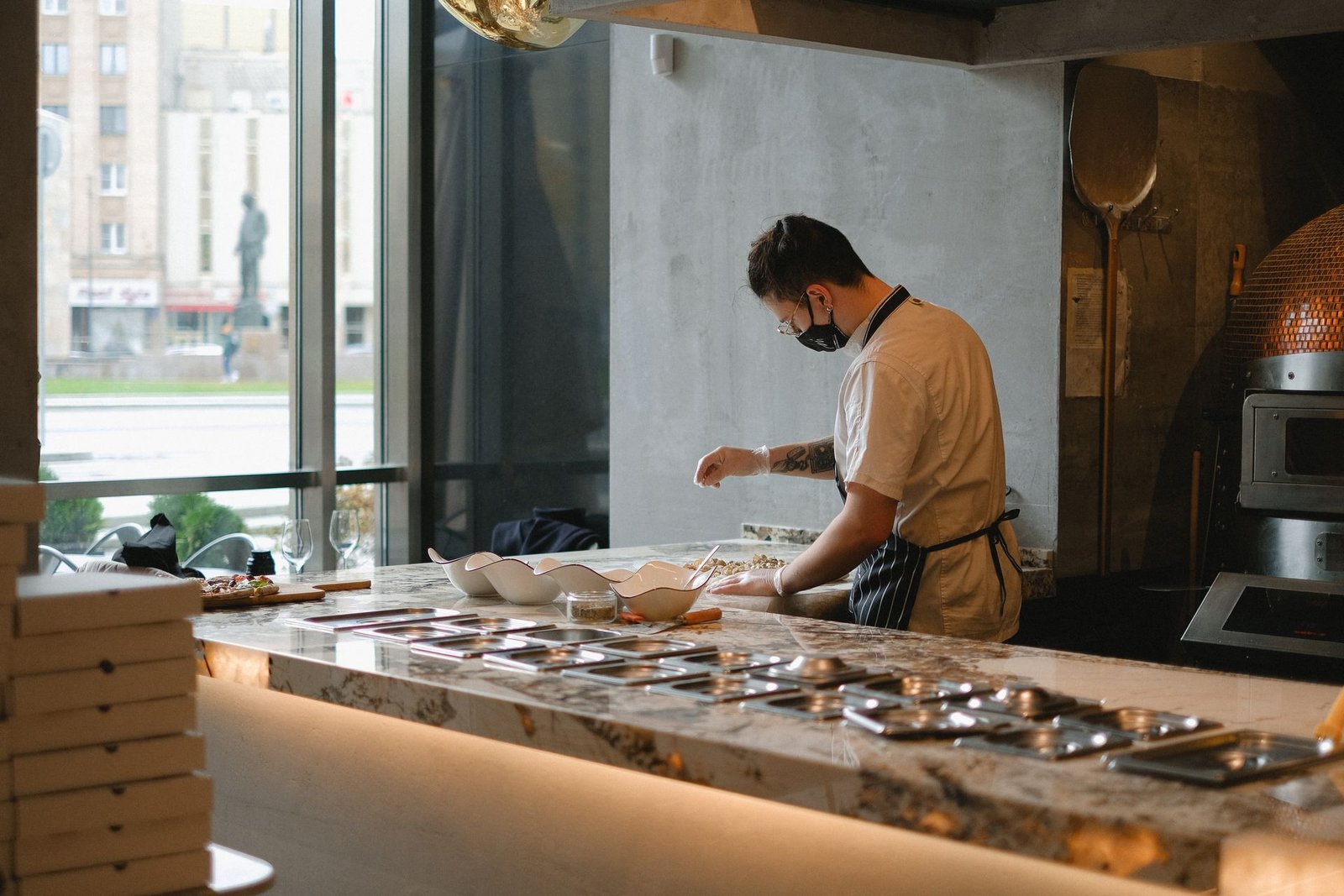
🍕 Key Takeaways
- A pizza crawl is a self-guided tasting tour: 3–5 pizzerias in one outing, 1–2 slices per stop.
- Plan your route in advance — cluster stops close together and order the itinerary from lightest to heaviest styles.
- Order one large (or two mediums) per stop for a group of 4–6; everyone tastes, nobody gets full early.
- Pace with 45–60 minutes per stop and walk between locations when possible — movement aids digestion and morale.
- Bring a simple scoring sheet (crust, sauce, cheese, overall) and crown a winner at the final stop.
- Budget $15–$30 per person for food, plus drinks and tips at every stop — and designate a driver or use rideshares.
- Call ahead for groups of 6+; many pizzerias appreciate the warning and some will prepare a tasting lineup.
What Is a Pizza Crawl, Exactly?
The concept is simple: visit several pizzerias in a single outing, eating a small amount at each, and compare them. Think of it as a wine tasting where the flights are slices. A typical crawl has three to five stops over three to four hours, with each stop featuring a different style or a different shop’s take on a classic.
The magic of the format is comparison. Eating one pizza tells you whether it’s good; eating slices from four pizzerias in one evening teaches you what “good” means — how one shop’s crust shatters while another’s chews, how sauce sweetness varies, how the same pepperoni topping tastes different on different pies. You’ll leave with opinions, and strong ones.
Pizza crawls work for birthdays, bachelor/bachelorette parties, team outings, date nights (a two-person mini-crawl is deeply charming), and out-of-town visitors who want the full local tour. If you’re visiting one of America’s great pizza towns, a crawl is the single best use of an evening — our best pizza cities guide can help you pick the destination.
Crawl formats to consider
The style tour: each stop features a different style — Neapolitan, New York, Detroit, Chicago tavern. Educational and delicious; great for pizza nerds. The neighborhood showdown: all stops within walking distance, same style, different shops — pure head-to-head competition. The themed crawl: every stop’s signature slice, or a specific topping judged across shops (the great pepperoni-off). Pick the format that fits your group, and announce it in advance so people arrive in the right mindset.
Step 1: Pick Your Route
Route planning is the highest-leverage work of the entire crawl. Get this right and everything else flows; get it wrong and you spend the evening in transit.
Cluster your stops. Ideally, all pizzerias are within a 15-minute walk or a short drive of each other. A dense neighborhood with several good shops is the dream — downtown districts, Little Italy-type corridors, college neighborhoods. Plot the stops on a map before committing; if stop three is a 25-minute drive from stop two, cut it or reorder.
Order stops light to heavy. Start with the lightest styles (Neapolitan, thin-crust) and progress toward the heaviest (deep-dish, Detroit, stuffed). Your palate is sharpest and your stomach emptiest at stop one — that’s where subtlety shines. Save the gut-bomb for last, when richness reads as a finale rather than a mistake. Never start with deep-dish unless you want a two-stop crawl.
Mix the lineup. Variety keeps the evening interesting: different styles, different price points, maybe one beloved institution and one newcomer. Avoid two nearly identical New York slice shops back-to-back — the comparison gets muddy and the evening feels repetitive. If your town only has one style, vary by topping specialty instead.
Check hours and days. Pizzerias keep idiosyncratic hours — closed Mondays, ovens off between lunch and dinner, late-night-only slice windows. Verify every stop’s hours for your crawl day, and note any that don’t take groups or don’t do dine-in. A quick round of calls or website checks the week before prevents the special pain of arriving at a dark storefront with a hungry group and a useless scoring sheet.
The anchor stop
Designate your final stop as the anchor — the place with the best seating for a group, the fullest menu (for anyone who wants a real meal after all that tasting), and ideally drinks. The anchor is where scores get tallied, the winner gets crowned, and the evening winds down naturally. Pick it first, then build the route toward it.
Step 2: Pacing — How Much to Order Per Stop
This is where crawls succeed or fail. The golden rule: order less than you think at every stop. You are tasting, not dining. For a group of 4–6, one large pizza (or two mediums) per stop is plenty — that’s 1–2 slices per person per stop, 4–8 slices total across the evening. It sounds like a lot written out, but spread over four hours with walking between stops, it’s very manageable.
Resist the “while we’re here” urge. Every group has someone who wants to order the full spread at stop one because the menu looks amazing. That person will be regretting it by stop three. Appoint a crawl captain (maybe you) with gentle veto power over over-ordering. The mantra: we can always come back; we can’t un-eat.
Mind the clock. Budget 45–60 minutes per stop: 10 minutes to settle and order, 15–20 to eat and score, and a buffer before moving on. Three stops fit comfortably in an evening; five is ambitious but doable if you’re disciplined. Build in a 15-minute flex window — someone always needs a restroom, a photo, or a breather.
Hydration and pacing aids. Water at every stop, no exceptions — it resets your palate between pizzas far better than soda, and it keeps the salt from catching up with you. Walking between stops (even 10 minutes) genuinely helps: movement aids digestion and clears your head. Some crawlers swear by a simple green salad at the midpoint stop to cut the richness; others prefer to power through on water and willpower. Know your group.
What to order at each stop
Order each shop’s signature — the thing they’re known for. That’s the fairest test and the most fun comparison. If a place is famous for its margherita, don’t judge it on its barbecue chicken. One exception: if you’re running a themed crawl (pepperoni at every stop), consistency beats signature. And always ask the staff what they’re proudest of; their answer is usually the right order, and it often comes with a story worth hearing.
Step 3: The Scoring Sheet
A crawl without scoring is just dinner; a crawl with scoring is an event. A simple sheet transforms opinions into a verdict and gives the evening a narrative arc — the underdog shop that surges at stop four, the favorite that coasts, the dramatic final tally.
Keep it simple. Score each pizza on four categories, 1–5 points each: Crust (texture, char, flavor), Sauce (balance, seasoning), Cheese & Toppings (quality, distribution), and Overall impression (the gut score). Twenty points max per pizza. Add a line for notes — “best char,” “sauce too sweet,” “would order again” — because the notes are what you’ll actually remember months later when the scores have blurred together.
How to run it: hand out sheets (or a shared phone note) at stop one, score after each stop before moving on — palates forget fast, so don’t batch the scoring at the end. Tally at the anchor stop. Crown a winner, award a silly prize (a paper crown, a gift card for a return visit), and take the group photo with the champion pie.
Keep it friendly. The scoring is a game, not a health inspection. If a shop’s staff asks what you’re doing, tell them — most pizzerias love crawl groups and some will even suggest what to order. Just keep the critique good-natured and never loud enough to carry; you’re guests, not judges on television.
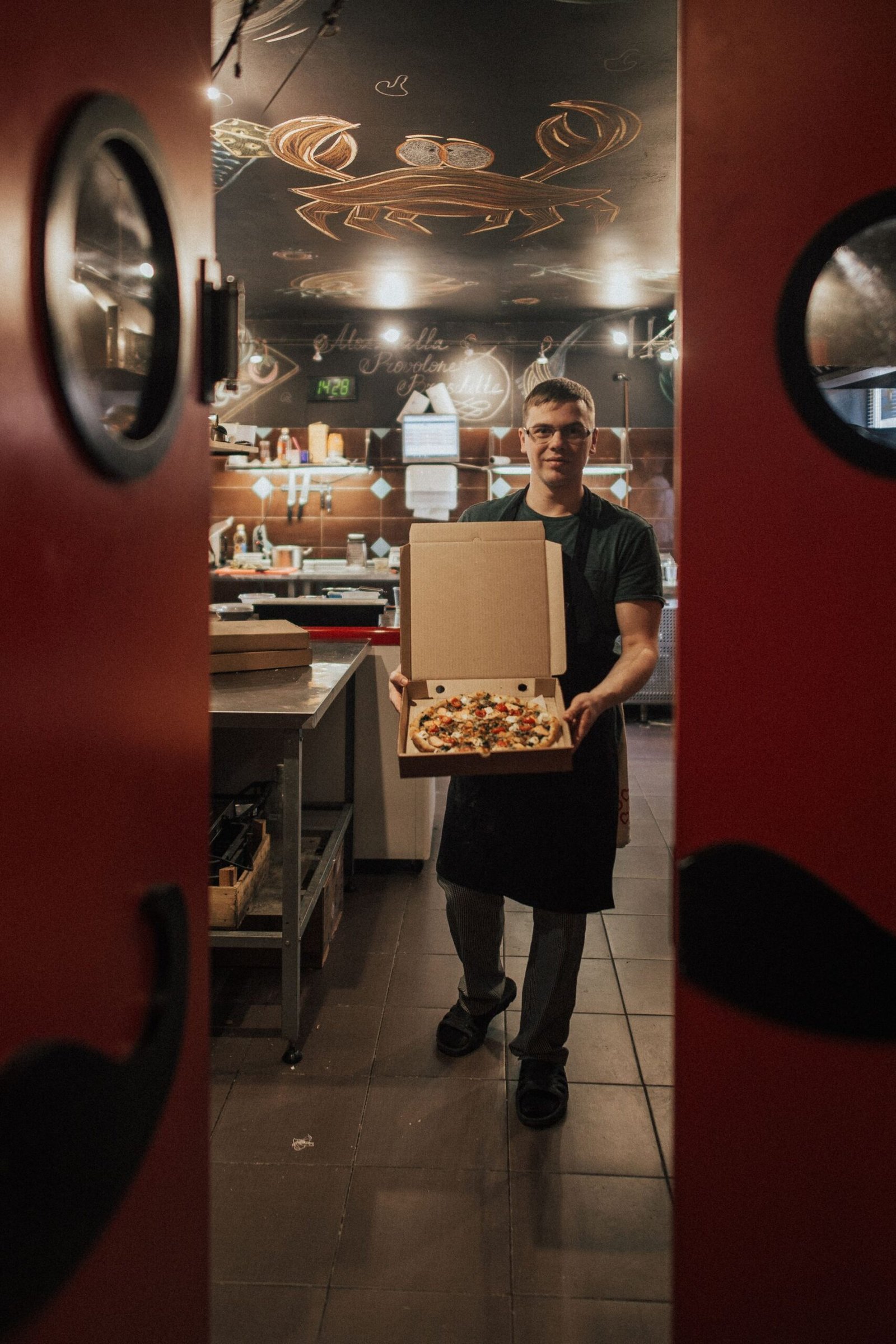
Group Logistics: Size, Transport, and Communication
The ideal group size is 4–8 people. Fewer than four and you’re ordering too much pizza per person; more than eight and you’re unmanageable — splitting checks gets painful, seating gets hard, and the group fragments. If more people want in, consider two parallel crawl teams with a shared scoring sheet and a merged finale at the anchor stop.
Transportation plan first. If your stops are walkable, walk — it’s the best format. If driving is required, sort it before the first slice: designated driver, rideshares between stops, or (for the committed) a hired van for the evening. Drinking and driving is never worth it, and crawls pair naturally with beer — our pizza and beer pairing guide can inform the drink orders. The unglamorous logistics email you send the day before (“we meet at 6, we walk, Dave’s driving the late leg”) is what separates a great crawl from a chaotic one.
Communication. Set up a group chat for the crawl: the route map, the meeting point and time, the format, and the budget expectation. The two most useful messages you can send in advance are “eat a light lunch, nothing after 2 PM” and “bring cash for tips.” Both prevent real problems.
Call ahead for 6+. A group of six or more arriving unannounced at a small pizzeria is a stress event for the staff. A quick call — “we’re a pizza crawl group of eight, we’ll be in around 7:30, just ordering a couple of larges to share” — lets them plan, and many shops will rise to the occasion with faster service or off-menu suggestions. Some will even prepare a special tasting lineup if you ask nicely.
Budgeting Your Pizza Crawl
A crawl is refreshingly affordable as group outings go. Here’s the realistic math per person:
Food: $15–$30. One large pizza split 4–6 ways runs $4–$7 per person per stop; across 3–5 stops that’s $15–$30. Style matters — Neapolitan and artisan shops cost more per pie than slice joints. Check menus when planning the route so the budget matches the lineup.
Drinks: $10–$25. A beer or two per stop adds up; water is free and your best friend. Decide the group’s drink posture in advance — full bar crawl energy or tasting-focused moderation.
Tips: budget for every stop. This is the line item people forget. You’re receiving service at three to five establishments — tip at each one as you would for normal dine-in. Our tipping guide covers delivery, but the dine-in principle is the same: 15–20% at every stop. Across a crawl, that’s real money — build it into the per-person estimate so nobody’s surprised.
The collection method. Easiest: one person pays at each stop and everyone settles via a payment app at the anchor, or use a bill-splitting app in real time. Decide before stop one — nothing kills momentum like a 20-minute check-splitting debate at stop two.
Crawl Etiquette: Being a Good Guest
You’re asking several restaurants to serve your group in quick succession, so good manners matter — they’re also what gets you invited back.
Don’t camp. You’re on a schedule; the table is needed after you. Order promptly, eat, score, and move on within your 45–60 minute window. If the place is slammed, be extra efficient.
Tip well at every stop. Worth repeating: the staff doesn’t know you’re on a crawl and doesn’t care — they just see a table. Tip 15–20% everywhere, in cash when you can. Generous crawl groups become legendary among local pizzerias; cheap ones become cautionary tales.
Keep the critique kind. Scoring is for your sheet, not for the dining room. Compliment the staff genuinely — “this crust is fantastic” costs nothing and means a lot. If a pizza disappoints, note it quietly and move on.
Clean up after yourselves. Push in chairs, stack plates if that’s the vibe, leave the table tidy. Small courtesies compound across five stops.
Respect the regulars. You’re visitors in someone’s neighborhood spot. Keep the volume reasonable, don’t block the counter with a huddle, and remember that the couple on date night at the next table didn’t sign up for your event.
Variations: Themed and Special Crawls
Once you’ve run a classic crawl, the format invites riffs:
The style championship: one style, many shops — all Neapolitan, all Detroit, all tavern-style. The purest head-to-head. The topping gauntlet: the same topping judged everywhere — pepperoni, mushroom, or white pizza across five shops. The budget crawl: slice joints only, cheapest total wins bonus points — proof that great pizza doesn’t need a white tablecloth. The dessert crawl: end at a spot with dessert pizza or add a gelato stop as the finale. The visitor’s crawl: when friends visit town, the crawl doubles as a tour — history between stops, local lore with the slices.
Seasonal crawls are worth planning around: many shops run seasonal specials (butternut squash in fall, fresh corn in summer) that make a themed crawl feel timely. And if you’re pairing drinks seriously, our wine pairing guide offers the grape-side companion to the beer pairings — a wine-focused crawl is a sophisticated variation for the right group.
Common Mistakes That Ruin Pizza Crawls
Too many stops. Five is the practical max; six is a marathon most groups regret. Three excellent stops beat five rushed ones. No route plan. “We’ll figure it out” means forty minutes of standing on a sidewalk debating. Plan the route. Ordering full meals at stop one. The cardinal sin — covered above, worth repeating. Skipping water. Dehydration plus salt plus cheese is a miserable combination. Forgetting dietary needs. Check restrictions in advance: gluten-free, vegetarian, dairy-free. Most pizzerias can accommodate with notice; none can accommodate a surprise. No end time. Open-ended crawls drift into exhaustion. Announce the anchor stop and the finale — “we crown the winner at 10” — and let people peel off gracefully after.
The Finish Line: Crowning Your Champion
Every great pizza crawl ends the same way: at the anchor stop, sheets tallied, a winner declared. Make it a moment — the paper crown, the toast, the group photo with the champion pie. Then do the thing that turns a fun night into a tradition: schedule the next one before everyone scatters, while the energy is high and the opinions are fresh. The losing shops get their rematch, the route rotates to a new neighborhood, and your group now has a thing — the quarterly crawl, the annual championship. Some of the best food traditions start exactly this way: a few friends, a scoring sheet, and a shared opinion about crust. Lace up your walking shoes, bring an appetite, and go find the best slice in town. For help with the broader math of feeding your group, our per-person pizza guide and ordering guide have you covered — and if the crawl bug bites hard, browse our pizza culture and ordering collection for the next adventure.
Frequently Asked Questions
How many pizzerias should a pizza crawl include?
Three to five is the sweet spot. Three stops make a relaxed evening; five is a full ambitious night. Fewer than three isn’t really a crawl, and more than five usually means rushed stops and overstuffed crawlers. Start with three or four for your first crawl.
How much pizza should we order at each stop?
For a group of 4–6, one large pizza (or two mediums) per stop — roughly 1–2 slices per person. You’re tasting, not dining. The most common beginner mistake is over-ordering early; appoint someone to keep orders lean and remind the group you can always return to a favorite later.
How do you score pizzas on a crawl?
Use a simple 1–5 scale across four categories: crust, sauce, cheese and toppings, and overall impression — 20 points max per pizza. Score right after each stop while the memory is fresh, tally at the final stop, and crown a winner. Keep the notes column; that’s what you’ll actually reminisce about.
What’s the best time of day for a pizza crawl?
Early evening is ideal — start around 5:30–6 PM so you hit dinner hours at every stop and finish by 9–10. Starting earlier means some shops aren’t in full dinner mode; starting later compresses the schedule. For weekend crawls, Saturday evening beats Friday (kitchens are less slammed than the Friday rush).
How much does a pizza crawl cost per person?
Typically $25–$55 all-in: $15–$30 for food, $10–$25 for drinks, plus tips at every stop. Slice-joint crawls run cheaper; artisan and Neapolitan lineups run higher. Set the budget expectation in the group chat beforehand and pick one person to manage the money.
Can you do a pizza crawl with dietary restrictions in the group?
Absolutely, with planning. Check restrictions before finalizing the route and confirm each stop can accommodate — most pizzerias offer gluten-free crusts or vegetarian options with notice. Call ahead rather than hoping. A heads-up lets the kitchen prepare instead of scrambling, and everyone gets to participate fully.