

The best pizza sauce you’ll ever make takes five minutes, five simple ingredients, and zero cooking. That surprises people — we’re trained to think sauce means simmering a pot for an hour. But pizza sauce isn’t pasta sauce. It cooks in the oven, on the pizza, where the intense heat concentrates its flavor in minutes. Starting with a cooked sauce means it cooks twice, and twice-cooked tomato sauce tastes dull, flat, and oddly sweet in the way of jarred sauces.
A no-cook homemade pizza sauce recipe is brighter, fresher, and more tomato-forward than anything simmered — and it’s the exact method used by the best Neapolitan and New York pizzerias in the world. All you need is a can of good tomatoes, garlic, olive oil, salt, and oregano. This guide gives you the exact recipe, explains why each ingredient matters (and which tomatoes to buy), offers variations for every pizza style, and covers storage so you can make a batch that lasts weeks.
🍕 Key Takeaways
- The best pizza sauce is uncooked: it cooks on the pizza in the oven’s intense heat, staying bright and fresh-tasting.
- You only need 5 ingredients — canned San Marzano-style tomatoes, garlic, extra-virgin olive oil, sea salt, and dried oregano.
- Use canned whole peeled tomatoes (hand-crushed) for the best texture; avoid pre-crushed or pureed for a fresher result.
- Cooking the sauce before baking dulls it — simmered sauce tastes flat because it effectively cooks twice.
- Season boldly but simply: the sauce should taste bright and balanced raw, since the oven concentrates everything.
- One 28-oz can makes sauce for 4–6 pizzas; it keeps 5 days refrigerated and 3 months frozen.
- Adjust the base for your style: chunkier for deep dish, smoother for Neapolitan, sweeter for St. Louis.
Why No-Cook Sauce Wins: The Flavor Science
Here’s what happens when sauce meets a 500°F oven: the water in the tomatoes evaporates rapidly, the sugars caramelize, and the raw edge of the garlic and herbs mellows — all in the 6–8 minutes the pizza bakes. The oven does the cooking work, and it does it at temperatures a stovetop simmer can’t touch. A sauce that goes on raw comes out tasting cooked, concentrated, and vibrant.
Now consider a sauce you simmered for 30 minutes before it ever met the pizza. In the oven, it cooks again — effectively a second full cooking. The fresh, bright top notes that make tomatoes taste alive cook away, leaving something muted and one-dimensional. This is why jarred “pizza sauces” taste the way they do: they’ve been cooked in manufacturing, then cooked again on your pizza. Double-cooked is the enemy.
The world’s best pizzerias figured this out generations ago. In Naples, the sauce on a Margherita is typically just crushed San Marzano tomatoes with salt — sometimes not even that much — applied raw. In New York, the classic sauce is canned tomatoes, garlic, oregano, olive oil, and salt, mixed and used as-is. The pattern holds across styles: the oven is the saucepan. Trust it.
There’s one exception worth naming: very long-baked styles like Chicago deep dish (35–45 minutes) sometimes use a briefly simmered sauce, because 40 minutes of oven time can over-reduce a raw sauce. Even then, most deep-dish shops keep the cooking minimal — 10–15 minutes, not an hour. For every other style, raw is right.
The 5 Ingredients (And Why Each Matters)
1. Canned whole peeled tomatoes (28 oz / 800g)
The foundation, and the ingredient worth caring about most. Buy whole peeled tomatoes, not diced, not crushed, not puree. Here’s why: diced tomatoes are treated with calcium chloride to hold their shape, which makes them firmer and less flavorful; crushed tomatoes and puree vary wildly in quality and often taste tinny or cooked. Whole peeled tomatoes are simply the best fruit, packed in juice — and you control the texture by crushing them yourself.
Which tomatoes? Certified D.O.P. San Marzano tomatoes from Italy are the gold standard — sweet, low-acid, with few seeds — but good California-grown “San Marzano style” tomatoes (look for brands packed in the USA from Italian-style seeds) are excellent and often fresher-tasting. Our San Marzano tomatoes guide breaks down what the labels actually mean and which cans to buy. Whatever you choose, taste the tomatoes from the can first: if they’re delicious raw, the sauce will be delicious. If they’re tinny or bland, no seasoning saves them.
2. Garlic (2 cloves, minced or grated)
Fresh garlic, always — never garlic powder in the base sauce (save the powder for dusting). Grate it on a microplane or mince it very fine so it distributes evenly and mellows fully in the oven’s heat. Raw garlic tastes harsh, but remember: it cooks on the pizza. Two cloves per 28-oz can is the classic ratio; garlic lovers can push to three. If you’re sensitive to raw garlic bite, let the minced garlic sit in the olive oil for 10 minutes before mixing — the oil tames it.
3. Extra-virgin olive oil (2 tablespoons)
Olive oil does three jobs: it carries flavor, adds richness that rounds the tomato’s acidity, and helps the sauce spread evenly. Use a decent extra-virgin — not your precious finishing oil, but something you’d happily eat on bread. Two tablespoons per can is plenty; more makes the sauce greasy and can cause it to slide off the dough.
4. Fine sea salt (1 to 1 1/2 teaspoons)
Salt is what makes tomatoes taste like themselves. Canned tomatoes vary in saltiness, so start with 1 teaspoon, taste, and adjust. The sauce should taste well-seasoned but not salty raw — the oven concentrates flavors, and cheese adds more salt on top. Fine sea salt dissolves instantly in the uncooked sauce; avoid coarse kosher salt unless you let the sauce rest 10 minutes.
5. Dried oregano (1 teaspoon)
Dried oregano, not fresh — the dried herb’s concentrated, earthy punch is the classic pizzeria flavor, while fresh oregano tastes green and mild. Rub it between your palms as you add it to wake up the oils. Greek or Sicilian oregano is the most pungent and the best choice if you can find it. (Fresh basil has its place — but as a topping added after baking, not cooked into the sauce.)
That’s it. Five ingredients. No sugar (good tomatoes don’t need it), no onion, no simmering. If your tomatoes are genuinely acidic, a tiny pinch of sugar — 1/4 teaspoon — is acceptable, but treat it as a fix for bad tomatoes, not a recipe component.
Tasting and Adjusting: The 60-Second Sauce Check
Raw sauce tastes different from baked sauce — the oven concentrates, sweetens, and mellows — so you need to taste with the bake in mind. Here’s how to read a raw sauce:
Taste a spoonful straight. It should taste bright and a little aggressive — saltier and more garlicky than you’d want in a finished dish. That’s correct. The bake rounds everything: water evaporates (concentrating salt and flavor), raw garlic mellows, and tomato sugars caramelize. A sauce that tastes perfectly balanced raw will taste flat after baking. Aim for 10–15% bolder than “perfect.”
The salt test. If the sauce tastes flat or the tomato flavor seems muted, it needs salt — add 1/4 teaspoon at a time. Salt doesn’t just add saltiness; it suppresses bitterness and amplifies the tomato’s natural sweetness and umami. Most under-seasoned sauces are fixed by salt alone.
The acid test. If the sauce tastes sharp or tinny even after salting, the tomatoes were acidic or low-quality. A tiny pinch of sugar (1/4 teaspoon) or a small grated carrot’s worth of sweetness balances it — but this is triage, not technique. Note the brand and buy better tomatoes next time.
The rest test. If the garlic tastes harsh and raw, give the sauce 15–30 minutes at room temperature. Garlic’s bite mellows as its compounds dissolve into the oil and tomato. Never add more garlic to compensate for harshness — time fixes what quantity can’t.
The spread test. Drag a spoon through the sauce: it should leave a brief trail before leveling. Too thick (paste-like) and it won’t spread evenly; too thin (soupy) and it will sog the crust. Adjust with reserved tomato liquid or by draining, not with water.
Homemade Pizza Sauce Recipe: Step by Step
Yield: about 3 cups — enough for 4–6 (12-inch) pizzas
Time: 5 minutes
Equipment: a bowl and your hands (or a potato masher)
- Open the 28-oz can of whole peeled tomatoes. Pour off about half the packing liquid into a cup and reserve it — you can add it back if the sauce needs thinning, but most cans have more liquid than you want.
- Pour the tomatoes into a large bowl. Crush them by hand, squeezing each tomato until it breaks apart. Aim for a rustic texture: mostly crushed with some small chunks remaining. (A potato masher works; a blender or food processor makes it too smooth and aerates it into an orange foam — avoid.)
- Add 2 minced garlic cloves, 2 tablespoons extra-virgin olive oil, 1 teaspoon fine sea salt, and 1 teaspoon dried oregano (rubbed between your palms).
- Stir well and taste. It should taste bright, garlicky, well-salted, and unmistakably of fresh tomato. Adjust salt first, then consider a pinch more oregano. If it tastes flat, it needs salt; if it tastes harsh, it needs 10 minutes of rest for the flavors to meld.
- Use immediately, or refrigerate. The sauce actually improves after a few hours as the garlic mellows into the tomatoes.
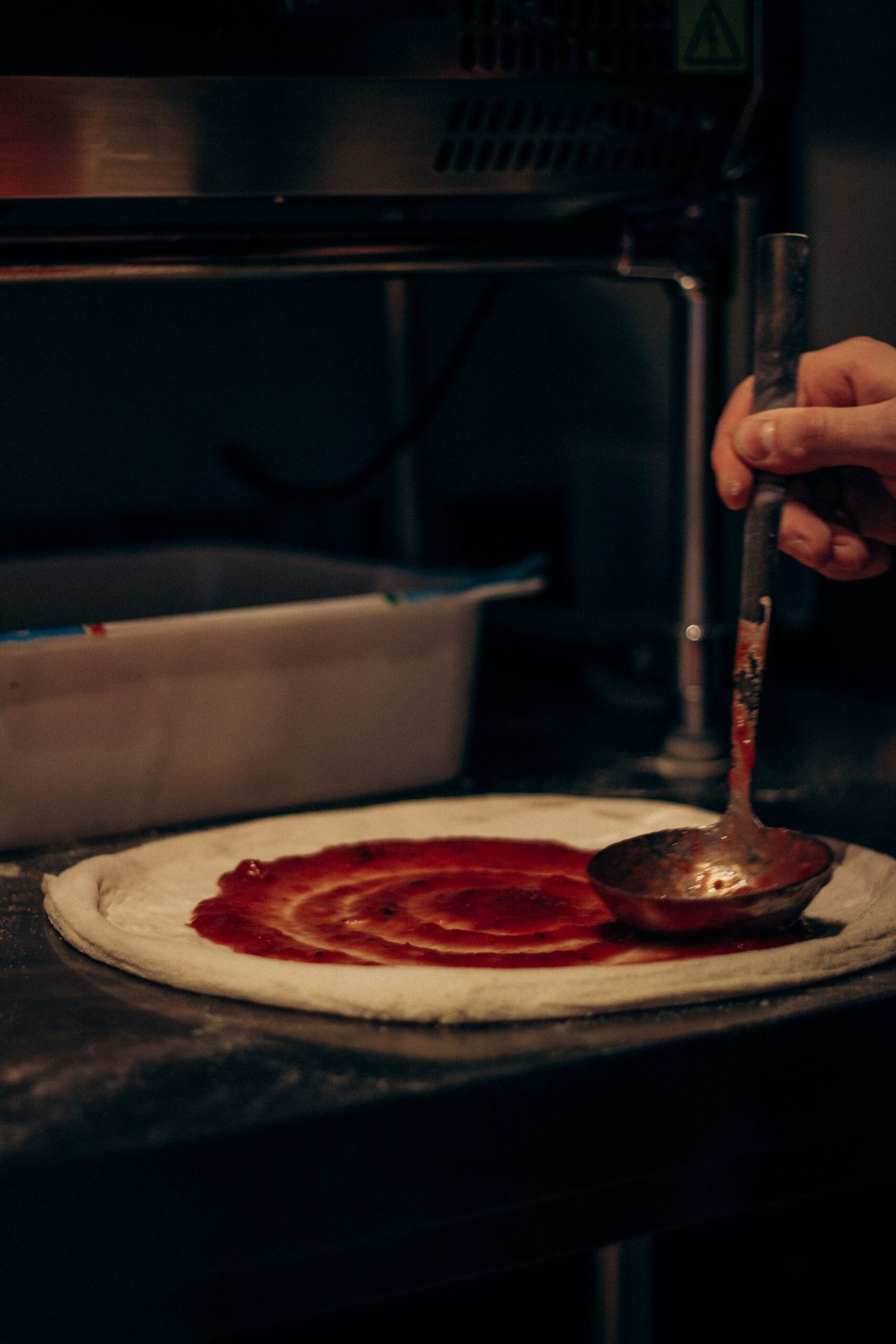
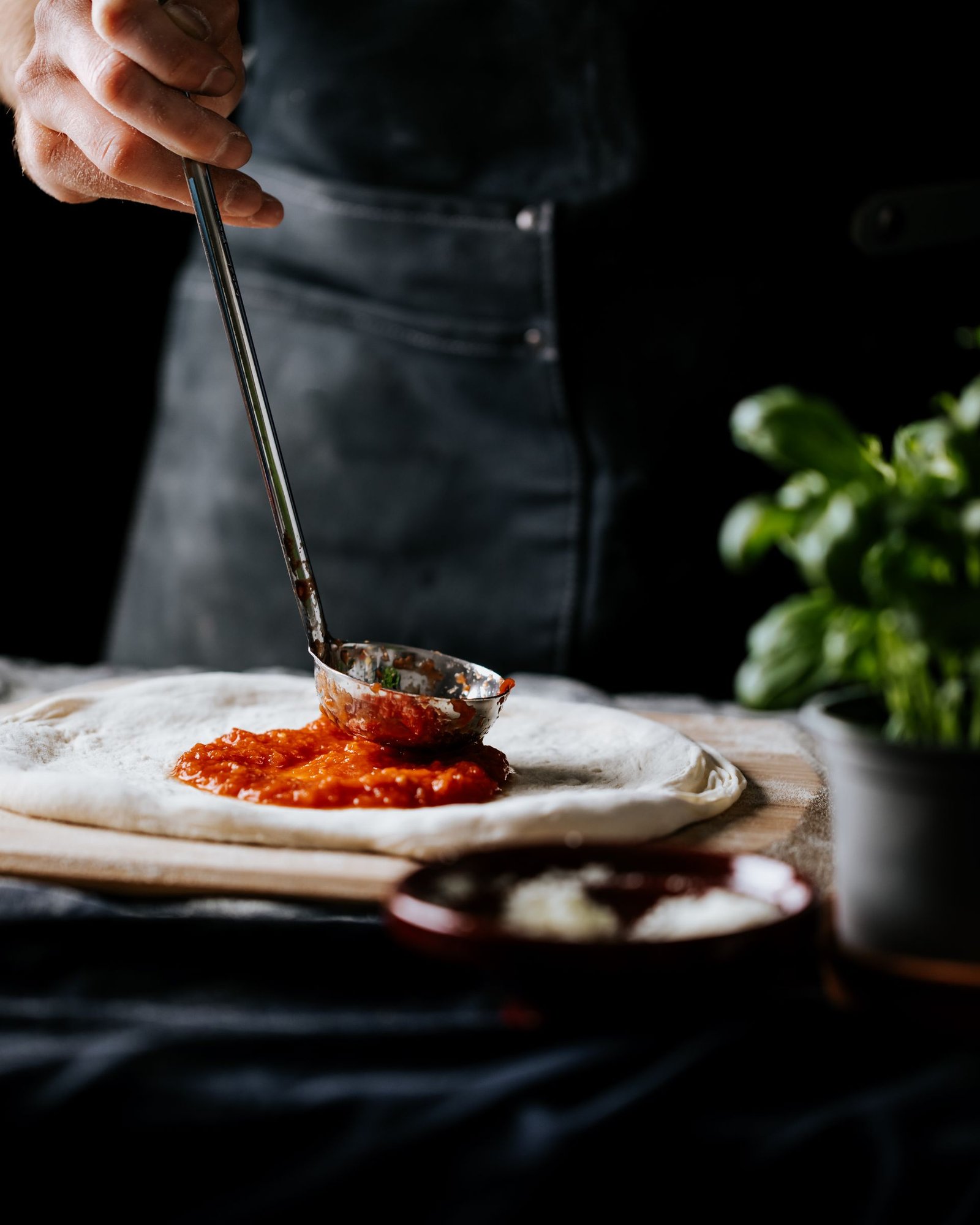
How much sauce per pizza: about 1/3 to 1/2 cup for a 12-inch pizza, spread thinly and evenly, leaving a 1/2-inch border. Over-saucing is one of the top causes of soggy pizza — the sauce should be a layer you can almost see through, not a blanket. Our guide to keeping pizza from getting soggy covers the full water-management picture.
Sauce Variations for Every Pizza Style
The 5-ingredient base adapts to every style with small tweaks:
Neapolitan / Margherita: Simplify further — crushed San Marzano tomatoes with just salt, maybe a drizzle of olive oil. The 90-second bake and delicate fresh mozzarella need the purest tomato flavor. Our Neapolitan pizza guide and Margherita recipe both use this minimal version.
New York style: Use the base recipe exactly as written. This is the classic NY sauce profile — bright, garlicky, oregano-forward. See our New York style guide.
Detroit style: Same base, warmed gently before ladling in racing stripes over the baked pizza. Some Detroit shops add a pinch of sugar; try it both ways. Full method in our Detroit style guide.
Chicago deep dish: Make it chunkier — crush the tomatoes coarsely and add sautéed garlic, fresh basil, and a pinch of sugar. The 40-minute bake concentrates everything, so start bolder. Details in our deep dish guide.
Sicilian: Bump the oregano to 1 1/2 teaspoons and add a minced anchovy fillet or two for the traditional Palermitan depth. See our Sicilian pizza guide.
St. Louis style: Add 1 teaspoon sugar and go heavier on oregano — the style’s signature is a sweeter, more herb-forward sauce. Our St. Louis style guide has the full breakdown.
Spicy (fra diavolo): Add 1/2 to 1 teaspoon red pepper flakes to the base. Excellent on pepperoni or sausage pizzas — try it in our pepperoni pizza recipe.
White garlic sauce (for white pizzas): Not a tomato sauce at all, but worth mentioning — for white pizza, skip tomatoes entirely and use olive oil infused with sliced garlic as the base.
Scaling Up: Sauce for Parties and Meal Prep
The recipe scales linearly — double or triple everything — but a few adjustments help at volume. Crush tomatoes in batches to keep the texture consistent; a huge bowl of tomatoes is hard to crush evenly by hand. Taste and season the full batch at once, since salt perception changes with volume (you’ll typically need slightly less salt per can when scaling up — start at 3/4 teaspoon per can and adjust).
For pizza parties, a triple batch (three 28-oz cans) sauces 12–18 pizzas — enough for a serious gathering. Portion into squeeze bottles for the topping station; guests sauce their own pizzas faster and more evenly than with spoons and bowls. Our pizza party hosting guide covers the full quantities math, and how much pizza per person helps you plan the dough to match.
For weekly meal prep, make a double batch on Sunday: use what you need for pizza night, refrigerate the rest for midweek pizzas or pasta, and freeze any surplus in portioned pucks. A freezer stocked with sauce pucks means homemade pizza is never more than dough away.
Storage, Freezing, and Make-Ahead
One of the beauties of no-cook sauce is how well it keeps — there’s nothing to spoil from undercooking, because it was never cooked.
Refrigerator: Store in an airtight jar or container for up to 5 days. The flavor actually improves over the first day as the garlic mellows and the oregano blooms. Give it a stir before using, as it can separate slightly.
Freezer: This sauce freezes perfectly for up to 3 months. Portion it into 1/2-cup servings (silicone muffin trays work brilliantly — freeze, then pop out the pucks into a freezer bag) so you can thaw exactly what you need. Thaw overnight in the fridge or in a bowl of warm water; never microwave from frozen, which creates hot spots that dull the fresh flavor.
Make-ahead for parties: Make a double or triple batch up to 3 days ahead. For a pizza party, portion sauce into squeeze bottles — one per pizza station — for fast, even spreading. Our pizza party hosting guide has the full quantities math.
Canning: If you want to preserve a big summer-tomato batch, this recipe can be water-bath canned — but follow a tested canning recipe’s acidification guidelines (bottled lemon juice) rather than this one, since safe canning requires specific acidity levels. When in doubt, freeze instead.
Sauce Mistakes to Avoid
- Cooking the sauce first. The number-one mistake. Simmered-then-baked sauce tastes flat and dull. The oven is the cooking step — trust it.
- Using diced tomatoes. The calcium chloride that keeps diced tomatoes firm also keeps them tasting firm and bland. Whole peeled, crushed by hand, every time.
- Blending it smooth. A blender aerates the sauce into a pinkish foam and destroys the rustic texture. Hand-crush for the ideal consistency with body and character.
- Over-saucing. Too much sauce is the fastest route to a soggy center. 1/3 to 1/2 cup per 12-inch pizza, spread thin — you should almost see the dough through it.
- Under-salting. Tomatoes need salt to taste like tomatoes. Taste the sauce raw and season until it’s bright — the cheese and bake will handle the rest.
- Adding sugar by default. Good tomatoes don’t need sugar. If your sauce tastes acidic, the fix is usually better tomatoes or a pinch of salt, not sugar. Reserve sugar for genuinely tart cans.
- Using garlic powder instead of fresh. Garlic powder tastes dusty and one-dimensional in an uncooked sauce. Fresh garlic, minced fine, mellows beautifully in the oven.
Frequently Asked Questions
Should pizza sauce be cooked before putting it on pizza?
No — for almost every style, pizza sauce should go on raw and cook in the oven. Pre-cooking dulls the fresh tomato flavor because the sauce effectively cooks twice. The only partial exception is very long-baked styles like Chicago deep dish, where a brief 10-minute simmer is sometimes used.
What’s the difference between pizza sauce and pasta sauce?
Pizza sauce is simpler, thicker, and uncooked — typically just tomatoes, garlic, olive oil, salt, and herbs. Pasta sauce (marinara) is simmered, often with onions, wine, and longer ingredient lists, and it’s wetter. Using pasta sauce on pizza usually means a soggy, overseasoned result.
Can I use fresh tomatoes instead of canned?
You can, but canned is usually better. Canned tomatoes are packed at peak ripeness, while most supermarket fresh tomatoes are picked underripe for shipping. If you have peak-season garden tomatoes, blanch, peel, seed, and crush them — but for consistency year-round, good canned tomatoes win.
How long does homemade pizza sauce last?
5 days refrigerated in an airtight container, or up to 3 months frozen. Portion it before freezing so you thaw only what you need. The flavor is best in the first 2–3 days as the garlic mellows.
Why does my homemade sauce taste bland?
Almost always under-salting, or bland tomatoes. Taste the sauce raw: it should taste bright and well-seasoned before baking. Add salt in 1/4-teaspoon increments until the tomato flavor pops. If salt doesn’t fix it, the tomatoes were the problem — try a better can next time.
Can I make pizza sauce without oregano?
Yes — for Neapolitan-style pizzas, many purists use only tomatoes and salt, letting the San Marzano fruit speak entirely for itself. Fresh basil (added after baking) can replace oregano’s herbal note. But for New York-style and most American pizzas, oregano is the signature flavor; leaving it out changes the character significantly and noticeably.
Conclusion
Homemade pizza sauce recipe success comes down to one insight: don’t cook it. Five ingredients — good canned whole tomatoes crushed by hand, fresh garlic, olive oil, salt, and oregano — mixed in five minutes and baked on the pizza, produce a sauce that’s brighter and more alive than anything simmered. Buy the best tomatoes you can, salt boldly, spread thinly, and let the hot oven do the work it was always meant to do. Once you’ve tasted a proper no-cook sauce — bright, fresh, unmistakably tomato — the jarred stuff will never tempt you again, and your homemade pizza takes its biggest single step toward true pizzeria quality.
[…] the side for dipping the crust, which instantly makes the whole experience feel more generous. Our homemade pizza sauce recipe makes a perfect upgrade sauce with five ingredients and no […]