

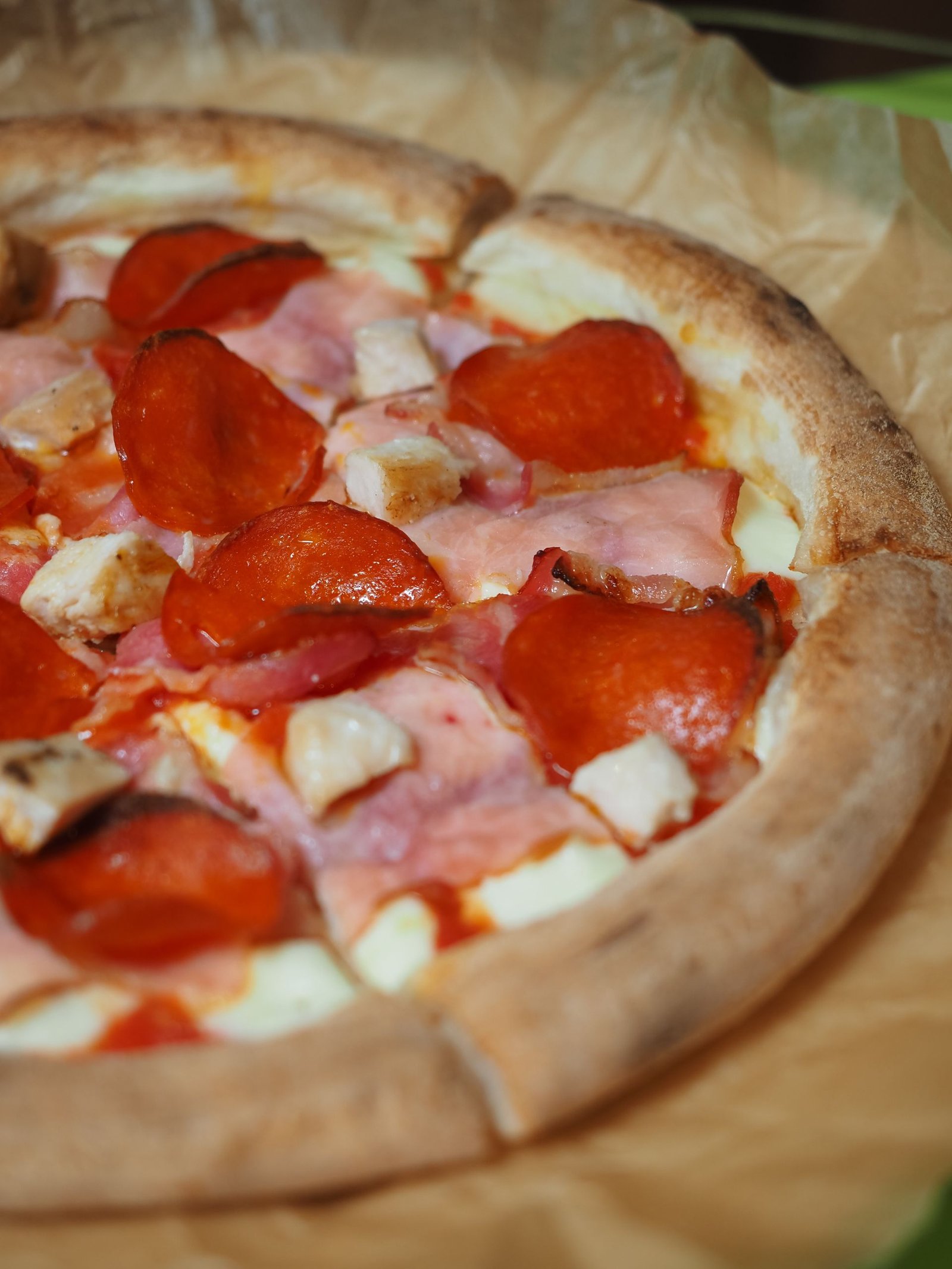
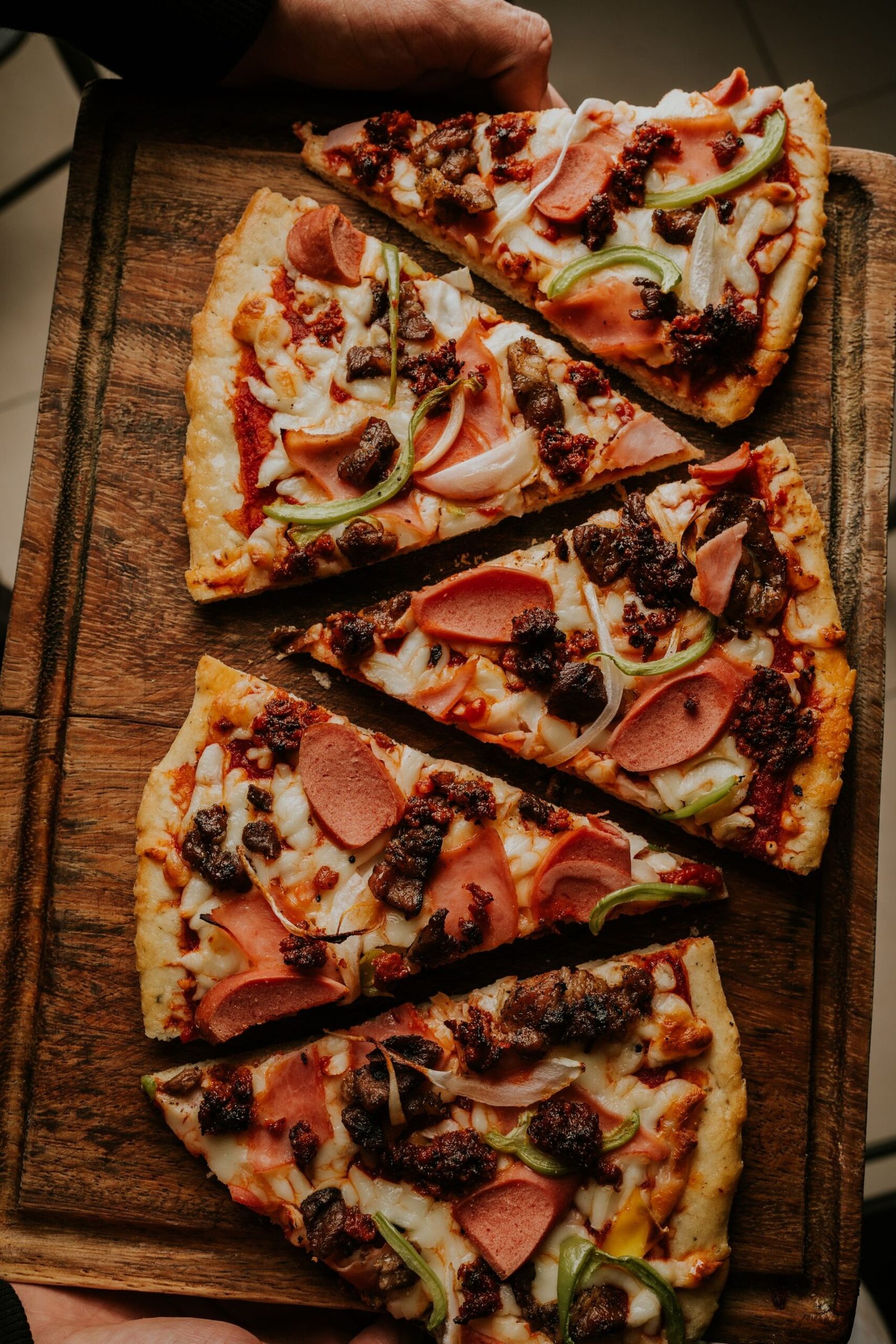
A proper meat lovers pizza recipe isn’t subtle, and it shouldn’t be. This is the pizza you make when the table wants maximum protein, maximum flavor, and maximum satisfaction: a crisp, sturdy crust loaded with pepperoni, Italian sausage, bacon, and ham under a blanket of golden mozzarella, all tied together with a bold tomato sauce. Every slice delivers salty, savory, crispy-edged meat in every bite — and when it’s built right, the crust stays crisp instead of drowning in grease.
The challenge with a loaded multi-meat pizza is structural. Four meats release a lot of fat and moisture, and a thin, flimsy crust will surrender. This recipe solves that with three moves: pre-cooking the raw meats (sausage and bacon), using a sturdy dough baked ripping hot on a preheated surface, and layering the cheese strategically so it shields the crust from the sauce. The result is a pizza that’s indulgent but not greasy, hearty but not heavy — the kind of bake that disappears at family pizza night before you’ve finished slicing it.
A few things to know: this recipe uses four classic meats, but the framework works with any combination — I’ll show you how to swap and scale. Food safety matters here since we’re working with multiple meats: raw sausage must reach 165°F (74°C) internally, which is why we pre-cook it. And if you want to explore the single-meat classics first, our pepperoni pizza recipe is the perfect starting point.
🍕 Key Takeaways
- This meat lovers pizza recipe layers pepperoni, Italian sausage, bacon, and ham over a bold tomato sauce and low-moisture mozzarella.
- Pre-cook raw meats (sausage, bacon) before topping — it prevents a greasy, soggy crust and guarantees food safety.
- Any meat on the pizza must reach 165°F (74°C) internally; use a food thermometer when in doubt.
- Build on a sturdy dough baked at 500°F on a preheated steel or stone for a crisp crust that holds the load.
- Layer cheese both under and over the meats to shield the crust and lock toppings in place.
- Refrigerate leftovers within 2 hours and use within 3–4 days; reheat in a hot skillet or oven until steaming.
- Easy to customize: swap in salami, prosciutto, meatballs, or chicken — keep total meat around 1 1/2 cups per pizza.
What Makes a Great Meat Lovers Pizza Recipe
The difference between a great meat lovers pizza and a mediocre one comes down to three things: meat quality, moisture control, and balance. Start with good meat — real pepperoni that cups and crisps (our best pepperoni for pizza guide explains what to look for), Italian sausage with visible fennel and fat, thick-cut bacon, and real ham rather than watery lunch meat. Cheap, water-injected meats release their liquid in the oven and turn your pizza into a swamp.
Moisture control is the technical heart of this recipe. Every meat contributes fat; fat is flavor, but unmanaged fat is grease. Pre-cooking the sausage and bacon renders out excess fat before it ever touches the dough. Draining on paper towels catches what the pan leaves behind. And a hot, preheated baking surface sets the crust bottom fast, so it crisps instead of steaming. Our guide to preventing soggy pizza covers the full playbook, but this recipe bakes the key moves right in.
Balance means the pizza still tastes like pizza, not a meat platter on bread. The tomato sauce should be bold and slightly acidic to cut the richness — a homemade pizza sauce with real tomato bite is ideal. The cheese should be present but not buried; you’re showcasing the meats. And a finishing touch of oregano or red pepper flakes after baking keeps the whole thing from tasting one-note.
The Meat Lineup: What Goes On and Why
For one 12–14 inch pizza, you’ll use about 1 1/2 cups of meat total — roughly 1/3 to 1/2 cup of each. That sounds modest, but once the meats cook down and the cheese melts over them, it reads as generously loaded. More meat isn’t better; it’s soggier.
Pepperoni
The anchor of any meat lovers pizza. Use 20–24 slices of good-quality pepperoni — the kind that cups into little grease-catching bowls as it crisps. Natural-casing pepperoni cups best; the flat, uniform supermarket kind still tastes fine but won’t give you those crispy edges. Place about half the pepperoni directly on the sauce and save half for the top, so you get pepperoni in two textures: soft and melded underneath, crisp and cupped on top.
Italian sausage
Use 1/2 pound of raw Italian sausage (sweet or hot — hot adds a welcome kick). Remove the casings, crumble into a skillet, and cook over medium-high heat until browned and cooked through, 8–10 minutes. Drain on paper towels. This pre-cook is non-negotiable: raw sausage on a pizza releases fat and water faster than the crust can handle, and you can’t reliably verify 165°F (74°C) inside a crumble buried under cheese. Pre-cooking solves both problems at once.
Bacon
Cook 4–5 strips of thick-cut bacon until just shy of crisp — it will finish in the oven. Chop into 1/2-inch pieces and drain on paper towels. Slightly undercooking matters: fully crisp bacon goes from crisp to burnt during the pizza bake, while floppy raw bacon never crisps under the cheese. “Just shy of crisp” is the sweet spot.
Ham
Use 1/3 cup of diced cooked ham — leftover holiday ham, a ham steak, or good deli ham cut thick. Because it’s already cooked, it just needs to heat through. Dice it small (1/4-inch) so it distributes evenly instead of landing in big salty chunks. Canadian bacon is a fine substitute; it brings a leaner, smokier profile.
Dough, Sauce & Cheese
Dough: You need a sturdy dough that can carry weight. A classic pizza dough at moderate hydration (60–65%) is perfect — strong enough to hold the load, crisp enough to stay interesting. Stretch it to 12–14 inches with a slightly thicker rim than usual; that rim is structural. If you’re new to stretching, our dough stretching guide walks through the technique. Let the dough warm at room temperature for 30–60 minutes before shaping.
Sauce: About 1/2 cup of bold tomato sauce per pizza. It should taste bright and slightly aggressive on its own — the meats and cheese will mellow it. If your sauce is watery, simmer it down first; a wet sauce plus four meats is a recipe for a soggy center. Season boldly: a pinch of sugar to balance acidity, extra oregano, and a grated garlic clove make a simple crushed-tomato sauce taste like it simmered all afternoon. For a deeper dive on tomatoes, our San Marzano tomatoes guide explains why the canned tomato you choose matters more than the recipe you follow.
Cheese: 2 cups (8 oz) of low-moisture mozzarella, shredded from a block, plus 1/4 cup grated Parmesan for finishing. The layering trick: spread half the mozzarella over the sauce first, then the meats, then the remaining mozzarella on top. The bottom cheese layer acts as a moisture barrier between sauce and crust; the top layer locks the meats in place so they don’t slide off when you slice.
Equipment
A pizza peel dusted with semolina, a preheated baking surface (steel, stone, or inverted sheet pan — see pizza steel vs. pizza stone), and an oven at 500°F. Preheat the surface for a full 45 minutes. Also: a reliable instant-read food thermometer. With multiple meats in play, guessing about doneness isn’t good enough — the thermometer is how you know the sausage hit 165°F (74°C) during its pre-cook.
How to Make Meat Lovers Pizza: Step by Step
Step 1: Preheat the oven and surface
Put your steel, stone, or inverted sheet pan on a middle-upper rack and preheat to 500°F (260°C) for 45 minutes. Take the dough out of the fridge to warm up. Preheat discipline matters more for a loaded pizza than for a plain one — the hot surface is what keeps a heavy pizza’s bottom crisp.
Step 2: Pre-cook the sausage and bacon
While the oven heats, crumble the sausage into a skillet over medium-high heat and cook until browned and no pink remains, 8–10 minutes. Verify with your thermometer: the crumbles should read at least 165°F (74°C). Transfer to a paper-towel-lined plate. In the same skillet, cook the bacon until just shy of crisp, then chop and drain. Dice the ham. Have the pepperoni sliced and the cheese shredded. Everything prepped before assembly — once the dough is stretched, you move fast.
Step 3: Stretch the dough
On a lightly floured surface, stretch the room-temperature dough to a 12–14 inch round with a slightly puffy rim. Transfer to a semolina-dusted peel and do the shake test — the dough must slide freely. A stuck launch with a loaded pizza is a disaster, so confirm the slide twice.
Step 4: Sauce, cheese, meats, cheese
Spread 1/2 cup sauce evenly, leaving a 3/4-inch border. Scatter half the mozzarella over the sauce. Distribute the cooked sausage, bacon pieces, and diced ham evenly. Lay on half the pepperoni slices. Top with the remaining mozzarella, then the rest of the pepperoni. Finish with the Parmesan. Brush the exposed rim with olive oil. Work quickly — a loaded pizza sitting on the peel absorbs moisture and gets harder to launch with every passing minute.
Step 5: Bake
Launch onto the preheated surface and bake 11–14 minutes, until the crust is deeply golden, the cheese is bubbly with browned spots, and the top pepperoni is cupped and crisped at the edges. If the top browns faster than the bottom crisps, move to a lower rack for the last few minutes. Because all meats were pre-cooked, the bake is about melting and browning, not cooking raw protein — but the finished pizza should still be steaming hot throughout.
Step 6: Rest and slice
Rest 3–4 minutes on a wire rack before slicing. This sets the cheese and lets the meat juices redistribute instead of running across the cutting board. Slice with a sharp pizza cutter or large chef’s knife — a loaded pizza needs a confident cut. Finish with a pinch of dried oregano and red pepper flakes if you like.
Variations
Spicy meat lovers: Use hot Italian sausage, add sliced jalapeños or Calabrian chiles, and finish with hot honey. The sweet-heat against the salty meats is outstanding.
BBQ meat lovers: Swap the tomato sauce for a thin layer of barbecue sauce, use smoked sausage instead of Italian, and add red onion. It nods toward our BBQ chicken pizza while staying firmly in meat-lovers territory.
Breakfast meat lovers: Add the meats to a breakfast pizza base — crack an egg or two onto the pizza for the last 5 minutes of baking. The runny yolk over sausage and bacon is a weekend-morning triumph.
Deluxe / supreme style: Add sautéed bell peppers, red onion, and mushrooms to the meat lineup. Sauté the vegetables first to drive off moisture — raw vegetables plus four meats is too much water.
Three-meat weeknight shortcut: Skip the bacon, double the pepperoni, and use store-bought dough. You lose some complexity but the pizza still satisfies, and it’s on the table in 30 minutes.
Meat Lovers Pizza Recipe: Pro Tips for the Best Results
Don’t exceed 1 1/2 cups of meat per pizza. This is the golden rule. More meat means more fat and moisture, and the crust can’t keep up. A pizza that looks “loaded” but eats crisp beats a mountain of meat on a soggy base every time.
Render, drain, and pat. Every pre-cooked meat should be drained on paper towels and patted. The fat you remove in the skillet is fat that won’t pool on your pizza.
Two-layer pepperoni placement gives you the best of both worlds: soft, cheese-melded pepperoni underneath and crispy cupped pepperoni on top. It’s a small move with a big textural payoff.
Grate your own mozzarella. Pre-shredded cheese contains anti-caking starch that prevents smooth melting and encourages a grainy texture. A block of low-moisture mozzarella and a box grater take two minutes and melt dramatically better.
Mind the grease pool. If your pepperoni is particularly fatty, you can blot the finished pizza once with a paper towel before slicing. Nobody will know, and the crust will thank you.
Thermometer, not guesswork. The sausage pre-cook must hit 165°F (74°C). The finished pizza should be steaming hot throughout. When meat is involved, “looks done” isn’t a food-safety standard — the thermometer is.
Rest the dough fully. A loaded pizza needs a dough that’s relaxed and extensible. If the dough springs back while stretching, give it 10 minutes under a damp towel and try again. Fighting tight dough gives you a thick, uneven base that bakes up dense under the meat load — the opposite of the crisp, airy crust you want.
Slice with authority. A loaded pizza resists wimpy cutting. Use a sharp wheel or a large chef’s knife with a rocking motion, and cut all the way through the crust in one pass per cut.
Make-Ahead and Storage
Make-ahead: Cook the sausage and bacon up to 2 days ahead and refrigerate. Shred the cheese a day ahead. The sauce keeps 5 days refrigerated. On pizza night, assembly takes 10 minutes.
Storing leftovers: Refrigerate within 2 hours of baking — this is the food-safety rule that matters most with meat pizzas. Store slices in an airtight container for 3–4 days. When in doubt about a slice’s age or storage, throw it out; our leftover pizza safety guide has the full timelines.
Reheating: The skillet method is king — medium heat, lid on, 3–4 minutes, until the bottom is crisp and the cheese re-melts. The oven at 375°F for 8–10 minutes works for larger batches. Reheat until steaming hot throughout. See our pizza reheating guide for every method ranked.
Freezing: Freeze baked slices for up to 2 months, wrapped tightly. Reheat from frozen at 375°F for 15–20 minutes until steaming. Meat pizzas freeze well because the pre-cooked meats don’t change texture much.
What to Serve With Meat Lovers Pizza
This is a bold, salty, rich pizza — pair it with contrast. A crisp lager or IPA cuts through the fat beautifully; our pizza and beer pairing guide has specific recommendations. A simple green salad with sharp vinaigrette gives the palate somewhere to rest between slices. Pickles or pickled peppers on the side add acidity that makes the next slice taste new again.
For a crowd, this pizza anchors a spread — figure 3–4 slices per hungry adult when it’s the main event (our how much pizza per person guide does the math for mixed groups). Pair it with something lighter, like a margherita, so guests have a breather. Browse the pizza recipes category for the full lineup.
Frequently Asked Questions
Do I have to pre-cook the sausage for meat lovers pizza?
Yes — for both safety and texture. Raw sausage releases significant fat and water during baking, which soaks the crust, and crumbles buried under cheese can’t be reliably verified at 165°F (74°C). Pre-cooking in a skillet takes 10 minutes, renders out excess fat, and guarantees the meat is safe. Bacon gets the same treatment; pepperoni and pre-cooked ham are fine as-is.
How do I keep meat lovers pizza from getting greasy?
Four moves: pre-cook and drain the sausage and bacon, don’t exceed 1 1/2 cups of total meat, use a preheated steel or stone so the bottom crisps fast, and blot the finished pizza once with a paper towel if needed. Choosing quality meats with less added water also helps — check labels and avoid anything that lists water as a primary ingredient.
What temperature should meat lovers pizza be baked at?
500°F (260°C) on a preheated surface, for 11–14 minutes. The high heat sets the crust quickly under the heavy topping load and crisps the pepperoni edges. If your oven maxes out at 475°F, add 2–3 minutes and watch the bottom. A home oven pizza guide has more on getting the most from a standard oven.
Can I use different meats than the classic four?
Absolutely. Salami, soppressata, prosciutto (add after baking), cooked meatballs (halved), chorizo (pre-cooked), or diced chicken all work. Keep the total around 1 1/2 cups per pizza, pre-cook anything raw, and verify 165°F (74°C) for poultry and ground meats. The framework — sturdy dough, bold sauce, two-layer cheese, hot bake — stays the same whatever meats you choose.
How long does leftover meat lovers pizza last?
Refrigerated within 2 hours of baking, 3–4 days in an airtight container. Because this pizza contains multiple meats, don’t stretch the timeline — the 2-hour refrigeration rule and the 3–4 day window are firm. Reheat until steaming hot throughout, and never reheat more than once.
Can I make meat lovers pizza on the grill?
Yes — grilled pizza handles heavy toppings well because the direct heat crisps the bottom fast. Use our grilled pizza guide method: par-grill the crust, flip, top quickly, and finish with the lid closed. Keep the meat quantities the same and have everything pre-cooked and prepped, since grill assembly needs to be fast.
Final Thoughts
This meat lovers pizza recipe is proof that “loaded” and “well-made” aren’t opposites. Pre-cook the meats, control the moisture, bake it screaming hot, and you get a pizza that’s indulgent without being greasy — crispy crust, cupped pepperoni, savory sausage, smoky bacon, and ham in every bite, all verified safe with a thermometer.
It’s the pizza for game day, for feeding a crowd of teenagers, for the nights when only maximum pizza will do. Master this framework and you can riff endlessly: swap the meats, change the sauce, add heat. And when you want the single-meat classic done perfectly, our pepperoni pizza recipe is the natural next bake.